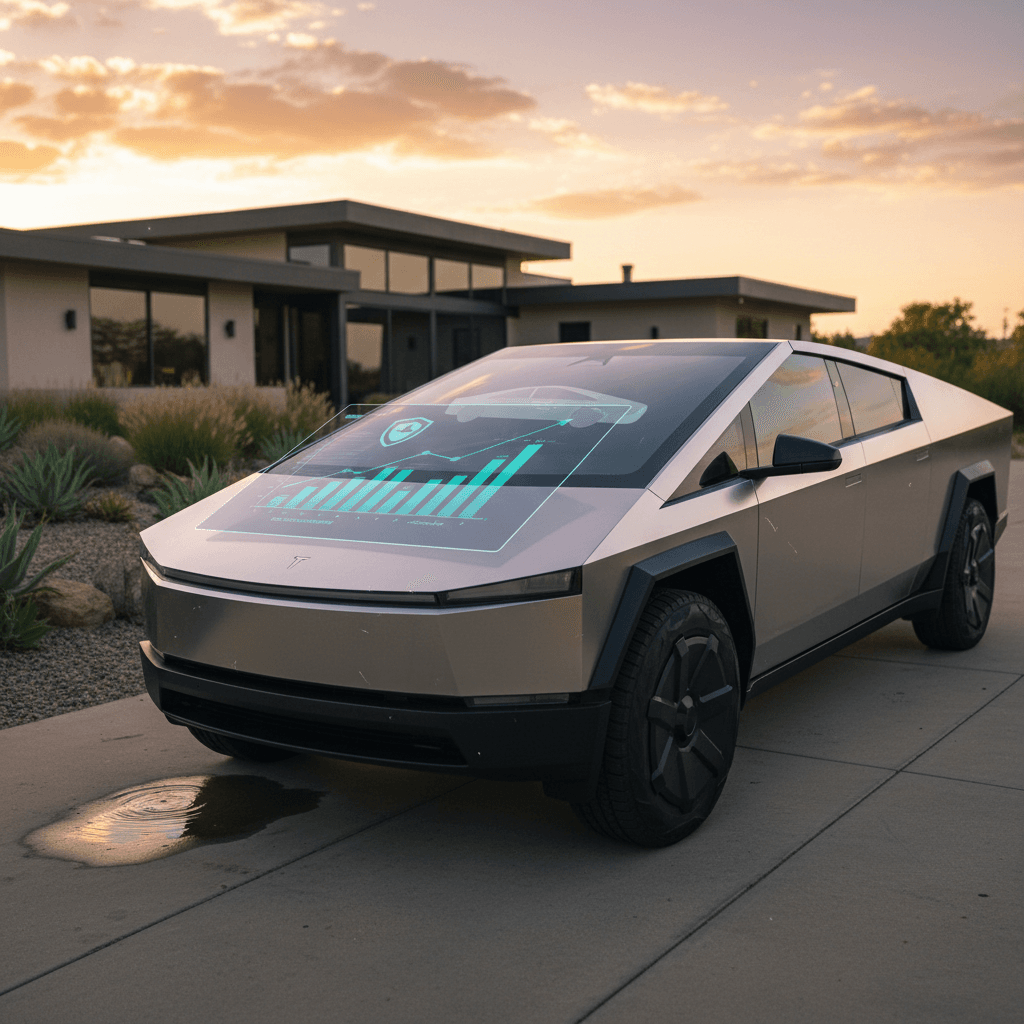
If you’ve priced one out, you already know the truck itself isn’t cheap. But many shoppers are surprised by a different line item: how much insurance is on a Tesla Cybertruck. Early data shows Cybertruck premiums running well above the typical pickup or SUV, and often about double the national average full‑coverage rate in 2026. Let’s break down what that really means for your budget and what you can do about it.
Key takeaway
Tesla Cybertruck insurance in one glance
2026 Cybertruck insurance vs the average driver
Those are ballpark figures, not quotes. Your own number could be significantly lower, or higher, depending on your driving record, where you live, how you use the truck, and which insurer you choose. The rest of this guide will show you how those pieces fit together and how to keep your costs under control.
So…how much is insurance on a Tesla Cybertruck?
Let’s start with the headline number most shoppers are looking for. In early 2026, many national insurance comparison tools and carrier estimates are landing Cybertruck full‑coverage premiums around $350–$450 per month for a clean‑record driver, roughly $4,200–$5,400 a year for standard personal use.
- Some mainstream insurers quote closer to $180–$220 per month for very strong drivers in low‑risk areas.
- Others are well north of $500 per month for young drivers, dense cities, or high‑risk profiles.
- Commercial or heavy‑business use can push premiums even higher than personal‑use quotes.
By comparison, recent national data for all vehicles puts average full‑coverage car insurance in the low‑to‑mid $2,000s per year. In other words, the Cybertruck is currently priced like a high‑risk, high‑value vehicle in insurers’ eyes, even if you’re a model driver.
Sticker shock is common
Why is Tesla Cybertruck insurance so expensive?
Insurers don’t have emotions, they have spreadsheets. When they look at the Cybertruck, several red flags pop up at once: a very expensive vehicle, unusual construction, limited repair history, and plenty of headlines about crashes, recalls, and repair delays. That combination tends to produce higher premiums until there’s a longer track record.
The big drivers of Cybertruck insurance costs
Six reasons your quote looks so high right now
High vehicle value
Unusual stainless body
Complex tech & sensors
Limited real‑world data
Expensive prior Tesla claims
Open recalls & scrutiny
EV trend in general: higher insurance
7 factors that change what you’ll actually pay
A national average is just the starting line. What matters is your quote. Here are the biggest levers that move Cybertruck premiums up or down.
Personal factors that shape your Cybertruck premium
1. Driving record
Accidents, speeding tickets, DUIs, and at‑fault claims can send Cybertruck premiums into the stratosphere. A clean record over three to five years is one of the strongest discounts you can have.
2. Where you live and park
Urban ZIP codes with higher crash, theft, and litigation rates cost more than quiet suburbs or rural areas. Garaging the truck overnight and off the street is a plus.
3. How you use the truck
Commuting 50 miles a day or using the Cybertruck for business or contracting work signals more exposure than weekend‑toy status. Expect commercial use or high annual mileage to cost more.
4. Coverage levels & deductibles
Higher liability limits and low deductibles are smart for many owners, but they do raise the premium. Choosing a $1,000–$2,500 comprehensive/collision deductible can save money if you have cash reserves.
5. Credit & insurance score (where allowed)
In many states, insurers use credit‑based insurance scores to predict losses. Strong credit usually means lower rates; poor or thin credit can make Cybertruck coverage especially pricey.
6. Age & experience
Younger drivers, especially under 25, often see eye‑watering Cybertruck quotes. Mature drivers with long, claim‑free histories pay much less on the same truck.
7. Insurer & discounts
Rates for the exact same Cybertruck and driver can vary by thousands of dollars per year between companies. Bundling, telematics (usage‑based), and safe‑driver programs can soften the blow.
Run the quote before you fall in love
Should you use Tesla Insurance for a Cybertruck?
In many states, Tesla offers its own Tesla Insurance product. For Cybertruck shoppers, it’s natural to ask whether going “all‑Tesla” will solve the high‑premium problem. The answer: sometimes it helps, sometimes it doesn’t, and it’s worth comparing.
Potential advantages of Tesla Insurance
- Vehicle‑specific data: Tesla can use data from your vehicle and driving behavior (where approved) to reward safer driving with better rates.
- Familiarity with repairs: Because they understand the tech stack and repair network, Tesla may price certain repairs more precisely than a carrier with limited Tesla volume.
- One‑ecosystem convenience: Managing vehicle, app, and insurance in one place can be attractive for some owners.
Potential drawbacks to consider
- Limited availability: Tesla Insurance still isn’t offered in every U.S. state, and coverage options vary.
- Data‑sharing comfort: Some drivers are uneasy with their insurer directly collecting detailed driving data and linking it to pricing.
- Not always cheapest: In some markets, traditional insurers undercut Tesla Insurance, especially if you bundle home, renters, or multiple vehicles.
Check coverage details, don’t just chase the lowest quote
10 ways to lower your Cybertruck insurance bill
You can’t change the Cybertruck’s stainless body or repair costs, but you can influence how much you pay to insure it. These are practical steps that often move the needle.
Practical strategies to bring costs down
Mix and match what fits your situation
1. Shop multiple insurers
2. Right‑size your liability
3. Increase your deductibles
4. Bundle home or renters
5. Enroll in telematics
6. Limit young‑driver access
7. Improve security & parking
8. Clean up old tickets
9. Re‑evaluate optional coverages
10. Re‑quote annually
Good news for patient shoppers
Cybertruck vs other EVs: Insurance cost comparison
How does the Cybertruck stack up against other popular EVs and trucks? Exact numbers vary by driver and insurer, but recent national averages paint a clear picture: Cybertruck sits at the top end of the spectrum.
Typical 2026 full‑coverage insurance ranges (clean‑record driver)
Illustrative annual premium ranges based on recent national averages and insurer sample quotes. Your specific rate may fall outside these bands.
| Vehicle | Typical annual full‑coverage range | How it compares to Cybertruck |
|---|---|---|
| Tesla Cybertruck | $4,200–$5,400+ | Baseline: often around 2× the average U.S. rate |
| Tesla Model 3 (RWD/Long Range) | $2,000–$3,000 | Usually much cheaper than Cybertruck, especially for older model years |
| Tesla Model Y | $2,200–$3,200 | Still high for a crossover, but often 30–40% less than Cybertruck |
| Ford F‑150 Lightning | $2,500–$3,500 | EV truck pricing is elevated, but typically under Cybertruck quotes so far |
| Gas full‑size pickup (e.g., F‑150, Silverado) | $1,800–$2,800 | Many mainstream gas trucks insure closer to the national average |
| Compact/midsize SUV (gas) | $1,600–$2,400 | Among the most affordable categories to insure compared with Cybertruck |
Cybertruck tends to cost significantly more to insure than mainstream EVs and gas trucks.
Why used EVs often insure for less

What if you buy a used Cybertruck, or another used EV?
Over time, more Cybertrucks will hit the used market, either from early adopters trading out or from off‑lease vehicles. Buying used can soften the blow on both the truck price and, sometimes, insurance. But you still need to run the numbers.
How a used Cybertruck affects insurance
- Lower vehicle value can mean slightly lower comprehensive/collision costs compared with a brand‑new truck of the same spec.
- Repair costs and parts remain high, so don’t expect used‑truck insurance to drop to mainstream levels right away.
- Prior claim history on the specific VIN (major crashes, branded title) can affect how some insurers view the risk.
Why Recharged focuses on transparency
- Every used EV on Recharged includes a Recharged Score Report with battery‑health diagnostics and background checks, so you know what you’re buying.
- Understanding total cost of ownership, including insurance, charging, and maintenance, is part of Recharged’s expert‑guided buying support.
- Our EV specialists can help you compare models if Cybertruck insurance doesn’t pencil out and you’re open to other used EV options.
Ask insurers about VIN‑specific history
Checklist: Insurance steps before you buy a Cybertruck
Pre‑purchase Cybertruck insurance checklist
1. Get model‑specific quotes
Ask for quotes that explicitly list the Tesla Cybertruck trim you’re considering, not just a generic Tesla or pickup category.
2. Compare at least 3–5 carriers
Include your current insurer, at least one major national carrier, and Tesla Insurance (if available) to see the spread.
3. Decide on liability limits up front
For an expensive truck, many owners choose higher‑than‑minimum liability limits. Get quotes at your target coverage level, not just your state minimums.
4. Test different deductibles
Price out two or three deductible options so you understand the savings trade‑off before you sign paperwork on the truck.
5. Ask about EV‑specific coverages
Clarify policies on OEM parts, battery damage, charging‑equipment coverage, and towing for a Cybertruck or other EV.
6. Run "what‑if" scenarios
If you have teens or high‑risk drivers in the household, ask how adding them later would affect Cybertruck premiums.
7. Compare alternatives
If the Cybertruck premium feels too steep, compare quotes on other EVs or trucks, new or used, to see what fits your budget better.
FAQ: Tesla Cybertruck insurance
Frequently asked questions about Cybertruck insurance
Bottom line: Is Cybertruck insurance a deal-breaker?
If you love the look and capability of the Tesla Cybertruck, insurance alone doesn’t have to be a deal‑breaker, but it absolutely needs to be part of your math. Early 2026 data suggests full‑coverage Cybertruck premiums often land around twice the U.S. average, and that gap is even wider for younger or higher‑risk drivers. Before you commit, get real quotes, test different coverage levels and deductibles, and compare what the same budget could buy in a different EV or truck.
If you decide the Cybertruck’s insurance load is more than you’d like to carry, you still have options. A well‑chosen used EV can deliver low running costs, modern tech, and far more approachable insurance premiums. Recharged is built to make that process transparent, from verified battery health and fair pricing to expert guidance on the ownership costs that don’t show up on the window sticker.