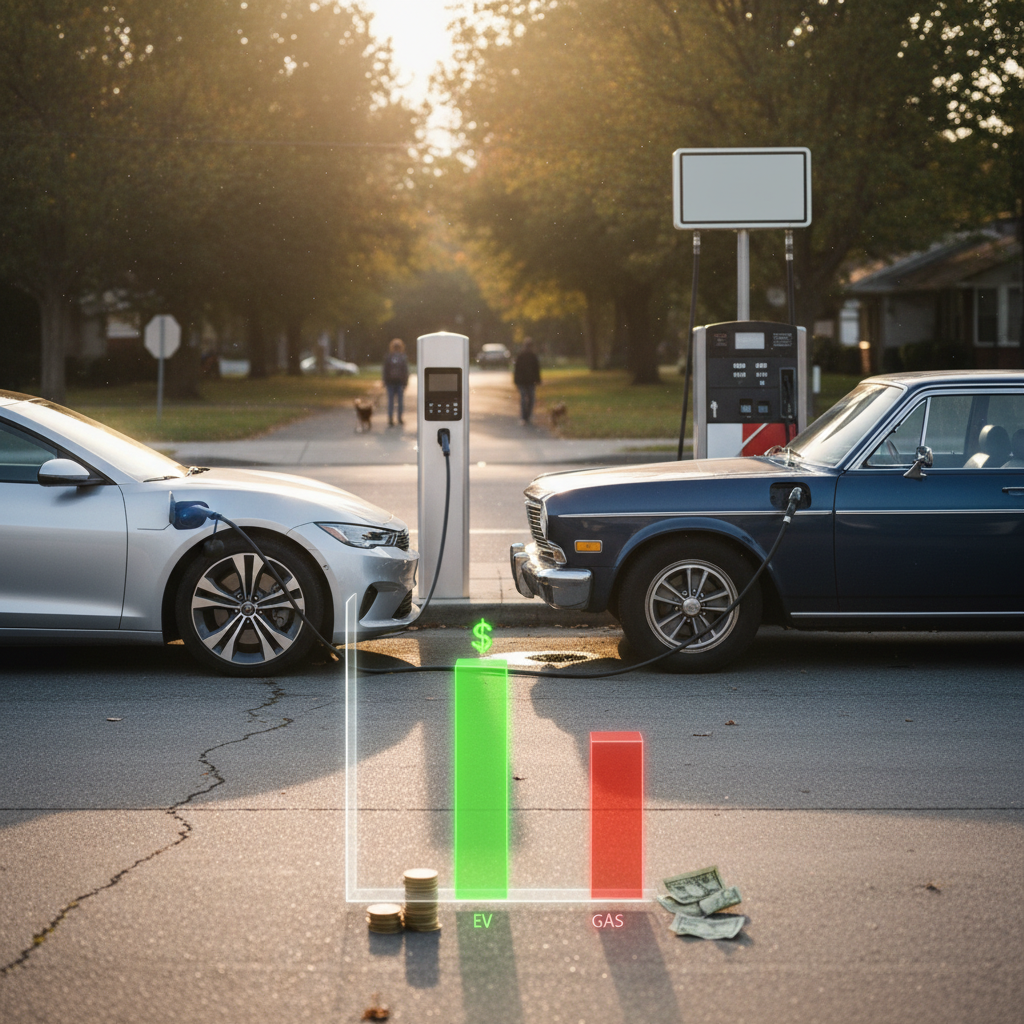
If you’re trying to figure out how much the average electric car costs in the U.S. right now, the honest answer is: it depends what you’re really asking. The “average” new EV price is still higher than a gas car, but used EVs have gotten dramatically cheaper, and in some cases now undercut comparable gasoline models. The gap between the sticker price and what you actually pay over years of driving is getting even more interesting.
Quick snapshot for 2025
What does an “average” electric car cost today?
When people ask how much the average electric car costs, they typically want a ballpark number to anchor their budget. Here’s the simplest way to think about it in the U.S. as of late 2025:
Average EV prices at a glance (U.S.)
Those are big averages, pooling together everything from basic commuter EVs to six‑figure luxury crossovers. For a typical household shopping with a realistic budget, it’s more helpful to break things into categories and to look closely at the used EV market, where prices have fallen fastest.
Why “average price” can mislead you
New electric car prices in 2025
New EV prices have been on a downward trend since 2023, driven by price cuts, new competition, and dealer incentives. But they still sit above the market as a whole. Early‑2024 data from major pricing services showed the average transaction price for a new EV at about $55,000, roughly 10% lower than a year prior but still above the overall new‑vehicle average of around $47,000.
Typical new EV price ranges by segment
Approximate MSRP ranges before incentives or dealer discounts
Entry‑level & compact EVs
Price range: roughly $32,000–$40,000 new.
- Examples: Nissan Leaf, Chevy Equinox EV (lower trims), Hyundai Kona Electric.
- Best for: Shorter commutes, urban driving, first‑time EV buyers.
Mainstream crossovers & sedans
Price range: roughly $40,000–$55,000.
- Examples: Tesla Model 3/Y, Hyundai Ioniq 5/6, Kia EV6, VW ID.4.
- Best for: Families that need more space and range.
Premium & large EVs
Price range: $55,000–$90,000+.
- Examples: Cadillac Lyriq, Mercedes EQ models, F‑150 Lightning, Rivian R1T/R1S.
- Best for: Luxury shoppers or drivers who really need a truck or three‑row SUV.
Sticker price vs what people actually pay
How much does a used electric car cost?
Used EVs are where things get very interesting. After a wave of price cuts and a flood of off‑lease vehicles, late‑model EVs have seen double‑digit price declines year over year. Several studies of the 1–5‑year‑old market in 2024 put the average used EV price at roughly $32,000, within a few hundred dollars of comparable gasoline cars, and far below the typical new EV.
Typical used EV price bands (1–5 years old)
Approximate price ranges you’ll actually see in the U.S. used market, excluding rare exotics.
| Used EV segment | Typical price range | Example models | What you usually get |
|---|---|---|---|
| Budget commuter | $15,000–$25,000 | Early Chevy Bolt EV, older Nissan Leaf, Hyundai Ioniq Electric | Shorter range (100–250 miles), great for city and suburban commuting. |
| Mainstream compact/midsize | $25,000–$35,000 | 3–5‑year‑old Tesla Model 3, Kona Electric, Kia Niro EV | Solid range (220–300 miles), modern tech, good daily usability. |
| Crossovers & family EVs | $30,000–$40,000 | Used VW ID.4, Mustang Mach‑E, Kia EV6, Hyundai Ioniq 5 | Roomier cabins, more cargo space, popular with families. |
| Premium & performance | $40,000–$60,000 | Used Audi e‑tron, Porsche Taycan, higher‑trim Tesla, Rivian R1T/R1S | Luxury interiors, performance powertrains, higher running costs. |
Real listings will vary by mileage, condition, options, incentives, and local supply/demand.
Why the used EV market favors buyers right now
On Recharged, you’ll see many late‑model EVs listing well below their original MSRP but still showing strong battery health. Each vehicle’s Recharged Score Report includes an in‑depth battery diagnostic, so you’re not guessing about the most expensive component when you shop used.
Why average EV prices are dropping
The trend line is unmistakable: the average electric car cost has been coming down. Across 2023 and 2024, average new EV transaction prices fell close to 10% in a single year, and used values in some models dropped by more than 20%. Several forces are working together here.
What’s pushing EV prices down?
Four forces reshaping the EV price curve
1. Aggressive price cuts
Tesla and other major brands have repeatedly cut prices to maintain volume. Those cuts push down not just new‑vehicle averages but also used EV resale values.
2. More competition
Every month, more EVs hit the market, crossovers, sedans, and trucks across nearly every price band. More choice usually means more discounts and incentives.
3. Faster depreciation
Early EVs and older tech tend to depreciate quickly, especially when newer models bring more range and features at lower prices. That hurts resale but helps second owners.
4. Incentives & fleet sales
Federal tax credits, state rebates, and large fleet purchases all play a role in driving effective prices down while keeping production lines moving.
Falling prices are good, unless you overpay now
Understanding the total cost of owning an EV
Sticker price is only part of the equation. When you compare EVs to gas cars, the real question is: what does it cost to own and operate this vehicle over five or more years? That’s where EVs often start to look better than their higher upfront prices suggest.
Costs where EVs usually win
- Fuel: Even with electricity rates creeping up, charging at home is often equivalent to paying roughly $2–$3 per gallon of gas, versus whatever your local pump price is.
- Maintenance: No oil changes, fewer moving parts, and less brake wear thanks to regeneration usually mean lower routine maintenance.
- Time: Home charging saves you trips to the gas station, which matters if you have a busy schedule.
Costs where EVs can be higher
- Insurance: Some EVs cost more to insure because of higher repair costs and expensive components.
- Depreciation: Rapid tech improvements and shifting incentives can mean steeper value drops, especially for the first owner.
- Financing: A higher purchase price, even at a similar interest rate, still translates into a higher monthly payment.
Average ownership cost is dropping too
How tax credits and incentives change what you pay
Federal and state incentives can knock thousands of dollars off the effective price of an EV, but the rules are complex, and some are scheduled to change. Historically, U.S. buyers could claim up to $7,500 in federal tax credits on new EVs and up to $4,000 on qualifying used EVs, subject to income caps, price caps, and assembly/battery sourcing rules. Some of those programs are time‑limited or already evolving, so always check current IRS and state guidance before you buy.
Incentive checklist before you sign
1. Confirm federal eligibility
Not every EV qualifies. Confirm the specific trim and year on the IRS’s clean vehicle list and make sure you meet income limits and price caps.
2. Look for used‑EV credits
If you’re buying used, see whether you qualify for a used clean vehicle credit. Limits are lower, but so is the purchase price, stacking those can be powerful.
3. Stack state and local rebates
Many states, utilities, and local agencies offer their own rebates and grants for EV purchases and home charger installation. These can be worth hundreds or thousands of dollars.
4. Ask about dealer or lender incentives
Some OEMs and finance arms offer EV‑specific APR deals or lease cash that only shows up when you ask finance to quote them side‑by‑side.
5. Run the total cost, not just the discount
A $7,500 credit on an overpriced vehicle isn’t a win. Compare total out‑the‑door cost and monthly payment against other EVs and an equivalent gas model.
Watch the calendar on tax credits
Price bands: budget vs mainstream vs premium EVs
Instead of focusing on a single average, it’s more useful to ask: What does an EV that fits my life usually cost? Here’s a simple way to map your needs to realistic price bands, especially in the used market where Recharged specializes.
Typical EV buyer profiles and price expectations
Use this as a starting point, then refine based on your range needs, brand preferences, and local inventory.
| Profile | Driving pattern | Typical EV budget (used) | What you can realistically find |
|---|---|---|---|
| Urban commuter | Under 40 miles/day, mostly city | $15,000–$25,000 | Older Leaf or Bolt, compact Korean EVs with enough range and low running costs. |
| Suburban family | Mix of errands and weekend trips | $25,000–$35,000 | 3–5‑year‑old Tesla Model 3, Niro EV, ID.4 or similar with modern safety tech. |
| Road‑trip regular | Frequent highway trips, long distances | $30,000–$40,000 | Used Mach‑E, Ioniq 5/6, EV6 or Model Y with strong DC fast charging performance. |
| Luxury/performance shopper | Wants premium interior and power | $40,000–$60,000 | Used Audi, BMW, or higher‑trim Tesla with advanced driver assistance and upscale cabins. |
All figures are rough U.S. market ranges as of late 2025.
Don’t forget charging speed, not just range
How to get more EV for your money
Whether you’re buying new or used, there are practical ways to beat the raw averages and land a better‑than‑expected deal on your next EV.
Five ways to beat the “average” EV price
Real tactics real shoppers are using right now
1. Let depreciation work for you
Target 2–4‑year‑old EVs. That’s often where the steepest depreciation has already happened but the battery is still in great shape, especially when you have verified health data.
2. Buy on battery condition, not age
Two EVs of the same year can have very different battery health depending on usage and charging habits. Recharged’s battery diagnostics, summarized in the Recharged Score Report, show real capacity and fast‑charging history so you can pay for what you’re actually getting.
3. Use EV‑savvy financing
Pairing a fairly‑priced EV with smart financing can turn a high sticker into a manageable payment. Recharged offers financing options tailored to EV buyers, with transparent terms and no in‑store haggling.
4. Shop beyond your ZIP code
EV supply is uneven. A model that’s scarce and expensive in one metro can be plentiful and cheaper in another. With Recharged’s digital process and nationwide delivery, you can chase value instead of being trapped by your local lot.
5. Compare against a gas benchmark
Before you commit, compare your EV’s total monthly cost, payment, insurance estimate, charging, and maintenance, against a similar gas model. Many shoppers find that once fuel and maintenance are factored in, the EV’s higher price looks much more reasonable.
6. Plan home charging up front
Budget a few hundred to a couple thousand dollars for home charging installation if needed, and look for utility rebates. Owning an EV without convenient home charging can turn a good deal into a daily hassle.
How Recharged can help you buy smarter
Ready to find your next EV?
Browse VehiclesCommon questions about EV prices
Frequently asked questions about EV pricing
Key takeaways
If you’re trying to pin down exactly how much the average electric car costs, the headline numbers tell only part of the story. New EVs still transact around the mid‑$50,000s on average, while used EVs have fallen toward the low‑$30,000s and can go much lower for smaller or older models. Layer in incentives, lower fueling and maintenance costs, and the right financing, and your real‑world cost of driving electric can be very competitive with gas, even when the sticker is higher.
The key is to shop with a clear understanding of total ownership cost and to let market realities work in your favor. That usually means focusing on late‑model used EVs with verified battery health, realistic range for your routine, and pricing that reflects today’s EV market, not yesterday’s hype. Marketplaces like Recharged are designed around that reality, pairing transparent Recharged Score Reports with EV‑savvy support, financing, trade‑in options, and nationwide delivery so you can step into electric ownership with confidence and without overpaying for the so‑called average.