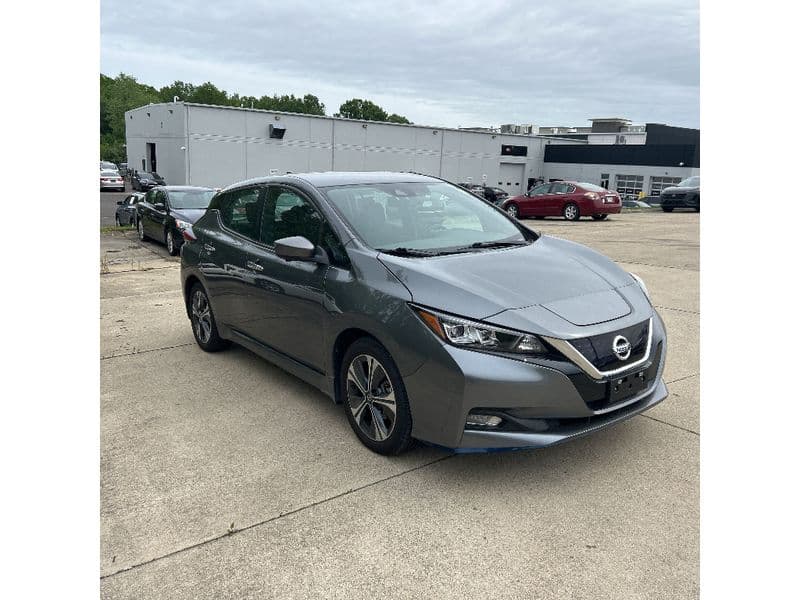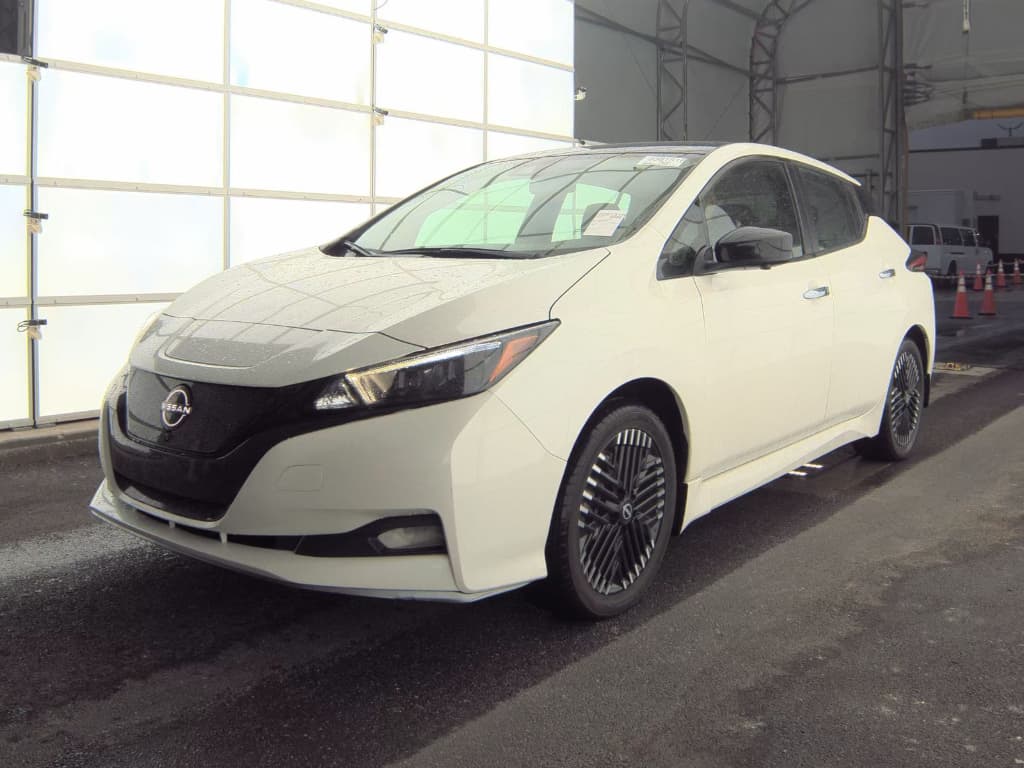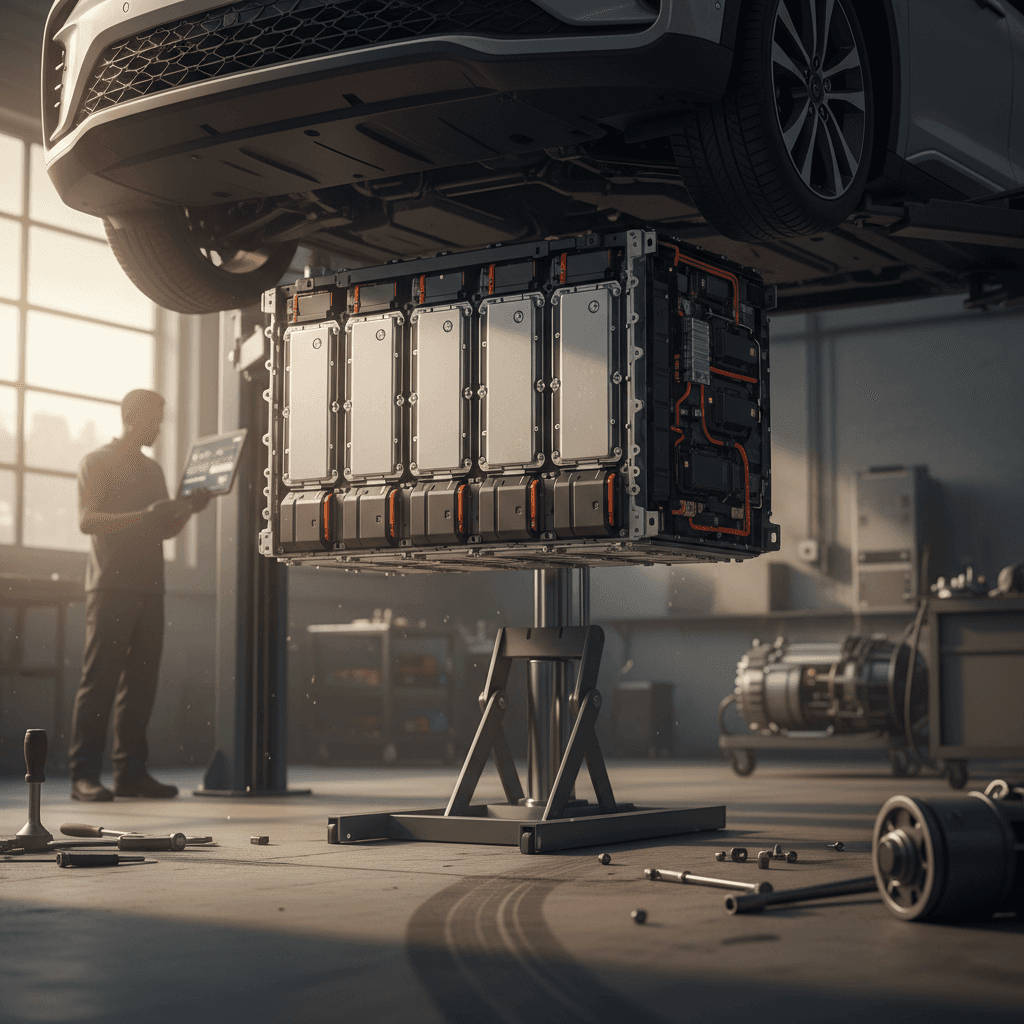
If you’re shopping for an EV, or eyeing a used one, the question eventually lands with a thud: how much does it cost to replace electric car batteries? You’ve heard horror stories about $20,000 packs and cars totaled by a dead battery. The truth, as usual, is more nuanced: most owners will never pay for a pack, but if you do, the bill can be the single biggest repair you’ll ever see on a car.
Big picture
EV battery replacement cost in 2025: the short answer
Typical 2025 EV battery replacement cost ranges
In 2025, if your EV battery fails outside warranty, the out-of-pocket replacement cost for the main traction pack typically runs: - Around $3,000–$8,000 for smaller, compact EVs (Leaf, Bolt, older compliance cars) - About $8,000–$12,000 for mainstream crossovers and sedans - Roughly $12,000–$20,000+ for large luxury EVs and high-performance packs Those numbers include both the pack and labor. Tesla-specific quotes cluster around $12,000–$16,000 for Model 3/Y and up to $20,000+ for Model S/X. For context, that’s roughly the cost of a decent used compact car.
Sticker shock vs reality
What actually drives electric car battery replacement costs?
Why does one EV battery cost $4,000 to replace and another $18,000? Underneath, it’s a simple equation: kilowatt-hours, chemistry, and complexity.
The big levers behind EV battery replacement cost
Think in kWh, not just “a battery is a battery.”
1. Battery size (kWh)
The pack is priced largely by energy capacity. A 30–40 kWh pack in a first‑gen Nissan Leaf is fundamentally cheaper than a 100+ kWh pack in a luxury sedan. Multiply pack size by current $/kWh, add markup and labor.
2. Chemistry & design
Older packs may use earlier chemistries with more expensive cells or less modular designs. Newer packs with LFP (lithium iron phosphate) can be cheaper per kWh, but design and supply chains still affect pricing.
3. Labor, access & tooling
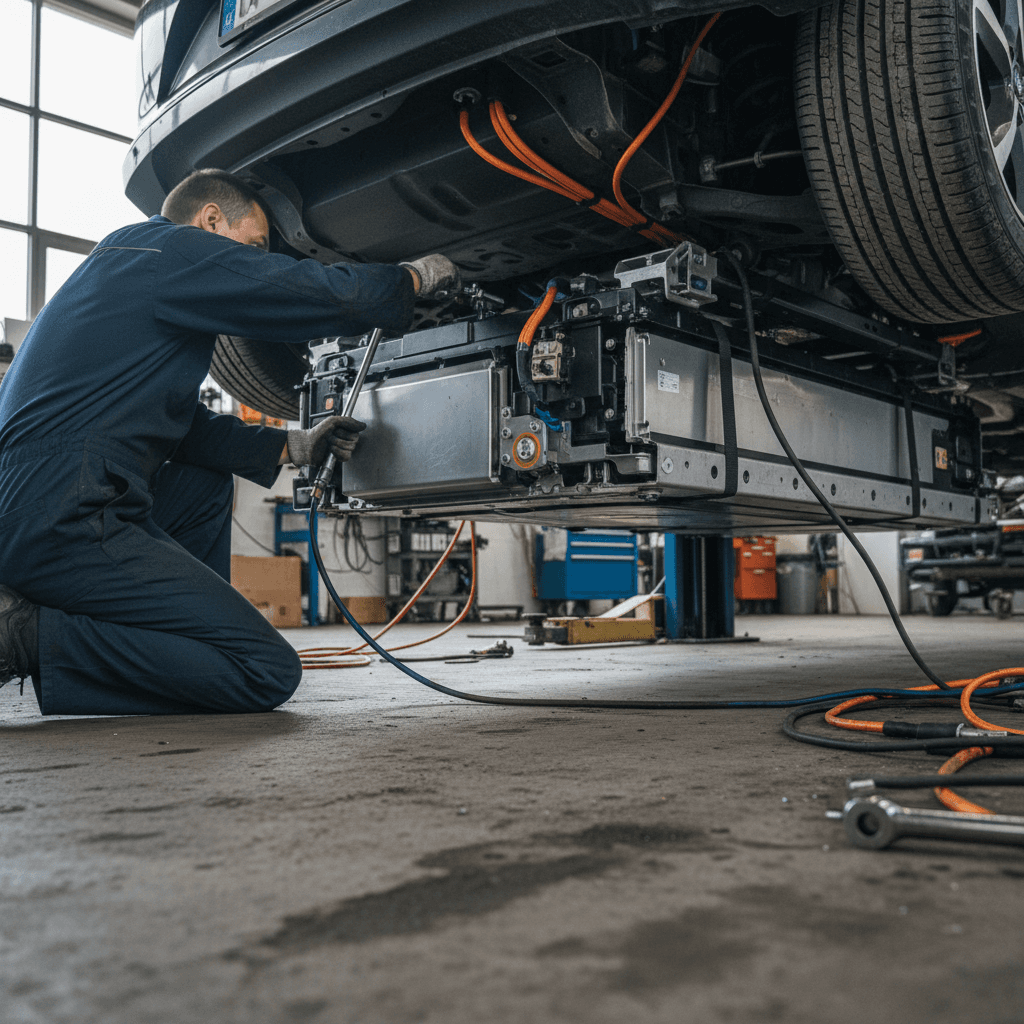
On some EVs the pack drops in a couple of hours. Others require complex disassembly, special high-voltage safety procedures, and brand-specific tools. Labor alone can add several thousand dollars.
OEM vs. independent shop
Getting a brand-new pack from the manufacturer is usually the most expensive route, but you’re paying for factory-new parts, matching software, and a fresh warranty. Independent EV specialists may offer rebuilt or salvaged packs at substantial discounts, sometimes 30–50% cheaper, but with shorter or shop-backed warranties.
Location and timing
Battery replacement quotes vary by region, technician availability, and timing. Supply constraints, shipping costs, and local labor rates can move the number thousands of dollars in either direction. A quote in California may look very different from one in the Midwest, even for the same car.
Follow the kWh
EV battery replacement cost by vehicle type and size
Approximate 2025 EV battery replacement costs by segment
Very broad ranges for out-of-warranty pack replacements in the U.S. Actual quotes depend on brand, parts availability, and whether you choose OEM, refurbished, or salvage.
| EV Type | Typical Pack Size | Approx. Replacement Cost (Pack + Labor) | Examples |
|---|---|---|---|
| Compact EV | 30–60 kWh | $3,000–$8,000 | Nissan Leaf, Chevy Bolt, BMW i3 |
| Mainstream crossover/sedan | 60–80 kWh | $8,000–$12,000 | Hyundai Kona Electric, Kia Niro EV, VW ID.4, Mustang Mach-E |
| Large SUV / luxury sedan | 90–130 kWh | $12,000–$20,000+ | Tesla Model S/X, Mercedes EQE/EQS, Lucid Air |
| Performance / specialty | 100 kWh+ | $15,000–$25,000+ | High-performance trims, early low-volume EVs |
Use this as a directional guide, not a repair quote.
High-voltage reality check
How much does it cost to replace a Tesla battery?
Tesla is the EV conversation’s main character, so let’s talk numbers. In 2025, real‑world Tesla battery replacement quotes generally fall into these bands for out‑of‑warranty work:
- Model 3 / Model Y: About $12,000–$16,000 for a full pack replacement through Tesla service, parts and labor included. Some owners report quotes as low as the low‑$13k range for Long Range packs, and higher for Performance trims.
- Model S / Model X: Typically $17,000–$22,000+, especially for larger 90–100+ kWh packs in older Model S and all Model X. Third‑party rebuilders sometimes undercut OEM pricing by several thousand dollars.
- Module-level repairs: In some failures, a single module or component can be replaced or reconditioned, dropping the cost into the low thousands instead of a full-pack price. This is more common at independent EV shops than at Tesla service centers.
Early Teslas aging in
Warranties & reality: how often do EV batteries really fail?
Here’s the part that rarely makes social media: most EV owners will never buy a new traction battery. That’s by design. Automakers know the battery is the beating heart of the car, so they wrap it in surprisingly generous warranty coverage.
Typical EV battery warranty terms in the U.S.
Check your specific owner’s manual, but this is the pattern.
Time & mileage
Many EVs carry 8-year / 100,000‑mile battery warranties, sometimes more on premium models. Coverage usually applies to the original owner and often transfers to subsequent owners.
Capacity guarantee
Some brands promise the battery will retain about 70% of its original capacity over the warranty period. Drop below that threshold, and you may qualify for repair or replacement under warranty.
Failure vs. wear
Warranties typically cover defects and abnormal degradation, not normal long‑term wear. Losing a few percent of range over years is expected and not considered a failure.
Real‑world data from fleets and battery‑health analytics firms show that modern EV packs are holding up well. Catastrophic failures are rare; slow, predictable capacity loss is the norm. Climate, frequent DC fast charging, and regularly charging to 100% can accelerate wear, but even then, many packs are on track for 10–15 years of usable life or more.
Good news for used EV shoppers
Repair vs. replace: modules, refurbished packs, and salvage options
The phrase “battery replacement” makes it sound binary: the pack lives or dies, and you either write a five‑figure check or scrap the car. In practice, you have multiple rungs on the ladder before a brand‑new pack from the manufacturer.
Common alternatives to a full new pack
1. Software diagnostics and safety checks
First step is a proper diagnosis: scan for fault codes, run isolation tests, and confirm whether the problem is one module, the BMS (battery management system), the contactors, or the whole pack.
2. Module replacement or repair
On modular packs, a single failing module can sometimes be replaced with a matched unit. This can pull a quote down from $15,000 to something in the low‑to‑mid thousands, especially on older, simpler packs.
3. Refurbished or remanufactured pack
Independent EV shops and some OEM programs offer refurbished packs, repaired, rebalanced, and tested, with shorter warranties. Expect substantial savings versus a brand‑new pack, at the cost of some long‑term reassurance.
4. Salvage-yard pack swap
In some cases, a low‑mileage pack from a wrecked EV can be transplanted into your car. It’s often the cheapest route, but history, remaining life, and warranty support are big question marks.
Do the math, not just the miles
How battery health affects used EV prices (and your risk)
Battery health is to a used EV what engine compression is to a used sports car. It’s the underlying truth. Two identical EVs on the lot, same year, trim, even color, can have dramatically different real‑world value if one has 95% battery health and the other is sitting at 75%.
Range is the new odometer
A healthy pack means the car can still deliver close to its original range, which translates directly into real‑world usability. Lose 20–30% of capacity and suddenly your 250‑mile crossover behaves like a 170‑mile city car. That’s fine for some drivers, a deal‑breaker for others.
Pricing follows battery health
Smart used‑EV buyers are already pricing cars not just by miles and model year, but by verified battery health reports. A car with documented 90%+ state of health can justify a higher price, and gives you confidence you’re unlikely to face a giant battery bill soon.
Where Recharged fits in
Budgeting and financing an EV battery replacement
Suppose you do end up on the wrong side of the odds and need a pack. It’s a gut punch, but not necessarily a financial death sentence. The key is to treat the battery like any other major automotive expense: plan, compare, and finance intelligently.
- Get multiple quotes: Talk to the dealer and at least one independent EV specialist. Ask for separate line items for diagnostics, labor, and the pack itself.
- Ask about partial repairs: Clarify whether a module‑level repair, refurbished pack, or salvage option is feasible for your particular model.
- Check warranty and goodwill coverage: Even if you’re just out of warranty, some OEMs quietly offer goodwill assistance on big‑ticket failures, especially with a solid service history.
- Consider financing or personal loans: Spreading a $10,000 repair over time may make more sense than throwing good money after bad into an aging gas car. If you’re on the fence between repair and replacement, compare the monthly payment on a repair vs. a newer used EV.
Or skip the repair entirely
Ready to find your next EV?
Browse VehiclesHow to avoid a surprise $20,000 battery bill
You can’t control every electron in a lithium‑ion pack, but you can stack the deck heavily in your favor. Think of it as routine care and smart shopping rather than superstition.
Practical ways to protect yourself
1. Buy with verified battery data
When shopping used, insist on a <strong>professional battery health report</strong>, not just a full‑charge test drive. Tools like the Recharged Score give you an objective look at pack health before you sign anything.
2. Understand the remaining warranty
Look at the in‑service date, mileage, and your state’s specific EV warranty rules. An EV with three years of battery coverage left is a very different proposition than one that aged out last month.
3. Charge gently most of the time
Use DC fast charging when you need it, not as a daily habit. At home, living between roughly 20–80% state of charge, especially in hot climates, is generally easier on the pack than hammering 0–100% cycles.
4. Watch for warning signs early
Sudden drops in range, repeated error messages, or unusual charging behavior are your cue to schedule a diagnostic visit. Catching a failing module early can mean a smaller repair instead of a full pack.
5. Be realistic about range needs
If your commute is 40 miles round‑trip, a car that’s lost 20% of its original range may be a non‑issue. Buy the car that fits your actual life, not the road‑trip fantasy in your head.
FAQ: electric car battery replacement costs
Frequently asked questions about EV battery replacement costs
Bottom line: should battery costs scare you away from EVs?
EV battery packs are expensive, full stop. Replacing one is more like rebuilding the engine and fuel system of a gas car in a single shot than swapping a 12‑volt battery at a big‑box store. But in day‑to‑day ownership, that worst‑case scenario is just that: rare, and often covered by warranty when it does happen.
If you buy smart, favoring cars with strong battery warranties and verified battery health, the specter of a $15,000 pack shouldn’t keep you out of an EV. And if you’d rather not navigate that alone, Recharged exists for exactly this reason: to put transparent battery health data, fair pricing, and EV‑specialist support between you and the world’s scariest repair bill.