If you’re trying to figure out how long it takes to charge a Nissan Leaf, the honest answer is: it depends. Battery size, model year, the type of charger you use, and even the weather all play a role. The good news is that once you understand a few basics, you can predict your Leaf’s charging time pretty accurately and build a routine that just works.
Quick answer
Nissan Leaf charging time at a glance
Typical Nissan Leaf charging times (modern 40–62 kWh packs)
Those numbers are ballpark figures, but they’re close to what Nissan, dealers, and independent tests report for recent Leafs with 40 kWh and 62 kWh packs. Older 24 and 30 kWh cars take less absolute time because the battery is smaller, but their onboard chargers can be slower, so the gap isn’t as big as you might think.
What affects how long it takes to charge a Leaf?
Charging time is ultimately just battery size divided by charging power, with a few real-world wrinkles layered on top. For your Nissan Leaf, six factors matter most:
- Battery size – Leafs have come with 24, 30, 40, and 62 kWh batteries. Bigger packs take longer to fill but also go farther.
- Onboard charger rating – Older Leafs can have a 3.3 kW AC charger; newer ones typically have 6.6 kW. A larger onboard charger can take better advantage of a strong Level 2 station.
- Charging level – Level 1 (120V), Level 2 (240V), and DC fast charging (CHAdeMO) all deliver very different power levels.
- State of charge (SoC) window – Charging from 10% to 80% is much faster than 0% to 100%. Fast chargers in particular slow down sharply after ~80%.
- Battery temperature – The Leaf’s pack is air‑cooled. A very cold or very hot pack will charge more slowly and may limit DC fast‑charge speed.
- Battery health (degradation) – A worn 24 kWh pack might actually reach “100%” sooner because its usable capacity has shrunk, but that also means less real‑world range.
Rule-of-thumb for planning
Level 1 charging: How long on a regular outlet?
Level 1 charging uses a standard 120V household outlet and the portable EVSE that comes with (or came with) the car. It’s slow but it gets the job done if your daily miles are low.
Approximate Level 1 Nissan Leaf charging times (120V, 12A)
Assumes a typical 1.3–1.4 kW draw and charging from roughly 10% to 100%.
| Battery size | Typical model years | 10–100% time | Miles of range added per hour* |
|---|---|---|---|
| 24 kWh | 2011–2015 | ~16–18 hours | 3–4 mi/hr |
| 30 kWh | 2016–2017 | ~18–20 hours | 3–4 mi/hr |
| 40 kWh | 2018–2025 (S/SV) | ~22–26 hours | 3–4 mi/hr |
| 62 kWh / 60 kWh | 2019–2024 Leaf Plus | ~28+ hours | 3–4 mi/hr |
Real-world times vary based on temperature, battery health, and exact amperage.
Safety first with Level 1
Level 1 works surprisingly well if you only drive 15–30 miles a day. Plug in every night and you’ll usually be back to full by morning. But if you routinely drain half or more of the battery, or you share the car, it’s time to look at Level 2.
Level 2 charging: Realistic home and public times
Level 2 charging uses a 240V circuit, like an electric dryer or stove. This is what most public “destination” chargers provide, and what most Leaf owners install at home. It’s the sweet spot for daily living: fast enough, not brutally hard on the battery, and much cheaper than DC fast charging.
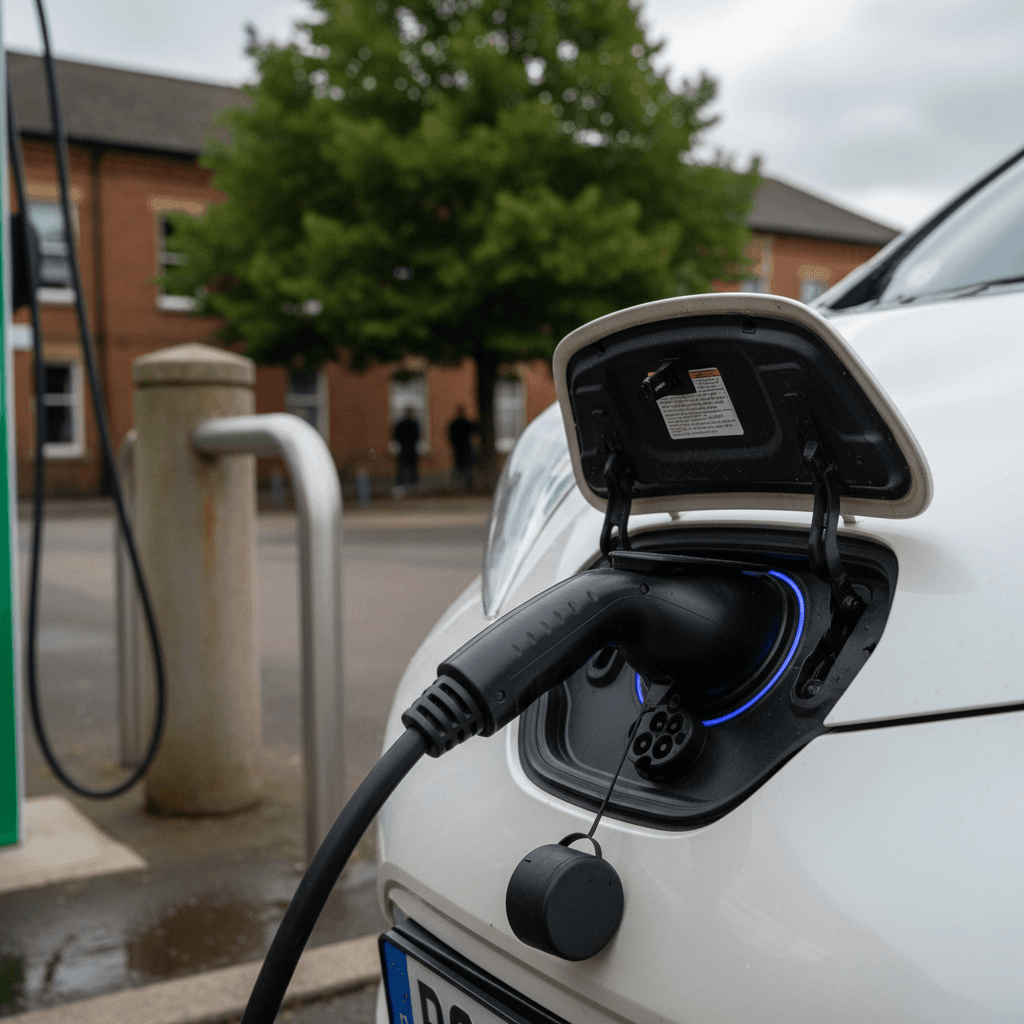
Approximate Level 2 charging times for Nissan Leaf
Assumes 240V, 30–32A (around 7.2 kW), and an onboard charger that can use it. Some older Leafs with 3.3 kW chargers will take roughly twice as long.
| Battery size | Leaf models | Onboard charger | 10–100% time | Typical mi/hr added |
|---|---|---|---|---|
| 24 kWh | 2011–2015 | 3.3–3.6 kW | ~7–8 hours | 10–12 mi/hr |
| 30 kWh | 2016–2017 | 3.3 or 6.6 kW | ~6–8 hours | 12–20 mi/hr |
| 40 kWh | 2018–2025 S/ SV | 6.6–7.2 kW | ~7–8 hours | 22–30 mi/hr |
| 60–62 kWh | 2019–2024 Leaf Plus | 6.6–7.2 kW | ~10–11 hours | 22–30 mi/hr |
Times are from about 10% to 100% under mild temperatures.
Real-life overnight pattern
If you’re buying a used Leaf, pay attention to whether it has the larger 6.6 kW onboard charger. Some early S trims came with a slower 3.3 kW unit unless you ticked the right option package, which can make home Level 2 feel more like 1.5 than 2.0.
DC fast charging: How quickly can a Leaf charge?
Every Nissan Leaf that supports DC fast charging uses the CHAdeMO standard. On paper, newer Leaf Plus models can accept up to around 100 kW, but in the real world most Leafs will spend a lot of time closer to 30–50 kW, and they’ll taper off as the battery fills or heats up.
Typical DC fast-charge experience in a Nissan Leaf
What to expect when you plug into CHAdeMO on a road trip
Fast from low state of charge
The sweet spot is usually 10–60%. In this window, a healthy Leaf can pull close to its rated fast‑charge power.
Taper toward 80%
Around 60–80%, charge power drops. Going from 80% to 100% can take as long as 10–80% did, so most drivers unplug around 80%.
Heat matters
Because the Leaf’s pack is air‑cooled, back‑to‑back fast charges can overheat it and slow charging, this is the well‑known “rapidgate” behavior on some Gen 2 cars.
Approximate Nissan Leaf DC fast charging times (CHAdeMO)
Realistic estimates for a single fast‑charge session on a warm but not overheated battery.
| Battery size | Typical Leaf models | Power seen in practice | 10–80% time |
|---|---|---|---|
| 24 kWh | 2011–2015 | 20–40 kW | ~20–30 minutes |
| 30 kWh | 2016–2017 | 30–45 kW | ~25–35 minutes |
| 40 kWh | 2018–2025 S / SV | 30–50 kW | ~40–45 minutes |
| 62 / 60 kWh | 2019–2024 Leaf Plus | 40–70 kW (peaks) | ~40–60 minutes |
Most drivers stop around 80% to save time and protect battery health.
Don’t live on fast charging
Charging times by battery size and generation
If you’re comparing different Leafs, or shopping used, it helps to see how charging times change across generations. Here’s a simplified view you can use as a sanity check when a seller or dealer gives you numbers that sound… optimistic.
1st‑gen Leaf (2011–2017)
- 24 kWh, then 30 kWh battery options.
- Many early cars had a 3.3 kW onboard charger; some later trims got 6.6 kW.
- With Level 2 at home, expect 7–10 hours for a mostly full charge.
- DC fast charging tops out around 40–50 kW on a cool pack.
2nd‑gen Leaf (2018–present)
- 40 kWh standard; 62/60 kWh Leaf Plus for more range.
- Onboard AC charging effectively around 6.6–7.2 kW on most US cars.
- Level 2 from low to full: roughly 7–8 hours (40 kWh), 10–11 hours (62 kWh).
- Fast charge: about 40–60 minutes from low to 80% when the battery isn’t overheated.
Trim and options matter
How to choose the right home charging setup
“How long to charge a Nissan Leaf” is really another way of asking, “What kind of home charging do I need for my life?” Here’s how to match your setup to your driving patterns.
Home charging decisions for Nissan Leaf owners
1. Estimate your daily miles
Look at a normal week, not your biggest road trip. If you usually drive under 30 miles a day, Level 1 might be enough. Over 40–50 miles a day, you’ll be happier with Level 2.
2. Check your Leaf’s onboard charger
Dig into the window sticker, owner’s manual, or online forums to confirm whether your Leaf has a 3.3 kW or 6.6 kW charger. There’s no point installing a 48‑amp home unit if the car can only drink at 16 amps.
3. Evaluate your electrical panel
Have an electrician confirm whether you have room for a new 240V circuit and what amperage it can safely support. A 40‑amp circuit (32A charger) is a great sweet spot for most Leafs.
4. Decide between hardwired vs. plug‑in
Hardwired wall units look clean and are great for permanent installs. Plug‑in Level 2 chargers (NEMA 14‑50, for example) add flexibility if you might move soon or want to take the charger with you.
5. Think about where you park
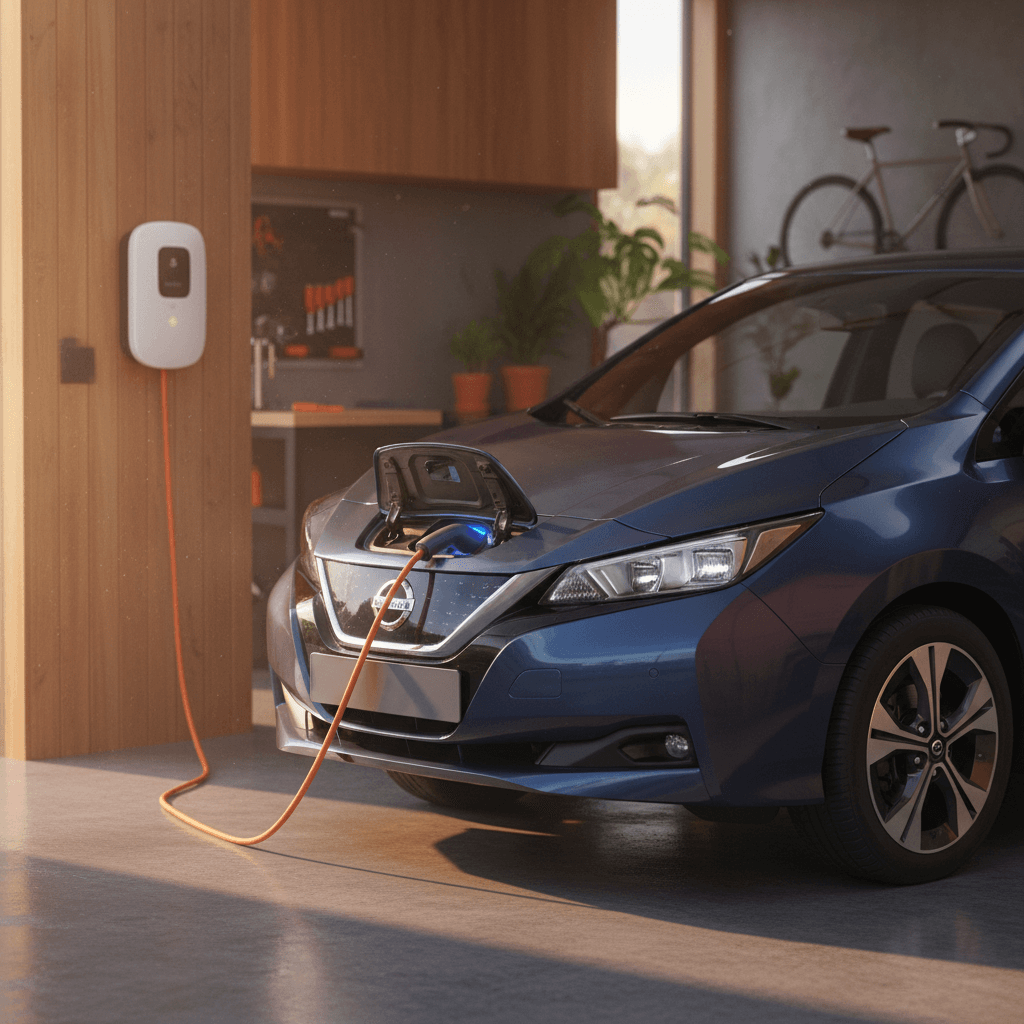
Measure cable runs and consider where the charge port sits on the Leaf’s nose. A charger mounted too far away or behind the car can make daily use annoying.
6. Factor in future EVs
If you may add a second EV later, it can be worth installing a slightly heavier‑duty circuit now. The Leaf won’t use all of it, but your next EV might.
Where Recharged fits in
Ready to find your next EV?
Browse VehiclesTips to charge your Nissan Leaf faster and smarter
You can’t cheat physics, but you can nudge things in your favor. These habits won’t magically turn a Leaf into a Tesla Supercharger monster, but they’ll make your everyday charging feel smoother and sometimes noticeably faster.
Practical tips to optimize Leaf charging time
Small changes that add up over months and years of ownership
Top up more, deep‑charge less
Instead of swinging between 5% and 100%, try to live between 30–80%. It’s easier on the battery and makes Level 2 sessions shorter and more predictable.
Use charge scheduling
Newer Leafs let you schedule charging. Set a window overnight so the car finishes close to your departure time, great for off‑peak electricity rates and a warm battery on cold mornings.
Precondition in extreme weather
In very cold weather, preheating the cabin while plugged in spares your battery and can slightly improve charge behavior by warming the pack and electronics.
Prioritize home Level 2
Use DC fast charging for trips and emergencies, not as your daily gas station. Home Level 2 is cheaper, gentler on the pack, and more convenient than hunting for CHAdeMO every other day.
Plan fast‑charge stops around 10–60%
On road trips, it’s usually quicker overall to charge more often but only to 60–80%, rather than sitting through the slow last 20% at every stop.
Track real speeds
Apps like LeafSpy and many public charging networks will show you real‑time kW. Watching those numbers for a few sessions will teach you exactly how your Leaf behaves.
Charging-time considerations for used Nissan Leafs
Used Leafs are some of the most affordable EVs on the market, but their charging behavior can vary more than you’d expect from the badge on the hatch. When you’re test‑driving or shopping online, here’s how to think about charging time specifically.
What to ask about charging when buying a used Leaf
Confirm battery size and remaining capacity
Is it a 24, 30, 40, or 62 kWh pack, and what’s the State of Health (SoH)? A tired 24 kWh Leaf might charge to “100%” quickly but deliver disappointingly short range.
Verify fast‑charge hardware
Make sure the CHAdeMO port is actually present on the car and that the seller isn’t just assuming it has fast charging. Some early S models lacked it entirely.
Ask about charging history
A car that mostly lived on home Level 2 will generally have a happier battery than one that fast‑charged daily on a hot commute. It’s not an automatic dealbreaker, but it should inform price and expectations.
Test a real charging session
If possible, plug into a public Level 2 or CHAdeMO station during your test drive. Watch the kW numbers and the estimated time to full. Do they line up with what you’d expect for that battery size?
Consider your home situation
If you’ll be stuck on Level 1 for a while, an older 24 kWh Leaf with short range and long charge times may feel cramped. A 40 kWh car with Level 2 at home can feel almost invisible to live with.
Use expert tools
At Recharged, every used Leaf listing includes a <strong>Recharged Score Report</strong> with verified battery health and context for charging time. That’s the difference between guessing and knowing what you’re buying.
FAQ: How long to charge a Nissan Leaf
Frequently asked questions about Nissan Leaf charging times
Bottom line: Is Nissan Leaf charging time right for you?
When you zoom out, how long it takes to charge a Nissan Leaf comes down to your routine more than the spec sheet. With a solid Level 2 charger at home or work, most drivers simply plug in, walk away, and wake up to a car that’s ready to go, whether it’s a 2013 24 kWh commuter or a 2024 Leaf Plus road‑trip sidekick.
If you’re shopping used, pay attention to battery size, health, and charging hardware, then be honest about your daily miles and home setup. Get those pieces right, and charging time stops being a math problem and becomes just another quiet part of owning an EV.
Recharged was built to make that decision easier. Every used Leaf we list comes with a Recharged Score battery health report, fair pricing, and EV‑savvy guidance on what charging will look like in your actual driveway, not in a brochure. When you’re ready, you can browse, finance, trade in, and schedule delivery completely online, then plug in with confidence.