If you’re driving, or shopping for, a Mercedes EQB, your first practical question is usually simple: how long does it take to charge? The answer depends on where you plug in, from a slow household outlet to a 100 kW DC fast charger, but once you understand the basics, planning your day or a road trip gets a lot easier.
Quick context
Mercedes EQB charging time at a glance
Typical Mercedes EQB charge times (recent model years)
- Level 1 (120V, wall outlet): Overnight top-ups if you barely drive, or emergency use.
- Level 2 (240V, home or public): The workhorse for daily charging, plug in at night, wake up full.
- DC fast charging (100 kW max): Your road-trip tool for quick 10–80% sessions.
EQB battery and charging basics
Before you can estimate how long it takes to charge a Mercedes EQB, you need a 30‑second tour of what’s under the floor. Recent U.S. EQB models (including 2024–2025 EQB 250+, 300, and 350) use a lithium‑ion battery pack with about 70 kWh of usable capacity, give or take a few kilowatt‑hours depending on year and trim. That’s the energy your charger has to replace when you plug in.
Key Mercedes EQB charging specs
These numbers are what your wall outlet or charger is working with
Battery capacity
~70 kWh usable on most recent EQB trims. Earlier models are in the mid‑60 kWh range usable, but real‑world charge times are in the same ballpark.
AC charging (home & public)
Up to 9.6–11 kW AC with the onboard charger when connected to a 240V Level 2 source. This is your baseline for overnight charging.
DC fast charging
Up to 100 kW peak DC fast‑charge power, typically used from 10–80% for the best blend of speed and battery health.
Rule of thumb for EQB drivers
How long to charge a Mercedes EQB at home
Level 1: 120V household outlet (slow but simple)
Plugging your Mercedes EQB into a standard 120V household outlet (Level 1) is like filling a swimming pool with a garden hose. It works, but you need patience. Owners typically see about 3–5 miles of range per hour and very long full‑charge times.
Approximate Mercedes EQB Level 1 charging times
Using a standard 120V outlet and the factory portable cord, assuming a roughly 70 kWh usable pack.
| Start state of charge | End state of charge | Energy added (approx.) | Estimated time |
|---|---|---|---|
| 10% | 80% | ~49 kWh | ~33–47 hours |
| 20% | 80% | ~42 kWh | ~28–40 hours |
| 50% | 90% | ~28 kWh | ~18–25 hours |
Use Level 1 as a backup; it’s not practical for frequent deep charges on an EQB.
When Level 1 is OK, and when it’s not
Level 2: 240V home or workplace charging (the sweet spot)
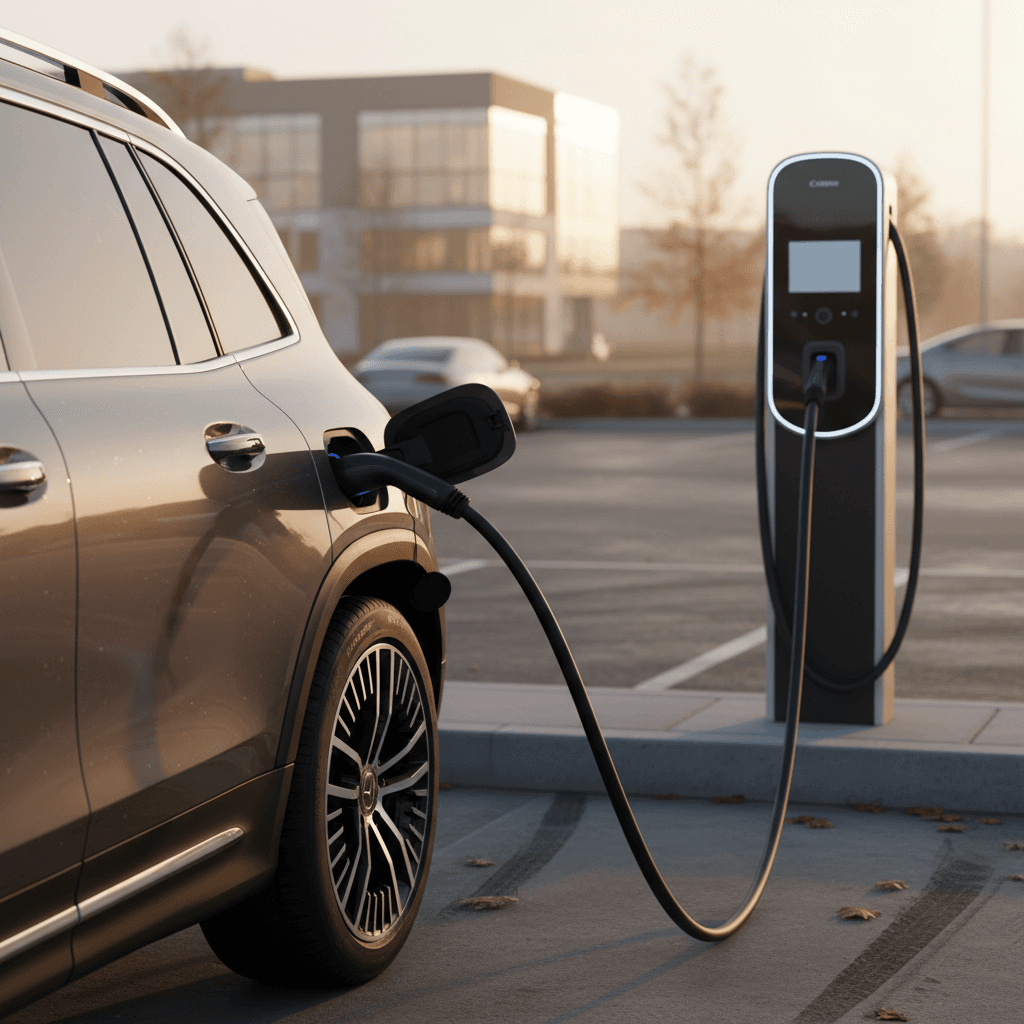
Level 2 charging is where the Mercedes EQB feels like a normal car again. On a 240V circuit with a properly sized wallbox or portable EVSE, you’re using the EQB’s ~9.6–11 kW onboard charger. In plain English, that means roughly 7–8 hours to go from about 10% to full, and much less time if you’re topping up nightly.
Mercedes EQB Level 2 charging times by circuit
Estimates assume recent EQB models and a healthy battery; older years are similar.
| Circuit / charger | Approx. kW | Typical use | 10–100% time |
|---|---|---|---|
| 240V / 16A (3.8 kW) | ~3.8 kW | Shared dryer circuit or basic portable EVSE | ~18–20 hours |
| 240V / 32A (7.7 kW) | ~7.7 kW | Typical wallbox on 40A breaker | ~9–10 hours |
| 240V / 40A (9.6 kW) | ~9.6 kW | Higher‑output home charger, fully using EQB’s onboard capacity | ~7–8 hours |
Real‑world numbers will vary slightly by temperature, losses, and how far you charge.
What most EQB owners do
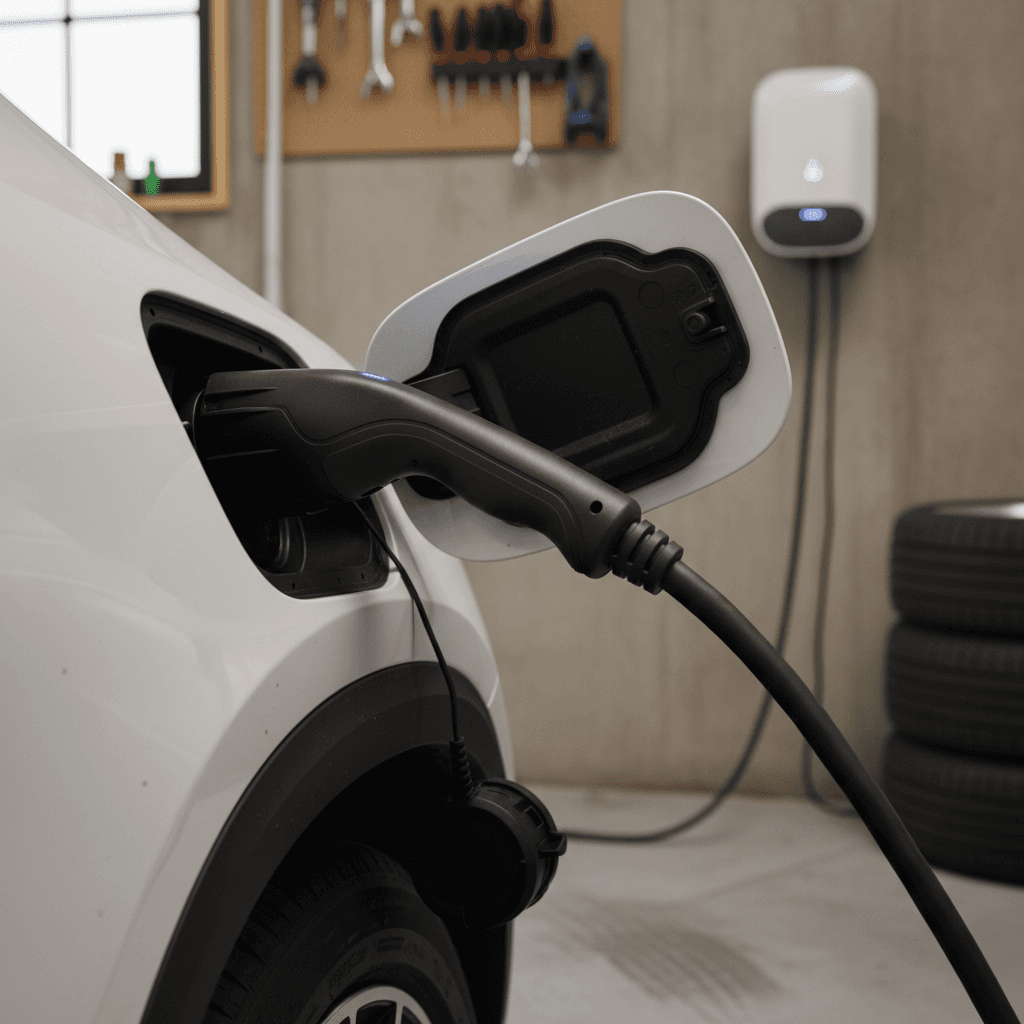
How long to DC fast charge a Mercedes EQB
On a road trip, the Mercedes EQB’s DC fast‑charging behavior matters more than its home charging. On paper, the EQB supports up to 100 kW DC fast charging. In real life, when you arrive with a warm battery at a competent station, you’re looking at around 30–35 minutes to go from 10–80%.
Mercedes EQB typical DC fast charging times
Assuming a healthy EQB pack on a capable 100 kW CCS or NACS adapter‑equipped station, moderate weather, and a warm battery.
| Start state of charge | End state of charge | Energy added (approx.) | Typical time |
|---|---|---|---|
| 10% | 80% | ~49 kWh | ~30–35 minutes |
| 20% | 80% | ~42 kWh | ~25–30 minutes |
| 10% | 60% | ~35 kWh | ~20–25 minutes |
| 10% | 100% | ~63 kWh | ~55–70 minutes (slows a lot after ~80%) |
Staying between roughly 10–80% usually gives the best blend of speed, convenience, and long‑term battery health.
Use the navigation for faster charging
When DC fast charging makes sense
- You’re on a road trip and need to add 100–150+ miles quickly.
- You can’t install home charging and rely on public infrastructure.
- Weather or schedule demands a fast turnaround.
When to stick with Level 2
- Daily commuting where you can charge calmly overnight.
- Maximizing battery longevity by avoiding frequent 0–100% fast charges.
- Saving money with lower home electricity rates vs. public DC pricing.
Real-world factors that change your EQB charge time
Manufacturer specs are tidy; real life is not. Two EQB drivers can plug into identical chargers and see different times. Understanding why helps you decide whether a slow session is “normal finicky German engineering” or something worth troubleshooting.
What really changes your Mercedes EQB charging time
Same car, same charger, different results, here’s why
Battery temperature
Cold batteries charge slowly. If you drive gently for only a few minutes, arrive at a fast charger in freezing weather, and plug in immediately, don’t expect 100 kW. Preconditioning via navigation helps, as does finishing a longer highway stint before charging.
State of charge (SoC)
EVs charge fastest when the battery is lower. Your EQB will ramp up near its peak in the 10–40% window, then gradually taper as you approach 80% and beyond. That’s why 10–80% is the standard road‑trip metric.
Charger quality & load
A “350 kW” station isn’t a promise. Older hardware, shared power cabinets, or thermal limits can cap real output. If your EQB refuses to go past ~50–70 kW at multiple sites, try another brand or location to separate car issues from station problems.
Watch for software limits and recalls
Planning road trips in a Mercedes EQB
The EQB is not a 300‑plus‑mile road‑trip monster, but it can be a perfectly workable family hauler if you plan realistically. Depending on trim, recent models are EPA‑rated from about 205 to 251 miles of range, with the front‑drive EQB 250+ going farthest. In real highway driving, plan around 150–200 miles between fast‑charge stops, especially in winter or at higher speeds.
EQB road-trip charging game plan
1. Plan legs around 10–20% arrival
Aim to roll into chargers around <strong>10–20% charge</strong>. That sets you up for the fastest part of the EQB’s curve and keeps your stops efficient.
2. Charge only to 60–80% most of the time
On a long day, it’s usually quicker overall to <strong>stop more often for shorter 10–80% bursts</strong> than to sit forever waiting for 90–100%.
3. Use multiple networks, including Tesla
With the right adapter and account setup, newer EQBs can use <strong>Tesla Superchargers</strong> plus CCS networks like Electrify America. More options mean shorter detours and better odds of a strong working station.
4. Add a buffer for weather and traffic
Cold, headwinds, heavy cargo, and high speeds all eat range. Build in a 10–20% buffer so you’re not white‑knuckling it to each charger.
5. Pair stops with real breaks
Think of that 25–30 minute 10–80% DC session as your <strong>bathroom, snack, and stretch</strong> stop. The road trip feels calmer when the car and your body run on the same schedule.
Let the car do some of the work
Charging tips if you’re shopping for a used EQB
If you’re looking at a used Mercedes EQB, especially a 300 or 350 that’s already seen a few winters and DC fast‑charge sessions, it’s smart to think beyond leather and wheel size. Charging behavior and battery health will define your ownership experience just as much as the window sticker did on day one.
Used Mercedes EQB: charging questions to ask
These checks help you avoid surprises after you’ve signed the paperwork
1. Has the battery been tested?
Ask for verifiable battery health data, not just “it seems fine.” At Recharged, every used EV includes a Recharged Score report that measures real battery capacity, past fast‑charging behavior, and how that compares to similar vehicles.
2. What charge times does the seller actually see?
Have the current owner or dealer describe a recent DC fast‑charge session, state of charge in, state of charge out, and time. If it takes an hour to get from 10–70% on multiple modern stations, you might be looking at a charger or battery issue.
3. What’s the home-charging setup?
Do they use Level 1 only, or a proper Level 2? Inspect the 240V circuit and EVSE if possible. A clean, professionally installed Level 2 circuit is a green flag.
4. Any open recalls or software limits?
Verify that all recall work and software updates are current, especially any that affect charging limits or maximum state of charge. A Recharged‑inspected EQB will already have these issues addressed.
How Recharged makes EQB charging more predictable
Ready to find your next EV?
Browse VehiclesFAQ: Mercedes EQB charging times
Frequently asked questions about Mercedes EQB charging
Bottom line: How long does a Mercedes EQB take to charge?
Once you cut through the spec‑sheet clutter, the Mercedes EQB is straightforward to live with. Figure on about 7–8 hours to charge from low to full on a solid Level 2 home charger, about 30–35 minutes for a 10–80% DC fast‑charge stop on a good road‑trip station, and “only if you must” for Level 1 wall‑outlet charging.
Get your home charging sorted, learn how the EQB behaves on your local DC network, and its charging rhythm quickly becomes just another part of your routine. And if you’re considering a used Mercedes EQB, shopping with a marketplace like Recharged, where every vehicle includes verified battery health, fair pricing, and EV‑savvy support, means you know exactly how long your EQB will take to charge before you ever bring it home.