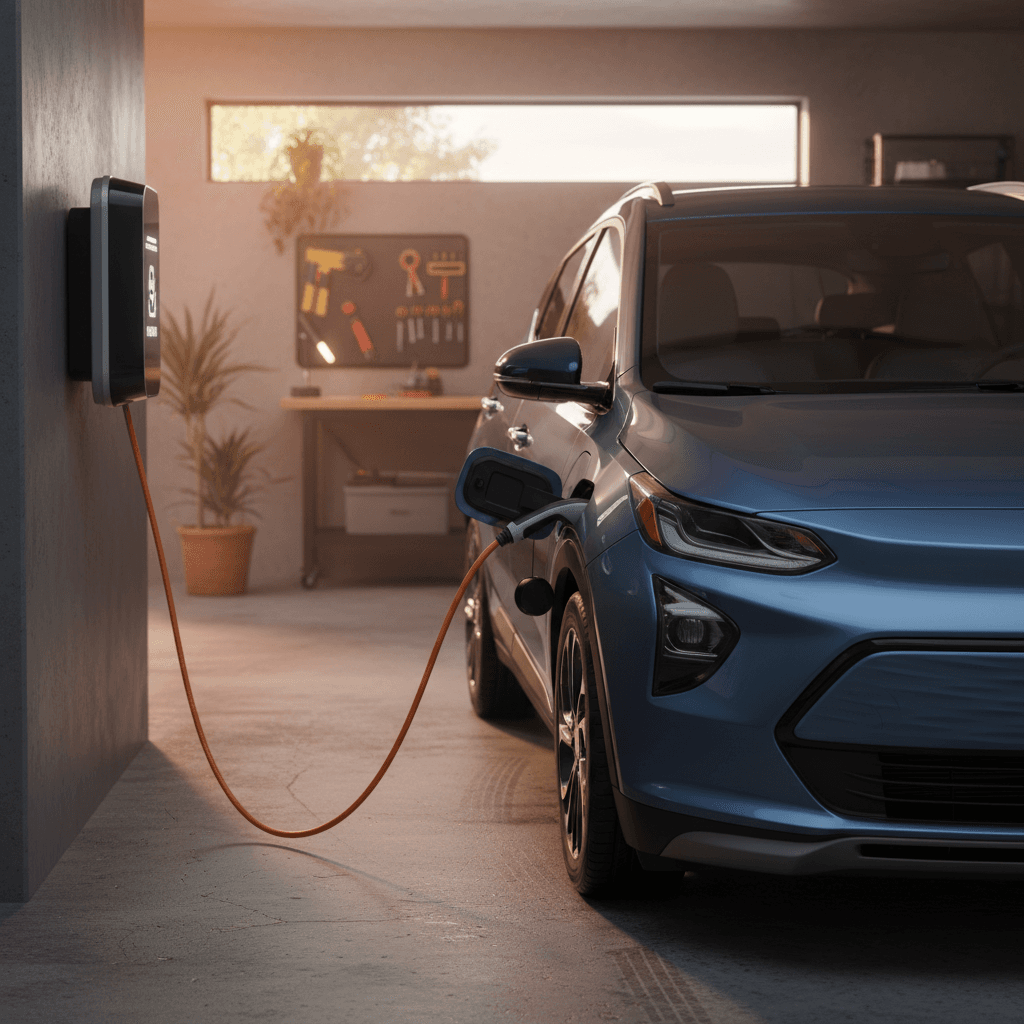
You don’t buy a Chevrolet Bolt EUV because it refuels like a gas car. You buy it because, for most people, it can quietly swallow a week’s worth of commuting on a single charge. Still, the first question every shopper asks is the same: how long does it take to charge a Chevrolet Bolt EUV in the real world?
Key spec in one line
Chevrolet Bolt EUV charging basics
- Battery size: about 65 kWh usable capacity on 2022–2023 Bolt EUV models
- Connector: CCS1 for DC fast charging, J1772 for Level 1 & Level 2 AC charging
- Max Level 2 AC rate: up to 11.5 kW with a 48-amp (60A circuit) charger
- Max DC fast-charging rate: roughly 55 kW peak in ideal conditions
- EPA range: up to around 247 miles on a full charge (trim and conditions depending)
Those numbers translate directly into time. Charging speed is power (kW); your battery is capacity (kWh). Divide one by the other and you get hours. The catch is that DC fast charging doesn’t stay at full speed the whole time, and real-world conditions rarely match the brochure. We’ll walk through what you can realistically expect on each type of charger.
Quick answer: How long to charge a Chevy Bolt EUV?
Typical Chevrolet Bolt EUV charging times
Think in “hours per week,” not “0–100%”
Level 1 charging: Standard 120V outlet
Level 1 charging uses a normal household outlet (120 volts) and the portable cord that came with the car. It’s the slowest way to charge a Bolt EUV, but it’s also the most universally available, every garage has at least one 120V receptacle somewhere.
Chevy Bolt EUV Level 1 charging times (typical)
Approximate times assume about 1.2–1.4 kW going into the battery (120V at 12 amps), mild temperatures, and a healthy battery.
| Scenario | Start → End charge | Energy added | Approx. time | Miles of range added* |
|---|---|---|---|---|
| Overnight top-up | 40% → 80% | ~26 kWh | 18–22 hours | ~95–115 miles |
| Workday trickle | 60% → 80% | ~13 kWh | 9–11 hours | ~45–55 miles |
| Empty to full (roughly) | 0% → 100% | ~65 kWh | 48–60 hours | ~230–250 miles |
Use Level 1 as a backup or for low-mileage lifestyles, not as your only fueling plan if you regularly drive long distances.
Outlet safety matters
If your daily driving is light, say, 20–30 miles a day, Level 1 can work surprisingly well. You might recover that energy with 10–12 hours plugged in each night. Where it breaks down is if you routinely arrive home nearly empty or need to turn around quickly for another long drive. That’s when Level 2 becomes less a luxury and more a requirement.
Level 2 charging: 240V home and workplace chargers
Level 2 charging is where the Chevrolet Bolt EUV feels like it was meant to live. Plugged into a 240‑volt circuit, similar to an electric dryer, the car can take advantage of its upgraded on‑board charger (up to 11.5 kW on 2022–2023 models) and refill the pack overnight with time to spare.
Common Level 2 setups for a Chevy Bolt EUV
From budget-friendly to max-speed home charging
Hardwired wall unit (48A)
Fastest home option most electricians will recommend.
- 60A breaker, 48A continuous charging
- Up to ~11.5 kW into the car
- 0–100% in roughly 6–7 hours in ideal conditions
NEMA 14-50 plug-in unit (32–40A)
The sweet spot for many households.
- 50A breaker, 32–40A charging
- About 7.5–9.6 kW
- 0–100% in ~7–9 hours
Workplace / public Level 2
Often 6.6–7.2 kW shared posts.
- Think 20–30 miles of range per hour
- Perfect for topping up during the workday
Approximate Chevy Bolt EUV Level 2 charging times
These are ballpark times for a healthy battery and moderate temperatures. Actual times vary with temperature, state of charge, and charger limits.
| Charger / circuit | Power into car | 0–100% time | 10–80% time | Miles added per hour* |
|---|---|---|---|---|
| 48A wall unit on 60A circuit | Up to ~11.5 kW | ~6–7 hours | ~4.5–5.5 hours | 30–35 mi/hr |
| 40A on 50A circuit | ~9.6 kW | ~7–8 hours | ~5–6 hours | 27–30 mi/hr |
| 32A on 40A circuit | ~7.7 kW | ~8–9 hours | ~6–7 hours | 22–26 mi/hr |
| Public 6.6–7.2 kW post | ~6.6–7.2 kW | ~9–10 hours | ~6.5–7.5 hours | 20–24 mi/hr |
You rarely need to charge 0–100%, aim for 20–80% or 20–90% for daily use.
Plan the install, not just the charger
Once you have Level 2, the charging question mostly disappears from your life. You plug in when you get home, tell the car to charge in off‑peak hours if your utility offers them, and walk out to a full, or full enough, battery in the morning. For a typical commuter, that’s maybe 2–4 hours of actual charging time each night, invisibly running while you sleep.
DC fast charging: Road trips and quick top-ups
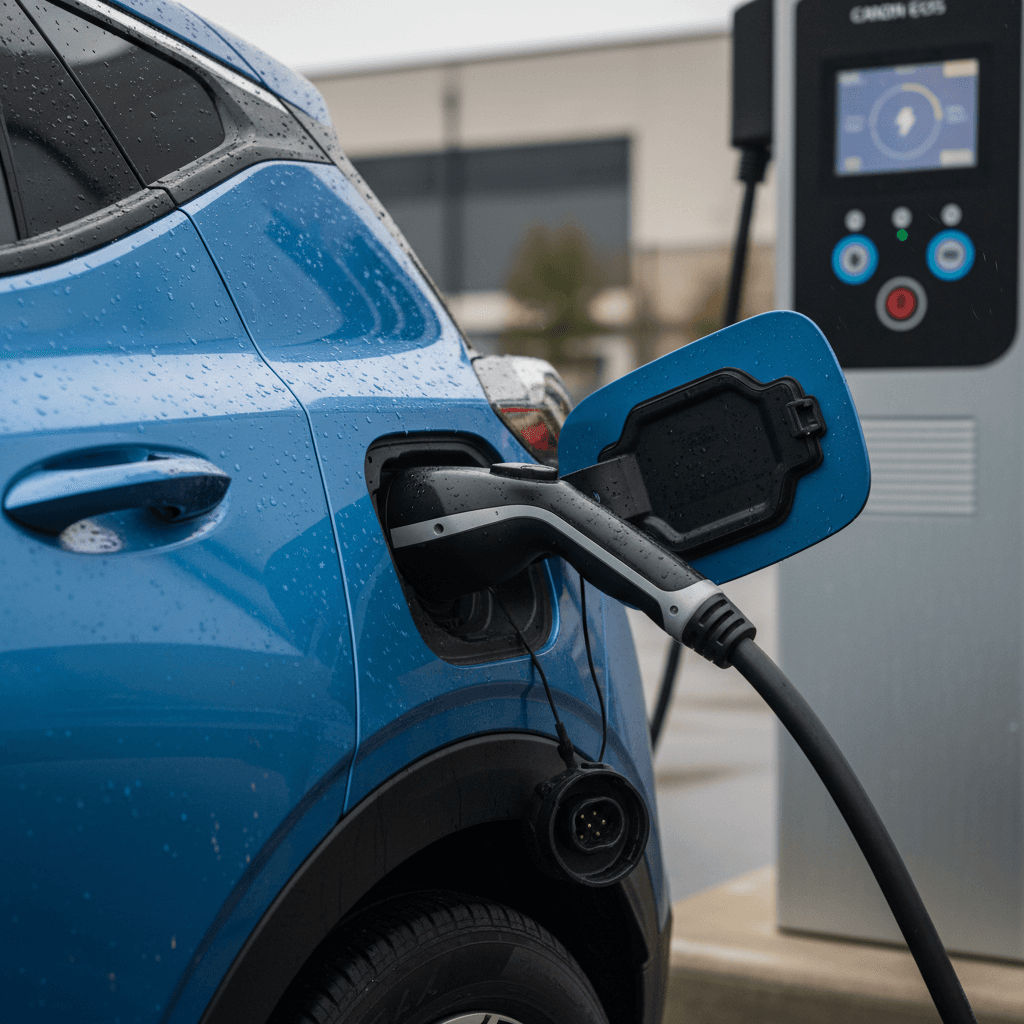
Here’s where expectations need recalibrating. The Chevrolet Bolt EUV is excellent at Level 2, but its DC fast charging is conservative by 2026 standards. While many newer EVs will inhale power at 150–250 kW, the Bolt EUV tops out around the mid‑50 kW range and tapers fairly early in the session.
Chevy Bolt EUV DC fast-charging times (typical)
Real-world estimates based on a peak around 55 kW and a charge curve that starts to slow noticeably after ~60% state of charge.
| Scenario | Start → End | Energy added | Approx. time | Miles of range added* |
|---|---|---|---|---|
| Highway pit stop | 10% → 60% | ~32 kWh | ~35–45 minutes | ~115–135 miles |
| Deeper fill | 10% → 80% | ~45 kWh | ~45–70 minutes | ~160–190 miles |
| “Just enough to get home” | 20% → 50% | ~19 kWh | ~20–30 minutes | ~70–85 miles |
For road trips, think in 10–70% or 10–80% windows rather than 0–100%.
Cold or hot battery? Expect slower DC speeds
Is that “slow”? Compared with a Hyundai Ioniq 5 or Tesla Model Y, absolutely. Compared with a gas stop, it’s glacial. But compared with the pace of life on an actual road trip, a 45‑minute lunch-and‑bathroom stop every 150 miles is more survivable than it sounds, if you plan your route and expectations around what the Bolt EUV can realistically do.
Why real-world Bolt EUV charging times differ from the brochure
The optimistic version
Automaker marketing tends to quote best‑case numbers: warm battery, high‑power charger, low state of charge, brand‑new pack. That’s how you get claims like “up to 95 miles of range in 30 minutes on a DC fast charger” for the Bolt EUV.
It’s not false, exactly. In the right window, say 10–50%, you can see something like that. But it’s a highlight reel, not the whole game.
What you’ll actually see
- Tapering: The car starts around 50–55 kW, then steps down into the 30s and 20s as you get past ~60–70%.
- Charger limits: Some “fast” chargers are capped at 50 kW or share power between stalls.
- Temperature: Cold‑soaked or overheated batteries will charge slower to protect themselves.
- State of charge: The last 10–15% (80–95/100%) is always slow, regardless of brand.
The 80% rule (and why it really matters on a Bolt EUV)
Smart charging strategies for daily driving and road trips
How to make the most of your Bolt EUV’s charging speeds
1. Use Level 2 as your “home base”
If you can, install or regularly use a Level 2 charger where you live or work. That turns the Bolt EUV into a “plug it in and forget it” car. Recharged can help you evaluate used Bolt EUVs and their charging history so you know what you’re buying.
2. Think in ranges, not percentages
For commuting, ask: “Do I have the 80–120 miles I need tomorrow?” If yes, there’s no need to sit there nursing the car to 100%. For most owners, living between 30% and 80% works beautifully.
3. Time your DC fast stops wisely
On road trips, aim to arrive at a fast charger around 10–20% and leave around 60–80%. That’s the sweet spot where your time‑per‑mile is best, even if it means a few more stops overall.
4. Precondition the cabin on the plug
On cold or hot days, use scheduled departure and preconditioning so the car pulls climate energy from the wall, not from the battery. You start your drive with more usable range and less stress on the pack.
5. Use apps to scout chargers
Apps like PlugShare or your charging‑network app can show how reliable a station really is. For a Bolt EUV, where each stop is longer, you don’t want to gamble on a lonely, poorly reviewed charger in the middle of nowhere.
6. Price out your charging options
In some areas, DC fast charging is priced high enough that it’s worth a slower Level 2 stop or adjusting your route. Do a quick cost‑per‑kWh check in the app before you plug in.
What this looks like in real life
How charging habits affect your Bolt EUV’s battery health
The Bolt EUV’s lithium‑ion pack is engineered to handle years of daily use, but how and where you charge still matters. The good news: its relatively gentle DC fast‑charging profile is already conservative compared with the ultrafast crowd, which helps longevity. You can help by not turning every day into a science experiment.
Battery-friendly vs battery-stressing habits
Small choices add up over a decade of ownership
Battery-friendly
- Living mostly between ~20–80% state of charge.
- Using Level 2 at home as your primary charging method.
- Preconditioning the cabin while plugged in.
- Parking in shade or a garage in extreme heat.
- Occasional DC fast charging on trips, not daily.
Battery-stressing
- Frequent 0–100% cycles, especially on DC fast.
- Leaving the car at 100% for days when it’s not needed.
- Fast‑charging repeatedly in a single hot day.
- Parking at 0–5% for long periods.
- Ignoring battery or charging warning messages.
Don’t ignore warning lights or drastic charging changes
What to know about charging a used Chevy Bolt EUV
On the used market, the Bolt EUV is a bit of a stealth bargain: a long‑range EV with modern safety tech and a real back seat, often for less than the price of a new economy car. But used EVs come with invisible history, how the previous owner charged, where they parked, and how many DC fast‑charge marathons they did all leave fingerprints on the battery.
Charging checks to make before you buy a used Bolt EUV
1. Verify Level 2 behavior
If you can, plug the car into a known‑good Level 2 charger and confirm it charges at a reasonable rate (around 7–11 kW) with no warning lights or odd noises.
2. Test at a DC fast charger
A brief 10–50% DC fast‑charge session tells you a lot. Watch how quickly it ramps up, whether it holds in the 40–50+ kW zone for a while, and whether there are any fault messages.
3. Compare indicated range to expectations
On a full or nearly full charge, the displayed range should broadly line up with EPA numbers adjusted for your climate and driving style. A wildly low estimate can signal battery wear, or just an aggressive previous driver.
4. Ask about home charging setup
A seller who mostly used Level 2 at home and only hit DC fast chargers on trips is exactly what you want. Heavy reliance on DC fast charging isn’t an automatic deal‑breaker but deserves a closer look at battery health.
5. Get a professional battery health report
This is where buying through Recharged changes the game. Every vehicle we list includes a <strong>Recharged Score</strong> with verified battery health, so you’re not guessing about the most expensive component in the car.
6. Confirm recall and software status
GM has issued important battery‑related recalls and software updates for Bolt models in recent years. Make sure those are complete, your future charging performance and safety depend on it.
“The slowest fast charger in the room can still be the right tool, if you build your life around what it actually does, not what the brochure suggests.”
Chevy Bolt EUV charging: Frequently asked questions
Frequently asked questions about Bolt EUV charging
So, how long does it take to charge a Chevrolet Bolt EUV? Long enough that you won’t confuse it with a fuel stop, but short enough that, with a decent Level 2 setup and realistic expectations for DC fast charging, it fades into the background of your life. The car’s real party trick isn’t speed at the plug; it’s the way a good charging plan makes range anxiety vanish. And if you’re shopping used, pairing that plan with a Bolt EUV that’s had its battery health verified, via a Recharged Score, turns an already sensible EV into a genuinely compelling long‑term bet.