If you’re wondering how long does batteries last in an electric car, you’re not alone. Battery life is the single biggest question shoppers ask when they compare EVs, especially used ones. The good news: modern EV batteries routinely outlast early fears, and most will serve multiple owners before needing replacement.
Short answer
Why EV battery life matters more than you think
In a gasoline car, you expect the engine and transmission to last well past 150,000 miles with basic maintenance. In an EV, the high-voltage battery pack plays that same role. It’s the most expensive single component in the vehicle, so understanding how long EV batteries last, and how they age, directly affects resale value, range, and total cost of ownership.
- Battery health determines how much real-world range you get today versus when the car was new.
- Degradation affects how confident you feel on road trips, in cold weather, or with frequent fast charging.
- Resale value on a used EV depends heavily on the condition of its battery pack.
- If a pack ever must be replaced, the cost can easily reach into the five-figure range.
Used EV buyers’ edge
How long do EV batteries really last?
Let’s go beyond the marketing and talk real-world expectations. Automakers design traction batteries to last the life of the vehicle, but “life” is a moving target. Data from fleet operators and early high‑mileage EVs now give us a clearer picture of how long EV batteries last in everyday use.
Typical EV battery lifespan at a glance
You’ll see two patterns with most EVs. First, there’s a faster drop in the first few years, often 5–10%, as the pack “settles in.” After that, degradation usually slows to a steadier, lower rate. That’s why a 5‑year‑old EV with 85–90% battery capacity is generally considered healthy.
What affects how long EV batteries last?
Not every EV or driver will see the same results. When you ask, “how long does batteries last in my situation?” you’re really asking about degradation factors. Several things can speed up, or slow down, battery aging.
Key factors that change how long EV batteries last
Same car, different habits can lead to very different outcomes.
Climate & temperature
Heat is the enemy of battery life. EVs that live in very hot climates or park in direct sun all day tend to degrade faster, especially if they lack active liquid cooling.
Fast-charging habits
DC fast charging is convenient, but frequent 150 kW+ sessions heat the pack. Occasional use is fine; using fast charging as your daily fuel stop can accelerate wear.
Charge level extremes
Regularly charging to 100% and letting the car sit, or frequently running down below 10%, stresses cells. Staying mostly between 20–80% is much easier on the pack.
Mileage & driving style
Higher mileage naturally means more cycles, but hard acceleration and heavy loads can also add stress. Smooth driving and moderate speeds help your battery age more gracefully.
Charging speed & hardware
Properly sized Level 2 home charging is gentle and predictable. Undersized wiring or improvised solutions can create heat and risk.
Thermal management design
Some EVs use liquid-cooled battery packs, which better protect cells from extreme temperatures than air‑cooled designs.
Don’t obsess over every percentage point
Signs your EV battery is aging
Battery aging doesn’t look like a sudden failure in most EVs. It’s more like your phone: over time, you gradually lose range and the car behaves a bit differently at low state of charge. Spotting these changes early helps you decide whether it’s a normal, expected decline or something worth checking out.
- Your rated range on a full charge is noticeably lower than when the car was new.
- You need to charge more often on the same commute you’ve driven for years.
- Fast‑charge sessions taper earlier than they used to, even in similar conditions.
- The car becomes more conservative at low state of charge (earlier power limits or warnings).
- You see battery‑related warnings or reduced‑power modes in the instrument cluster.
Normal vs. abnormal
Battery warranties and what they really cover
Battery warranties are a big reason modern EVs last as long as they do. In the U.S., federal rules require at least 8 years or 100,000 miles of coverage on EV batteries in many cases, and several states go further. Automakers often go beyond that minimum, with some offering mileage caps up to 150,000 miles.
Typical EV battery warranty terms (illustrative)
Exact coverage varies by brand and model, but most warranties look roughly like this.
| Brand type | Years of coverage | Mileage cap | Degradation threshold |
|---|---|---|---|
| Mainstream EV brands | 8 years | 100,000–150,000 | Around 70% capacity |
| Premium EV brands | 8–10 years | 100,000–150,000 | 70% capacity in many cases |
| Early-generation EVs | 5–8 years | 60,000–100,000 | May not specify clear capacity thresholds |
Always check the specific warranty booklet for the vehicle you’re considering.
Nearly every modern EV battery warranty covers two things: defects (unexpected failures) and excessive capacity loss. The fine print usually says that if the pack falls below roughly 70% of its original capacity within the warranty window, the manufacturer will repair or replace it.
Warranty isn’t a blanket guarantee
How long does batteries last in a used EV?
If you’re shopping used, the key question is less “how long do EV batteries last in theory?” and more “how long does batteries last from this point forward for the car in front of me?” That depends on age, mileage, climate history, and how the previous owner charged.
Scenario 1: 3-year-old commuter EV
Think of a 3‑year‑old EV with 30,000 miles and mostly home Level 2 charging. Battery capacity might still be around 90–95%. If you keep similar habits, you can reasonably expect another 7–10 years before range becomes a serious limitation.
Scenario 2: 7-year-old road‑trip workhorse
Now picture a 7‑year‑old EV with 110,000 miles and heavy fast‑charging use. Capacity could be in the 75–85% range. Still usable, but you’ll want a clear view of degradation, and you’re closer to the edge of warranty coverage.
Where Recharged fits in
Ready to find your next EV?
Browse VehiclesHow to check battery health before you buy
You can’t eyeball an EV battery, and simple test drives won’t tell you how much capacity it’s lost. To understand how long the batteries will last in a specific car, you need data. Here’s how to get it.
Pre‑purchase battery health checklist
1. Review the battery warranty status
Confirm the in‑service date, mileage, and whether the vehicle is still within its battery warranty window. This gives you a safety net if degradation accelerates unexpectedly.
2. Look at the rated range at 100%
Ask the seller for a photo of the car at a full charge. Compare the displayed range to the original EPA or WLTP rating. A modest gap is normal; a large drop could signal heavier degradation.
3. Request a professional battery health report
Third‑party diagnostics tools can read battery state-of-health (SoH) directly from the vehicle. A platform like Recharged bakes this into its <strong>Recharged Score</strong> so you don’t have to hunt down a specialist.
4. Check charging history and patterns
Ask how the car has typically been charged, home Level 2, workplace, or public DC fast chargers. Frequent ultra‑fast charging and always topping off to 100% can shorten battery life.
5. Inspect for software updates & recalls
Battery management software evolves. Confirm that major updates and any battery‑related recalls have been completed to keep the pack within the latest protection strategies.
6. Test real‑world range on your route
If possible, drive your normal commute and note energy use. It’s the most practical way to see whether the battery’s remaining capacity works for your life today.
Tips to make your EV battery last longer
Once you own an EV, your habits are the biggest lever you have. You don’t need to baby the car, but small changes can add up to years of extra useful life from the pack.
Everyday habits that extend battery life
You don’t need to be perfect, just consistent.
Live between 20–80%
Use 100% only before longer trips, and avoid leaving the car fully charged for days at a time. Many EVs let you set a daily charge limit in the app.
Favor Level 2 charging
Make DC fast charging the exception, not the rule. Home or workplace Level 2 charging is gentler on the pack and easier on your schedule.
Park in the shade when possible
High cabin and pack temperatures accelerate degradation. Parking in a garage or shade can meaningfully reduce heat stress over the years.
Avoid repeated full‑throttle sprints
EV torque is addictive, but constant max‑power launches heat the pack. Enjoy the performance, just not at every stoplight.
Precondition in extreme weather
Use preconditioning to warm or cool the battery while plugged in. This improves efficiency and reduces stress, especially in very cold or hot conditions.
Use smart charging features
Many EVs let you schedule charging during off‑peak hours or set limits remotely. Use those tools so the car isn’t sitting at high state of charge all night.
Bonus: lower running costs
Battery replacement costs and real-world risks
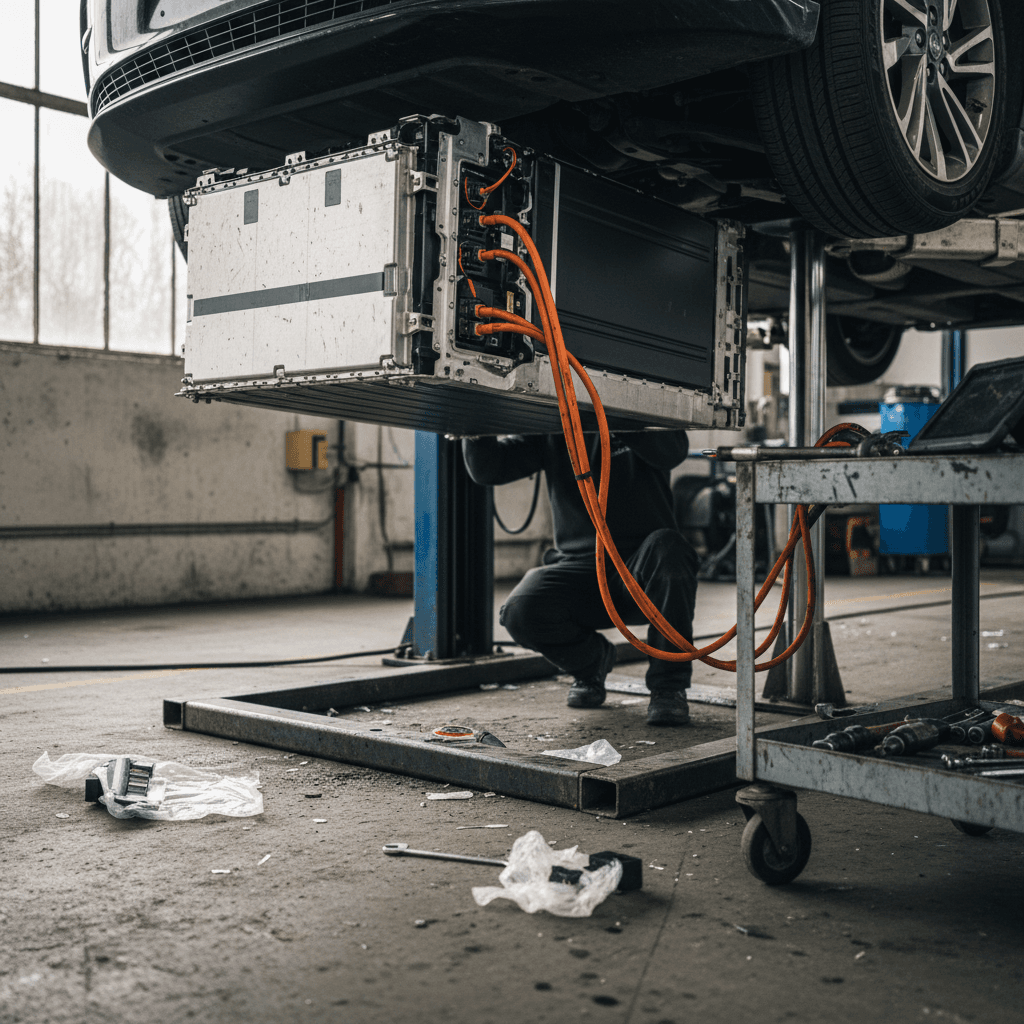
Headline stories about five‑figure battery replacement quotes scare shoppers, but they don’t represent the average EV owner’s experience. Packs are expensive, yes, but outright replacement is still relatively rare, especially within warranty. What matters is understanding the risk so you can price it into your decision.
- Full pack replacement through a dealer can easily run from several thousand dollars to well over $15,000, depending on model and parts availability.
- Some manufacturers and independent shops can replace only modules or sections, cutting cost but depending heavily on the design of the pack.
- In many cases, software‑limited issues or minor component failures inside the pack can be repaired without replacing the entire battery.
- As the EV market matures, a growing supply of refurbished and remanufactured packs is emerging, which can lower costs for older vehicles.
Plan, don’t panic
EV battery lifespan FAQ
Frequently asked questions about how long EV batteries last
Key takeaways on how long EV batteries last
When you cut through the noise, the picture is reassuring. Modern EV batteries routinely last well past 150,000 miles, and many will serve second and even third owners before range becomes a deal‑breaker. The real questions are how the car was treated and what protection you still have through warranty or pricing.
If you’re shopping for a used EV, focus on verified battery health, clear warranty status, and transparent pricing. That’s exactly what Recharged was built for: every vehicle comes with a Recharged Score Report, expert EV support, flexible financing, and nationwide delivery, all designed to make EV ownership simple, especially when you’re thinking about how long those batteries will last.