If you’re eyeing a used Hyundai Kona Electric, you’ve probably heard two competing stories: “EVs tank in value” and “Kona holds up surprisingly well.” So how fast does the Hyundai Kona Electric actually depreciate, and when does it cross from risky to smart money as a used buy?
Quick answer
Hyundai Kona Electric depreciation at a glance
Typical Kona Electric depreciation curve
On paper, the Kona Electric is a low‑drama, right‑sized EV: subcompact footprint, real‑world range in the 250‑mile neighborhood on the big‑battery versions, and the kind of anonymous styling that ages gently. Those traits help it avoid the brutal, 65–70% value wipeouts you see on some early, short‑range EVs. But it’s still an EV in a rapidly moving segment, and tech obsolescence plus shifting incentives mean its first years of ownership are expensive if you buy new.
3-year vs 5-year Hyundai Kona Electric depreciation
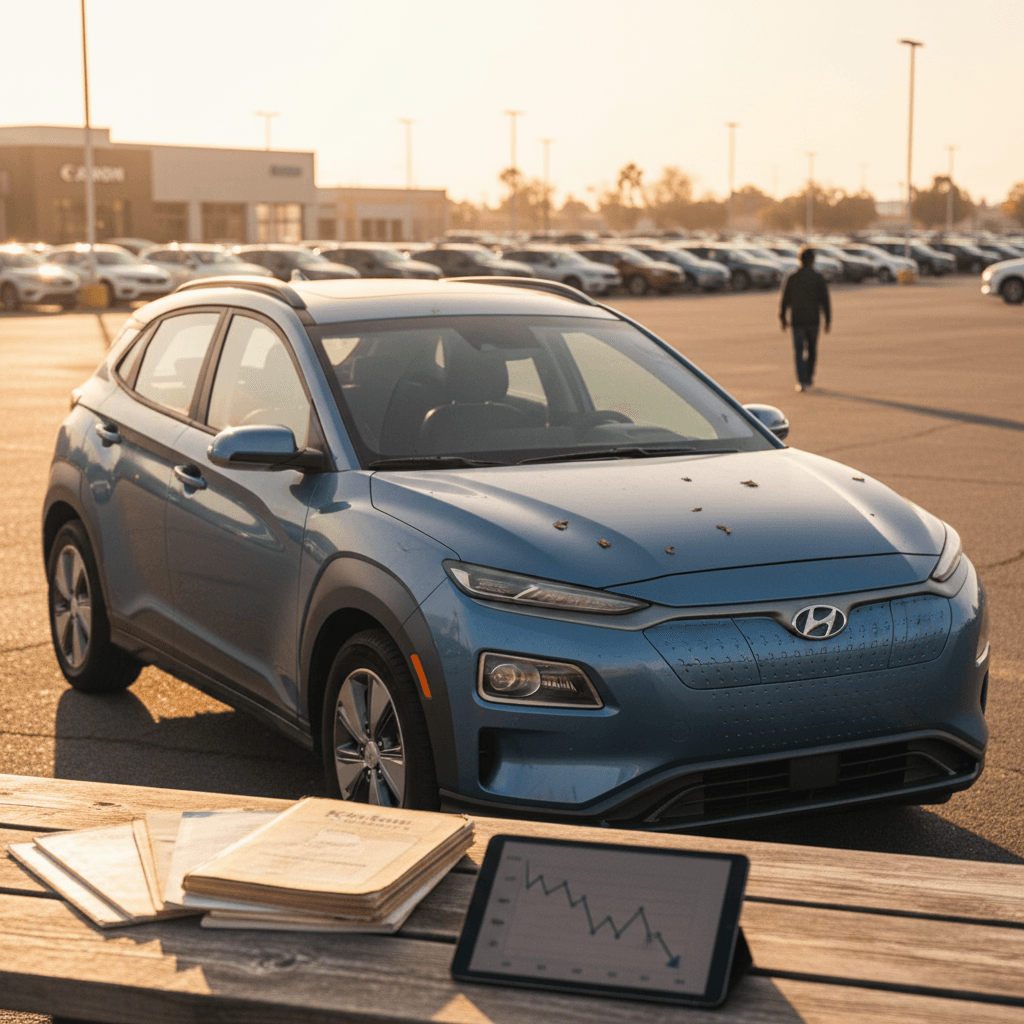
All the major residual‑value trackers tell roughly the same story: the Hyundai Kona Electric sheds value fastest in the first three years, then settles into a slower, more predictable decline. Exact numbers differ by source and assumptions, but the pattern is consistent.
Estimated Hyundai Kona Electric depreciation
Approximate, rounded retail depreciation for a typical Kona Electric with average miles and clean history. Actual values vary by market, incentives at time of sale, and equipment.
| Time from new | Approx. original MSRP* | Typical resale value | Estimated depreciation |
|---|---|---|---|
| 1 year | $39,000 | $31,000–$33,000 | ~15–20% |
| 3 years | $39,000 | $25,000–$27,000 | ~30–35% total |
| 5 years | $39,000 | $15,000–$18,000 | ~55–60% total |
| 7 years | $39,000 | $11,000–$13,000 | ~65–70% total |
Use these figures as directional guidance, not a guaranteed resale value for your specific car.
About the numbers
- Early years (0–3): The Kona Electric’s depreciation is dominated by EV tech turnover and the expiration of purchase incentives. If you buy new and sell after only a few years, you’re absorbing the steepest part of the curve.
- Middle years (3–6): Depreciation slows materially. By this point the car is priced as “solid used EV transportation” rather than the latest gadget, which is exactly why many budget‑conscious shoppers focus here.
- Later years (6–10): Pricing is driven heavily by battery health, DC‑fast‑charge history, and whether the car lives in a snow‑belt or sun‑belt climate. A strong battery test can mean the difference between a bargain and a liability.
How the Kona Electric compares to other EVs
Kona Electric vs gas crossovers
If you compare a new Hyundai Kona Electric to a similarly priced gas crossover, the EV typically depreciates a bit faster over the first 5 years. That’s more about the EV market whiplash of 2024–2025 than about the Kona specifically, rapid tech improvements and changing incentives have pushed used EV prices down across the board.
Where the Kona claws back is running costs: electricity, maintenance, and brakes are all cheaper. Over 5–7 years, many owners effectively "pay themselves back" on the steeper depreciation through operating savings, especially if they charge at home on reasonable electricity rates.
Kona Electric vs other mainstream EVs
When you stack the Kona Electric against peers like the Chevy Bolt and Nissan Leaf, its depreciation looks middle‑of‑the‑road:
- Better than many early Leafs with short range and air‑cooled batteries.
- Roughly similar to Bolt in percentage terms, though actual dollars differ.
- Not as strong as star performers like Tesla Model 3 for long‑term resale.
The Kona’s saving grace is range and efficiency. Even as newer models add more tech, a clean, 250‑mile Kona Electric still feels usable and relevant, which helps it avoid the bargain‑bin fate of older 80–120‑mile EVs.
Value hunter’s rule of thumb
What actually drives Hyundai Kona Electric depreciation?
Key forces behind Kona Electric depreciation
Some are EV‑specific, others are just car‑market gravity.
Battery health & range
The Kona Electric’s pack has been relatively well‑behaved compared with some EVs, but buyers still fixate on range. A car that originally did ~258 miles but now only shows ~200 miles on a full charge will command less money.
Documented battery health – like the Recharged Score – can keep a good car from being treated like a bad one by default.
Charging speed & standards
The Kona Electric is not a charging rocket ship, and newer EVs are gaining faster DC speeds and the NACS connector. That tech gap nudges older cars down the value ladder.
For most commuters charging at home, this is more psychology than real‑world problem, but psychology moves markets.
Incentives & new‑car pricing
The on‑again, off‑again nature of EV tax credits and manufacturer incentives wreaks havoc on resale. A deep discount or rebate on new cars can instantly re‑price every used example on the market.
Which means 2019–2023 Kona Electrics are, in part, collateral damage from yesterday’s discount wars.
Secondary but important factors
These are the quiet levers that move your specific car’s value up or down.
Mileage & use pattern
A Kona Electric with 80,000+ miles and heavy DC‑fast‑charge use is going to be priced very differently from a 30,000‑mile commuter that lived in a garage.
EV buyers pay more attention to how miles were accrued, not just the odometer number.
Climate & storage
Hot‑weather states are harder on batteries. Cars parking in direct sun all day, every day, will generally age faster, even with thermal management onboard.
Cooler climates and garage parking tend to preserve both the battery and the interior, and resale follows.
History & software
Accidents, open recalls, missing software updates, and one‑key‑only cars all nibble at resale. With EVs, buyers also worry about warranty coverage on the pack and any prior battery work.
A clean history with good documentation props up value; mystery cars get punished.
Model year, trim, and battery size: who loses value fastest?
Not all Kona Electrics depreciate at the same pace. Within the family there are winners, laggards, and a couple of sleepers that make particularly sharp used buys.
How different Kona Electric configurations tend to age
Generalized patterns based on equipment, range, and buyer demand. Individual cars will vary.
| Configuration | Typical buyer appeal used | Relative depreciation feel | Why it plays out this way |
|---|---|---|---|
| Early years (2019–2020) | Strong if battery is healthy | Moderate to heavy | First‑wave tech, good range but older infotainment. Battery test is everything. |
| Mid‑cycle (2021–2023) | Very strong | Moderate | More modern cabin tech, familiar design, still‑competitive range. Sweet‑spot used buys. |
| Newest gen (2024+) | High new, rising used | Yet to fully play out | Better packaging and tech but still in first ownership cycle. Resale story is still being written. |
| Well‑equipped trims | Higher | Similar % but more dollars | Buyers like heated seats, safety tech, and better audio. They don’t like cloth‑and‑plastic penalty boxes. |
| Base spec cars | OK but price sensitive | Feels steeper | When new pricing falls or incentives improve, the most basic cars get cross‑shopped against lightly used, better‑equipped examples. |
If you’re cross‑shopping multiple Kona Electrics, this table helps explain why their asking prices may differ more than you expect.
Where depreciation can work for you
Is the Hyundai Kona Electric a good used buy?
If you like your cars to be anonymously competent rather than theatrically fast, the Kona Electric makes a very strong case as a used buy. Once you’re past the ugly part of the depreciation curve, you’re left with a compact SUV that feels like a normal car in all the good ways and an EV in all the cheap‑to‑run ways.
Why the Kona Electric shines used
- Real, usable range: Around 250 miles on the larger‑battery variants means fewer compromises versus newer EVs.
- Compact footprint, big practicality: Easy to park, but still a hatchback with folding seats, perfect for city folks and small families.
- Simple, efficient powertrain: No turbos, no multi‑speed gearbox, very little to “age badly” besides the battery.
- Depreciation already baked in: Buy at 4–6 years old and you’re surfing the gentle part of the curve.
Where you need to be picky
- Battery condition varies: Abuse, heat, and fast‑charging can separate the heroes from the has‑beens.
- Charging speed limitations: If you road‑trip constantly, the Kona’s modest DC‑fast‑charge performance could grate compared with newer 800‑volt EVs.
- Rapidly evolving competition: Newer EVs keep raising the bar on screens, driver‑assist, and charge speed, which continually nudges older cars down the price ladder.
The big mistake to avoid
How to shop a used Hyundai Kona Electric smartly
Used Kona Electric buyer’s checklist
1. Start with the depreciation sweet spot
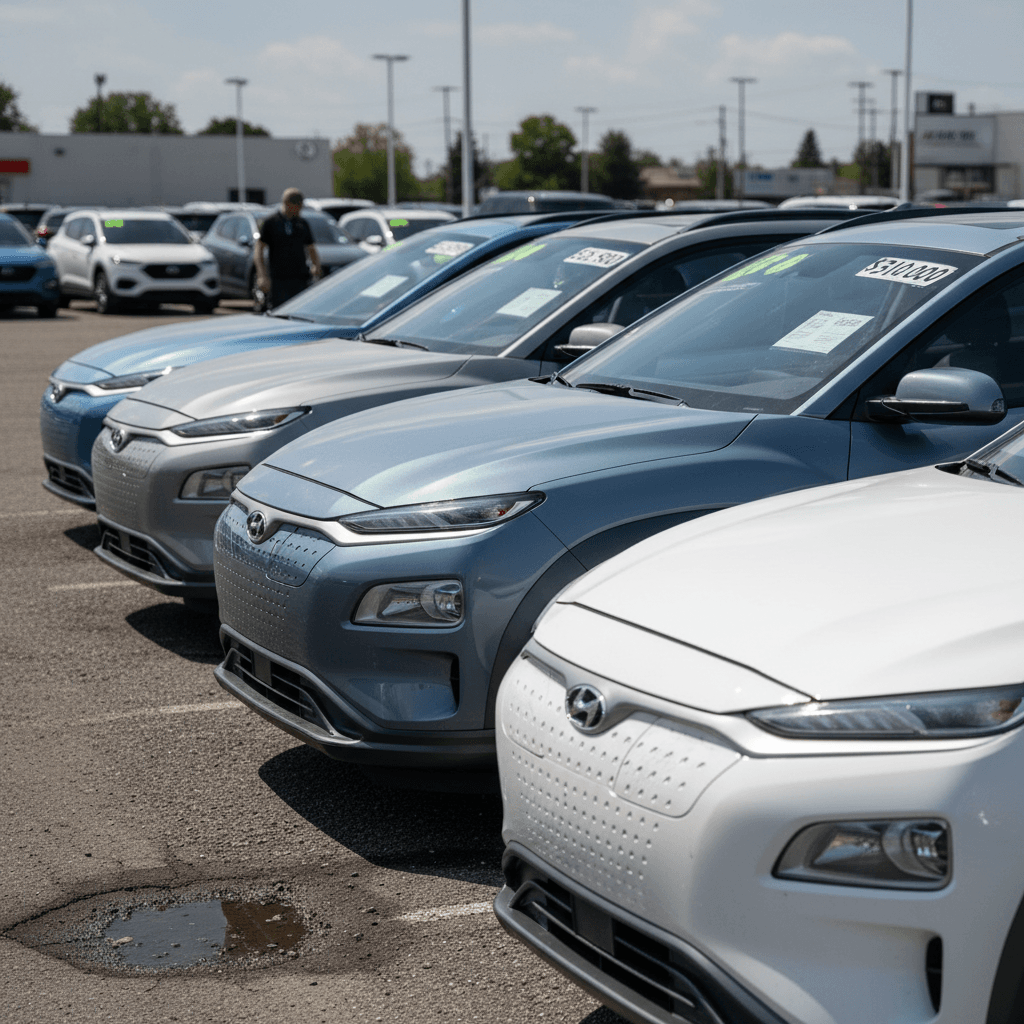
Focus your search on cars roughly <strong>4–6 years old</strong>. You’re late enough to let the worst depreciation pass, but early enough to still have meaningful battery warranty coverage and modern tech.
2. Demand real battery health data
Don’t settle for “it seems fine.” Ask for a <strong>third‑party battery health report</strong> or a detailed SOH (state‑of‑health) reading. At Recharged, this is built into the Recharged Score so you’re not guessing about the most expensive component on the car.
3. Look beyond the odometer
Two Konas with 60,000 miles can be very different if one spent its life doing highway road trips on DC fast chargers and the other commuted gently on Level 2 at home. Ask about usage patterns and charging habits.
4. Check for software and recall history
Make sure major <strong>software updates, safety recalls, and service campaigns</strong> are up to date. With EVs, some of the most important “maintenance” happens over the air or at the dealer laptop, not under the hood.
5. Compare against new‑car incentives
Before you commit, quickly sanity‑check current new‑car pricing and incentives. If Hyundai is blowing out new inventory with big discounts in your area, that should be reflected in used pricing, too.
6. Plan your charging reality
If you have home charging, the Kona’s modest DC‑fast‑charge speed is less of an issue. If you rely heavily on public DC fast chargers, you may want to test‑drive one on your actual routes to make sure the experience works for you.
How Recharged helps you de-risk a used Kona Electric
EV depreciation is really a story about uncertainty. Shoppers don’t know how the battery is doing, they’re fuzzy on incentives history, and they’re not sure what a “fair” price looks like in a volatile market. That’s exactly the gap Recharged was built to close.
Why a Kona Electric from Recharged is a different proposition
Less guesswork, more data, and support from EV specialists.
Recharged Score battery diagnostics
Every vehicle listed on Recharged includes a Recharged Score Report with verified battery health. Instead of hoping the range gauge is honest, you see data‑driven diagnostics on pack condition and charging history.
Fair market pricing & trade-ins
Recharged benchmarks fair market pricing against live EV resale data, so you’re not overpaying for a Kona that’s already done its big depreciation dance. You can also bring your current car into the equation with trade‑in or instant offer options.
Nationwide EV‑savvy support
From financing to nationwide delivery to EV‑specialist support, the goal is to make buying a used Kona Electric feel as normal as buying any other car, just cleaner and cheaper to run.
If you’re near Richmond, VA, you can even stop by the Recharged Experience Center to see vehicles in person.
Ready to find your next EV?
Browse VehiclesFAQ: Hyundai Kona Electric depreciation
Frequently asked questions about Kona Electric depreciation
Bottom line: how fast does the Kona Electric really depreciate?
Viewed coldly, the Hyundai Kona Electric is neither a depreciation horror show nor a resale superhero. It’s an honest, efficient EV crossover that loses roughly a third of its value in three years and about 55–60% in five, then ambles along the back half of its life as quiet, low‑drama transportation.
For you as a shopper, the trick is simple: don’t volunteer to pay for the steep part of the curve. Let someone else take the early hit, then buy a 4–6‑year‑old Kona Electric with verified battery health, clean history, and pricing that reflects the new‑car incentive landscape. That’s exactly the slice of the market Recharged focuses on, used EVs with transparent diagnostics, fair pricing, and EV‑savvy support, so you can enjoy the savings of depreciation without inheriting its worst risks.