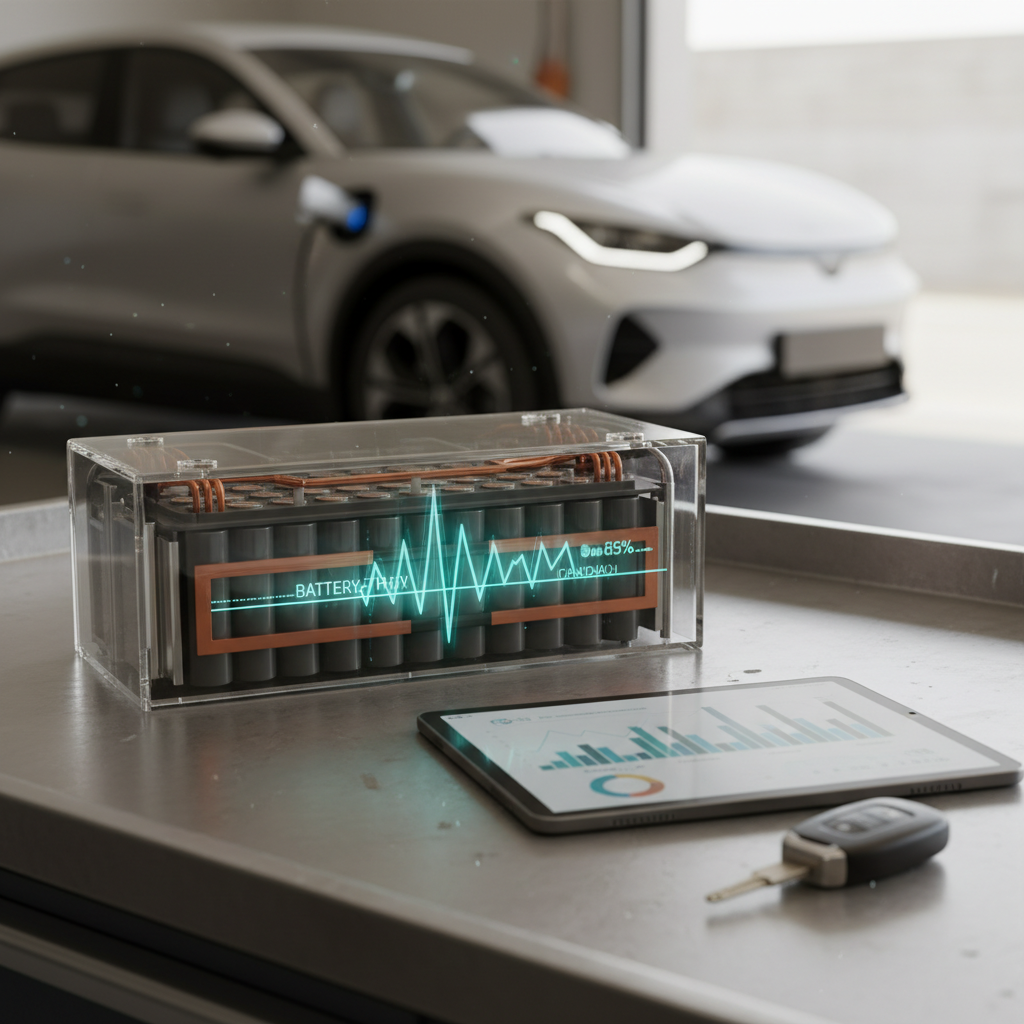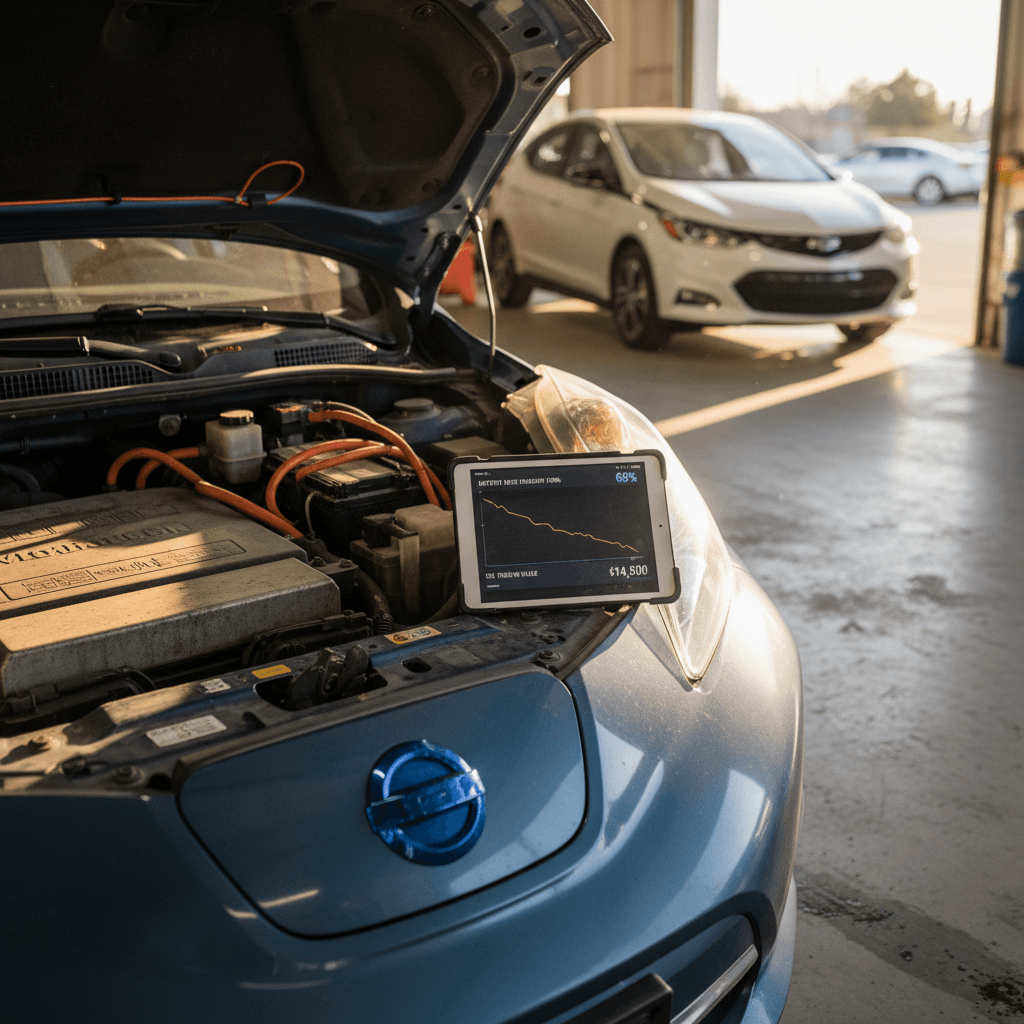
If you own an electric car, you already know the battery is the star of the show, and the most expensive part to replace. That’s exactly why battery degradation plays such an outsized role in your EV’s trade in value. The good news: real‑world data shows most modern packs age far better than many shoppers fear. The flip side: a battery that’s clearly below average for its age can knock thousands off what a dealer or marketplace is willing to pay.
Key takeaway
Why battery degradation matters for trade‑in value
With gasoline cars, dealers obsess over maintenance records and engine noise. With EVs, the spotlight moves to the high‑voltage pack. Because the battery can represent 30–40% of an EV’s total cost, any sign it’s aging faster than expected forces a buyer or dealer to price in extra risk. That shows up as a lower trade‑in offer, a reduced instant cash offer, or wariness from retail shoppers if you sell privately.
Three ways battery degradation shows up in price
Even when the car looks perfect from the outside
Shorter real‑world range
More charging, more hassle
Perceived risk of big repair
Don’t confuse age with health
What battery degradation actually is
Battery degradation is simply the slow loss of usable energy capacity in your EV’s pack over time. It’s usually expressed as state of health (SOH), a percentage showing how much capacity remains compared with when the car was new. A pack at 92% SOH can still store 92% of its original energy, so if the car launched with a 75 kWh usable pack, it now behaves like roughly 69 kWh.
- Calendar aging: chemical changes that happen just with time, even if the car sits parked.
- Cycle aging: wear from charging and discharging as you drive.
- Operating conditions: heat, cold, high‑power fast charging, and sitting at 100% or 0% for long periods.
Real‑world fleet and telematics data published in 2024–2026 shows modern EVs averaging roughly 2%–2.5% capacity loss per year under typical use, with a slightly steeper drop in the first year and then a long, gentle fade. Many EVs still have 80–90% capacity after 8–12 years and well over 100,000 miles, which is why you see eight‑year/100,000‑mile battery warranties from most manufacturers.
Think in usable range, not just percentage
What’s considered “normal” battery wear?
Typical EV battery health benchmarks dealers expect
When you bring an EV in for trade‑in, appraisers informally compare your battery to these broad benchmarks for its age and mileage. A car that’s within shouting distance of “normal” usually won’t be penalized purely on capacity, especially if everything else checks out. Where alarms go off is when a relatively young car is showing 70‑something percent SOH, or an older, high‑mileage car has slipped below common warranty thresholds.
Red flag territory
How dealers and buyers interpret battery health
How professionals look at it
Dealers, auction buyers, and marketplaces see thousands of cars. They’re looking for patterns:
- Is this pack typical for this age, mileage, and model, or an outlier?
- How does it compare with similar cars currently selling?
- Is there warranty coverage left if something goes wrong?
- Will retail buyers balk at the number if we disclose it?
If the battery looks average or better, it becomes a selling point. If it looks weak, it becomes the biggest line item in their risk column.
How retail shoppers react
Used‑EV shoppers often arrive nervous about batteries. They may not understand the data, but they react strongly to it:
- High SOH (90%+) feels like validation that EVs “age well.”
- Mid‑80s SOH on an older, high‑mile car can feel acceptable if the price is right.
- Low SOH on a younger car triggers suspicion about fast charging, abuse, or hidden problems.
That emotional reaction is what ultimately pushes prices up or down in the real world.

How much battery degradation can change trade‑in value
There isn’t a single, universal formula, but you can think of battery health like mileage on a gas car: a small, normal difference barely moves the needle, while a clear outlier can swing the price dramatically. Dealers effectively apply an invisible adjustment table in their heads when they see battery reports.
Illustrative impact of battery health on a mid‑size used EV
Assume a 5‑year‑old electric crossover that would be worth around $22,000 with an average‑health battery for its age and mileage. Here’s how different SOH readings might influence offers in a typical market.
| Battery SOH | Condition vs typical | Likely buyer reaction | Illustrative trade‑in impact |
|---|---|---|---|
| 96–100% | Above average | “This one’s been babied.” Strong interest from EV‑savvy buyers. | Small premium, maybe +$500–$1,000 if everything else is clean. |
| 90–95% | Normal | “Looks right for the age.” Battery not a concern. | Baseline value, no meaningful adjustment. |
| 80–89% | Below average on a newer car; normal on an older one | “Okay, but I want a discount.” | Modest reduction, often in the $1,000–$3,000 range depending on age/mileage spread. |
| 70–79% | Significantly degraded | “Will I need a pack soon?” Many buyers walk away. | Steep haircut or limited interest; reductions of $4,000+ are common, and some buyers won’t bid at all. |
| Under 70% | Severely degraded | “Only if the price is rock‑bottom, or if warranty will cover a replacement.” | Effectively valued as a high‑risk or parts car unless a warranty claim is likely. |
These are directional examples, not guaranteed prices. Market conditions, brand, and trim can all shift the actual numbers.
Why a few percent can matter
Other factors that magnify or soften the hit
Battery health is one lever, here are the others
Why two cars with the same SOH don’t always get the same offer
Climate & fast‑charging history
Remaining battery warranty
Brand, model, and demand
Overall condition & history
Tell the whole story
How to check your battery before you get quotes
Pre‑trade battery health checklist
1. Check the car’s own battery screens
Many EVs display battery health, range at 100%, or at least long‑term charging stats in their infotainment or app. Capture clear photos of these screens at a full charge so you can show them to any potential buyer.
2. Note your real‑world full‑charge range
Charge to 100% once, then note what the car reports as estimated range. Compare that to the original EPA rating to get a rough sense of capacity loss. It’s not a lab test, but it helps you sanity‑check what any scan tool reports.
3. Use a trusted diagnostic report where possible
Some brands support official battery health reports through dealers, independent tools, or connected‑car apps. A printout that shows SOH and pack balance looks much more credible to a buyer than “it feels fine on the highway.”
4. Gather your charging history
If you mostly charge at home on Level 2 and rarely fast‑charge to 100%, that’s exactly what informed buyers want to hear. Screenshots from your charging app or utility program can back up your story.
5. Organize maintenance and warranty documents
Have any high‑voltage work, software updates, or warranty repairs been done? Put those records in one folder. They show you’ve taken the car seriously and help a trade‑in buyer evaluate risk quickly.
Avoid “mystery battery” syndrome
Steps to protect trade‑in value over time
You can’t freeze battery chemistry in time, but you can nudge it in the right direction. A pack that ages gently keeps your daily range comfortable and gives you better options when it’s time to move on to your next EV.
- Prioritize Level 2 home charging for daily use instead of living on DC fast chargers.
- Avoid sitting at 0% or 100% for long stretches when you can; living in the middle is easier on the cells.
- Keep the car shaded or garaged in extreme heat, especially when charging.
- Stay current on software updates that may improve battery management and range predictions.
- Drive it regularly, long periods of total inactivity aren’t kind to batteries either.
Good habits, better offers
When to sell or trade in based on battery health
Timing your sale isn’t just about model‑year envy; it’s about where your battery is on its life curve, how much warranty remains, and what newer rivals look like. Two EVs with identical SOH can be priced very differently if one is about to age out of coverage while the other still has years of factory protection left.
Battery‑aware timing strategies
3–5 years old, normal SOH (90–95%)
You’re in the sweet spot: big early depreciation is behind you, but you still have attractive range and plenty of warranty left.
If you’re eyeing a newer EV with much better range or charging speed, this is a strong time to trade.
Battery health will be a selling point, not a liability, so shop your trade‑in to multiple buyers.
6–8 years old, 80–90% SOH
Battery health is still workable for many drivers, but range is no longer class‑leading.
If you have significant warranty left, you may want to hold a bit longer and enjoy low running costs.
If you’re out of warranty, watch SOH closely. A noticeable drop may be your cue to sell before buyers get nervous.
Older than 8 years or under 80% SOH
Expect range compromises, and know that many retail buyers will hesitate.
If you still have battery warranty and are near the threshold, explore a health test that might qualify you for a replacement.
If you’re out of warranty and SOH is low, trading sooner rather than later can keep more value on the table.
Don’t chase every last dollar
How Recharged handles battery degradation fairly
Because Recharged focuses on used EVs only, we live and breathe battery health. Instead of treating your car like a mystery box, every vehicle we buy or list comes with a Recharged Score Report that includes verified battery diagnostics, fair‑market pricing, and a clear explanation of how the pack’s condition influenced value.
What happens when you get a value from Recharged
Battery health is part of the story, but never the whole story
Objective battery testing
Transparent pricing logic
Flexible ways to sell
Ready to find your next EV?
Browse VehiclesThinking about trading in your EV?
FAQs: battery degradation and trade‑in value
Frequently asked questions
Battery degradation is real, but it’s not the horror story early headlines made it out to be, and it doesn’t have to sabotage your trade‑in. Most modern packs lose capacity slowly and predictably, which means the difference between a great offer and a disappointing one often comes down to how well you’ve cared for the car and how clearly you can document its health. Get familiar with your SOH, keep good records, and seek out buyers who actually understand EVs. Do that, and your next trade‑in conversation will feel a lot less like a gamble and much more like a fair deal.