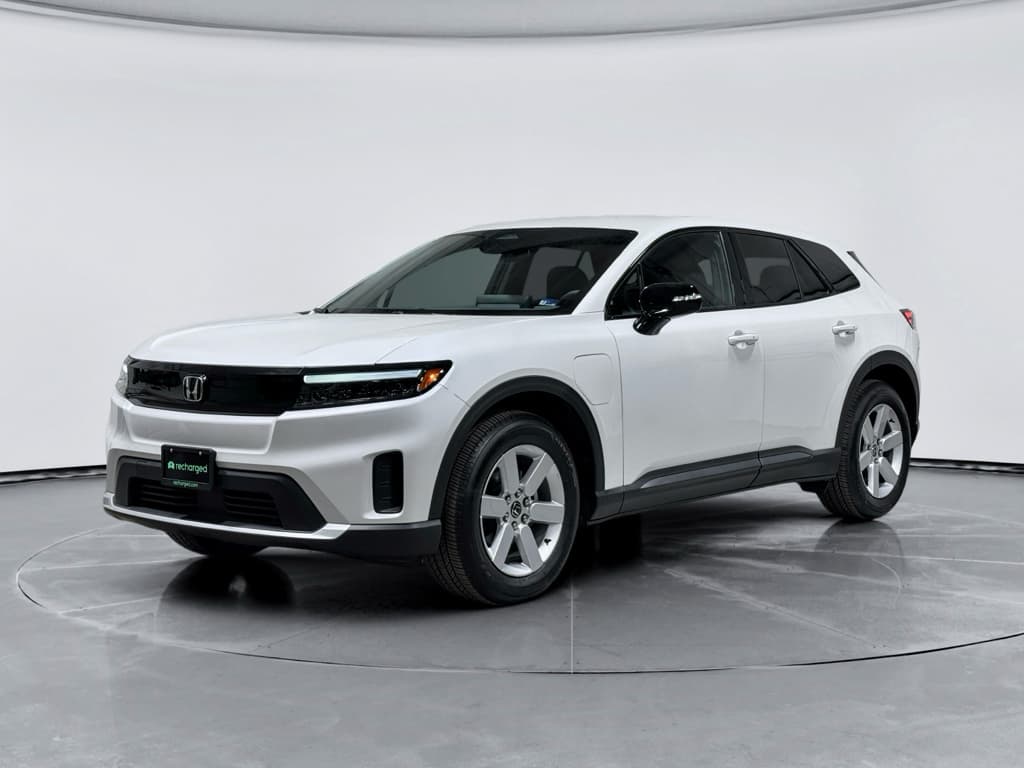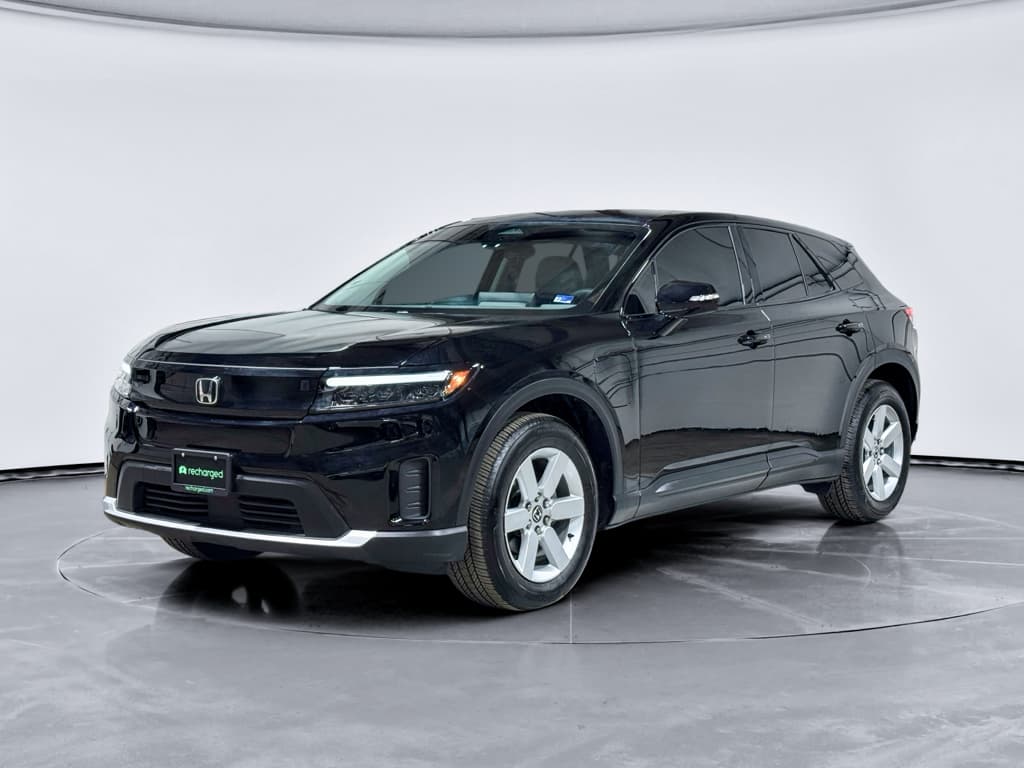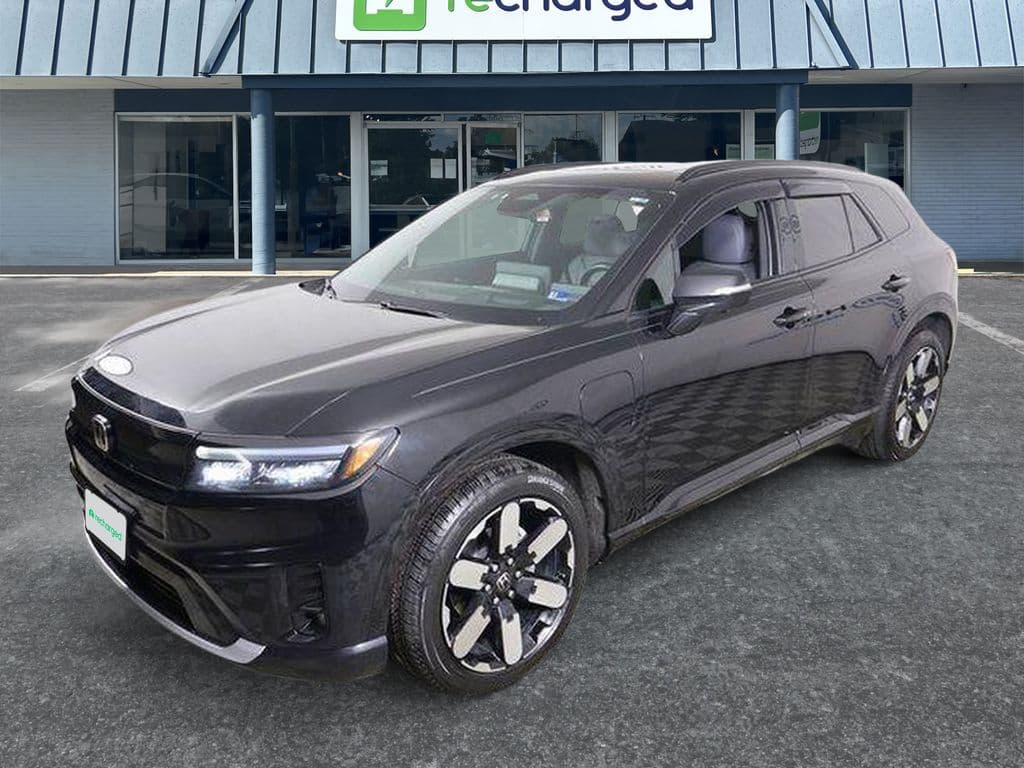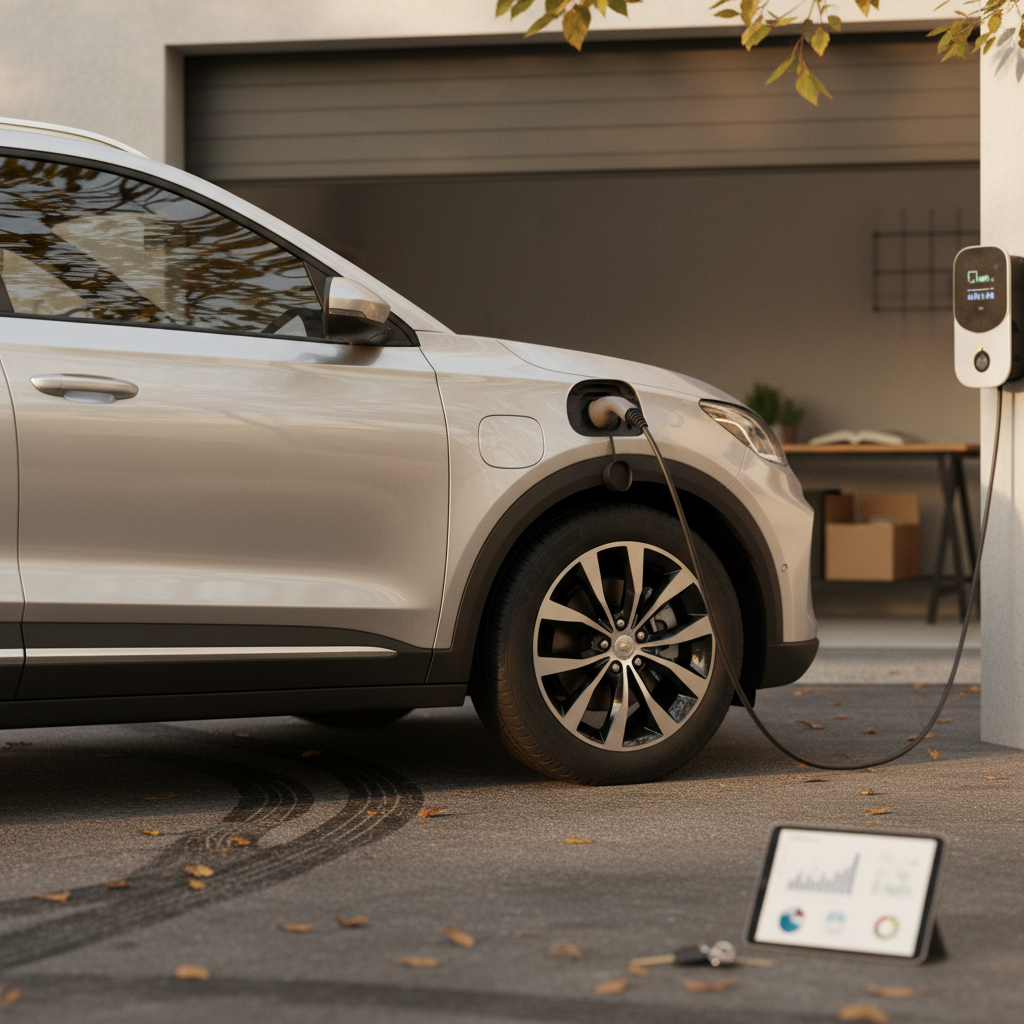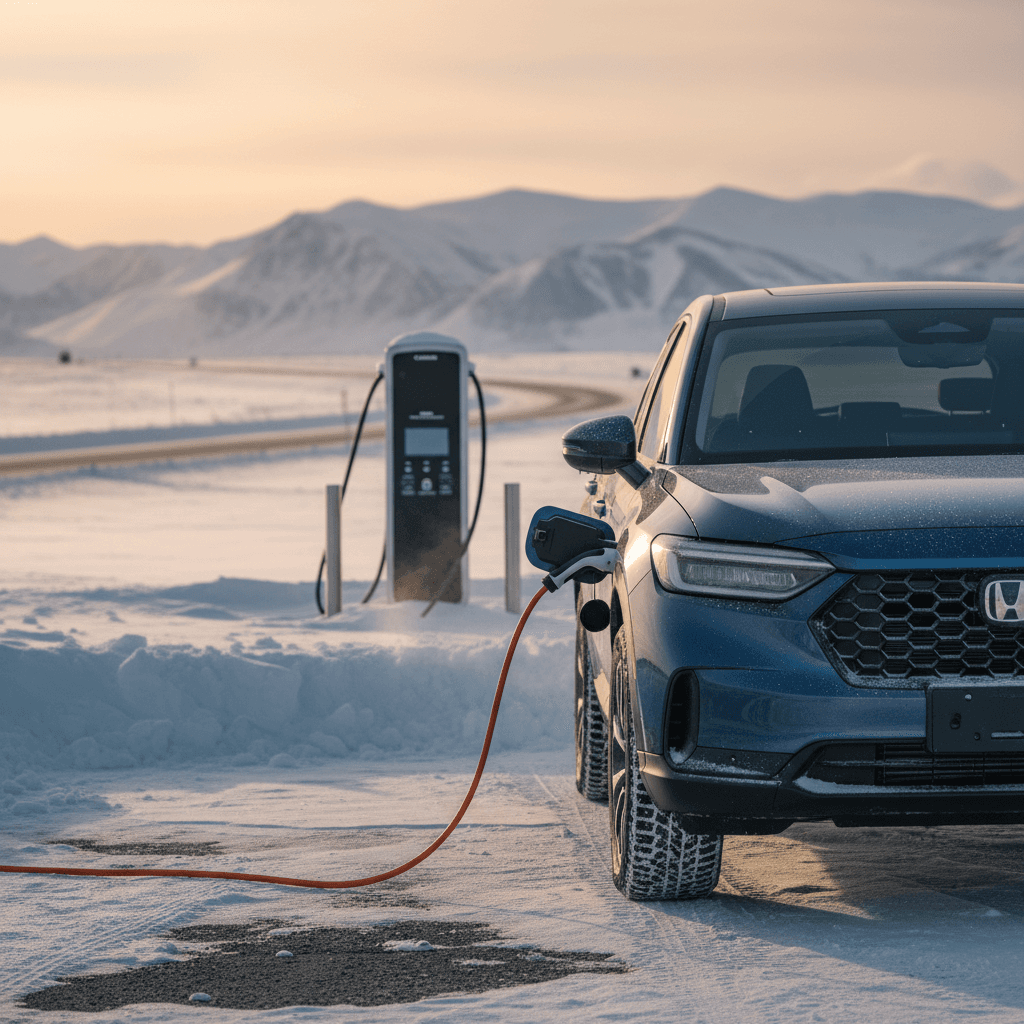
You don’t need to live in Fairbanks to notice it: when the temperature drops, the Honda Prologue’s range in cold weather drops with it. One week it’s a 280–300‑mile crossover, the next week it feels like a 200‑mile car. That’s not a defect in your specific SUV so much as the physics of lithium‑ion batteries colliding with winter. The useful question isn’t “Does range fall?” It’s “How much is normal, what can you do about it, and is the Prologue worse, or better, than its rivals?”
Quick takeaway
Honda Prologue range basics before winter hits
Before we talk sub‑freezing performance, it’s worth anchoring on the EPA range numbers in mild conditions, because every winter conversation starts there. For 2024–2025 models, Honda offers the Prologue with a roughly 85‑kWh usable battery (shared Ultium architecture with GM) and two main drivetrains:
2024–2025 Honda Prologue EPA range ratings (approximate)
Official EPA ratings vary slightly by wheel size and trim, but these are the headline numbers most owners will see on the window sticker.
| Model year & drivetrain | Battery (usable, approx.) | EPA rated range |
|---|---|---|
| 2024–2025 Prologue FWD (single motor) | ~85 kWh | 290–308 miles |
| 2024–2025 Prologue AWD (dual motor) | ~85 kWh | 270–283 miles |
Think of these as best‑case estimates in 70°F mixed driving, not guaranteed year‑round numbers.
EPA vs reality
How much range does the Honda Prologue lose in cold weather?
What most EVs lose in the cold
Independent testing and fleet data on modern EVs show that at freezing temperatures (around 32°F), the average vehicle keeps roughly 80% of its rated range. Push down to the low 20s and below, add highway speeds and a toasty cabin, and that’s where you see 30–40% drops from EPA numbers. The Prologue, built on GM’s Ultium platform, broadly follows this pattern.
In plain English, if your EPA sticker says 281 miles on an AWD Prologue, a cold‑weather day at 20–30°F with normal heating might realistically get you 170–210 miles of comfortable range. On milder winter days in the 40s, you’re more likely to see 210–240 miles if you drive gently.
A fast way to sanity‑check winter range
Why the Honda Prologue (and every EV) loses range in winter
1. Cold batteries are sluggish batteries
At low temperatures, the chemistry inside lithium‑ion cells slows down. Internal resistance increases, so the pack can’t deliver or accept energy as efficiently. Honda, like every OEM, has to warm the battery using electric heaters or by circulating warm coolant, and that heating energy comes from the same battery you drive with.
2. Your cabin is an all‑electric “furnace”
Gas cars get free-ish heat from waste engine warmth. EVs don’t. When it’s 20°F and you want 72°F in a big glassy SUV like the Prologue, the car runs a heat pump and/or resistive heater that can pull several kilowatts. Run that for an hour at highway speeds and you’ve spent the equivalent of 15–30 miles of range just staying cozy.
The Prologue’s advantage is that it uses a heat pump–based HVAC system on higher trims, which is more efficient than pure resistive heating in moderate cold. In very low temps, however, even a heat pump has to work harder and may lean on resistive elements, so range loss remains noticeable.
Good news on wear and tear
Real owner reports: Honda Prologue in snow and sub‑freezing temps
Because the Prologue is a relatively new model, big lab studies haven’t yet fixated on it. But owners in cold‑weather states and provinces have been very vocal. Reading through early‑adopter reports, a clear pattern emerges:
- Around freezing (30–35°F), many drivers see 15–25% range loss on commutes, especially when preheated and driven gently.
- In the low 20s and teens, sustained highway trips with the heater set to “comfortable” often show 25–35% drops versus EPA.
- Short errands, think five miles to the store with a cold-soaked car, can look disastrous on the gauge, with energy use double or triple normal until the pack and cabin warm up.
- Some owners in harsher climates have hit situations where effective range felt cut nearly in half when they combined high speeds, deep cold, and max heat/defrost.
Don’t judge it by one brutal day
Winter range expectations by Prologue trim and drive type
With the same underlying battery, your Prologue’s winter range depends more on drivetrain, wheel size, and your climate than on the trim badge. Here’s a realistic, rule‑of‑thumb picture for a healthy battery on mostly highway driving with normal heat use:
Approximate real‑world Honda Prologue winter range (highway‑biased)
These are rough planning numbers for 20–30°F weather, typical highway speeds, and an owner who uses cabin heat but doesn’t drive aggressively. Your results will vary by terrain, wind, tire choice, and how much you precondition.
| Drivetrain & season | EPA rating (rounded) | Practical planning range |
|---|---|---|
| FWD – mild winter (35–45°F) | ~300 mi | 220–250 mi |
| AWD – mild winter (35–45°F) | ~280 mi | 210–235 mi |
| FWD – deep winter (15–30°F) | ~300 mi | 190–220 mi |
| AWD – deep winter (15–30°F) | ~280 mi | 180–210 mi |
Plan conservatively on road trips, treat these as best‑case estimates, not promises.
How to use these numbers
Driving habits that quietly kill your winter range
Four winter habits that make your Prologue feel “thirsty”
None of these is unique to Honda, but together, they add up fast.
Cruising at 80+ mph
Drag goes up with the square of speed. Bump your Prologue from 65 to 80 mph in 25°F air and you’re asking it to punch a much bigger hole through dense, cold air. Expect a 10–20% hit on efficiency, on top of the cold‑weather penalty.
Always using max defrost
Max defrost turns the HVAC into a blast furnace. Great for clearing fog, brutal for range. Use it to clear the glass, then drop back to lower fan and temp, and lean on the heated seats and steering wheel.
Lots of short, cold‑soak trips
Drive three miles, park for an hour, repeat. The car spends more energy reheating the pack and cabin than actually moving you. Combining errands into one longer trip can reduce the range hit significantly.
Snowy, slushy roads & winter tires
Rolling through an inch of wet snow or deep slush takes noticeably more energy, and aggressive winter tires add rolling resistance. That’s the price of grip. Just budget extra and enjoy the traction.
10 ways to maximize Honda Prologue range in cold weather
Cold‑weather range optimization checklist
1. Always precondition while plugged in
Use the Honda app or key fob to warm the cabin and (when supported) the battery <strong>before you unplug</strong>. That pushes most of the heavy HVAC load onto your home charger instead of the onboard pack.
2. Use seat and wheel heaters first
Heated seats and steering wheels sip energy compared with blasting 75°F air. Set the cabin a few degrees cooler and let the contact heat keep you comfortable.
3. Dial back top speeds in deep cold
If it’s under 25°F, think 60–70 mph, not 80+. That alone can mean the difference between stopping every 120 miles and every 170 miles on a Prologue road trip.
4. Run Eco or efficiency‑biased drive modes
Eco modes soften throttle response and may tone down HVAC aggression. It won’t transform the car, but over a full battery it can save several kWh.
5. Keep your tires properly inflated
Cold air drops tire pressure. A few psi below spec increases rolling resistance and hurts range. Check pressures when cold and keep them near the door‑jamb recommendation unless your manual says otherwise for winter.
6. Clear snow and ice from the body
Snow‑packed wheel wells and ice on the hood, roof, and mirrors all add drag. A 5‑minute brush‑down is free range.
7. Avoid 0–100% charges in the cold
The Prologue battery warms and charges most efficiently in the <strong>20–80% window</strong>, especially on DC fast chargers. Outside that band, the car may slow charging or consume more energy heating the pack.
8. Take advantage of scheduled departure
If your Prologue and home charger support it, set a departure time. The car can finish charging and warming just before you leave, so the pack is toasty and happy.
9. Watch your real consumption, not just the guess‑o‑meter
Use the trip computer to track kWh/100 miles or mi/kWh over several days. That paints a clearer picture of winter efficiency than the fluctuating distance‑to‑empty readout.
10. Practice one winter road trip close to home
Before you bet a holiday trip on it, do a <strong>low‑stakes winter shakedown</strong>, a 150‑mile loop with chargers you know. Learn how the Prologue behaves at 20–30°F so nothing surprises you later.
Cold-weather charging, preconditioning, and heat pump tips
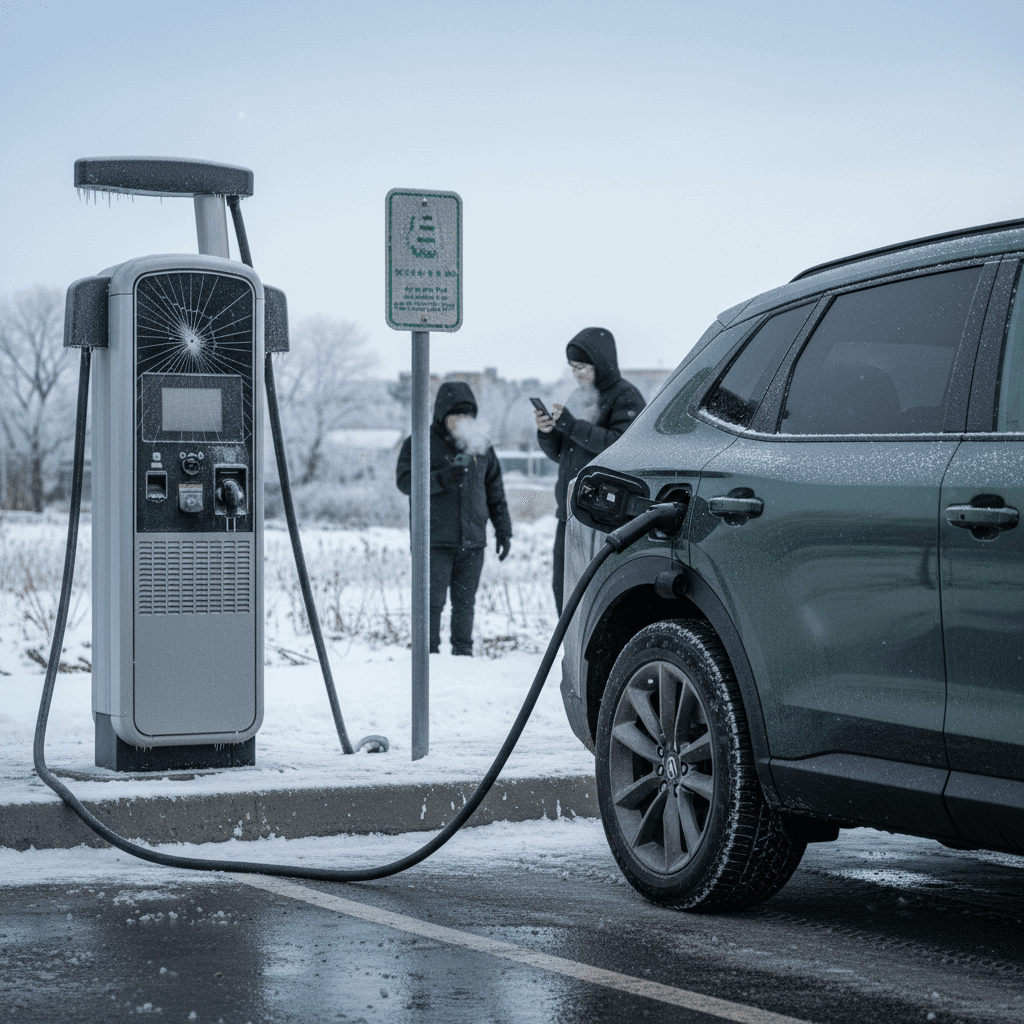
Cold doesn’t just reduce how far you can drive, it also affects how fast you can charge. The Prologue will protect its Ultium battery by limiting charge rates when the pack is very cold, especially on DC fast chargers. Here’s how to work with the car instead of against it.
Smart winter charging practices for the Prologue
Make the most of your home setup and public fast chargers.
Home Level 2 is king
If you have a 240V Level 2 charger at home, lean on it in winter. Charging more slowly overnight gently warms the pack and lets you leave each morning with a warm, full battery.
Preheat on the way to DC fast charge
On longer trips, start navigation to a fast charger in the infotainment (if supported) so the car can precondition the pack. Even 15–20 minutes of driving before you plug in can noticeably improve charge speed.
Aim for 10–60% on DC fast
In the cold, the Prologue is happiest and quickest between about 10% and 60–70% state of charge. Topping to 90–100% is slow and burns time and heater energy.
Don’t obsess over slow first minutes
When the pack is ice‑cold, initial DC charge rates can look painfully low. Give it a few minutes; as the battery warms, speeds usually climb.
Understand your heat pump
In moderate cold, the heat pump is efficient. In bitter cold, you may notice more aggressive behavior and range loss as the system blends in resistive heating. That’s normal, not a sign the car is failing.
Use the app, but know its limits
Honda’s app and remote climate tools are still evolving. There can be delays. When in doubt, start preconditioning early rather than hoping a last‑minute command goes through.
Where Recharged can help
Ready to find your next EV?
Browse VehiclesCan you road-trip a Honda Prologue in winter?
Yes, with some caveats. The Prologue is a midsize SUV with a solid‑size pack and DC fast‑charging capability. In the cold, the question isn’t “Can it?” but “How far between stops, and how long will those stops be?”
What works well
- 200–220‑mile legs in deep winter are realistic for FWD and AWD with conservative driving.
- The big battery means even at 30% range loss you still have more usable miles than many older EVs.
- On routes with plenty of DC fast chargers, an extra stop or two is an inconvenience, not a deal breaker.
What to watch for
- Sparse charging corridors can feel tight if stations are 140–150 miles apart in sub‑20°F weather.
- Headwinds and heavy snow can eat into the cushion quickly.
- Charging from 70–100% in the cold is slow; it’s usually better to charge more often but shallower.
Plan your winter routes differently
When winter range loss isn’t normal: red flags to watch
EVs do lose range in the cold, but there are cases where your Prologue is telling you something more serious. These are signs it’s time to get the car checked, or, if you’re shopping used, to ask harder questions.
- You routinely see 40–50% range loss at mild temps (40–50°F) on longer drives, not just short hops.
- The car refuses to fast charge at reasonable speeds even after 30–40 minutes of highway driving to warm the pack.
- You notice big, permanent range loss as weather warms in spring, not just seasonal swings.
- You get repeated high‑voltage system or battery‑related warnings, especially when using HVAC in the cold.
- Your efficiency is terrible year‑round (very high kWh/100 mi) compared with other Prologue owners with similar driving patterns.
Buying used? Demand real battery data
Honda Prologue winter range: FAQs
Frequently asked questions about Honda Prologue range in cold weather
Should you buy a Prologue if you live somewhere cold?
If you live where winter is a season, not a weekend, the Honda Prologue range in cold weather is something you have to budget for, but it isn’t a deal‑breaker. In exchange for a 20–35% seasonal hit, you get quiet torque, no cold‑start drama, and a cabin you can pre‑heat from your kitchen. The Prologue behaves like a modern midsize EV: not magic, not hopeless, just bound by the same laws of physics as its peers.
The key is to buy with your climate in mind. If you’re mostly doing 40‑mile commutes with weekend ski trips, the Prologue will be fine, or excellent, once you learn its winter quirks. If you’re regularly running 200‑mile slogs between sparse chargers at 10°F, you’ll want to drive one in those conditions, understand your local network, and lean on tools like the Recharged Score to make sure any used example you’re eyeing has the battery health to back up your plans.
When you’re ready to shop, Recharged can help you compare real‑world range, charging performance, and battery diagnostics across used EVs, not just the Prologue, so you end up in the car that fits both your budget and your winters.