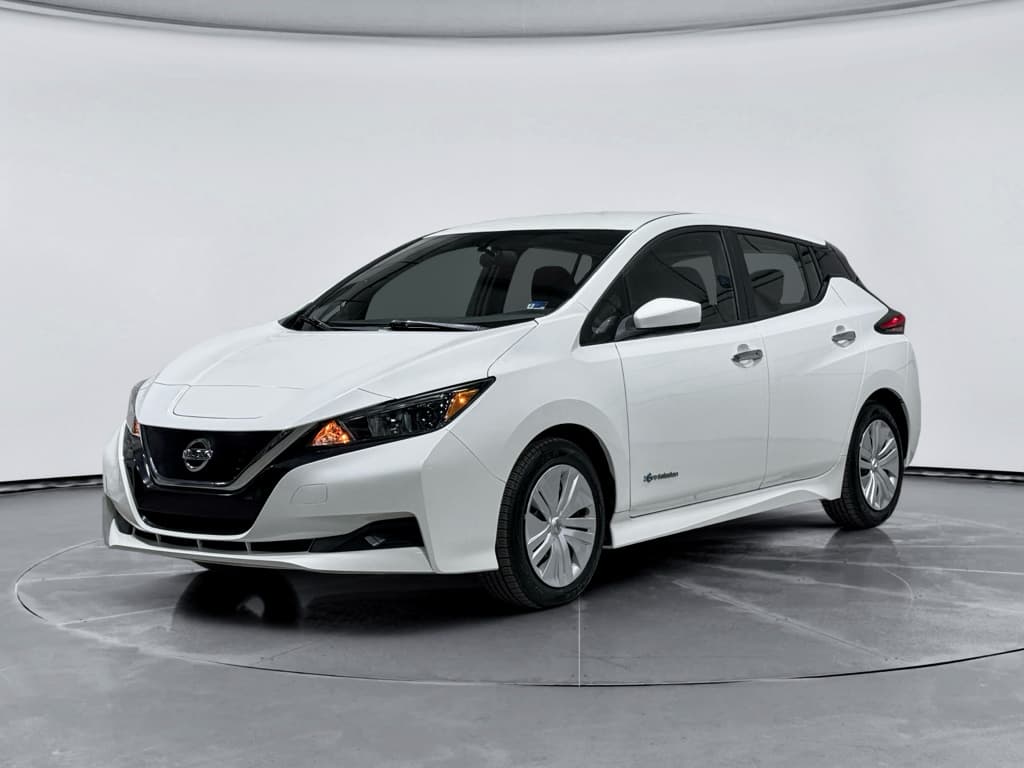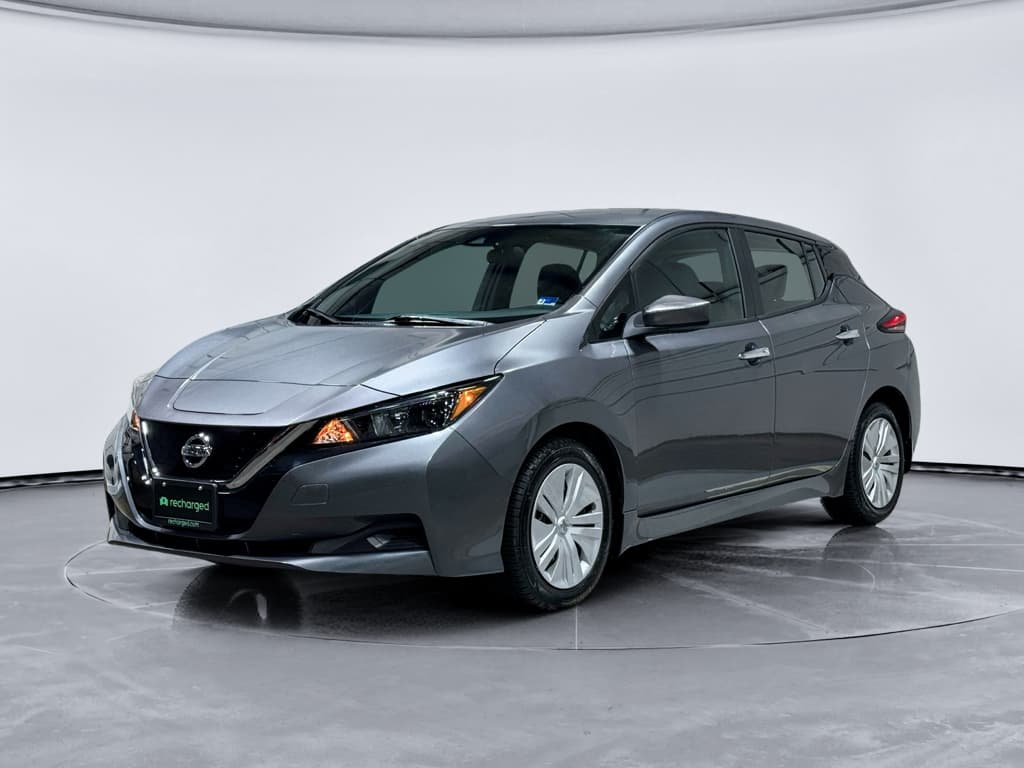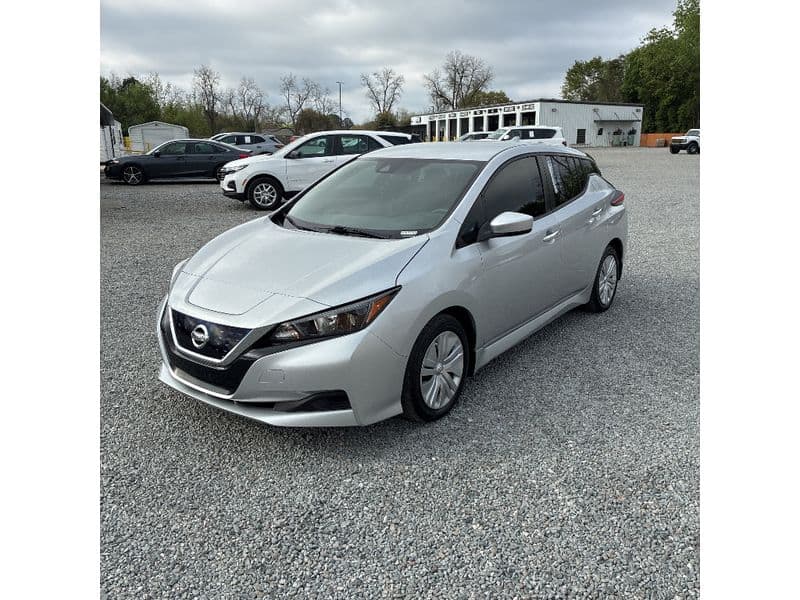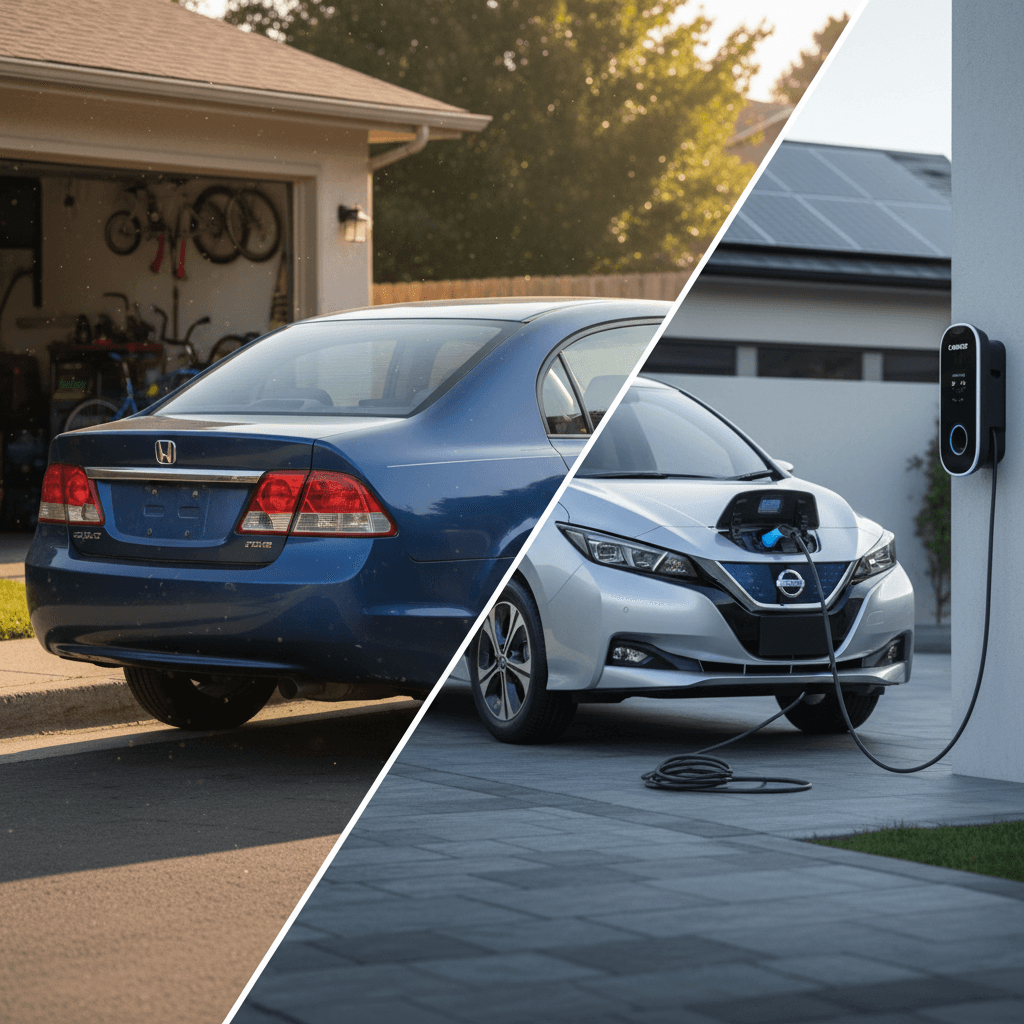
If you’ve driven a Honda Civic for years, you already know why it’s a default choice: reliable, efficient, and easy to live with. But with gas prices bouncing around and used EV prices softening, more Civic drivers are asking a new question: should I switch from a Honda Civic to a Nissan Leaf? This review-style guide walks through what really changes day to day, driving feel, costs, range, and the quirks of buying a used Leaf, so you can decide if the jump to an electric hatchback makes sense for you.
Who this article is for
Why Civic Owners Start Looking at the Nissan Leaf
The Civic and the Leaf occupy similar territory on paper: compact, practical, inexpensive to run. The big difference is that the Civic burns gasoline while the Leaf runs purely on electricity. For many Civic owners, the Leaf shows up on their radar when they do the math on fuel and maintenance, or when their commute settles into a predictable pattern that fits EV range.
Typical 5–7 Year Cost Picture: Leaf vs Civic
The net effect is that, for a lot of Civic owners, the Leaf can feel like a natural upgrade in running costs and refinement, with the main trade-off being long-distance flexibility and the need to learn a bit about battery health.
Driving Experience: From Honda Civic to Nissan Leaf
What feels better than your Civic
- Instant torque: The Leaf jumps off the line more eagerly than most Civics, especially in city driving.
- Quieter cabin: No engine noise, fewer vibrations, and smoother acceleration make commuting feel calmer.
- One-pedal driving: On newer Leafs with e-Pedal, you can slow the car using just the accelerator, addicting in traffic.
What may feel worse
- Highway refinement: At 70+ mph, the Leaf can feel less composed and noisier than a newer Civic sedan.
- Handling: The Leaf is secure but not sporty, Civic drivers who enjoy backroads may find it less engaging.
- Weight: The battery makes the Leaf heavier; you’ll notice it in quick lane changes or on rough pavement.
If you’re used to a base or mid‑trim Civic, the Leaf will likely feel quicker off the line and smoother in traffic. If your Civic is a sportier Si or you’re particular about steering feel, you may miss the Honda’s balance and feedback. Most daily commuters, though, come away impressed by how relaxed and easy the Leaf is to drive in the city.
Test-drive tip for Civic owners
Real-World Ownership Costs: Nissan Leaf vs Honda Civic
From a pure cost-of-ownership standpoint, a used Leaf can undercut a Civic by thousands of dollars over a typical 5–7 year ownership window. That said, the Leaf concentrates much of its risk in one component: the high-voltage battery. Your job as a buyer is to trade predictable fuel and maintenance savings against that battery risk.
Leaf vs Civic: Typical 5-Year Cost Comparison (Used, U.S. Buyer)
Rough, illustrative numbers for a typical commuter putting ~12,000 miles per year on the car, assuming mid‑teens cents per kWh electricity and mid‑$3s per gallon gasoline. Actual numbers will vary by region and model year.
| Category | Used Nissan Leaf | Used Honda Civic |
|---|---|---|
| Purchase price | Often lower for similar-age car, especially older 40 kWh Leafs | Usually holds value well; may cost more than an equivalent Leaf |
| Energy cost per mile | Typically much lower (home charging is key) | Higher; even at 35–40 mpg, gas adds up |
| Routine maintenance | Fewer items: no oil, plugs, belts; brakes last longer | Regular oil changes, transmission service, exhaust, more fluids |
| Repairs risk | Mainly centered on battery health and electronics | Engine, transmission, emissions, plus normal wear |
| Resale value | Can be sensitive to battery degradation and range | Historically strong residuals, easier to sell anywhere |
These figures are directional, not quotes. Always run numbers using your own utility and fuel prices.
Don’t ignore battery replacement math
For many Civic owners with a stable commute and the ability to charge at home, the Leaf’s lower fuel and maintenance costs more than compensate for slightly higher battery risk, especially if you buy a car with documented battery health and remaining warranty.
Range and Commuting: How the Leaf Really Compares
Range is where the switch from Civic to Leaf feels most dramatic. Your Civic can go 400+ miles on a full tank and refill in five minutes. A Leaf’s usable real‑world range, especially as a used car, can be more like 90–170 miles depending on battery size, age, climate, and how the previous owner treated it.
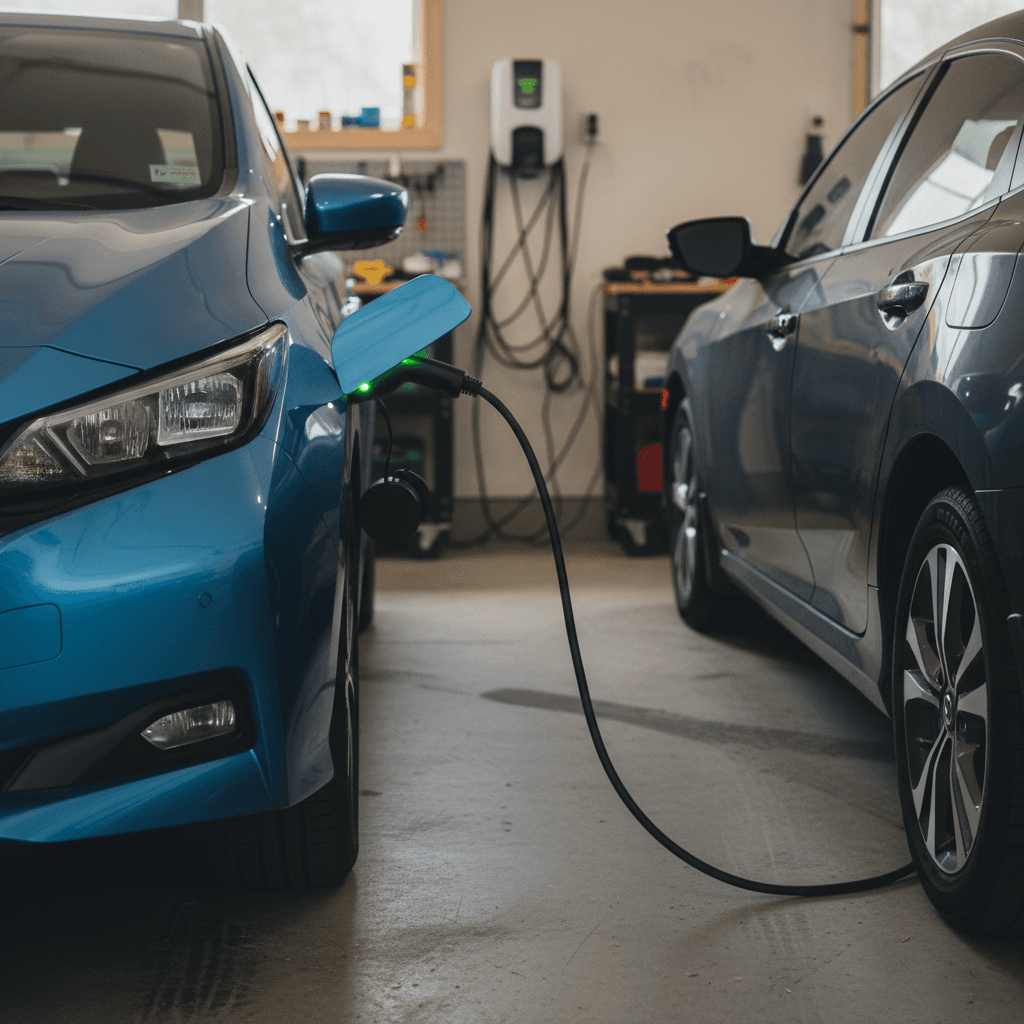
Typical Real-World Range by Common Leaf Battery Packs
Rough expectations for a healthy used Leaf in mild conditions, starting near full charge.
24 kWh (early Leafs)
Real‑world range: ~60–80 miles on a healthy pack.
Works for short urban commutes and second‑car duty, but many Civic owners will find this too limiting.
30–40 kWh (2016–2022 core models)
Real‑world range: roughly 90–140 miles depending on age and climate.
Sweet spot for many ex‑Civic commuters with 20–60 mile daily roundtrips.
62 kWh Leaf Plus
Real‑world range: often 170–200+ miles when healthy.
Best match to the Civic’s flexibility if you take occasional longer drives.
Easy commute fit test
Most Civic owners who are good candidates for a Leaf have a round‑trip commute under about 70 miles, access to overnight charging, and the ability to use another car or rental for the occasional long road trip. If you’re doing 200‑mile days or you can’t charge at home, a Leaf will feel like too much of a compromise coming from a Civic.
Comfort, Practicality, and Features in Daily Use
On space and comfort, the Leaf plays in the same sandbox as the Civic but with its own personality. It’s a tall hatchback with generous headroom and easy ingress/egress. The cargo area is boxier than a Civic sedan’s trunk, which many owners find more practical for strollers, sports gear, or bulky groceries.
- Seating: Cloth in lower trims, leather in higher ones; most Civic drivers find Leaf seats comfortable for daily commuting but not exceptionally plush for long interstate drives.
- Noise: The absence of engine noise makes around‑town driving quieter than a Civic, though wind and road noise can be more noticeable at highway speeds.
- Tech: Many Leafs include modern safety tech, automatic emergency braking, lane departure warning, available ProPILOT Assist, though features vary strongly by trim and year.
- Climate control: Instant heat is a plus in winter, but using heat or A/C heavily will trim range compared with your Civic, where climate use hardly affects how far you can go on a tank.
Practical win vs Civic
Downsides and Common Complaints When Switching
For all its strengths, the Leaf isn’t a perfect Civic replacement for every driver. When I talk to former Civic owners who’ve made the switch, a few frustrations come up over and over.
Most Common Complaints from Ex‑Civic Owners
Highway range anxiety
Even if the Leaf has enough range for your usual commute, unexpected detours, weather, or weekend trips can feel stressful until you fully trust the battery gauge and get a feel for real‑world consumption.
Public charging learning curve
Finding, activating, and paying for public chargers is more complex than pulling into any gas station. Apps, RFID cards, and varying pricing can be a culture shock after the Civic’s simplicity.
Battery degradation worries
Unlike a Civic engine, which often gives lots of warning before it fails, a Leaf’s battery can gradually lose range in a way that’s hard to see without tools like LeafSpy or a detailed battery health report.
Resale value uncertainty
Because buyers scrutinize battery health, some owners worry more about resale timing and value than they ever did with a Civic, which tends to be easy to sell in almost any condition.
The big red flag: weak batteries
Buying a Used Leaf as a Former Civic Owner
Shopping for a used Leaf is not like shopping for a used Civic. With the Honda, you might focus on mileage, maintenance records, and accident history. With the Leaf, you still care about those, but battery health moves to the top of the list.
What Matters Most When You’re Cross-Shopping Civic vs Used Leaf
Key differences in how you should approach the buying process.
| Priority | Honda Civic (used) | Nissan Leaf (used) |
|---|---|---|
| Powertrain health | Listen for noise, check for leaks, review maintenance records | Rely on battery health metrics (SOH, bars, diagnostics) and charging history |
| Mileage | Strong predictor of wear | Less important than battery condition; a lower‑mile Leaf can have a weaker pack than a higher‑mile one |
| Fuel/energy costs | Estimate but relatively predictable | Critical part of the value story; cheap electricity amplifies Leaf’s advantage |
| Inspection tools | Standard pre‑purchase inspection | Add EV‑specific checks: battery scan, charging test, possibly LeafSpy |
Battery health isn’t a footnote with a Leaf, it’s the headline.
How Recharged helps de‑risk a used Leaf
Quick Checklist for Civic Owners Test-Driving a Used Leaf
1. Confirm battery health
Check the in‑car battery bars (aim for 11–12 bars on newer cars) and, ideally, review a professional battery report or diagnostics. If the seller can’t provide any documentation, be cautious.
2. Match range to your real commute
Drive a route similar to your daily use at normal speeds and watch how quickly the state of charge drops. Make sure the Leaf can comfortably handle your worst‑case day with charge left over.
3. Test home charging options
Verify you have access to a dedicated outlet or Level 2 charger. If possible, plug the Leaf in and confirm that charging starts and stays stable.
4. Check fast‑charging behavior
If the car supports DC fast charging and you plan to use it, test at least one quick‑charge session to confirm it takes a charge at expected speeds without error messages.
5. Review service and recall history
Just as with a Civic, confirm software updates and recalls are done, and that basic maintenance (brake fluid, cabin filter, tires) is up to date.
Step-by-Step: How to Switch from a Civic to a Leaf
Two Paths from Civic to Leaf
Path A: Budget-Minded Commuter
Audit your actual driving: track your miles for a couple of weeks to see your real daily range needs.
Get a quote for home charging: check if a simple 240V outlet or basic Level 2 charger fits your budget and panel capacity.
Shop 30–40 kWh Leafs: prioritize healthy batteries over the absolute lowest price or fanciest trim.
Use total cost of ownership calculators to compare a used Leaf payment + electricity to keeping or replacing your Civic.
Leverage your Civic’s value as a trade‑in or private sale to reduce what you finance on the Leaf. Recharged can provide an instant offer or help with consignment.
Path B: Flexibility-Focused Driver
Decide how often you truly need 200+ mile days. If it’s more than a few times a year, look at a Leaf Plus or consider keeping a gas backup.
Investigate public charging near your home, work, and regular routes so you’re not relying purely on hope for longer days.
Focus on 40 kWh late‑model or 62 kWh Leaf Plus examples with strong battery reports for maximum usable range.
Test‑drive in poor conditions (cold, rain, highway speeds) to understand worst‑case range before you commit.
Plan your "Plan B": rentals, car‑sharing, or access to another family car for road trips where the Civic once shined.
FAQ: Honda Civic Owner Switch to Nissan Leaf
Frequently Asked Questions
Is the Switch Worth It? Final Thoughts
For the right driver, moving from a Honda Civic to a Nissan Leaf feels less like giving something up and more like stepping into a calmer, cheaper‑to‑run version of the car you already know. The Leaf is smooth, quiet, and surprisingly quick around town, and its hatchback layout is genuinely useful. Its Achilles’ heel is obvious: range depends entirely on battery health, and poor battery health can undercut the entire experience.
If your daily driving is predictable, you can charge at home, and you verify that the Leaf you’re eyeing has a solid pack, the numbers usually favor the EV over keeping, or replacing, your Civic. Buying through a platform like Recharged, where you get a Recharged Score Report with verified battery health, expert guidance, and financing and trade‑in options, further reduces the risk. Do a clear‑eyed assessment of your mileage, charging situation, and budget, and you’ll know whether the Nissan Leaf is the logical next chapter after life with a Civic, or whether your best move is to stay on gas a little longer.