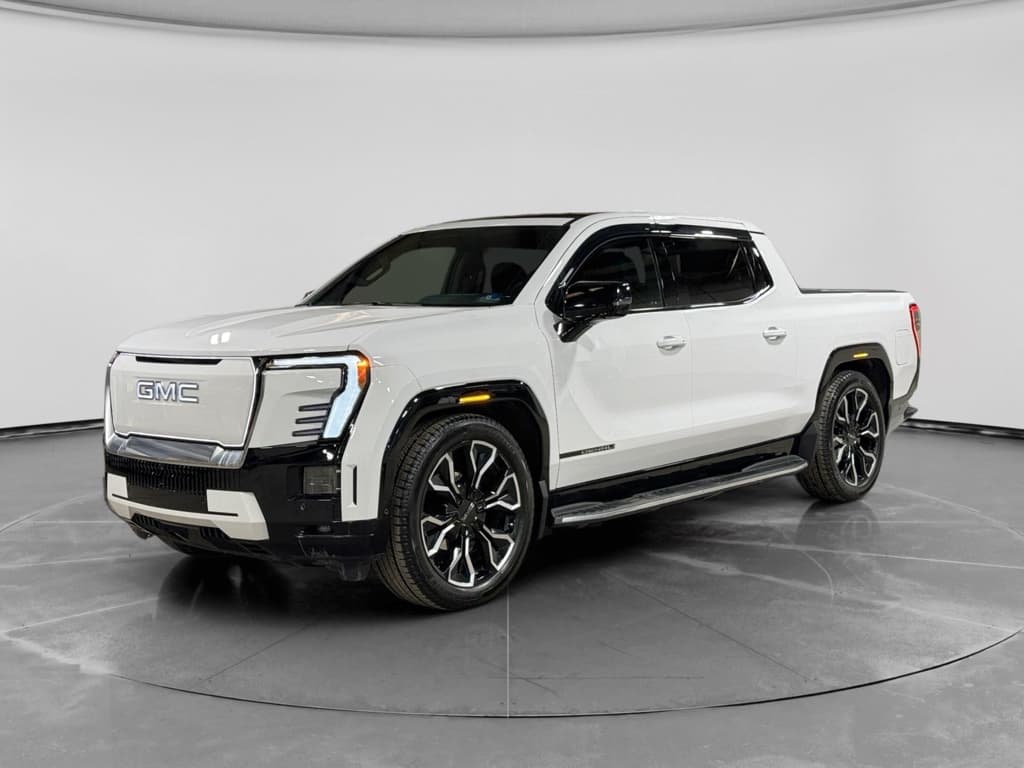
If you own or are eyeing a GMC Hummer EV, you already know it’s a 9,000‑plus‑pound electric super truck, not a hyper‑efficient commuter. But when temperatures drop, even capable EVs lose range, and the question becomes: how bad is GMC Hummer EV winter range loss, and what can you do about it?
Quick answer
How much winter range loss in a GMC Hummer EV?
Official EPA ratings for the GMC Hummer EV pickup and SUV fall in the low‑to‑mid‑300‑mile range depending on trim, tires, and wheels. Many 2024–2026 configurations are rated around 312–355 miles on a full charge in mixed driving. That’s your starting point before winter and real‑world driving styles enter the picture.
GMC Hummer EV winter range at a glance
Put that together and you get some practical planning numbers for a healthy Hummer EV battery in cold weather:
- If your trim is rated at ~330 miles EPA, planning for 230–260 winter highway miles between 10–90% state of charge (SoC) is realistic.
- Short‑trip city driving with lots of stops, preconditioning, and slower speeds can do better, sometimes close to 70–80% of your normal city range even in deep cold, as long as the battery stays warm.
- Aggressive driving, off‑roading, deep snow, roof racks, and big mud‑terrain tires can push winter loss past 30–35% compared to EPA numbers.
Don’t trust the EPA number in winter
Why the GMC Hummer EV loses range in winter
All EVs lose range in cold weather, but the Hummer EV’s sheer size and off‑road focus amplify that effect. There are three main physics problems working against you when temperatures drop.
Three main culprits behind Hummer EV winter range loss
The same physics as any EV, just magnified by mass and tires
Cold battery chemistry
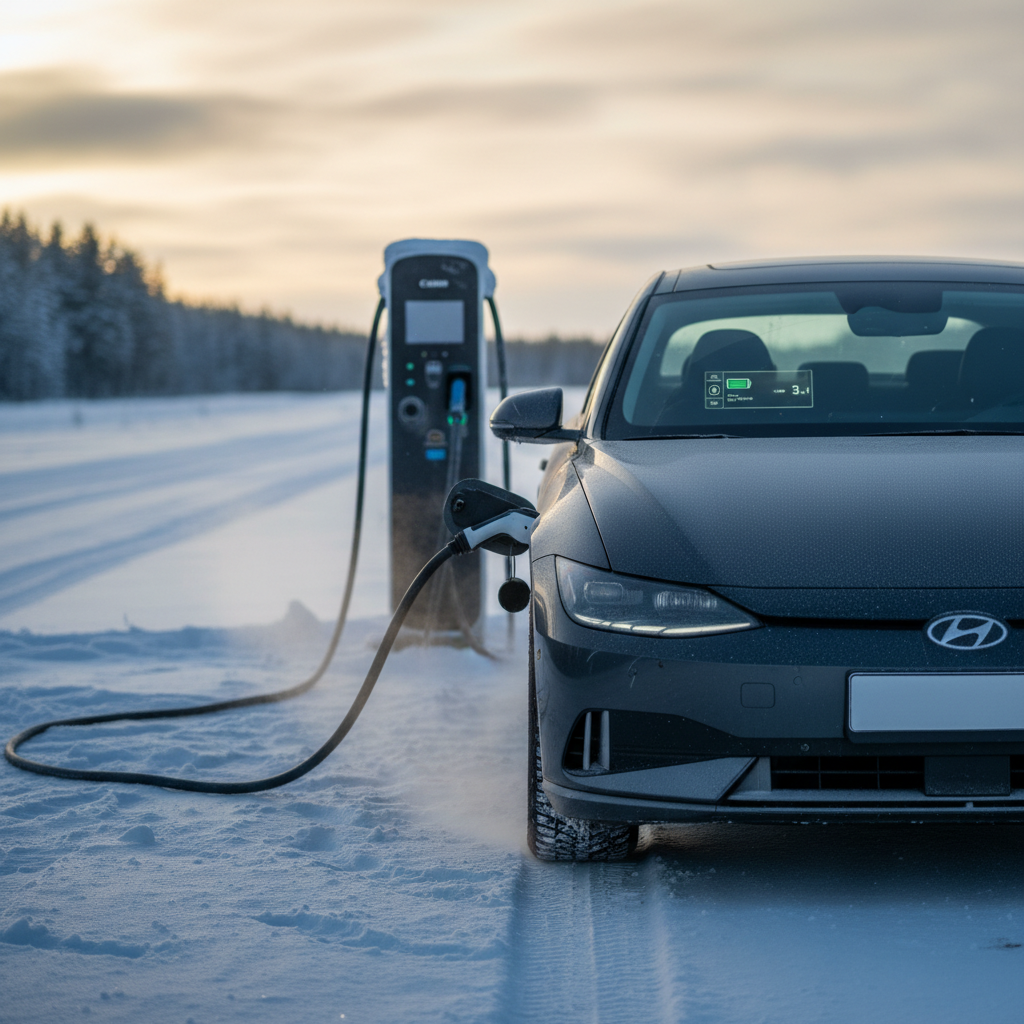
At low temperatures, the lithium‑ion cells inside the Ultium pack become less efficient. Internal resistance rises, so you need more energy for the same power output, and DC fast‑charging speeds can drop.
Cabin & battery heating
Unlike an engine that throws off waste heat, an EV must use battery energy to warm the cabin and the pack. In a huge cabin like the Hummer EV’s, climate control can easily draw several kilowatts at startup.
Drag, weight & tires
The Hummer EV is tall, wide, and heavy with aggressive rubber. In cold air (which is denser) and on wintry pavement, aerodynamic drag and rolling resistance go up, so each mile costs more energy.
Ultium pack and heat pump
Real-world winter range examples
Because the Hummer EV is still a relatively low‑volume niche truck, there isn’t the same mountain of owner data you might see for a Tesla Model 3. But test drives, efficiency reports, and cold‑weather modeling let us sketch a realistic picture.
Illustrative GMC Hummer EV winter range scenarios
Approximate real‑world winter ranges for a healthy Hummer EV battery, assuming ~330‑mile EPA rating, 10–90% SoC window, and no trailer.
| Scenario | Temp & Conditions | Average Speed | Estimated Usable Range |
|---|---|---|---|
| Suburban errands | 30°F, mostly dry, light snow patches | 25–40 mph | 200–230 miles |
| Highway cruise | 25°F, dry, normal all‑terrain tires | 70–75 mph | 210–240 miles |
| Mountain trip | 20°F, climbs & descents, ski gear | 55–70 mph | 180–210 miles |
| Deep cold city | 10–15°F, preheated, short trips | 20–35 mph | 170–210 miles (if the pack stays warm) |
These are planning numbers, not guarantees, actual results depend heavily on speed, elevation, wind, and tire choice.
Watch your mi/kWh, not just range
Factors that make Hummer EV winter loss better or worse
Two Hummer EVs can behave very differently in the same weather. The way you configure and drive the truck can easily swing cold‑weather range by 20–30% either way.
What helps your winter range
- Smaller wheels / less aggressive tires reduce rolling resistance.
- Preconditioning while plugged in warms the pack and cabin without draining the drive battery.
- Using seat and wheel heaters lets you set a slightly cooler cabin temperature.
- Driving 5–10 mph slower on the highway can easily add 10–30 miles of range.
- Eco or normal drive modes soften throttle response and limit peak power draw.
What hurts your winter range
- Off-road or mud‑terrain tires dramatically increase drag, especially in cold, dense air.
- Short, repeated cold starts force the truck to re‑heat the cabin and pack over and over.
- High speeds (75–80 mph+) are brutal on aerodynamic drag in winter air.
- Roof racks, ski boxes, and light bars add even more drag to an already boxy truck.
- Towing and heavy payloads multiply the energy penalty of winter driving.
Be extra conservative when towing
How to cut Hummer EV winter range loss
You can’t cheat physics, but you can work with it. A few habits make a meaningful difference in GMC Hummer EV winter range loss, without turning your truck into a science project.
7 practical ways to stretch Hummer EV winter range
1. Always leave with a warm battery
Use scheduled departure or remote start while plugged in so the Hummer EV warms the pack and cabin from the wall, not the drive battery. You’ll see better initial efficiency and faster DC charging later.
2. Use seat and steering wheel heaters first
Heated surfaces sip energy compared to blasting the HVAC. Set the cabin a few degrees cooler and let the seat and wheel do most of the work.
3. Pre‑scrape, then pre‑heat
Brush off snow and scrape ice before you pre‑heat. That way you’re not wasting battery power melting several inches of snow off the glass and roof.
4. Pick a realistic highway speed
In a brick‑shaped, 9,000‑lb truck, going from 70 to 78 mph can cost you <strong>dozens of miles</strong> of range over a winter road trip. Cruise at the right lane pace when you can.
5. Group short trips together
Cold starts are the enemy. If possible, batch errands so the pack warms up once and stays warm instead of cooling down fully between every 5‑mile drive.
6. Check tire pressure often
Cold air can drop tire pressure by several psi. Under‑inflated, aggressive tires are a double hit to winter range and stability. Adjust pressures to spec when tires are cold.
7. Use DC fast charging strategically
On winter road trips, plan shorter hops, charging from ~10–60% instead of 10–90% keeps you in the Hummer EV’s faster charge window, reduces time in the cold, and keeps the pack warm.
Good news for battery health
Planning winter road trips in a Hummer EV
A big question for many Hummer EV shoppers is whether winter makes long‑distance travel impossible. The answer is no, but you do need to be more deliberate than you might be in a smaller, more efficient EV.
Winter trip planning rules of thumb for Hummer EV owners
Use these guidelines as a starting point when mapping out cold‑weather routes in apps like PlugShare, A Better Routeplanner, or GM’s native navigation.
| Planning item | Summer guideline | Winter adjustment for Hummer EV |
|---|---|---|
| Buffer to next charger | 15–20% SoC | 25–35% SoC, more in remote areas |
| Highway leg length | 140–180 miles | 100–140 miles, depending on temps and speed |
| Arrival SoC at fast charger | 5–15% | 10–20% to account for headwinds and detours |
| Charge target for next leg | 70–80% SoC | 70–90% if chargers are sparse |
| Time per stop | 25–35 minutes | 30–45 minutes in deep cold, especially if the pack is cold‑soaked |
Adjust these rules based on your own experience, terrain, and how your particular truck behaves.
Use EV‑aware route planning
Winter range and used Hummer EV battery health
If you’re looking at a used GMC Hummer EV, winter range can be a clue, but it’s not the whole story. Cold weather temporarily suppresses range, while long‑term battery degradation reduces it permanently.
Is it winter or a worn battery?
How to tell the difference when shopping used
Signs it’s just winter
- Range bounces back noticeably on warmer days.
- Short highway trips after a warmup give better mi/kWh than first few miles.
- Seller’s summer photos or notes show significantly higher projected range at the same SoC.
Signs of real degradation
- Range remains well below what peers report even in mild weather.
- Large difference between “ideal” and “projected” range on a fully warm, fully charged battery.
- History of very frequent DC fast‑charging to 100% or repeated overheating warnings.
How Recharged helps with used Hummer EVs
Hummer EV vs other EVs in cold weather
The Hummer EV doesn’t uniquely fall apart in winter, the percentage loss looks broadly similar to other modern EVs that use heat pumps and active thermal management. The difference is that you’re starting from a less efficient baseline.
- Most modern EVs retain around 75–85% of EPA range near freezing in real‑world mixed driving, according to large‑sample telemetry studies.
- The Hummer EV’s energy consumption is already among the highest of any EV on sale, thanks to its weight, frontal area, and off‑road focus.
- That means a similar percentage winter loss translates into a larger number of miles lost versus a more slippery crossover that starts at 300–330 miles EPA on far less energy.
Who’s fine with Hummer EV winter range
- Owners with home Level 2 charging and daily round‑trips under 120 miles.
- People using the truck as a second vehicle or weekend toy.
- Drivers in metro areas with dense DC fast‑charging coverage.
Who should think harder
- Rural owners in charger‑sparse regions with harsh winters.
- Frequent long‑distance towers (campers, large trailers).
- Shoppers coming from a hyper‑efficient EV and expecting similar winter behavior.
FAQ: GMC Hummer EV winter range loss
Common questions about Hummer EV cold-weather range
Key takeaways for Hummer EV winter driving
The GMC Hummer EV was never designed to win efficiency contests, and winter doesn’t change that. What does change is how carefully you have to think about range. If you assume roughly 20–30% GMC Hummer EV winter range loss, plan conservative legs, and lean on preconditioning, surface heaters, and smart routing, the truck remains very usable even in cold climates.
If you’re shopping used, remember that cold weather complicates test drives. Look for objective battery‑health data, not just one chilly commute, and use tools like the Recharged Score Report to separate normal winter behavior from genuine degradation. Do that, and you can enjoy the Hummer EV for what it is: an over‑the‑top electric toy that, with the right planning, still pulls its weight when the temperature drops.