If you’re searching for information on the Georgia EV tax credit in 2026, you’ve probably already discovered two things: the rules changed fast in 2025, and a lot of articles are now out of date. This guide walks you through what’s actually available for Georgia drivers in 2026, what ended, what remains, and how you can still save serious money, especially if you’re considering a used EV.
Timeline check: where we are now
Overview: Georgia EV tax credit in 2026
Quick status of 2026 EV incentives in Georgia
For 2026, think of Georgia EV incentives in three buckets: state-level vehicle credits (none right now), charger-related tax credits (federal plus possibly state-level for businesses), and utility rebates. That means your biggest 2026 savings opportunities are tied to installing a home Level 2 charger and taking advantage of local rebate programs, while focusing on price and total cost of ownership when you pick the vehicle itself.
Don’t rely on pre-2025 articles
Did Georgia bring back a state EV tax credit?
Georgia used to be one of the most generous EV states in the country, offering a 20% state income tax credit up to $5,000 on zero‑emission vehicles purchased before July 1, 2015. That program ended in 2015 and was replaced by higher annual registration fees for EVs. As of the 2025–2026 tax years, Georgia has not reinstated a broad state income tax credit for consumers buying electric vehicles.
- There is no 2026 Georgia state income tax credit for buying a new or used EV for personal use.
- Georgia does have statutory language around tax credits for alternative fuel and zero‑emission vehicles and EV chargers, but current provisions are narrow and often aimed at businesses or tied to earlier tax years.
- The much‑discussed idea of new state EV purchase incentives has been debated in Atlanta, especially as federal credits wound down, but as of April 2026 nothing broad‑based has been enacted for retail buyers.
Business vs. personal incentives
What happened to the federal EV tax credit?
For several years, the federal Clean Vehicle Credit offered up to $7,500 off qualifying new EVs and up to $4,000 off qualifying used EVs, subject to price caps, income limits, and North American battery sourcing rules. A subsequent federal tax bill accelerated the phase‑out, and the EV purchase credit ended for vehicles acquired and placed in service after September 30, 2025.
Federal EV purchase credit: 2024–2025 vs. 2026
Understanding what changed helps you plan your next EV purchase.
Before October 1, 2025
- Up to $7,500 federal tax credit for eligible new EVs.
- Up to $4,000 credit for certain used EVs bought from dealers.
- Could be transferred to the dealer at the time of sale to reduce the price.
- Subject to income limits, MSRP caps, and strict battery sourcing rules.
After September 30, 2025 (2026 and beyond)
- No federal Clean Vehicle Credit for new, used, or commercial EV purchases.
- Time‑of‑sale transfer option disappeared with the credit.
- Only remaining federal EV‑related benefit for consumers is the credit for home charging equipment (through June 30, 2026).
No do‑over on the federal credit
2026 Georgia EV tax credit for home chargers
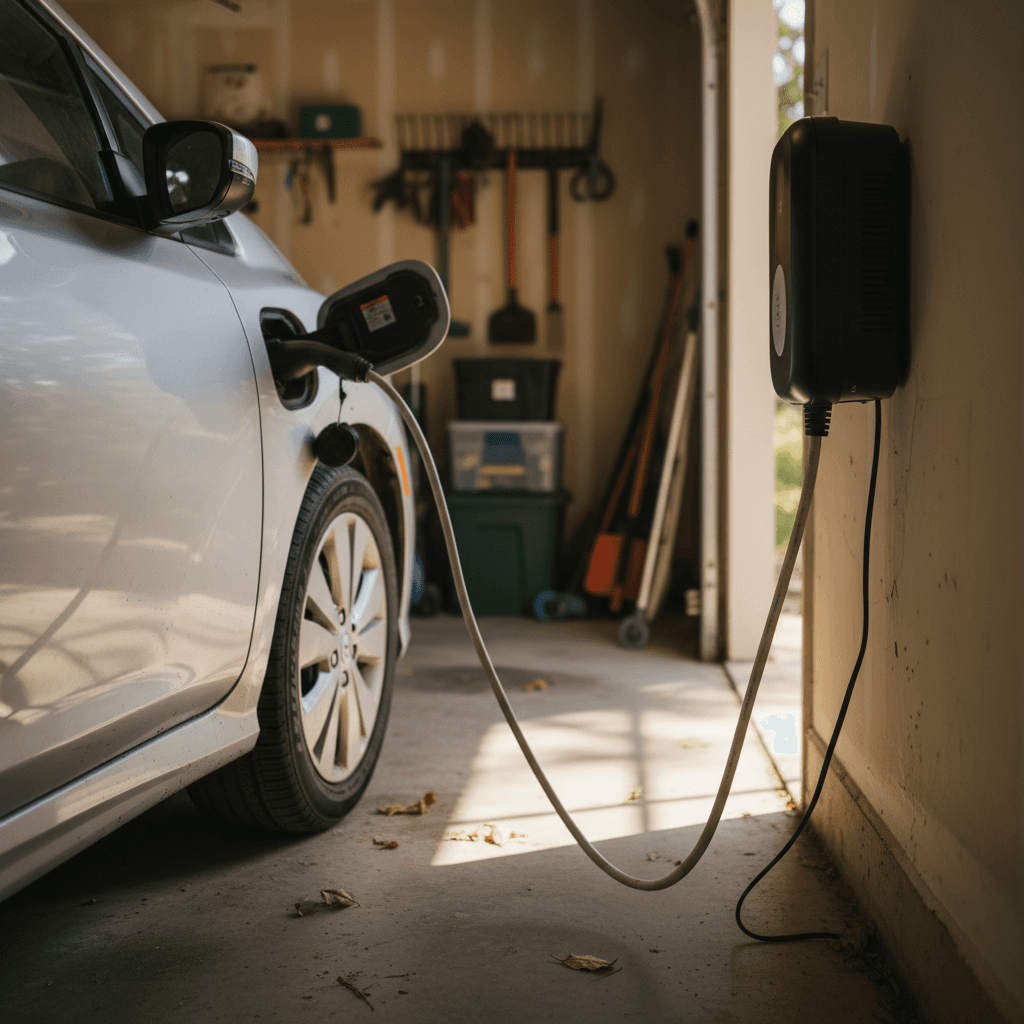
While the big federal purchase credit is gone, there’s still a meaningful federal incentive for installing a home charger. Under current law, the residential EV charging equipment credit remains available for qualifying property placed in service through June 30, 2026.
Federal home EV charger tax credit in 2026
Key facts for Georgia homeowners upgrading to Level 2 charging.
| Feature | How it works in 2026 |
|---|---|
| Type of incentive | Nonrefundable federal income tax credit for residential EV charging equipment |
| Expiration date | Applies to qualifying equipment placed in service on or before June 30, 2026 |
| Credit amount | Typically 30% of hardware and installation costs, up to a dollar cap (check current IRS limits when you file) |
| What qualifies | Wall‑mounted or hard‑wired Level 2 EV charging equipment installed at your primary residence; wiring and panel upgrades may be partially eligible |
| Where it applies | Works in Georgia just as in other states, your state of residence doesn’t change federal eligibility |
| How to claim | Keep receipts and Form 8911 instructions handy; you’ll claim the credit when you file your 2026 federal return for the year the charger goes into service |
Always confirm details with the latest IRS guidance or a tax professional before you file.
Time it right to maximize savings
2026 utility EV incentives in Georgia
Because Georgia doesn’t currently offer a statewide EV purchase tax credit, utility programs pick up some of the slack. They typically focus on home charging, not the vehicle itself, but the dollars are real, especially when combined with the federal charger credit.
Georgia utility incentives snapshot for 2026
Here’s how the most common Georgia incentives typically work in 2026. Program names and details can change, but the basic structure tends to be similar from year to year.
Typical Georgia EV utility incentives in 2026
Check your bill or your provider’s website for the latest details before you commit.
Home charger rebates
- Georgia Power: around $150 one‑time rebate for an eligible Level 2 charger installed at a residential service address.
- Smaller municipal or EMC utilities may offer their own rebates or bill credits.
- Usually requires proof of purchase and installation and sometimes a model approval list.
Time‑of‑use (TOU) rates
- Discounted overnight electricity rates when you charge during off‑peak hours.
- Higher prices during peak demand to encourage load shifting.
- Can dramatically lower the "fuel" cost of driving electric if you do most of your charging at home.
Enrollment bonuses
- Some utilities offer a small bill credit (for example, $25–$50) when you enroll an EV in a managed charging or TOU program.
- May require a smart charger or utility‑approved device.
Fine print matters
How to stack Georgia EV incentives when you buy
In 2026, you can’t lean on a big federal or state tax credit to make the numbers work on a new EV in Georgia. But you can still reduce your total cost of ownership by stacking charger credits, utility programs, and smart shopping, especially in the used market.
1. Focus on total ownership cost, not just sticker price
With purchase credits gone, you’re comparing EVs and gas cars on monthly payment, fuel, maintenance, and depreciation. EVs typically win on fuel and maintenance, especially if you charge at home on an off‑peak plan.
Look at:
- Financing terms and interest rate.
- Energy cost per mile vs. gasoline.
- Insurance premiums for each model.
- Expected resale value in 5–7 years.
2. Pair a sharp used‑EV deal with home charging incentives
Without a federal purchase credit, a well‑priced used EV can make more sense than a new one. You can:
- Buy a used EV at a discounted market price.
- Install a Level 2 charger and claim the federal home EVSE credit through June 30, 2026.
- Apply for your utility’s residential charger rebate (Georgia Power or a local provider).
Together, those two charger incentives can offset a large portion of your installation bill.
Where Recharged fits in
Ready to find your next EV?
Browse VehiclesUsed EV savings after the federal credit ends
The end of the federal used EV tax credit doesn’t mean used EVs stopped being a good deal; it just means you have to be more disciplined in your shopping. A well‑chosen used EV can still undercut a comparable gas car on up‑front price, operating costs, or both.
Key ways a used EV can still save you money in Georgia
1. Lower purchase price vs. new
Many 2‑ to 4‑year‑old EVs have already taken the biggest depreciation hit, especially in a market that was adjusting to changing federal incentives. You’re not paying the "new tech" premium.
2. Lower fuel costs with off‑peak charging
Charge at home on a time‑of‑use plan and you can often drive for the equivalent of $1–$1.50 per gallon, even before you factor in utility sign‑up bonuses.
3. Less maintenance than a used gas car
No oil changes, fewer moving parts, and reduced brake wear can lower your repair and maintenance outlay over a 5‑ to 7‑year ownership period.
4. Negotiating power in a softer EV market
With incentives winding down, some dealers are more motivated to move EV inventory. A strong pre‑purchase inspection and battery health report give you leverage on price.
5. Better fit for short Georgia commutes
If most of your driving is around Atlanta, Savannah, Augusta, or Macon, even a used EV with some battery degradation can comfortably cover your daily miles without public charging.
6. Transparency from tools like the Recharged Score
Buying through a marketplace that specializes in used EVs gives you insight into <strong>battery state of health, prior charging behavior, and pricing vs. the local market</strong>, which is critical now that you’re not counting on a tax credit to bail out a bad deal.
Step-by-step: Claiming EV incentives in 2026
The process for claiming EV‑related incentives in Georgia in 2026 is mostly about documentation. Here’s a practical roadmap you can follow whether you’re buying your first electric car or upgrading your charging at home.
Your 2026 EV incentive roadmap in Georgia
If you’re buying an EV in 2026
Decide whether a <strong>new or used EV</strong> makes more sense now that purchase tax credits are gone.
Shop broadly and compare <strong>total monthly cost</strong> (payment + insurance + charging/fuel).
If you buy used, insist on a <strong>battery health report</strong> (Recharged includes this with every vehicle).
Confirm that you will <strong>install a home Level 2 charger</strong> or have reliable charging access before you finalize the deal.
Plan your charger installation date so the equipment is in service by <strong>June 30, 2026</strong> if you want the federal EVSE credit.
If you’re installing or upgrading a home charger
Check the latest <strong>federal Form 8911</strong> instructions and confirm that your planned charger and installation qualify for the credit.
Download your utility’s <strong>2026 EV charger rebate form</strong> and read it before you buy hardware.
Save detailed invoices that clearly separate <strong>equipment cost vs. labor</strong>, as some incentives only apply to hardware.
Have your electrician pull any required permits so you don’t run into issues later with the utility or your insurer.
Once the charger is installed and working, submit your <strong>utility rebate application</strong> promptly, programs are often limited by annual funding.
When you file your 2026 federal return, work with a tax preparer or software that supports the EVSE credit and keep all receipts handy.
One folder for everything
Common pitfalls and gotchas for Georgia EV tax credits
With incentives changing quickly, it’s easy to misread an old article or assume that a national headline applies the same way in Georgia. Here are the most common mistakes we see shoppers make in 2026.
- Counting on a federal EV purchase credit that no longer exists. Many dealership ads and blog posts still reference the $7,500 credit without mentioning the September 30, 2025 cutoff.
- Installing a charger after the federal EVSE deadline. Equipment placed in service after June 30, 2026 won’t qualify unless Congress extends the credit again.
- Missing utility rebate windows. Georgia Power’s 2026 home charger rebate is capped by both time (calendar year) and funding level. When the money’s gone, it’s gone.
- Assuming Georgia reinstated a $5,000 state credit. That program ended in 2015. If someone mentions a $5,000 Georgia EV credit in the present tense, they’re talking about history, not 2026 reality.
- Skipping a battery health check on a used EV. In a world without a used‑EV tax credit, paying too much for a car with a weak battery is one of the fastest ways to erase your fuel savings.
Watch out for outdated dealership advertising
Georgia EV tax credit 2026: FAQ
Frequently asked questions about Georgia EV tax credits in 2026
Bottom line for Georgia EV tax credits in 2026
In 2026, the phrase "Georgia EV tax credit" doesn’t mean what it used to. The generous $5,000 state credit is long gone, and the federal Clean Vehicle Credit that once knocked thousands off the price of a new or used EV ended for vehicles acquired after September 30, 2025. But that doesn’t mean an EV stops making financial sense, especially in Georgia.
Your playbook now looks different: target a fairly priced EV (often used), lock in cheap home charging with a Level 2 charger and off‑peak rates, and squeeze maximum value out of the remaining federal charger credit and utility rebates before mid‑2026. Pay close attention to battery health, ownership costs, and how you actually drive, rather than hanging your decision on a single line of your tax return.
If you’re ready to explore used EV options that still add up in Georgia’s 2026 incentive environment, Recharged can help. Browse vehicles online, review each car’s Recharged Score Report, and get expert EV‑specialist guidance from your first question through delivery, whether that’s to your driveway in Savannah or to an apartment garage in Atlanta.