If you own or are shopping for an electric vehicle in Georgia, the rules around Georgia electric car inspection requirements can be surprisingly simple, and a little confusing. You’ll hear about emissions tests, county rules, and title inspections, but not all of it applies to EVs. This guide breaks down exactly what the state expects when you register, renew, buy, or sell an electric car in Georgia, with a special focus on used EVs.
Quick answer
How Georgia Handles Electric Car Inspections
Georgia splits vehicle requirements into a few buckets: emissions testing, registration/title checks, and, in special cases, inspections tied to branded titles such as salvage or rebuilt. For a typical battery-electric vehicle (BEV) with a clean title, there is no state-mandated safety inspection like you’ll find in some other states, and there’s no tailpipe emissions test because there’s no tailpipe.
Georgia EV Ownership at a Glance
Where things do get more nuanced is when you move counties, bring an EV in from out of state, or consider a used electric car with previous damage. In those cases, your experience at the county tag office and DMV can look a little different, and it pays to know the rules before you sign for that used Model 3 or Bolt EUV.
Do Electric Cars Need Emissions Tests in Georgia?
If you drive a fully electric vehicle, think Tesla, Nissan LEAF, Chevy Bolt, Hyundai Ioniq 5, you do not need an emissions test in Georgia. The state’s testing program targets gasoline-powered vehicles and certain hybrids in specific metro Atlanta counties, but battery-electric vehicles are explicitly exempt because they don’t burn fuel.
- Battery-electric vehicles (BEVs): No emissions test required anywhere in Georgia
- Plug-in hybrids (PHEVs): May require emissions testing in certain counties, depending on model year and weight
- Conventional hybrids (HEVs): Typically treated like gasoline vehicles for testing purposes
- Gasoline and diesel vehicles: Subject to emissions rules where applicable
Watch out with plug-in hybrids
For metro Atlanta residents, where emissions testing is part of life for many drivers, this exemption is one of the quiet perks of going electric. You still pay registration fees, including Georgia’s additional EV fee, but you’re not scheduling yearly visits to an emissions station for your BEV.
Inspection Rules When You Buy a Used EV in Georgia
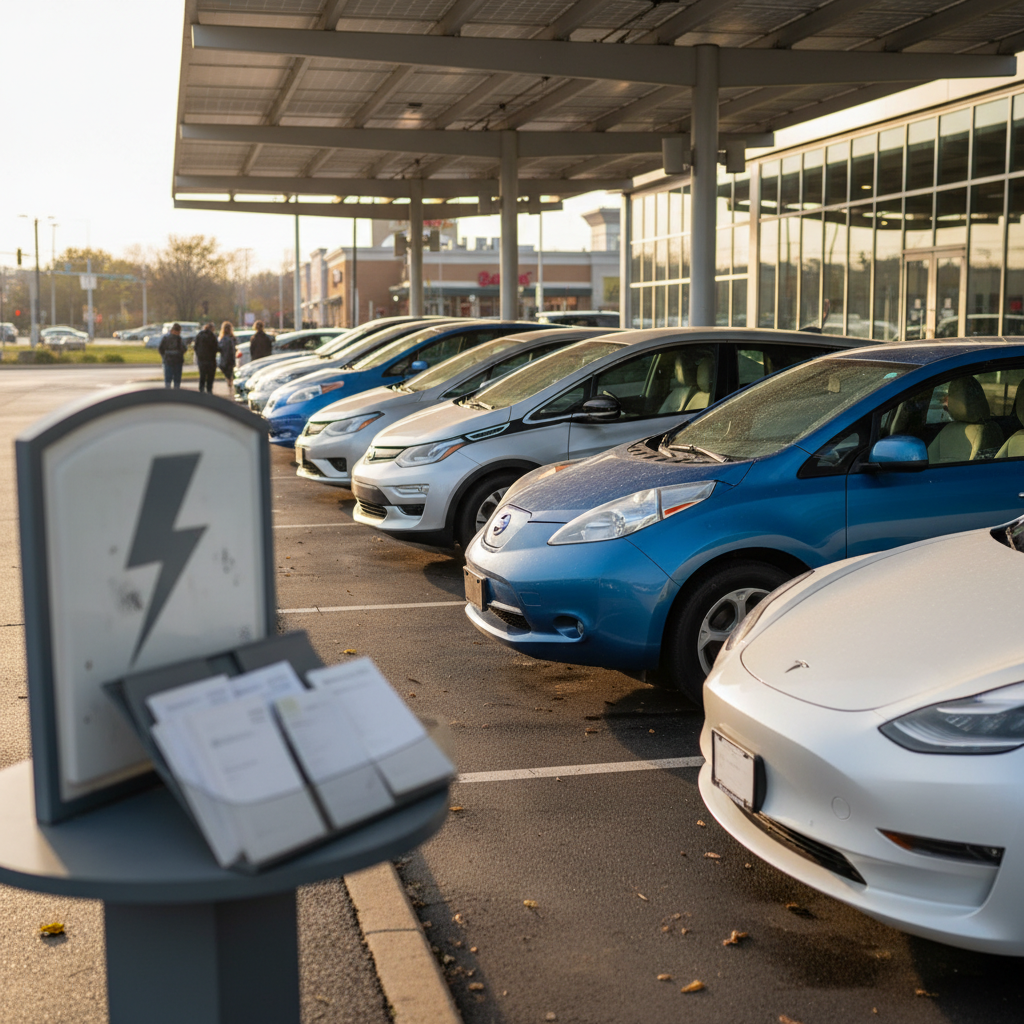
When you buy a used electric vehicle in Georgia, there’s no special state-run EV inspection. Instead, the state focuses on paperwork and the vehicle’s legal status, while the burden of checking condition and battery health largely falls on you as the buyer.
Used EV Purchase Scenarios in Georgia
How inspection rules change by where and how you buy
Buying from a Georgia dealer
State inspection: No special EV inspection.
Your focus: Battery health, accident history, and any dealer add-ons. Dealers handle most title and registration paperwork for you.
Buying private-party in Georgia
State inspection: None for a clean-title EV.
Your focus: Pre-purchase inspection, battery diagnostics, and making sure the seller’s name matches the title and Georgia ID.
Bringing an EV from out of state
State inspection: No emissions test for BEVs, but title verification at the county tag office.
Your focus: Verify title status, prior accidents, and ensure out-of-state lien releases are correct.
Pro move for used EV buyers
Registering an Electric Car in Georgia: Step-by-Step
Because there’s no special EV inspection lane, registering your electric car in Georgia looks similar to registering a gasoline vehicle, minus the emissions slip for BEVs. The exact process can vary a little by county, but the core steps are consistent statewide.
Step-by-Step: Registering Your Electric Car in Georgia
1. Confirm your vehicle type
Make sure your car is clearly a <strong>battery-electric vehicle</strong> (no gas engine). This determines your emissions exemption and how the DMV codes your registration.
2. Gather title and bill of sale
You’ll need the signed title (or manufacturer’s certificate of origin for new cars) plus a bill of sale or dealer buyers order. If there’s a lien, ensure lender information is complete and accurate.
3. Verify ID and insurance
Georgia requires proof of identity and <strong>valid insurance</strong> before registration. Confirm your policy lists the EV and meets the state’s minimum coverage requirements.
4. Visit your county tag office or submit via dealer
If you buy from a dealer, most of this flows through them. For private-party or out-of-state purchases, you’ll typically visit your county tag office with your documents and fees.
5. Pay registration and EV fees
In addition to standard title and tag fees, Georgia currently charges an annual <strong>EV registration fee</strong> to offset lost gas tax revenue. Expect this to appear on your bill every year.
6. Keep your paperwork
Hold onto your registration card, title (if mailed to you), and any receipts. They’ll matter when you sell or trade the EV later.
How Recharged helps
Ready to find your next EV?
Browse VehiclesCounty-by-County Emissions Overview for EV Owners
Georgia’s emissions program doesn’t treat counties the same. Thirteen metro Atlanta counties require annual testing for qualifying gasoline and hybrid vehicles. For fully electric cars, that patchwork doesn’t change your responsibilities, you’re still exempt, but it does shape the experience for households that mix EVs and gas vehicles.
Georgia Emissions Counties and What They Mean for EVs
Where testing is required for gas vehicles, but not for BEVs.
| County | Emissions Test for Gas Cars | Emissions Test for BEVs | What EV Owners Should Know |
|---|---|---|---|
| Cherokee | Yes, for applicable model years | No | You may take your gasoline car to a test station; your EV skips this step. |
| Clayton | Yes | No | Budget time for gas-vehicle tests before renewal; your electric car only needs registration paid. |
| Cobb | Yes | No | Common for families here to manage both EV exemptions and gas tests in the same household. |
| Coweta | Yes | No | If you move here from a non-emissions county, your gas car rules change, but your EV’s do not. |
| DeKalb | Yes | No | One of the busiest testing areas. EVs avoid the lines completely. |
| Douglas | Yes | No | Your county renewal notice may still mention emissions; it won’t apply to BEVs. |
| Fayette | Yes | No | Check carefully if you own a plug-in hybrid; some are test-required here. |
| Forsyth | Yes | No | Fast-growing EV area; emissions requirements apply only to vehicles with combustion engines. |
| Fulton | Yes | No | Atlanta’s core county: EV drivers enjoy emissions exemption and strong charging coverage. |
| Gwinnett | Yes | No | Large suburban fleet; EVs are exempt but often share garages with test-required vehicles. |
| Henry | Yes | No | If you’re new to Henry County, confirm your address is updated before renewal season. |
| Paulding | Yes | No | Rural-to-suburban mix; EV owners benefit from exemption though public chargers are more spread out. |
| Rockdale | Yes | No | Smaller population, same emissions rules as larger metro counties, except BEVs are exempt. |
EVs registered in these counties are exempt from testing, but household gas vehicles may still need annual emissions inspections.
Moving between Georgia counties?
Safety and Title Inspection Issues to Watch For
Georgia doesn’t require a routine safety inspection for every vehicle, but some used EVs carry title histories that trigger extra steps. That’s where buyers can get tripped up if they don’t read the fine print.
- Salvage or rebuilt titles: Vehicles that were totaled and then repaired often need a state inspection before a rebuilt title is issued. If you’re buying one of these EVs, confirm that all inspections are complete and documentation is in order before you try to register it.
- Out-of-state rebuilt titles: An EV that was salvaged and repaired in another state may face additional scrutiny in Georgia. Expect extra paperwork and possible inspection requirements.
- Odometer or VIN discrepancies: If records don’t match, county tag offices can pause your registration while they verify the vehicle’s identity.
Be cautious with cheap rebuilt EVs
Battery Health: The One Check Georgia Doesn’t Require
Unlike emissions or title status, Georgia doesn’t regulate EV battery health at registration or renewal. The state cares that your paperwork is clean, not whether your battery still delivers the range you expect. For a used EV buyer, that’s the single biggest blind spot in the process.

Why battery health matters more than emissions for EVs
On an electric car, the battery is the most expensive component and the biggest driver of real-world usability. A pack that’s lost 20–30% of its original capacity will cut your range, limit road trip flexibility, and reduce resale value, even though the car still registers just fine with the state.
How Recharged fills the gap
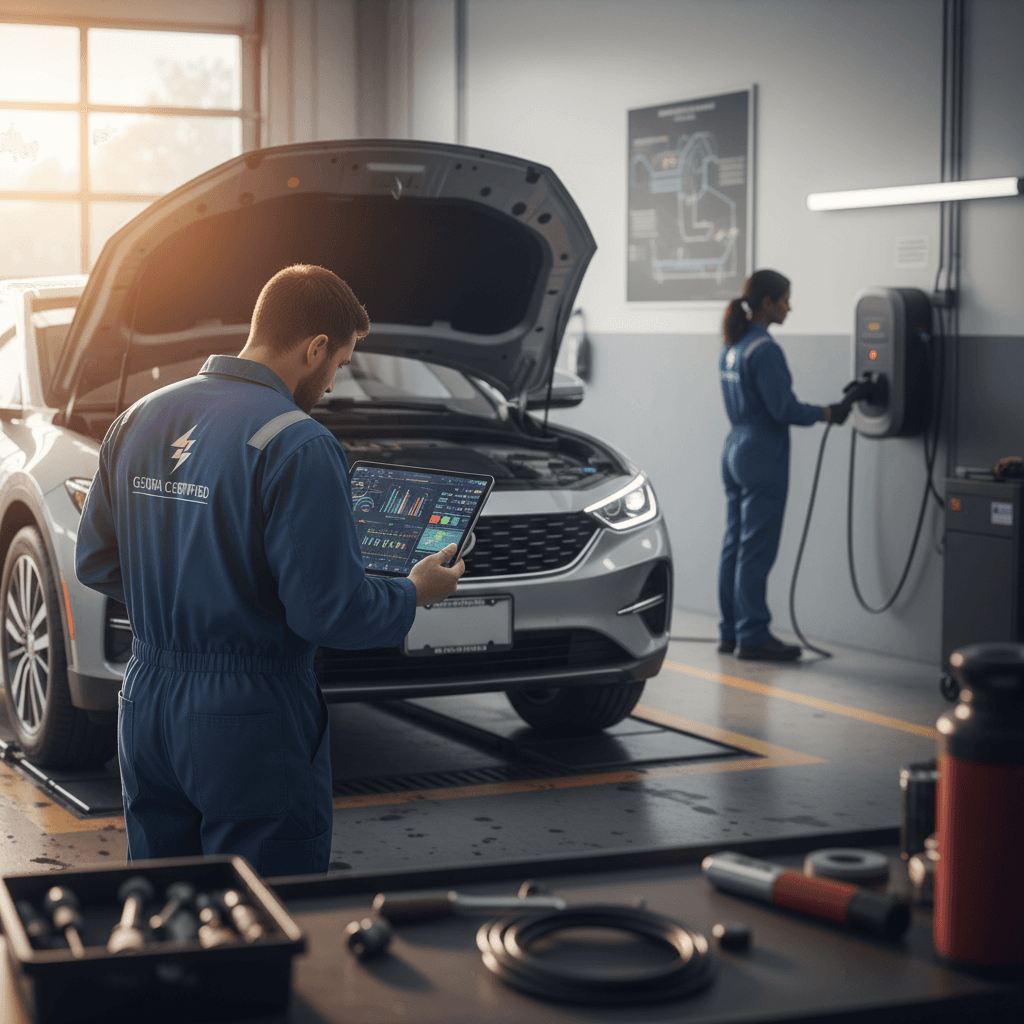
Every vehicle sold through Recharged includes a Recharged Score Report with verified battery health. We run deep diagnostics so you can see usable capacity, charging history patterns, and how the pack compares to similar EVs. It’s the kind of transparency Georgia’s registration system doesn’t provide, but EV buyers absolutely need.
Documentation You Should Bring for Your EV
EVs skip the emissions lane, but they don’t skip paperwork. Showing up prepared, whether you’re at the county tag office or closing a private-party deal, keeps you out of limbo and shortens your waiting time.
Georgia EV Paperwork Checklist
Government-issued ID
Georgia driver’s license or other accepted ID matching the name on the title or bill of sale.
Title and bill of sale
For private-party deals, ensure the seller signs the title correctly and provides a dated bill of sale with purchase price.
Proof of insurance
Have your insurance card or digital proof ready, and confirm your policy lists the correct VIN.
Lien documentation
If there’s a loan, you’ll need the lienholder’s information. For paid-off out-of-state vehicles, bring any lien release letters.
Out-of-state paperwork (if applicable)
Registration, temporary tags, and any inspection forms from the previous state, especially for rebuilt or salvage titles.
Battery and service records (optional but smart)
For used EVs, bring service history, battery reports, or a <strong>Recharged Score</strong> printout to document vehicle condition.
Common Mistakes Georgia EV Buyers Make
Georgia’s light touch on EV inspections is a blessing and a curse. It simplifies registration, but it also shifts more due diligence onto the buyer, especially when you’re looking at older or higher-mileage used EVs. Here are missteps that show up again and again.
- Confusing BEVs with PHEVs: Buyers assume every plug-in is emissions-exempt, then discover their new plug-in hybrid still needs a test in Cobb or DeKalb County.
- Ignoring title brands: Chasing a low price on a salvage or rebuilt EV without understanding the inspection hoops, or the real repair quality behind that title.
- Skipping battery diagnostics: Taking a quick test drive and trusting the dash estimate instead of asking for an independent battery health report.
- Underestimating registration fees: Forgetting Georgia’s additional EV registration fee and being surprised at the counter.
- Relying on generic pre-purchase inspections: Using shops that know gas engines but don’t specialize in high-voltage EV systems or software history.
Lean on EV specialists
FAQ: Georgia Electric Car Inspection Requirements
Frequently Asked Questions
Key Takeaways for Georgia EV Owners and Shoppers
Georgia makes life fairly simple for electric-car owners. If you drive a full EV, you’re exempt from emissions testing, even in metro Atlanta’s strictest counties, and there’s no blanket safety inspection every year. But that light regulatory touch also means the state won’t protect you from buying an EV with a weak battery, a murky title history, or hidden repair work.
If you’re shopping for a used electric car in Georgia, focus less on beating the emissions lane and more on verifying battery health, title status, and overall condition. Work with EV specialists, ask for documentation, and don’t be shy about walking away from a deal that doesn’t add up. And if you want a simpler path, buying through Recharged pairs Georgia’s straightforward registration rules with a transparent, data-driven picture of the car you’re bringing home.