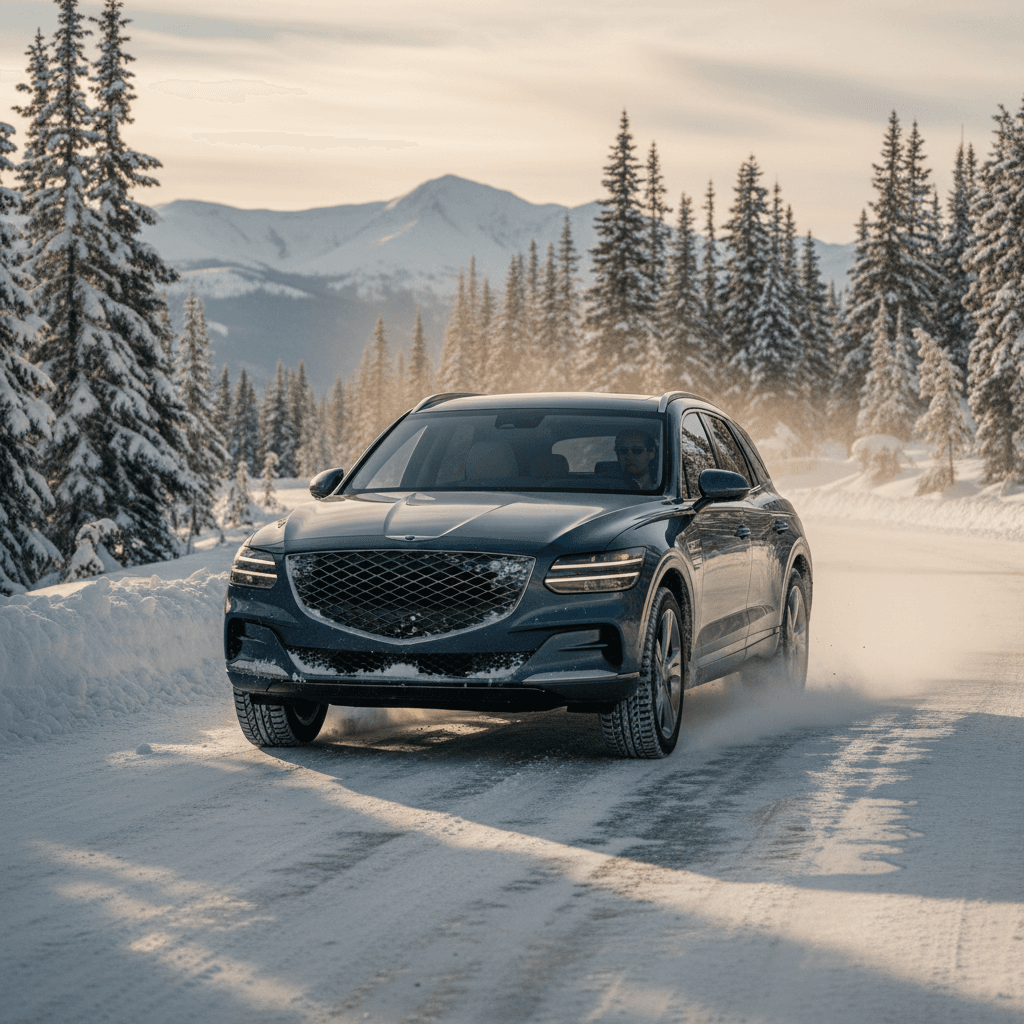
If you live where winters are serious, you’re right to ask whether the Genesis Electrified GV70 is truly one of the best EV SUVs for snow and ice. On paper it has dual‑motor all‑wheel drive, e‑Terrain “Snow” mode, a heat pump, and plenty of safety tech. But how does that translate when the road turns into packed powder, slush, or black ice?
Quick Answer
Overview: Is the Electrified GV70 Good in Winter?
From a fundamentals standpoint, the Genesis Electrified GV70 brings most of what you want in a winter vehicle: standard dual‑motor all‑wheel drive, sophisticated traction and stability control, and a dedicated e‑Terrain Snow mode that tailors power delivery and braking to low‑grip surfaces. Owners in snowy climates consistently report that the chassis feels stable and predictable when equipped with proper tires.
At the same time, this is still a luxury crossover, not a lifted off‑roader. Ground clearance is around 6.9 inches, similar to a BMW X3 or Mercedes GLC, so it’s great for plowed roads and light accumulation but not meant to plow through 10 inches of heavy wet snow. And like every EV, you’ll see 20–30% range loss in freezing conditions, more on short trips.
Key Takeaway
Key Winter Features on the Genesis Electrified GV70
Winter-Friendly Hardware & Software
What helps the Electrified GV70 in snow and ice
Dual-Motor AWD
e‑Terrain Snow Mode
Cold-Weather Support
The Electrified GV70 also carries over many winter‑friendly details from the gas GV70: rain‑sensing wipers, heated mirrors, available head‑up display, and a full suite of driver‑assistance systems that can reduce fatigue in poor visibility. Put together, the package is tailored to make cold‑weather driving less stressful, as long as you respect its physical limits.
Snow & Ice Traction: HTRAC AWD and e‑Terrain Snow Mode
Every Electrified GV70 uses a dual‑motor layout, one motor at each axle, to deliver HTRAC all‑wheel drive. Because each motor can respond in milliseconds, the system can quickly adjust the front‑to‑rear torque split when it detects slip. Combined with the vehicle’s electronic limited‑slip logic and stability control, that gives you much finer control than a traditional open‑differential AWD system.
Genesis adds a dedicated e‑Terrain mode with Snow setting. When you choose Snow, the SUV softens throttle response, limits initial torque, and keeps more even torque distribution between the axles. It also changes how the ABS and ESC intervene so that the wheels aren’t constantly being clamped the moment they start to turn on powder or packed snow. The goal is simple: get you moving and keep you pointed straight without drama.
How to Use Snow Mode Effectively
On ice, no electronic system can defy physics. What the Electrified GV70’s AWD and Snow mode can do is let you accelerate and climb modest grades more cleanly than a rear‑drive EV or a front‑drive crossover. Braking and steering grip, though, are almost entirely down to your tires, something we’ll dig into next.
Tires & Wheels: The Real Decider for Snow Performance
From the factory, the Electrified GV70 typically comes on 20‑inch wheels with performance‑oriented all‑season or EV‑specific tires (often something like Michelin Pilot Sport EV in some markets). Those are fine for three seasons and light dustings, but they’re not optimized for deep snow or ice. Several owners have noted that in real winter conditions, the stock tires are the limiting factor long before the AWD system.
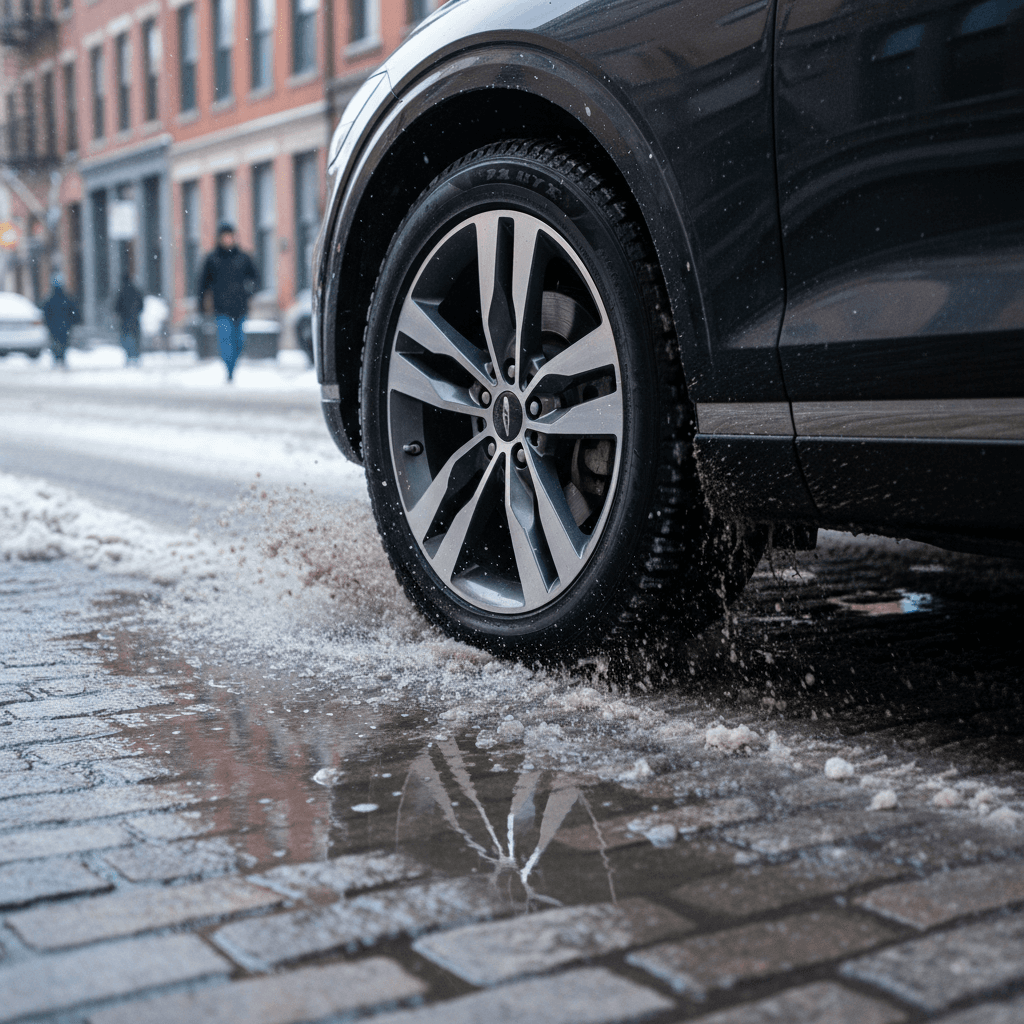
- Dedicated winter tires on 18" or 19" wheels give you the best snow and ice grip by far. Softer compounds and aggressive siping dramatically reduce stopping distances on packed snow.
- All‑weather (severe‑snow‑rated) tires are a strong compromise if you don’t want to change tires twice a year. Look for the three‑peak mountain snowflake (3PMSF) symbol.
- Stock 20" performance tires are usually the worst choice for serious winter. They have shallow tread, stiff sidewalls, and rubber compounds that harden in sub‑freezing temps.
Don’t Rely on AWD Alone
Many GV70 owners buy a separate set of smaller wheels with tall‑sidewall winter tires. That not only improves snow traction, it also softens impacts over potholes and frozen ruts. If you’re shopping used through a marketplace like Recharged, ask whether the seller has a second wheel‑and‑tire package; it can add real value, especially in northern states.
Ground Clearance, Size, and Winter Road Reality
The Electrified GV70 rides at roughly 6.9 inches of ground clearance, right in line with other compact luxury crossovers. That’s plenty for plowed city streets, rural roads with a few inches of loose snow, and rutted winter parking lots. Where it starts to run out of talent is in heavy, unplowed snow, deep slush, or where snowbanks have narrowed the usable lane.
Where It Feels at Home
- Daily commuting on plowed suburban or urban roads.
- Interstate road trips where DOT crews keep lanes clear.
- Ski‑town driving after the plows have been through.
Where to Be Cautious
- Unplowed side roads with more than 5–6" of heavy snow.
- Deep ruts that can pack snow under the battery tray.
- Steep unmaintained driveways or seasonal roads.
Practical Rule of Thumb
Cold-Weather Range Loss: What to Expect
Typical Winter Range Behavior for Electrified GV70 Owners
Cold affects any EV in three ways: the battery chemistry is less efficient, rolling resistance goes up, and you tend to run the heat more. The Electrified GV70 isn’t uniquely bad here, but its battery isn’t huge by modern standards, so you feel winter losses more quickly than in some long‑range competitors.
On a typical U.S. winter day in the 20s or 30s °F, many drivers see roughly a quarter of their range disappear. Short trips are hardest on efficiency; the car never fully warms up, and you’re repeatedly using energy to heat a cold cabin and cold battery. Long steady drives can look a bit better, particularly if you pre‑condition before setting off.
Plan for Conservative Winter Range
Charging & Preconditioning in the Cold
The Electrified GV70 includes a heat pump and a battery conditioning system that can warm the pack before fast charging or driving. That’s important, because a cold‑soaked battery may charge at less than half the advertised peak power. Owners have reported winter DC fast‑charge sessions topping out around 50–60 kW on a 150–180 kW charger until the battery warms up.
Cold-Weather Charging Best Practices
Use departure timers
Set a scheduled departure in the car or app so the cabin and battery warm up while you’re still plugged into Level 2 at home. That front‑loads the energy use and improves initial efficiency.
Precondition before DC fast charging
If your route includes a fast‑charge stop, use the navigation system’s charger POI to trigger battery pre‑heating on the way. A warmer pack accepts higher charge power and shortens your stop.
Don’t chase 0–100% in winter
The last 20% of charge is slow even in good conditions and slower in the cold. For long trips, charge from about 10–15% to 70–80%, then get back on the road.
Take advantage of heated surfaces
Use seat and steering‑wheel heat aggressively. They consume far less energy than blasting cabin air heat while still keeping you comfortable.
One Quirk to Be Aware Of
Winter Safety Tech and Driver Assistance
On slippery roads, properly tuned electronic safety systems can be the difference between a close call and a crash. The Electrified GV70 brings a deep bench of safety tech: forward‑collision avoidance, blind‑spot monitoring, lane‑keeping assist, adaptive cruise control with stop‑and‑go, and highway driving assist on many trims.
Tech That Helps When the Weather Turns
Beyond AWD and Snow mode
Stability & Traction Control
Auto Terrain Logic
Driver Assistance Suite
Let the Electronics Help, But Don’t Over‑Trust Them
Buying Used: Winter-Specific Checks for an Electrified GV70
If you’re considering a used Electrified GV70, especially in a snow‑belt state, you’ll want to look beyond the usual cosmetic inspection. Winter driving introduces extra stress on the battery, suspension, and body, and prior owners may or may not have been diligent about protection.
Winter-Focused Inspection Points for a Used Electrified GV70
Items that matter most if the SUV has lived through several snowy seasons
| Area | What to Check | Why It Matters |
|---|---|---|
| Battery health | Request a recent battery health report or a Recharged Score showing state of health and fast‑charging history. | Repeated cold‑soak and DC fast charging can accelerate degradation if abused. |
| Underbody & wheel wells | Look for excessive rust, packed mud, or impact damage on skid plates and suspension components. | Frequent travel on salted, slushy roads can corrode hardware if left unwashed. |
| Tires & wheels | Confirm current tread depth, age, and whether a second winter set is included. | Fresh, winter‑ready tires are worth real money and directly affect safety. |
| Brakes | Listen for grinding, feel for pulsing; ask about brake service records. | Salt and infrequent use (due to strong regen) can cause caliper issues over time. |
| Heater & defrosters | Test cabin heat, heated seats, steering wheel, and defrost performance. | Weak heat in an EV is not only uncomfortable, it pushes owners to over‑use resistive heat and sacrifice range. |
A structured walk‑through helps you separate a well‑loved winter vehicle from one that just survived it.
Buying through a specialist like Recharged can take some of this guesswork off your plate. Every car on the platform comes with a Recharged Score battery health report, pricing that reflects real‑world EV demand, and experts who can talk you through how the Electrified GV70 will fit your specific winter driving needs.
Winter Setup Checklist for Electrified GV70 Owners
Dial In Your Electrified GV70 for Snow and Ice
1. Choose the right tires
If you routinely see snow and ice, invest in a set of <strong>3PMSF‑rated winter or all‑weather tires</strong>. Mount them on separate wheels so changeovers are quick and you protect your factory rims from salt.
2. Verify Snow mode and Auto Terrain settings
Before the first storm, familiarize yourself with <strong>e‑Terrain Snow mode</strong> or Auto Terrain on your specific model year. Practice switching modes in a safe, empty lot so it’s second nature when you need it.
3. Set up departure and charging schedules
Program your home Level 2 charger or in‑car scheduler for off‑peak hours and timed departures. That way the cabin and battery are warm before you unplug, saving range and comfort.
4. Protect the underbody
If you live where salt is heavy, consider periodic <strong>undercarriage washes</strong> and, where appropriate, a rust‑inhibiting treatment to keep suspension and fasteners from corroding.
5. Build a winter kit
Keep a compact shovel, ice scraper, gloves, small traction aids, and a portable charger cable in the cargo area. EVs are heavy; if you do get stuck, a little preparation goes a long way.
6. Test everything before the deep freeze
Don’t wait for a January blizzard to discover that your heated windshield wipers or remote pre‑conditioning aren’t set correctly. Do a full function check when temps first dip near freezing.
FAQ: Genesis Electrified GV70 in Snow and Ice
Frequently Asked Questions
Bottom Line: Is It the Best EV SUV for Snow?
If your definition of “best for snow and ice” is a crossover that starts reliably on cold mornings, tracks straight on plowed winter highways, and climbs your icy neighborhood hill without drama, the Genesis Electrified GV70 deserves to be on your short list. Its dual‑motor AWD, e‑Terrain Snow mode, and robust safety tech put it right up there with the better all‑weather luxury SUVs, electric or otherwise.
Where it’s less ideal is for deep, unplowed back‑road use or very long winter road trips that regularly stretch its range. For most drivers in snowy metros and suburbs, though, pairing an Electrified GV70 with a dedicated winter tire set and a home Level 2 charger is a recipe for confident four‑season driving.
If you’re comparing a used Electrified GV70 to other winter‑ready EVs, working with Recharged can simplify the decision. You’ll see transparent battery health through the Recharged Score, fair pricing, and have EV specialists on hand to talk through how this Genesis will handle the specific snow and ice you face where you live.