If you’re eyeing a Genesis GV70 Electrified, or already have one in the driveway, the big long‑term question is simple: how much battery degradation per year should you expect? In other words, how quickly will real‑world range and resale value slip as the odometer climbs?
Key takeaway up front
Genesis GV70 Electrified battery degradation per year: the short version
- The GV70 Electrified uses a modern lithium‑ion battery pack (similar chemistry to Hyundai Ioniq 5/Kia EV6) with sophisticated thermal management and software safeguards.
- In realistic use, owners are seeing degradation broadly in line with other Korean EVs: single‑digit percent loss in the first few years, not catastrophic free‑fall.
- Genesis backs the pack with a long battery warranty, which is less about promising zero degradation and more about preventing outright failure or severe loss.
- Your driving, charging, and climate matter at least as much as the badge on the grille. Two GV70s can age very differently depending on how they’re used.
Rule of thumb
How much range will a GV70 Electrified lose over time?
Genesis rates the GV70 Electrified at roughly 230–250 miles of EPA range depending on wheel size and market tuning. That’s the lab number. In the real world, with mixed driving, U.S. owners often see 200–230 miles on a full charge in mild weather. Degradation eats into that over time, but not as fast as many people fear.
Approximate GV70 Electrified battery degradation over time
These are rough, planning‑level estimates for a normally driven, well‑maintained GV70 Electrified in a moderate climate. Real‑world numbers will vary by driver and conditions.
| Age / mileage | Estimated capacity remaining | Typical usable range (original 230–250 mi EPA) | Owner experience |
|---|---|---|---|
| Year 1 / 0–15,000 mi | ~95–98% | ~190–230 mi real‑world | Slight loss, mostly invisible day‑to‑day |
| Year 3 / ~30,000–45,000 mi | ~92–96% | ~180–220 mi | Range dip becomes noticeable on long trips |
| Year 5 / ~60,000–75,000 mi | ~88–94% | ~170–210 mi | You’re planning charging stops a bit more carefully |
| Year 8 / ~90,000–120,000 mi | ~80–90% | ~150–200 mi | Still usable as a daily driver; road‑trip charging more frequent |
Think of this as a weather forecast, not a lab report, useful for planning, but not a guarantee.
Climate and use can swing these numbers
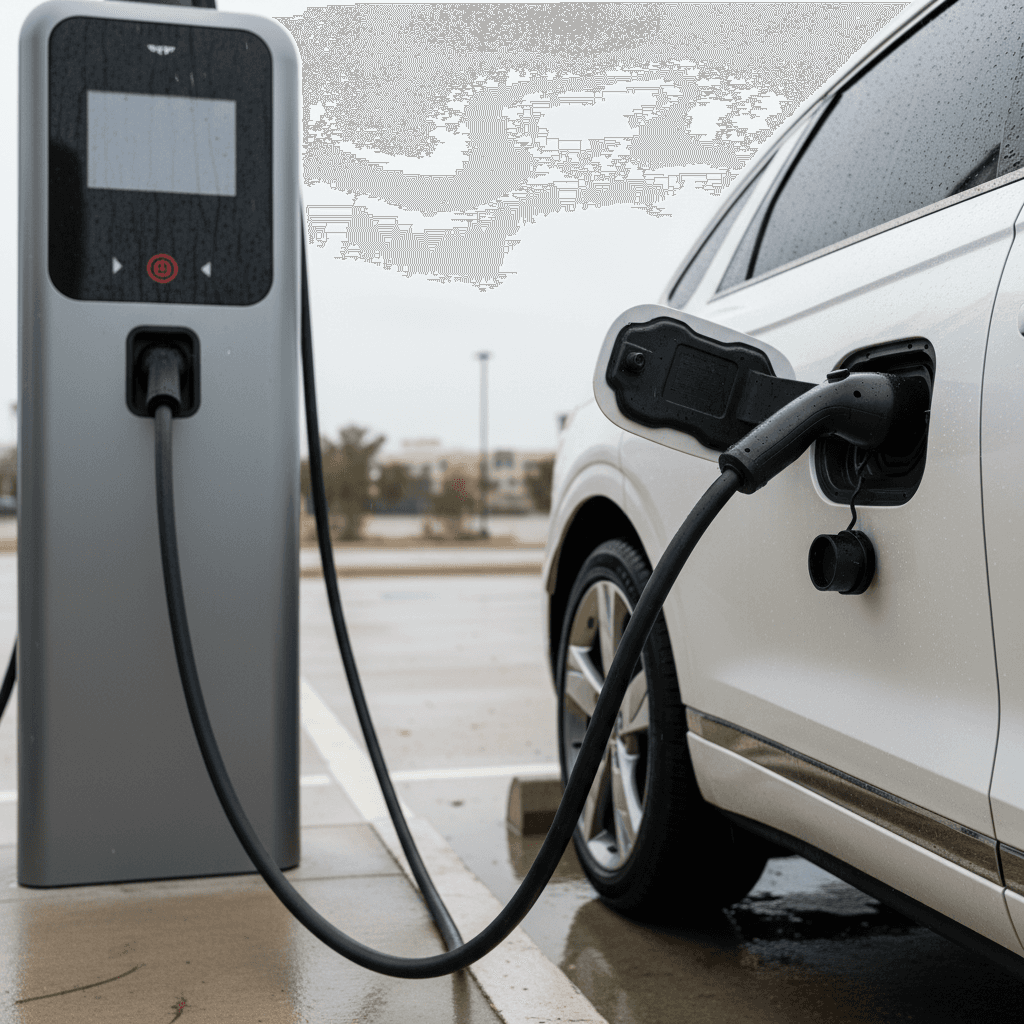
What actually causes battery degradation in the GV70 Electrified?
Battery degradation in the GV70 Electrified is not some mysterious Genesis‑specific curse; it’s the same electrochemistry that governs every modern EV. The pack uses lithium‑ion cells with active liquid cooling, so Genesis has already done the big, expensive things to protect it. What wears the battery down is mostly how hard you push that chemistry.
Main drivers of GV70 Electrified battery degradation
You can’t control everything, but you can control a lot.
Heat
High temperatures accelerate chemical reactions inside the cells.
- Living in hot climates
- Parking outside in full sun
- Charging immediately after hard driving
High charging stress
Fast charging is convenient but stressful.
- Frequent DC fast charging (200+ kW stations)
- Regularly charging from very low (under 10%) to 100%
- Multiple fast‑charge sessions in a single day
High state of charge
Keeping the pack full all the time isn’t ideal.
- Storing at or near 100% for days
- Daily commuting on a full charge when you don’t need it
- Rarely cycling the battery (garage queen syndrome)
What Genesis does for you
- Thermal management: Liquid cooling/heating keeps cells in a healthy temperature band.
- Charging curves: DC fast‑charge power ramps down as you approach high state‑of‑charge to protect the pack.
- Software buffers: The on‑screen “0–100%” isn’t the literal chemical 0–100%, which builds in safety margin.
What’s still on you
- Choosing where and how often you fast‑charge.
- How high you charge for daily use (70–80% vs. 100%).
- Whether the car bakes in summer heat or sits in a garage.
Even in a well‑engineered platform like the GV70, owner behavior is the tiebreaker between a “good” pack and a “great” one after a decade.
Genesis GV70 Electrified battery warranty and what it really means
Genesis, like Hyundai and Kia, hangs its reputation on long warranties. In the U.S., the GV70 Electrified’s high‑voltage battery is covered for a lengthy term (often around 10 years / 100,000 miles for the original owner, with specific terms varying by market and model year). That’s a strong vote of confidence in the hardware, but it’s important to understand what the warranty does and doesn’t promise.
How to read the GV70 Electrified battery warranty fine print
1. Warranty targets failure, not gentle aging
Battery warranties are designed to cover <strong>defects and major capacity loss</strong>, not the normal 10–20% degradation that all EVs experience over time.
2. Look for the capacity threshold
Many OEMs promise to repair or replace the pack if it falls below a certain capacity (often ~70%) within the warranty period. Check your GV70 owner’s documentation or Genesis portal for exact language.
3. Usage patterns can matter
Extreme, clearly abusive usage, like commercial fast‑charge abuse or tampering, can jeopardize coverage. Regular road‑trip fast‑charging won’t, but read the exclusions.
4. Transferability if you buy used
Some Genesis battery warranties remain in force for second owners, some are reduced, and some are non‑transferable. If you’re buying a used GV70 Electrified, <strong>verify warranty status by VIN</strong> with a Genesis dealer.
Why this matters for depreciation
How to slow Genesis GV70 Electrified battery degradation in daily driving
Battery degradation isn’t entirely up to you, but you have a lot more control than the horror stories on social media would suggest. With a few simple habits, you can keep your GV70’s pack in the “slow aging” lane.
Daily habits that keep your GV70 Electrified battery happy
Small changes, long‑term payoff.
Charge mostly at home
Use Level 2 home charging for the bulk of your miles.
- Gentler on the battery than frequent DC fast charging.
- Cheaper per kWh in many utilities.
- Easier to limit charge target (e.g., 80%).
Set a sensible daily limit
Unless you truly need full range, set your target to 70–80% for routine use.
Save 100% charges for road trips or rare long days, and try not to leave the car sitting full overnight.
Be kind in extreme temps
In very hot or very cold weather:
- Whenever possible, park in a garage or shade.
- Precondition the cabin while plugged in.
- Expect temporarily lower range; that’s physics, not permanent damage.
“Set and forget” approach
Fast charging and road trips: how hard is it on the GV70 battery?
The GV70 Electrified is, among other things, a wonderfully rapid road‑trip appliance. On an 800‑volt Hyundai–Kia–Genesis platform with strong charging curves, it can gulp power at speeds that would have seemed like science fiction a decade ago. That capability is there to be used, but, like any high‑performance feature, restraint pays dividends.
- Occasional DC fast charging, say, a few road trips a year, is not a problem. The pack and thermal systems are engineered for it.
- What accelerates degradation is making high‑power DC your primary fuel source: daily use, high ambient temperatures, repeated sessions back‑to‑back.
- For road trips, it’s healthier to charge more often but not as high, for example, 10–70% repeatedly instead of 5–100% stretches.
- If you arrive at a fast charger with a hot battery (after hours at 80+ mph), the car will use more cooling energy. It’s not a crime, but avoiding repeated “max‑stress” scenarios will help the pack age gently.
A smart GV70 road‑trip routine
How to evaluate battery health on a used GV70 Electrified
If you’re shopping used, “What’s the battery like?” is not just one question; it’s three. You’re asking about current usable capacity, how it’s been treated, and whether the price reflects reality. This is exactly where a data‑driven marketplace like Recharged is built to help.
Used GV70 Electrified battery health checklist
1. Start with verified battery data
Whenever possible, use an independent health report like the <strong>Recharged Score</strong>, which measures pack condition and compares it to similar vehicles. That’s far more useful than a seller saying “It seems fine.”
2. Compare range to original specs
Ask the seller what real‑world range they see at 80–100%. On a healthy pack, a GV70 should still comfortably cover typical daily driving with margin even after some years of use.
3. Look at the car’s usage story
High mileage isn’t automatically bad if most charging was done gently at home. Conversely, a low‑miles GV70 that lived at a high‑power DC station might have more wear than you’d expect. Ask about charging habits and where the car lived (hot climate, cold climate, etc.).
4. Confirm remaining battery warranty
Get the <strong>VIN</strong>, call a Genesis dealer, and confirm exactly what battery coverage remains and whether it’s transferable. A car with years of battery warranty left is inherently less risky.
5. Inspect charging behavior on a test drive
If you can, charge the car from a lower state of charge to around 80%. Watch how it accepts charge and whether it behaves normally. Abnormally low charge rates can sometimes hint at thermal or pack issues.
Where Recharged fits in
Ready to find your next EV?
Browse VehiclesRealistic range expectations by year and mileage
Instead of obsessing over exact percentages, it’s often more helpful to think in terms of, “What can I still do with this car comfortably?” Here’s how a typical GV70 Electrified might feel to live with at different points in its life, assuming normal usage and some degradation.
GV70 Electrified range snapshots at different ages
Short‑trip and family duty
As a school‑run and commuting SUV, a GV70 Electrified with even 20% degradation is still massively over‑qualified. Most U.S. drivers cover under 40 miles a day. Even at a conservative 150–170 miles of degraded real‑world range, you’re charging every few nights, not every few hours.
Road‑trip machine
On a long highway blast, the calculus changes. That same 20% loss may mean you’re stopping every 130–150 miles instead of stretching 170–180. If your life is built around 600‑mile days, degradation doesn’t make the GV70 useless, it just adds one more coffee stop.
Don’t over‑optimize what you don’t do
When does Genesis GV70 Electrified battery degradation become a problem?
Every EV has a tipping point where degradation stops being an academic number and starts meaningfully changing how you use the car. In a GV70 Electrified, that point is farther out than most people think, because it starts with a reasonably large pack and strong charging performance.
- For urban and suburban use, most owners won’t feel genuinely constrained until range falls below ~120–140 miles of reliable real‑world coverage in bad weather.
- For frequent long‑distance drivers, the annoyance arrives earlier, once you’re stopping more often than every 120–150 miles, even with careful planning.
- True “problem” territory is usually when the pack drops below the capacity threshold referenced in the warranty. At that point, if you’re still inside the coverage window, you may be eligible for repair or replacement.
- If the vehicle is long out of warranty and the pack is significantly degraded, it becomes a value question: does the price (or remaining loan balance) still make sense for what the car can now do?
Red flags to take seriously
FAQ: Genesis GV70 Electrified battery degradation
Frequently asked questions about GV70 Electrified battery health
Bottom line: Is the GV70 Electrified battery built to last?
Taken as a whole, the Genesis GV70 Electrified is not a fragile flower. It’s a well‑engineered luxury EV riding on proven Korean battery tech, backed by a long warranty and cushioned by smart thermal and charging controls. For most owners, annual battery degradation will be measured in low single digits, not horror‑story cliff dives.
If you treat the pack with ordinary care, charge mostly at home, limit daily charging to around 80%, avoid baking the car in extreme heat, and use DC fast charging like a road‑trip tool rather than a daily habit, the GV70 has every reason to be a decade‑plus companion. And if you’re buying used, leaning on a marketplace like Recharged, with verified battery health, fair‑market pricing, and EV‑specialist support, turns what feels like a chemistry exam into a clear, evidence‑based decision.