If you own a Genesis GV60 and you’re thinking about selling, you’re in a great but tricky spot. Steep depreciation on many luxury EVs means the market is full of “deals” for buyers, and unless you prepare carefully, you can leave thousands of dollars on the table. This Genesis GV60 selling checklist walks you step‑by‑step through how to prep, price, advertise, and safely complete the sale of your GV60 in today’s used‑EV market.
Good news for sellers
Why a Genesis GV60 selling checklist matters
The GV60 is not just another crossover. It’s a high‑tech luxury EV built on Hyundai’s E‑GMP platform, with features like facial recognition, fingerprint start, Vehicle‑to‑Load (V2L), and ultra‑fast DC charging. Buyers have a lot of questions, and the used values move fast as new incentives and software updates roll out. A clear checklist helps you: - Present the car in its best light - Answer EV‑specific buyer questions with confidence - Avoid common pitfalls around battery health, charging hardware, and warranties - Decide quickly between trade‑in, instant offer, consignment, or private sale Throughout this guide, you’ll also see where a marketplace like Recharged can simplify things with a data‑backed price, a Recharged Score battery health report, and options such as trade‑in, instant offer, or consignment.
Step 1: Decide how you want to sell your GV60
Four ways to sell a Genesis GV60
Each path trades convenience for total dollars. Know your priorities before you start.
1. Dealer trade‑in
Best for: Convenience when you’re buying another vehicle.
- Fast, usually same‑day.
- Lower price than private sale.
- May reduce sales tax on your next car in some states.
2. Instant cash offer (online buyer)
Best for: Quick exit with minimal hassle.
- Get an offer in minutes; money in days.
- Price based on current wholesale conditions.
- Great if you don’t want to deal with test drives or tire‑kickers.
3. Consignment or marketplace partner
Best for: Maximizing price without running a DIY sale.
- Specialist (like Recharged) markets the car for you.
- Helps explain EV features and battery health to shoppers.
- Typically charges a fee or takes a margin.
4. Private sale
Best for: Getting the highest possible price.
- You handle listing, leads, and test drives.
- Requires more time and comfort with negotiation.
- Ideal if you’re not in a rush and your GV60 is in great shape.
How Recharged can fit in
Step 2: Know what your Genesis GV60 is worth
Before you take any photos or talk to a buyer, you need a realistic view of your GV60’s market value. Early‑build GV60s have depreciated faster than average luxury SUVs, which is painful if you bought new but means used prices can look surprising at first glance.
GV60 value snapshot to keep in mind
Use multiple sources, Kelley Blue Book, Edmunds, recent listings on major marketplaces, and EV‑focused sites like Recharged, to estimate: - Trade‑in value: What a dealer might pay you. - Private‑party value: What a well‑informed private buyer might pay. - Retail listing range: Where similar GV60s are advertised. If you request a valuation from Recharged, we’ll pair current market data with a Recharged Score Report that factors in your specific battery health, something generic pricing tools still struggle to do for EVs.
Watch your expectations
Step 3: Gather key GV60 details and service records
Luxury‑EV shoppers are picky, and Genesis loads the GV60 with tech and options that affect value. Before you list the car, assemble a clean “spec sheet” and documentation folder.
Information to collect before listing your GV60
VIN, trim, and drivetrain
Note the full VIN, trim (Standard RWD, Advanced AWD, Performance AWD, etc.), and drivetrain. Range, power, and price expectations change sharply by trim.
Battery and mileage snapshot
Record current odometer reading and approximate battery capacity if you have a recent health report. Mention typical range you see on a full charge in your climate.
Service and repair history
Gather receipts for scheduled maintenance, tire rotations, recall work, and any repairs. Genesis EVs don’t need oil changes, but software and hardware updates matter to buyers.
Open recalls or TSBs
Check for open recalls and, if possible, get them handled before listing. A clean bill of health makes your GV60 easier to sell and may avoid last‑minute objections.
Remaining warranty coverage
Note the in‑service date and factory warranty terms, especially the high‑voltage battery and EV system coverage. Those long warranties are a big selling point for second owners.
Accessories and extras
List both keys, charging cables, adapters, floor mats, roof racks, mobile chargers, and any winter wheel/tire sets. Small items help your GV60 stand out in a crowded search.
Tip on Genesis EV warranties
Step 4: Check battery health and charging equipment
With a GV60, or any EV, the single biggest buyer concern is the high‑voltage battery. Range and charging confidence will make or break many deals. You don’t have to be an engineer, but you should be prepared with clear, honest information.
Battery health basics
- Buyers care about usable range today, not just the original EPA estimate.
- Note what you typically see at 100% charge in your climate and driving mix.
- If you’ve had any high‑voltage battery or charging system repairs under warranty, be ready to explain what was done and when.
- Consider getting a third‑party or marketplace battery health report (such as a Recharged Score) that measures pack condition beyond the dashboard estimate.
Charging gear and history
- Confirm you still have the OEM portable charging cable or wall‑box if it’s included in the sale.
- Document whether you mostly charged at home Level 2, DC fast chargers, or public Level 2. Many buyers like seeing a mix, not constant ultra‑fast charging.
- Note any complimentary charging programs (like past Electrify America promotions) and whether they still apply or were fully used.
- Make sure connectors, cables, and ports are undamaged and clean before photos and showings.
Why a Recharged Score helps
Step 5: Recondition your GV60 for sale
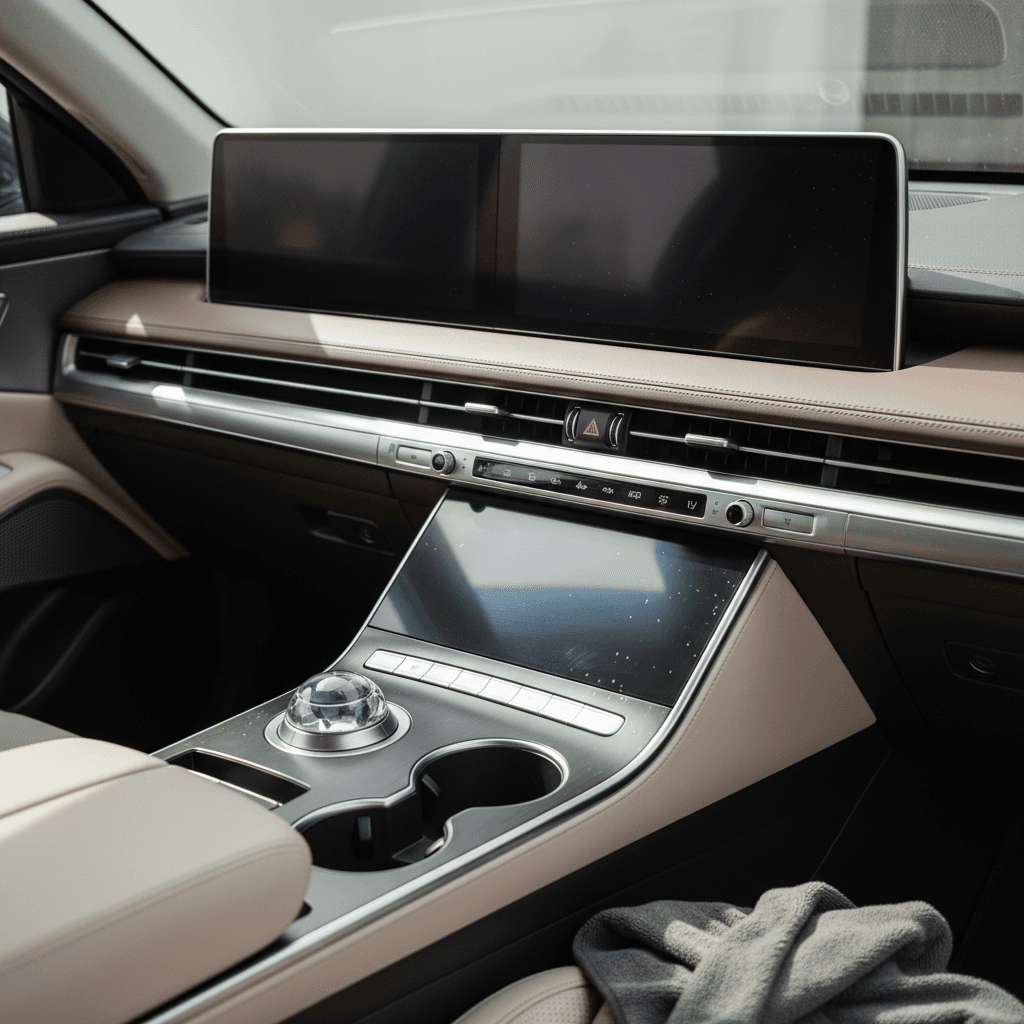
You don’t have to make your GV60 perfect, but appearance has a larger impact on resale than many owners realize, especially with a distinctive design like this. Spend a weekend getting it ready and you’ll usually earn that time back in a higher sale price and faster responses.
- Exterior: Wash, clay, and wax if you’re comfortable, or pay for a quality detail. Touch up obvious chips and curb rash where practical.
- Interior: Remove personal items, vacuum thoroughly, wipe hard surfaces, clean the large screens with proper microfiber and solution.
- Odors: Neutralize smoke, pet, or food smells. A clean‑smelling cabin is non‑negotiable for many luxury buyers.
- Tires and wheels: Note tread depth. Clean wheels and dress tires so photos show a well‑cared‑for stance.
- Lights and glass: Replace any burned‑out bulbs and clean glass inside and out to avoid glare in photographs.
- Minor fixes: Address inexpensive issues, wipers, key‑fob battery, missing caps or trim, that signal overall neglect if left undone.
High‑ROI touch
Step 6: Take photos and write a GV60‑focused listing
Shoppers often browse dozens of EV listings at once. The right photos and a clear, EV‑savvy description help your Genesis stand out from a sea of generic “electric SUV” ads.
Photo & listing checklist for your GV60
Shoot in good natural light
Take photos just after sunrise or before sunset. Show full exterior from all corners, profile, and straight‑on front/rear, plus close‑ups of wheels and lights.
Highlight the tech
Capture the dual 12.3‑inch screens, head‑up display if equipped, fingerprint start, facial recognition, and steering‑wheel controls. These are key differentiators from mainstream EVs.
Show the EV story
Include photos of the charge port, cables, wall charger (if included), and an instrument‑cluster shot of range at a known state of charge. That reassures EV‑curious buyers.
Be honest about flaws
Photograph any notable scratches, wheel rash, or interior wear. You’ll save time by attracting serious buyers who already understand the condition.
Write a specific, factual description
Mention trim, key options (panoramic roof, Bang & Olufsen audio, driver‑assist packages), remaining warranty, service history, and how you typically charged the car.
Use EV‑relevant keywords
Phrases like “800‑volt ultra‑fast charging,” “V2L power outlet,” and “heat pump for cold‑weather range” help informed buyers find your listing in searches.
Step 7: Screen buyers and arrange safe test drives
Once your GV60 is online, the real work begins: managing inquiries. A little structure keeps you safe and saves time.
Screening buyers
- Use the platform’s messaging tools before sharing your phone number or email.
- Ask simple qualifying questions: “Are you pre‑approved or paying cash?”, “Do you currently own an EV?”
- Beware of anyone who avoids common‑sense questions, pushes for shipping arrangements immediately, or offers to overpay.
- For serious buyers, schedule a call to walk through the car’s features and history before meeting in person.
Safe test drives
- Meet in a public, well‑lit place, ideally near Level 2 or DC fast charging so buyers can see that charging works as expected.
- Verify and photograph the buyer’s driver’s license before handing over keys.
- Ride along on the test drive so you can demonstrate one‑pedal driving, regen settings, and driver‑assist tech.
- Set a preplanned route that includes city streets and a short highway stint so the buyer can feel ride quality and acceleration.
Payment and scam protection
Step 8: Negotiate like a pro (GV60‑specific tips)
The best negotiations start with solid preparation. You’ve already researched values and documented your car; now use that work to support a fair price. With a tech‑heavy EV like the GV60, you’re not just selling sheet metal, you’re selling software, warranty coverage, and charging confidence.
- Lead with your homework: Bring printed or saved examples of similar GV60 listings, KBB/Edmunds estimates, and any offers you’ve already received from dealers or online buyers.
- Emphasize battery and warranty strength: If your GV60 still carries years of high‑voltage battery coverage, highlight that. Many luxury EVs with weak or unclear warranties make buyers nervous; yours doesn’t have to.
- Explain your charging routine: Describe how you mainly used home Level 2 and occasional DC fast charging for road trips. That reassures buyers who worry about constant ultra‑fast charging degrading the pack.
- Price with a small negotiation cushion: Leave yourself room, typically a few percent, so you can meet a serious buyer in the middle without feeling you’ve undersold the car.
- Know your walk‑away point: Decide in advance the lowest number that still makes sense compared with a trade‑in or instant offer. If a buyer can’t get close, be willing to move on.
Use competing options as leverage
Step 9: Complete paperwork, payment, and handover
Every state has its own quirks, but the basic flow for completing a private‑party EV sale is similar nationwide. The key is to slow down, double‑check names and VINs, and never rush money or signatures.
Closing out your Genesis GV60 sale
Use this as a high‑level checklist and adapt to your state’s specific forms and requirements.
| Step | What to do | Details |
|---|---|---|
| Confirm payoff | If you still have a loan, get a 10‑day payoff from your lender. | Ask how they prefer to receive funds and release the title, this alone may dictate whether a bank, credit union, or dealer needs to facilitate the sale. |
| Draft a bill of sale | Create a simple, signed bill of sale. | Include buyer and seller names and addresses, VIN, mileage, price, date, and an "as‑is" statement unless you’re providing a written warranty. |
| Handle title transfer | Complete the title exactly as your state requires. | Avoid scribbles or cross‑outs; mistakes can require a duplicate title. Both parties should keep photos or copies. |
| Notify DMV and insurer | Submit release‑of‑liability and cancel or transfer insurance. | Many states let you do this online. Don’t forget to remove the car from toll accounts as well. |
| Handover and education | Walk the buyer through GV60 basics before you part ways. | Pair their phone, show charging options and drive modes, and review how to access the digital owner’s manual and Genesis app. |
When in doubt on forms or payoff figures, call your DMV or lender before meeting the buyer.
If you’d rather not manage all this…
Genesis GV60 selling checklist at a glance
Rapid‑fire GV60 selling checklist
1. Choose your selling path
Decide between dealer trade‑in, instant offer, consignment with a specialist like Recharged, or DIY private sale based on your timing and comfort level.
2. Research current value
Use multiple guides and live listings to set a realistic range. Adjust for trim, mileage, options, and condition.
3. Compile specs and records
Document trim, options, VIN, mileage, service history, and remaining warranty coverage, especially the EV system and battery.
4. Assess battery and charging
Note current typical range, how the car was charged, and gather any battery health reports. Confirm that all charging equipment works.
5. Detail and recondition
Clean inside and out, address minor issues, and consider a professional detail or paintless dent repair on a high‑value GV60.
6. Shoot photos & write listing
Take clear, honest photos and write an EV‑savvy description highlighting the GV60’s tech, comfort, and charging advantages.
7. Manage inquiries safely
Screen buyers, meet in public, ride along on test drives, and be cautious with personal info and payment promises.
8. Negotiate and close
Use your research to justify price, know your walk‑away number, and complete payment and paperwork carefully before handing over keys.