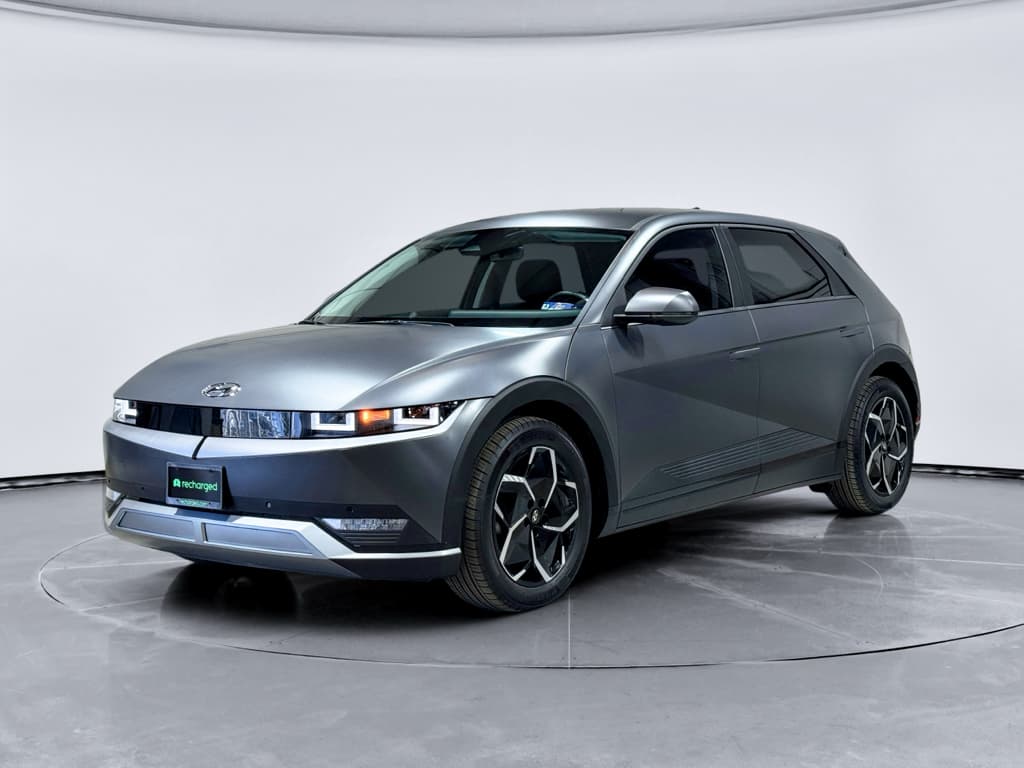
If you’re eyeing a Genesis GV60, or already have one in the driveway, resale value isn’t a theoretical question. It’s real money when you go to trade, sell, or refinance. The Genesis GV60 resale value forecast is more complex than many shoppers realize: it’s a low‑volume luxury EV from a young brand, built on an excellent platform, in a market where EV prices have been whipsawed by incentives, interest rates, and shifting demand.
Bottom line up front
Why Genesis GV60 resale value matters right now
The GV60 launched into the U.S. market as a premium, tech‑heavy EV crossover with pricing that overlaps Tesla, Mercedes‑EQ, and BMW’s electric crossovers. That put it under an intense spotlight on depreciation. Add in the broader EV landscape, sharp price cuts from Tesla, changing federal tax credits, and buyers still learning how to value used EV batteries, and you get a vehicle whose used prices move more than most.
- Luxury EVs tend to depreciate faster than their gas counterparts, especially in the first 3 years.
- Genesis is still building its reputation and dealer network in the U.S., which affects buyer confidence and resale values.
- The GV60 shares its excellent E‑GMP platform with the Hyundai Ioniq 5 and Kia EV6, but doesn’t yet have their name recognition.
- Rapid advances in EV tech (range, charging speed, driver‑assist) can make early model years look dated more quickly on paper, even if they’re still very usable in the real world.
Why timing matters
Where Genesis GV60 resale value stands today
Snapshot of current GV60 value trends
Recent appraisal tools show 2025 Genesis GV60 trade‑in values typically in the mid‑$40,000s for clean, average‑mileage examples, with retail prices ranging higher into the $50,000s depending on trim and options. Meanwhile, depreciation calculators for 2024 models suggest a drop on the order of $8,000–$9,000 per year in the first few years of ownership.
Those are large numbers, but they’re not unique to Genesis. Many luxury EVs, especially those that didn’t qualify for the full federal tax credit or saw heavy discounting, have taken the same kind of early hit. The difference is that Hyundai and Kia’s more mainstream EVs have slightly better recognized value trajectories, while the GV60 is still writing its story.

3–5 year Genesis GV60 resale value forecast
Projecting resale value is never an exact science, but we can sketch a reasonable 3–5 year depreciation curve for the GV60 based on current data, its platform mates, and the broader luxury EV market. Here’s a simplified view for a well‑equipped AWD model used as a daily driver in the U.S., assuming typical mileage and no major accidents:
Illustrative 5‑year Genesis GV60 value curve (from new MSRP)
Approximate forecast using current depreciation data for the GV60 and similar luxury EV crossovers. Actual numbers will vary with condition, mileage, region, and incentives.
| Ownership year | Approx. value vs. original MSRP | What that usually means in dollars* | Context |
|---|---|---|---|
| Year 1 | ~75–78% | Retains roughly three‑quarters of MSRP | Early demo and loaner discounts already drag down like‑new values. |
| Year 3 | ~50–55% | About half of original MSRP | Aligns with current 3‑year data showing ~49% depreciation. |
| Year 5 | ~34–40% | Roughly one‑third of MSRP | Close to forecasted ~52–66% total depreciation after 5 years. |
The steepest drop is in the first 3 years; years 4–5 show a slower, more traditional curve.
How this compares to peers
Which trims hold value better?
In the 3–5 year window, shoppers gravitate toward mid‑level AWD trims that balance range, performance, and equipment. For the GV60, that means the Advanced and Standard AWD models often hit the sweet spot on the used market.
Top‑spec Performance models are exciting but narrower in appeal, so they can take a bigger percentage hit even if dollar depreciation is similar.
Mileage and use pattern
Like most EVs, the GV60 is more sensitive to mileage and charging behavior than an equivalent gas SUV. A 3‑year‑old GV60 with 20,000 miles and a documented history of gentle DC fast charging can command a visibly higher price than a similar car with 45,000 miles that lived on highway fast chargers.
6–8 year long‑term outlook for GV60 values
Looking beyond the typical lease or first‑owner window, the question becomes whether a Genesis GV60 will age like a quickly obsolete gadget or like a solid luxury crossover with an electric drivetrain. Here’s how the 6–8 year picture is shaping up:
Genesis GV60 6–8 year outlook drivers
What’s most likely to shape values in the second half of the GV60’s life cycle
Battery health & warranty
Charging standard & access
Brand reputation & support
At 6–8 years old, expect surviving GV60s to settle into a value band that reflects their battery health and maintenance history more than their badge alone. Well‑cared‑for examples will likely trade at a premium to off‑lease cars that were driven hard and maintained casually.
Why this is good news for used buyers
What’s driving Genesis GV60 depreciation
To understand the Genesis GV60 resale value forecast, you have to separate emotion from the market’s cold math. The GV60 is a terrific car to drive, but depreciation is shaped by more than driving enjoyment:
Key forces behind GV60 resale performance
Luxury badge still maturing
Genesis is still the new kid in the luxury neighborhood. That means buyers looking at a used $50,000 EV may default to brands they know better, even if the GV60 is objectively competitive. Lower demand equals lower prices.
Aggressive new‑car incentives
When new GV60s carry heavy discounts or lease support, it pushes used values down. Shoppers compare a 2‑year‑old used GV60 with a brand‑new one effectively on sale, and they often choose new if the gap is small.
EV market whiplash
Tax credit changes, high interest rates, and volatile sentiment around EVs have caused spikes and slumps in demand. The GV60, as a niche luxury EV, feels those swings more acutely than a mainstream crossover.
Technology pacing
Rapid progress in range, charging speeds, and driver‑assist tech can make early‑build GV60s look dated compared with fresh competitors, even when they remain excellent daily drivers. That perceived tech gap pulls values down.
Limited brand‑wide used EV ecosystem
Some brands have certified pre‑owned EV programs with very strong support and marketing. Genesis is developing its presence here, but it doesn’t yet drive the kind of residual value stability we see in long‑established brands.
Watch for market headlines
Genesis GV60 vs. Hyundai Ioniq 5 and Kia EV6 resale
Because the GV60 rides on the same E‑GMP platform as the Hyundai Ioniq 5 and Kia EV6, a lot of shoppers assume resale will be similar. Mechanically, that makes some sense. In the real‑world used market, though, the story is different.
GV60 depreciation compared with Ioniq 5 and EV6
Approximate 5‑year retained‑value comparison based on current forecasts from major valuation tools.
| Model | Estimated 5‑year value lost | Relative resale strength | Key takeaway |
|---|---|---|---|
| Genesis GV60 | ~65–66% | Lower | Steeper depreciation; better opportunity if you buy after the initial drop. |
| Hyundai Ioniq 5 | ~59% | Higher | Retains a few extra points of value thanks to strong brand momentum and broader demand. |
| Kia EV6 | Similar to Ioniq 5 or slightly better | Higher | Sportier image and broader awareness help support residuals. |
The GV60 tends to lag its platform mates on retained value, largely because of its positioning as a younger luxury badge.
Badge value vs. mechanical value
Under the skin, these three EVs share a lot. But used buyers don’t shop purely on engineering commonality, they shop on brand confidence, dealer proximity, and perception of quality. Hyundai and Kia have been household names in the U.S. for decades; Genesis is still climbing that hill.
What this means for you
If you’re buying new, the Ioniq 5 or EV6 may be the safer bet on resale. If you’re buying used, a GV60 that has already taken its big depreciation hit can deliver more luxury, more features, and the same underlying hardware, often for less money.
A smart arbitrage play
How to shop for a used Genesis GV60 the smart way
A resale forecast is only as good as the car you actually buy. Two GV60s from the same model year can have very different futures if one has a healthy battery and clean history and the other doesn’t. Here’s how to stack the deck in your favor.
Used Genesis GV60 buying checklist
1. Focus on battery health, not just miles
Ask for objective battery diagnostics, not guesses. A report like the <strong>Recharged Score</strong> translates pack data into an easy‑to‑understand health grade so you can compare two GV60s on more than odometer readings.
2. Verify DC fast‑charging history
Frequent high‑power fast charging can accelerate degradation. When possible, favor cars that were mostly charged at home on Level 2, or at least show balanced usage. Ask the seller how and where the car was typically charged.
3. Compare trims and equipment carefully
Advanced driver‑assist, HUDs, premium audio, and comfort features matter more on the used market than exotic wheels or paint. Mid‑trim AWD models with practical options usually hold value better than maxed‑out builds with niche options.
4. Check tires, brakes, and suspension
Despite regenerative braking, tires and suspension components on heavy, quick EVs work hard. Worn‑out tires or tired dampers may not kill the deal, but they should factor into what you’re willing to pay.
5. Confirm software and recall status
Make sure all recalls are addressed, and that the GV60 is current on software updates. Up‑to‑date software can improve charging behavior and range estimates, and it signals a more attentive previous owner.
6. Shop where EV expertise is baked in
Not every dealer or private seller is fluent in used EVs. Buying through a platform like <strong>Recharged</strong>, where every vehicle includes a verified battery report, fair market pricing, and EV‑specialist support, makes it easier to compare apples to apples.
Leverage transparent pricing
Practical tips to protect your GV60’s resale value
Whether you already own a Genesis GV60 or you’re about to, your day‑to‑day choices have a measurable impact on what the car will be worth 4–8 years from now. Here are concrete ways to keep more money in your pocket when it’s time to move on.
Six habits that help your GV60 hold value
Simple, repeatable actions that future buyers and appraisers actually care about
Charge thoughtfully
Document everything
Protect and present well
Stay ahead on maintenance
Keep options functioning
Avoid collision history
When to consider selling or trading
Ready to find your next EV?
Browse VehiclesIs the Genesis GV60 a good used buy?
Put simply: yes, with the right homework. From the driver’s seat, the GV60 is one of the more engaging and refined compact luxury EV crossovers on the road. Its fast‑charging capability, strong performance, and high‑quality interior make it a compelling daily driver. The question has never been, “Is it a good car?” The question is, “Can I buy it at a price that respects its depreciation curve and long‑term outlook?”
Why a used GV60 makes sense
- Steep early depreciation means you can often buy a 2–3 year‑old GV60 for around half of its original MSRP.
- You still get cutting‑edge charging tech and a premium interior that feels current.
- Predicted reliability is solid for a luxury EV, especially when paired with remaining warranty coverage.
When to be cautious
- If the battery’s health is unknown or the car has lived on DC fast charging, walk away or price it aggressively.
- In regions with thin Genesis dealer coverage, access to brand‑specific service may be less convenient.
- If you plan to sell again quickly, the remaining depreciation may still be significant.
If you’re willing to be deliberate, verifying battery health, checking history, and buying at a price that reflects the market, the Genesis GV60 can be one of the smarter plays in the used luxury EV space. At Recharged, that’s exactly the gap we try to fill: every used EV comes with a Recharged Score battery health report, fair market pricing, and EV‑specialist guidance so you can treat depreciation as a factor to manage, not a roll of the dice.