If you own, or are considering buying, a Genesis GV60, you’ve probably heard about a few recalls by now. This Genesis GV60 recalls list pulls together every major safety campaign into one plain‑English guide so you can see what’s been fixed, what still needs attention, and how to keep your electric crossover safe and reliable.
Good news about recalls
Genesis GV60 recalls list: quick overview
Since its U.S. launch for the 2023 model year, the Genesis GV60 has been subject to several recalls covering seat belt pretensioners, rear driveshafts, the instrument cluster display, and most recently the windsheld upper molding. Below is a high‑level snapshot before we dig into each campaign.
Current Genesis GV60 recalls at a glance
Major U.S. safety recalls affecting Genesis GV60 models through early 2026.
| Recall focus | Approx. model years | Key risk | Typical fix | Cost to owner |
|---|---|---|---|---|
| Windshield upper molding detaching | 2023–2025 | Trim strip may fly off, creating road hazard | Replace stainless‑steel windshield molding | Free |
| Instrument panel display may go blank | 2023–2025 | Cluster may not show speed or warning lights | Update instrument cluster software (often OTA) | Free |
| Seat belt pretensioner housing | 2023 (built Feb–Dec 2022) | Pretensioner may rupture in a crash | Install protective cap or revised part | Free |
| Defective rear driveshafts | 2023 (built mid‑2022–early 2023) | Possible driveshaft fracture and loss of drive | Replace left and right rear driveshafts | Free |
Always verify recall status for your specific GV60 using its 17‑digit VIN on NHTSA.gov or with a Genesis dealer.
Dates vs. model years
How to check if your Genesis GV60 has an open recall
Before you worry about any specific Genesis GV60 recall, start with a VIN check. That tells you exactly which campaigns apply to your car and whether they’ve already been completed.
- Find your VIN. It’s on a small plate at the base of the windshield on the driver’s side, on the driver‑door jamb sticker, and on your registration or insurance card.
- Go to the official NHTSA recall lookup tool (search for “NHTSA recall VIN” in your browser). Enter your full 17‑digit VIN and submit.
- Review results. You’ll see a list of open recalls. If nothing appears, all known recalls have been completed or your GV60 isn’t in the affected VIN ranges.
- Call Genesis customer service (844‑340‑9741) or your local Genesis dealer. Give them your VIN and ask them to confirm open recalls and schedule repairs.
- If you’re shopping used, ask the seller for a current VIN report and service records showing recall completion before you sign anything.
Leaning toward a used GV60?
Recall: windshield molding could detach (2023–2025 GV60)
The newest and widest Genesis GV60 recall targets the stainless‑steel molding at the top edge of the windshield. On certain 2023–2025 GV60s, the supplier’s manufacturing process used insufficient adhesion, so the trim piece can loosen over time.
Windshield molding recall details
Why it matters and how Genesis fixes it
What can happen
The upper windshield molding can loosen and eventually detach, especially at highway speeds. That strip of metal turning into road debris is the real concern, it can surprise drivers behind you.
What you might notice
Owners often report new wind noise, whistling, or tapping at the top of the windshield before anything comes off. If you hear new sounds up there, schedule a visit even if your VIN check isn’t done yet.
How dealers repair it
Genesis dealers remove the original trim and install a new molding with the correct adhesive and sealant. The windshield glass itself normally stays put.
Owner takeaway
Recall: instrument panel display software error
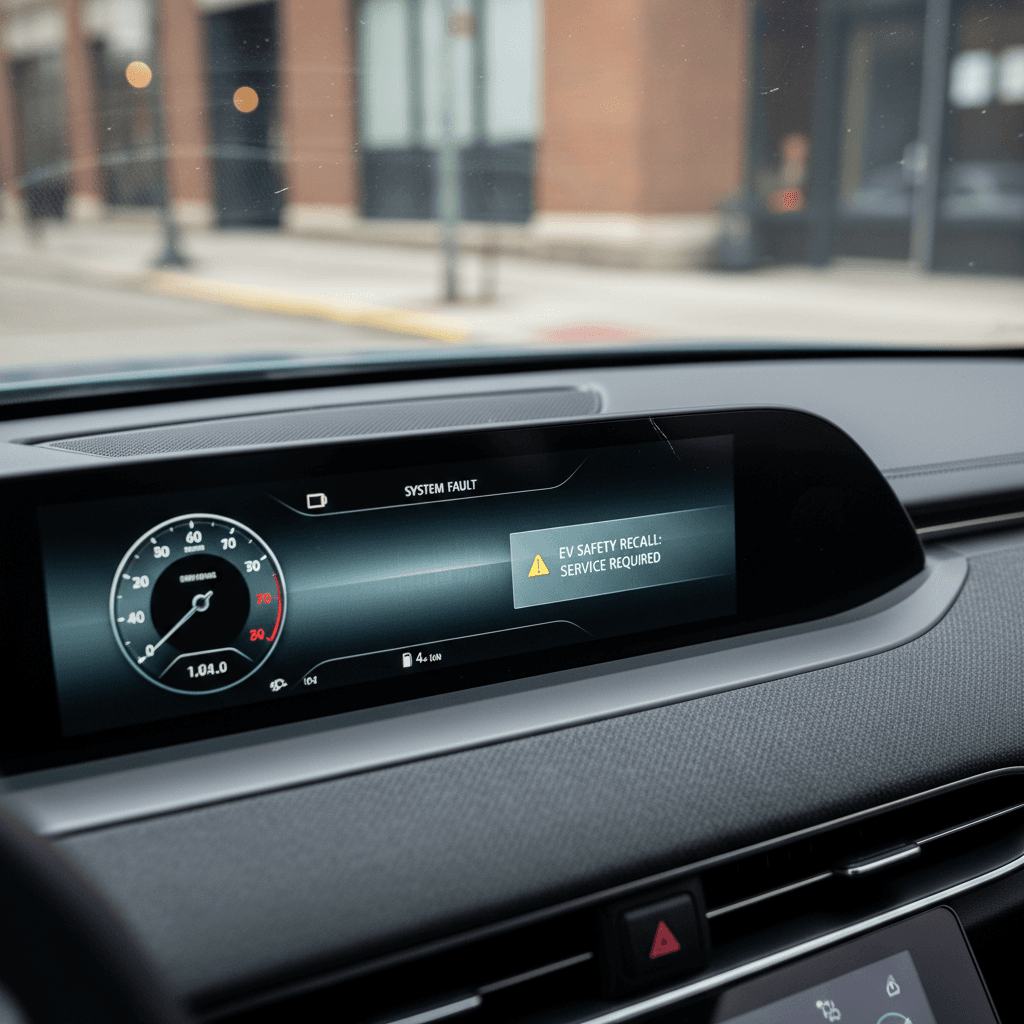
Another significant Genesis GV60 recall involves the digital instrument cluster. Certain 2023–2025 GV60s share a software bug with the Genesis G90 sedan that can leave the entire display blank when you start the car.
What’s the risk?
If the instrument panel goes black, you may lose critical information such as speed, warning lights, and gear selection. That’s why the recall exists, federal safety standards require that information to be visible whenever the vehicle is on.
Most drivers experience this as an intermittent issue: sometimes the screen wakes up, sometimes it doesn’t.
What Genesis does about it
Genesis is addressing the problem with a software update for the instrument cluster, supplied by LG. Many owners receive this as an over‑the‑air (OTA) update while the car is parked and connected, but dealers can also apply the fix if needed.
The work is quick, and like all recalls, there’s no charge.
If your cluster goes dark while driving
Recall: seat belt pretensioners (early 2022 production)
Part of a broader Hyundai‑Genesis campaign, this Genesis GV60 recall affects seat belt pretensioners on early‑build vehicles. Pretensioners are small explosive devices that cinch the belts tight in a crash. On affected GV60s built from February through late December 2022, the internal gas generator can rupture instead of venting properly.
Seat belt pretensioner recall: key facts
What could go wrong
In a crash, a defective pretensioner may rupture its metal housing. That can send metal fragments into the cabin, with potential for injury to occupants.
How common is it?
The issue has been rare, but serious enough that Hyundai and Genesis expanded earlier campaigns. Even with no reported GV60 injuries, regulators expect the risk to be engineered out of the car.
The repair
Dealers typically install a protective cap or updated pretensioner design that directs gas and pressure safely. They’ll inspect your belts and replace components if there’s any sign of damage.
Don’t delay this one
Recall: defective rear driveshafts (2022–early 2023)
The earliest widely reported Genesis GV60 recall in the U.S. involved the rear driveshafts. A supplier manufacturing issue meant some shafts left the factory with microscopic damage that can grow over time.
What owners might feel
Most GV60 drivers will never notice anything, but a failing driveshaft can produce vibration, clunking, or shuddering from the rear during acceleration. In extreme cases, the shaft can fracture.
Genesis reported fracture incidents in overseas markets, which triggered the U.S. recall even though no American crashes were linked to the defect at the time.
What the dealer does
On affected vehicles, roughly 1,800 U.S. GV60s built between mid‑2022 and early 2023, dealers replace both rear driveshafts with improved parts. The new components are built using a corrected jig and extra inspection steps.
You shouldn’t be charged a cent, and the work is performed under recall even if the original warranty has expired.
Will I be stranded if a driveshaft fails?
Recalls vs. TSBs: other GV60 fixes you may hear about
When you start reading about Genesis GV60 problems, you’ll see two very different types of factory actions: recalls and Technical Service Bulletins (TSBs). They often get lumped together in online chatter, but they aren’t the same thing.
How recalls differ from TSBs on the GV60
1. Recalls involve safety or legal compliance
If a defect touches crash protection, visibility, fire risk, or other federally regulated safety standards, it’s handled as a recall. That’s the bucket your GV60’s pretensioner, instrument cluster, and windshield‑trim issues fall into.
2. TSBs address known issues or improvements
TSBs are technical notes to dealers about how to diagnose or repair a <em>known pattern</em>, think infotainment glitches, noises, or non‑safety bugs. They may or may not be free, depending on warranty status.
3. Recalls are always free and VIN‑specific
A recall repair on your GV60 is free regardless of mileage or age. TSB‑based repairs are usually free <strong>only if</strong> the car is still within its basic or powertrain warranty.
4. Both show up in service history
A well‑documented service file will show recall completion AND TSB repairs. For a used‑car shopper, that kind of paper trail is gold, it tells you the previous owner actually took care of the vehicle.
What Genesis GV60 recalls mean for used‑EV shoppers
If you’re cross‑shopping a used Genesis GV60 against other luxury EV crossovers, a long recall list can look scary. In practice, recalls are part of modern car ownership, especially for first‑generation models like the GV60 that pack a lot of new technology.
How to read GV60 recalls when you’re buying used
Use recalls as a lens into how well a car was cared for, not as an automatic red flag.
Completed recalls = engaged owner
A GV60 with all recalls closed and regular dealer visits in the record is usually a sign of an owner who paid attention. That’s a good thing.
Open recalls = negotiation leverage
An otherwise nice GV60 with an open recall isn’t doomed, it just means you’ll need to schedule the work. You can use that hassle as a small bargaining chip on price.
Compare across models
Most EVs of this era have at least a handful of recalls. Focus less on the raw count and more on how serious the issues are and whether the fixes are straightforward, as they are on the GV60.
How Recharged handles recalls on used GV60s
Pre‑purchase and ownership checklist for GV60 recalls
Whether you already have a GV60 in the driveway or you’re about to test‑drive one across town, use this quick checklist to stay ahead of recalls and other safety items.
GV60 recall and safety checklist
1. Run a fresh VIN recall search
Don’t rely on old screenshots. Enter the VIN on the NHTSA site and confirm there are <strong>no open recalls</strong> as of today. If there are, print or save the results.
2. Ask for service and recall records
For used GV60s, ask the seller or dealer for repair orders showing the pretensioner, driveshaft, windshield‑molding, and cluster software recalls have been completed.
3. Inspect the windshield trim and listen for noise
Look closely at the stainless‑steel strip at the top of the glass. It should sit tight and even, with no gaps or loose edges. On the test drive, listen for new wind noise at highway speeds.
4. Watch the cluster on startup
Each time you start the GV60, check that the digital instrument panel wakes up immediately and stays on. If you see any blank‑screen behavior, confirm the cluster software recall status.
5. Confirm seat belt feel and condition
Buckle and tug all belts firmly. They should retract briskly and click in solidly. Any odd noises, slow retraction, or visible damage is worth a closer look, recall or not.
6. Build recalls into your value equation
A GV60 with recalls completed, a clean battery‑health report, and thorough records can be a smarter buy than a seemingly trouble‑free car with no paperwork. Price your offer accordingly.
Genesis GV60 recalls: FAQ
Frequently asked questions about Genesis GV60 recalls
Bottom line on the Genesis GV60 recalls list
The Genesis GV60 packs cutting‑edge EV tech into a compact, luxurious package, and like many first‑generation electric models, it has accumulated a handful of recalls as real‑world miles pile up. The important thing isn’t that these campaigns exist, it’s whether they’ve been properly addressed on the specific GV60 you’re driving or thinking about buying.
Use your VIN to confirm recall status, keep an eye out for the telltale signs tied to each campaign, and treat safety‑critical items, especially the seat belt pretensioners and driveshafts, as top priority. If you’re shopping used, fold recall completion, battery health, and service history into your decision, not just paint color and wheels. And if you’d rather have a specialist do that homework with you, a Recharged GV60 comes with the diagnostics, paperwork, and support to make electric‑SUV ownership as transparent as it ought to be.