
If you’re eyeing a Genesis GV60, you’ve probably heard the whispers: gorgeous car, brutal depreciation. The truth is more nuanced. The Genesis GV60 depreciation rate is steeper than some rival EVs, but that can be a problem for first owners and a gift for savvy used buyers, especially if you care about battery health and total cost of ownership.
Headline takeaway
Genesis GV60 depreciation overview
Let’s start with the question you really care about: how much value does a GV60 shed, and how fast? Third‑party valuation tools that track real transaction prices show that a Genesis GV60 loses around 55–65% of its value over the first 5 years, depending on trim, incentives, and mileage at resale.
Genesis GV60 depreciation at a glance
In plain English: the GV60 behaves like a lot of first‑wave luxury EVs. It’s expensive new, heavily incentivized, and then the used market adjusts quickly once reality sets in. Shoppers comparing it to German luxury SUVs may be surprised; shoppers cross‑shopping other EVs will feel right at home.
Depreciation is directional, not destiny
3–5 year Genesis GV60 depreciation rate
Let’s dig into the key ownership window: 3 to 5 years. This is where most leases end and where many original owners trade out of the car.
Genesis GV60 projected depreciation (illustrative)
Approximate depreciation curve for a well‑optioned GV60 with a new price around $63,000, assuming average mileage and typical use.
| Vehicle age | Estimated depreciation from new | Estimated residual value | Notes |
|---|---|---|---|
| 1 year | ~43% | ~57% of original price | Early drop reflects heavy incentives and first‑year price corrections. |
| 3 years | ~55% | ~45% of original price | Lines up with KBB data on a 2023 GV60 losing about 55% of value in 3 years. |
| 5 years | ~61–66% | ~34–39% of original price | Independent modeling puts 5‑year depreciation in the low 60% range. |
Actual values vary by trim, incentives, and local market conditions.
One valuation source modelling depreciation on a GV60 priced around $63,700 new projects a 5‑year resale value of about $25,000, or roughly 39% of original MSRP. Another comparison against the Tesla Model Y pegs 5‑year depreciation for the GV60 at about 65.7%, versus 60.8% for the Model Y, so the Genesis lags, but not disastrously so.
How to use these numbers
Why the GV60 depreciates the way it does
Depreciation is not a verdict on whether a car is “good.” It’s the compound effect of incentives, brand perception, technology turnover, and buyer psychology. The GV60 lives at the intersection of all four.
Main drivers of Genesis GV60 depreciation
What’s pushing values down, and what’s quietly holding them up
Aggressive incentives when new
Genesis has leaned on discounts, lease cash, and dealer incentives to move GV60s. For example, 2025 models have already been advertised with four‑figure incentives and subsidized leases. That’s great if you’re walking into a showroom today, but it also means the used market quickly re‑prices earlier cars downward.
Rapid EV tech turnover
Every model year brings better range, faster charging, and new features. The GV60 already charges extremely quickly thanks to 800‑volt architecture, but later years get battery tweaks and software improvements that make earlier examples look dated on spec sheets, even if they still drive beautifully.
Younger brand in the luxury space
Genesis doesn’t have the baked‑in resale halo of Tesla, Porsche, or Lexus yet. That’s changing as reviewers heap praise on its design and build quality, but used‑car shoppers still discount the badge more aggressively than the experience deserves.
Strong warranty and shared platform
On the positive side, the GV60 shares its E‑GMP platform with the Hyundai Ioniq 5 and Kia EV6 and carries a long EV component warranty. That under‑the‑skin familiarity and coverage helps keep values from falling off a cliff in years 6–10, when buyers start to worry about battery replacement costs.
Lease residuals tell the story
Genesis GV60 vs Tesla Model Y depreciation
When shoppers talk EV depreciation, the Tesla Model Y is the control group. It’s the compact electric SUV that everyone else is measured against, including the GV60.
Genesis GV60
- Estimated 5‑year depreciation: around 65–66%.
- Strengths: lavish interior, ultra‑fast charging, distinctive design, generous equipment.
- Weaknesses: weaker brand recognition, fewer buyers searching for “Genesis EV” versus “Tesla.”
Tesla Model Y
- Estimated 5‑year depreciation: about 60–61% in comparative analysis.
- Strengths: huge brand awareness, strong demand pipeline on the used market, robust Supercharger network.
- Weaknesses: heavy price cuts on new cars in recent years have also pulled used values down.
In resale terms, the Model Y comes out slightly ahead. Over five years, it appears to retain roughly 4–5 percentage points more of its original price than the GV60. But that difference is not enormous, and it’s often swamped by how much discount you negotiate on day one and which trim you choose.
How this helps a value shopper
How depreciation shows up in real-world used GV60 prices
National valuation guides already show the GV60’s early drop translating into very approachable used pricing. For instance, some data sets have 2024 GV60s trading in the high‑$20Ks to low‑$40Ks depending on trim, versus original MSRPs from the low‑$50Ks to around $70K. That’s a sharp discount for a one‑ or two‑year‑old luxury EV.
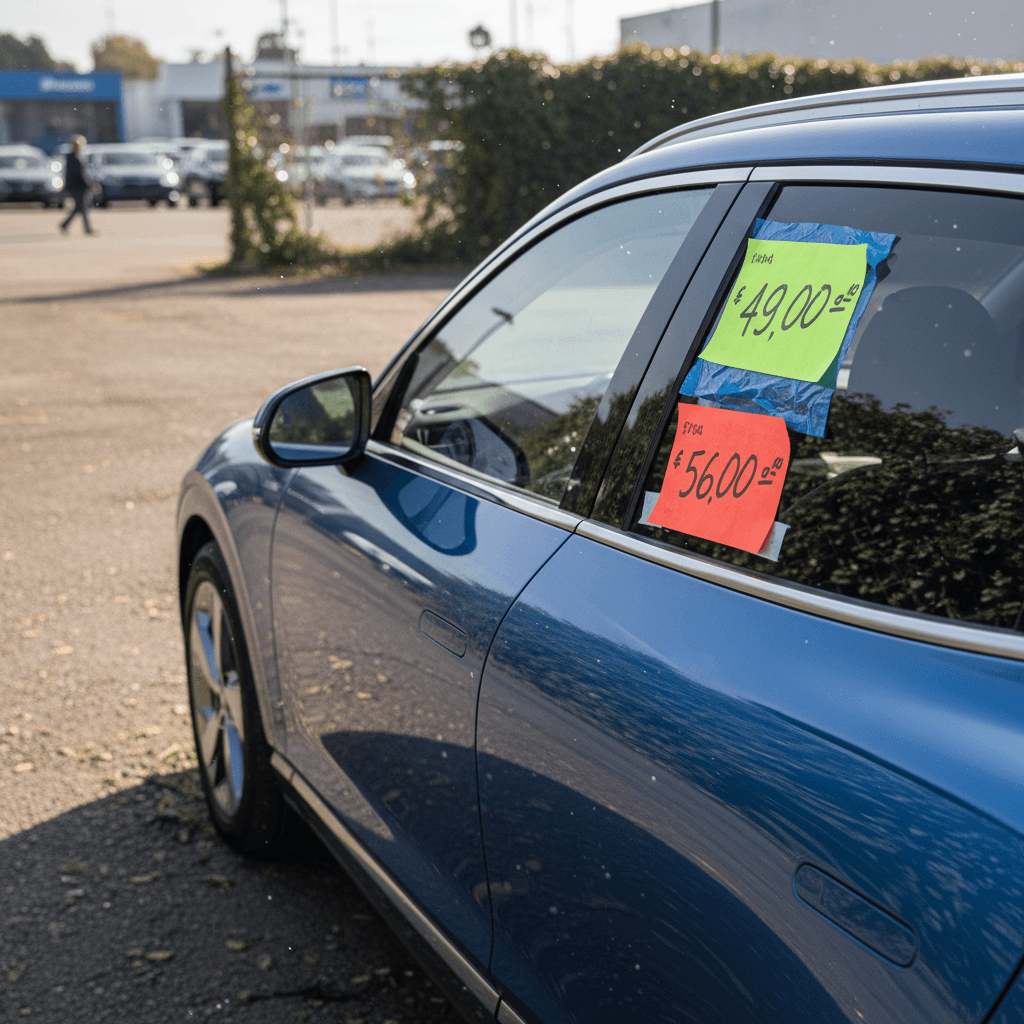
As model years advance, the gap between original MSRP and current transaction prices typically gets even wider. Add in factory incentives on new vehicles, and you get a used market where a three‑year‑old GV60 looks like an outright steal next to a brand‑new one parked 30 feet away on the same lot.
Watch out for over‑MSRP illusions
Tips to reduce your Genesis GV60 depreciation hit
Whether you’re buying new or used, there are concrete ways to soften the financial blow. Depreciation is inevitable, but how much of it you personally eat is not.
Smart ways to protect your GV60’s value
1. Buy used after the big drop
Let the first owner take the cliff‑edge hit. A 2–4‑year‑old GV60 has already absorbed the sharpest depreciation, yet should still have years of factory coverage left, including battery warranty.
2. Prioritize battery health documentation
Battery condition is the beating heart of EV resale value. Look for vehicles with a documented history of charging habits and battery checks. On Recharged, every vehicle includes a Recharged Score Report with verified battery health so you don’t have to guess.
3. Choose mainstream colors and trims
Wild colors and niche trims might delight the first owner but can shrink your buyer pool later. For best resale, stick with popular colors, dual‑motor trims, and option packs that used buyers recognize and want.
4. Keep mileage reasonable
EV shoppers tend to be extra mileage‑sensitive because they mentally equate miles with battery wear. If you can, keep annual mileage in the 10,000–12,000 mile range; even the difference between 36,000 and 60,000 miles at resale can be thousands of dollars.
5. Stay on top of software and service
Keep your GV60 updated and serviced on schedule. OTA software updates, documented maintenance, and clean inspection reports give future buyers confidence and strengthen your negotiating position.
6. Time your exit with incentives in mind
If Genesis introduces major discounts or a facelift that changes range or design, expect your current GV60 to take a step down in value. Selling a few months before a big update can sometimes mean real money retained.
Consider total cost, not just resale
Is a used Genesis GV60 a good buy?
For the right shopper, a used GV60 is one of the most compelling value plays in the compact luxury EV segment. You’re getting a distinctive design, a genuinely luxurious interior, and some of the fastest charging hardware in the game, at a price that has been pushed down by factors that have little to do with how the car drives.
Why a used GV60 makes sense
- Value for money: Steep early depreciation means you can often buy a well‑equipped GV60 for the price of a new mainstream crossover.
- Charging performance: 800‑volt architecture and up to 350 kW DC fast‑charging capability put it near the top of the field.
- Luxury feel: Design, materials, and tech that punch above the badge on the hood.
What to scrutinize carefully
- Battery and high‑voltage health: Not just range today, but degradation trend over time.
- Service history: Software updates, recall work, and routine maintenance fully documented.
- Previous incentives: Heavily subsidized leases and demos may show up used in higher numbers, affecting pricing; make sure you’re paying true market value, not a nostalgia price for old MSRP.
How Recharged fits in
Ready to find your next EV?
Browse VehiclesSo yes, the Genesis GV60 depreciation rate is steeper than some shoppers expect. But that’s not a reason to cross it off your list, it’s a reason to rethink how you buy it. Let someone else overpay for the new‑car smell. You can step into the same sculpted seats, enjoy the same whisper‑quiet torque, and own the value curve instead of being owned by it.
FAQ: Genesis GV60 depreciation rate
Frequently asked questions about Genesis GV60 depreciation
If you’re serious about a GV60, new or used, it pays to think like an investor and a driver at the same time. Know the depreciation math, insist on clear battery health information, and let the incentives and early‑owner losses work for you, not against you. That’s how you turn a steep depreciation curve into a smart EV buy.