If you’re eyeing a Genesis GV60, or already have one in the driveway, you’ve probably seen the marketing headline: **10–80% charge in about 18 minutes** on a 350 kW DC fast charger. That sounds fantastic, but how does a real-world **Genesis GV60 charging speed test** actually play out, and what does it mean for road trips and daily life?
Quick takeaway
Genesis GV60 charging overview
The Genesis GV60 rides on Hyundai Motor Group’s **E‑GMP 800‑volt platform**, the same architecture under the Hyundai Ioniq 5 and Kia EV6. That’s important because 800V hardware is what enables the **very high peak charging power** and the short 10–80% times you’ve seen in the brochures.
- All GV60s use a large battery pack (around 77.4 kWh in earlier years, 84 kWh in newer models).
- The car automatically supports both **800V and 400V DC fast chargers**, no adapters or switches to flip.
- Genesis quotes **about 18 minutes** for a 10–80% DC fast charge on a 350 kW ultra-fast charger.
- On AC (Level 2), the onboard charger is rated around **10.9 kW**, which sets your maximum home charging speed.
E‑GMP advantage
Genesis GV60 fast-charging specs and hardware
Before we get into how a Genesis GV60 charging speed test looks in the real world, it’s worth grounding ourselves in the hardware limits. The car can’t charge faster than what its battery, charging electronics, and software will allow, no matter what the charger sign claims.
Core Genesis GV60 charging specs (US models)
Approximate factory specs for mainstream GV60 trims. Always confirm details in your owner’s manual or window sticker for your exact year and trim.
| Item | Spec (earlier GV60) | Spec (newer GV60) | What it means for you |
|---|---|---|---|
| Battery capacity | ≈77.4 kWh | ≈84 kWh | Usable energy for driving; more kWh = more range, slightly longer to charge. |
| Max DC fast-charge power | ≈240 kW peak | ≈240 kW peak | Short bursts near this number early in a session on a strong charger. |
| DC fast-charge time (10–80%) | ~18 min (ideal case) | ~18 min (ideal case) | What Genesis quotes on a 350 kW / 800V ultra-fast charger. |
| Onboard AC charger | ≈10.9 kW | ≈10.9 kW | Limits maximum Level 2 charging speed at home or public AC stations. |
| Charging architecture | 800V (with 400V compatibility) | 800V (with 400V compatibility) | Can use both 400V and 800V DC stations at full capability. |
These numbers set the ceiling for any Genesis GV60 charging speed test.
Specs vs. reality
Real-world Genesis GV60 charging speed test
Let’s walk through what a real-world **Genesis GV60 charging speed test** looks like on a modern DC fast charger. We’ll use **approximate but realistic numbers** based on the E‑GMP platform’s behavior, independent tests, and what owners have reported from the road.
Test scenario
- Vehicle: Genesis GV60 with ~77.4 kWh battery
- State of charge: 10% to 80%
- Charger: 350 kW ultra-fast DC (800V-capable)
- Ambient temp: mild (60–75°F), battery preconditioned from highway driving
What we’re watching
- Peak kW (how high the curve spikes)
- Average kW over the 10–80% window
- Time spent above ~150 kW
- Total minutes to go from 10% to 80%
Typical Genesis GV60 DC fast-charging results (10–80%)
The charge curve usually spikes quickly past 200 kW just after you plug in, holds above 150 kW through the middle of the pack, and then starts to taper as you approach 70–80%. By the time you cross 80%, the car often has dropped to something closer to 70–90 kW, which is why most road‑trippers **unplug around 70–80%** and get back on the highway.
Road-trip sweet spot
Home charging speed: Genesis GV60 on Level 2
DC fast charging is the headline, but most of your GV60’s life will be spent sipping electrons at home. Here’s how long that takes on a typical **Level 2 home charger**.
Genesis GV60 Level 2 home charging times (approximate)
Assumes the onboard charger is around 10.9 kW and the EVSE and circuit can support the current shown. Times are for roughly 0–100% for simplicity.
| Circuit / EVSE | Max power into car | Approx. miles of range per hour | Approx. 0–100% time |
|---|---|---|---|
| 240V / 32A (typical 40A circuit) | ≈7.7 kW | 22–28 mi/hr | ≈10–11 hours |
| 240V / 40A (typical 50A circuit) | ≈9.6 kW | 27–34 mi/hr | ≈8–9 hours |
| 240V / 48A (typical 60A circuit) | ≈11.5 kW (limited to car’s ≈10.9 kW) | 30–36 mi/hr | ≈7–8 hours |
| Public Level 2 (7 kW class) | ≈6.6–7.2 kW | 20–25 mi/hr | ≈11–12 hours |
Use these Level 2 times as ballpark planning tools; your actual times will vary with starting SOC and conditions.
The GV60 doesn’t need a monster home charger
7 factors that change your GV60 charging speed
Your Genesis GV60 might be an 800‑volt rock star on paper, but real‑world charging speed tests live and die by the conditions. Here are the biggest variables that explain why you sometimes see 230 kW, and sometimes barely crack 70.
Key variables in any Genesis GV60 charging speed test
1. State of charge when you plug in
The GV60 charges fastest when the battery is **low**. Plugging in at 50% will never hit the same heights as plugging in at 10–15%. For road trips, aim for the lower end.
2. Battery temperature
Cold packs charge slowly. After a long highway stretch the battery is warm and happy; after an overnight soak in winter, it’s ice‑cold and cautious. Preconditioning via navigation to a DC charger helps when available.
3. Charger power and health
A station labeled 350 kW may be **power‑limited**, sharing with another stall, or just plain tired. If you’re stuck at 70–90 kW on an empty battery, the limiting factor is probably the charger, not your Genesis.
4. Station congestion
Shared power cabinets mean your GV60 can lose speed when the site gets busy. If another car plugs into the paired stall, your curve may flatten even if the charger sign still says 350 kW.
5. Software and BMS strategy
Genesis tunes the GV60’s battery‑management system to balance speed and longevity. Updates over time can tweak how aggressively the car ramps up or tapers down power, even on the same hardware.
6. Weather and climate control use
Running cabin heat or AC at full blast during a fast charge pulls power from the pack. In extreme cold or heat, thermal management also eats into what’s available for charging.
7. Battery age and health
A well‑cared‑for pack that’s seen moderate DC fast charging will generally keep its speed longer than a pack that’s been hammered from 0–100% on fast chargers for years.
Cold-weather reality check
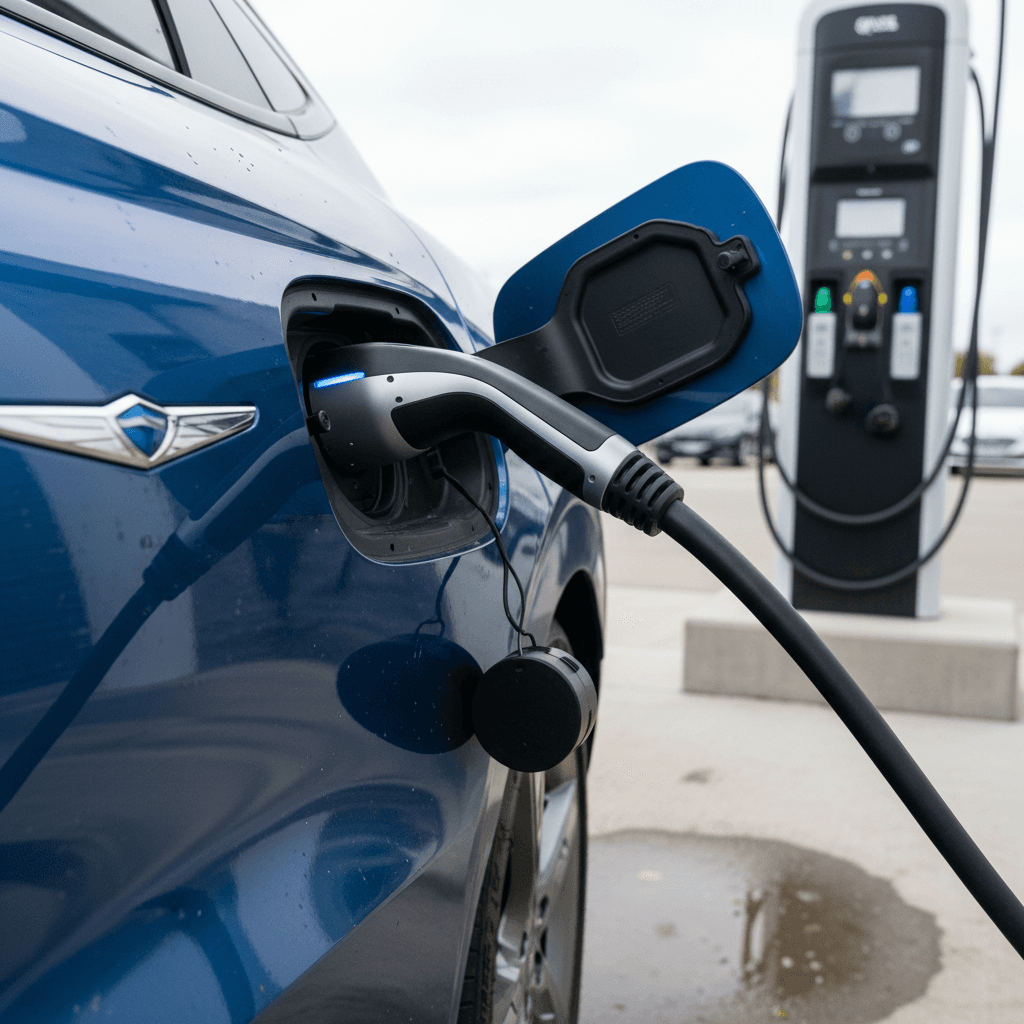
How fast charging affects GV60 battery health
The GV60’s E‑GMP battery is designed to **handle frequent fast charging**, but there’s no such thing as free speed. Every high‑power session heats the pack and nudges long‑term degradation a little higher. The good news: if you treat the car reasonably, you’ll almost certainly age out of the GV60 before the battery does.
Fast-charging the Genesis GV60 without beating up the battery
Smart habits that keep your DC speeds strong for years
Save DC for road trips
Use ultra-fast DC charging mainly when you’re away from home or on long drives.
Day to day, lean on Level 2. It’s cheaper, gentler, and still easily fills the pack overnight.
Avoid sitting at 100%
If you must charge to 100% for a trip, hit it just before departure.
Letting the GV60 sit at 100% for days in hot weather is the quickest way to age the pack.
Mind heat and cold
Extreme heat and cold are the enemy. In summer, park in the shade when you can; in winter, precondition while plugged in.
Both moves reduce how hard the pack has to work.
Warranty safety net
Charging tips if you’re shopping for a used GV60
If you’re looking at a **used Genesis GV60**, a charging speed test is one of the best real‑world health checks you can do, especially when you pair it with proper battery diagnostics like a Recharged Score report.
Smart charging checks for a used Genesis GV60
1. Ask about charging history
Did the previous owner mostly charge at home, or live at DC fast chargers? Occasional road‑trip fast charging is normal; **daily 0–100% DC sessions** are a red flag.
2. Do a quick DC fast-charging trial
If possible, arrive at a DC station around **15–20%** and watch how high the kW climbs. You don’t need lab gear, just note whether it can still break into **triple‑digit** kW on a healthy charger.
3. Check home-charging behavior
On a Level 2 charger, confirm the car pulls close to its expected ~10.9 kW when the battery is low. Much lower draw could mean a wiring limitation, EVSE setting, or (less commonly) an onboard charger issue.
4. Look at estimated range
With the pack at 100% and the drive mode in its most efficient setting, compare the estimated range to EPA numbers for that trim. A modest drop is normal; a **huge gap** is worth investigating.
5. Get a battery health report
A **Recharged Score** report uses professional diagnostics to verify real battery health, fast‑charging behavior, and fair market pricing, especially useful on higher‑mileage luxury EVs like the GV60.
How Recharged can help
Genesis GV60 charging speed test FAQ
Frequently asked questions about GV60 charging speed
Bottom line: is the Genesis GV60 a fast charger?
If you judge it by the stopwatch, the answer is yes: when conditions are right, a Genesis GV60 can legitimately deliver **10–80% charges in under 20 minutes**, putting it among the quickest‑charging luxury EVs on the road. The secret sauce is its 800‑volt E‑GMP platform, a solid 240 kW peak, and software that’s happy to hold high power through the heart of the battery pack.
In daily life, that means **stress‑free home charging** overnight and **short, predictable road‑trip stops** on the highway, especially if you keep your sessions in the 10–80% sweet spot. If you’re considering a used GV60, combining a simple charging speed test with a **Recharged Score battery health report** gives you the kind of confidence you can’t get from a spec sheet alone.