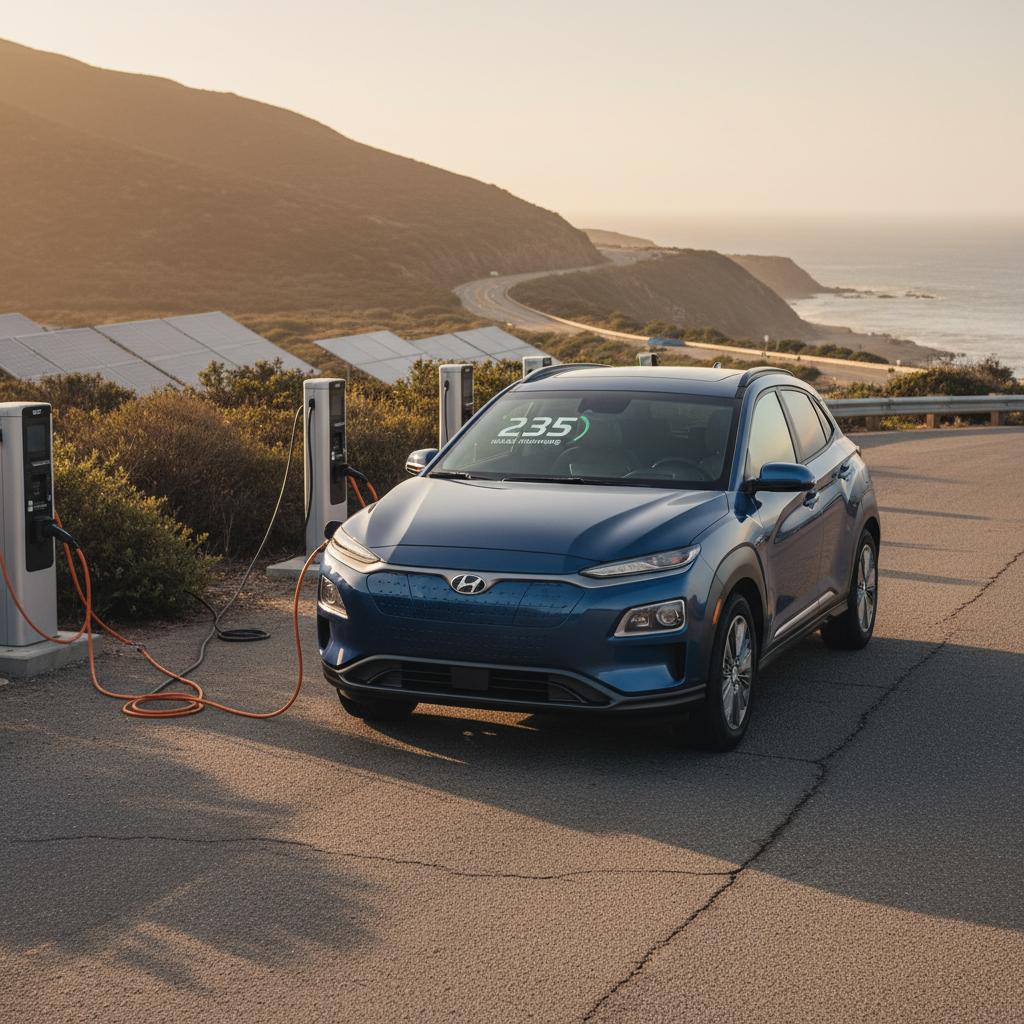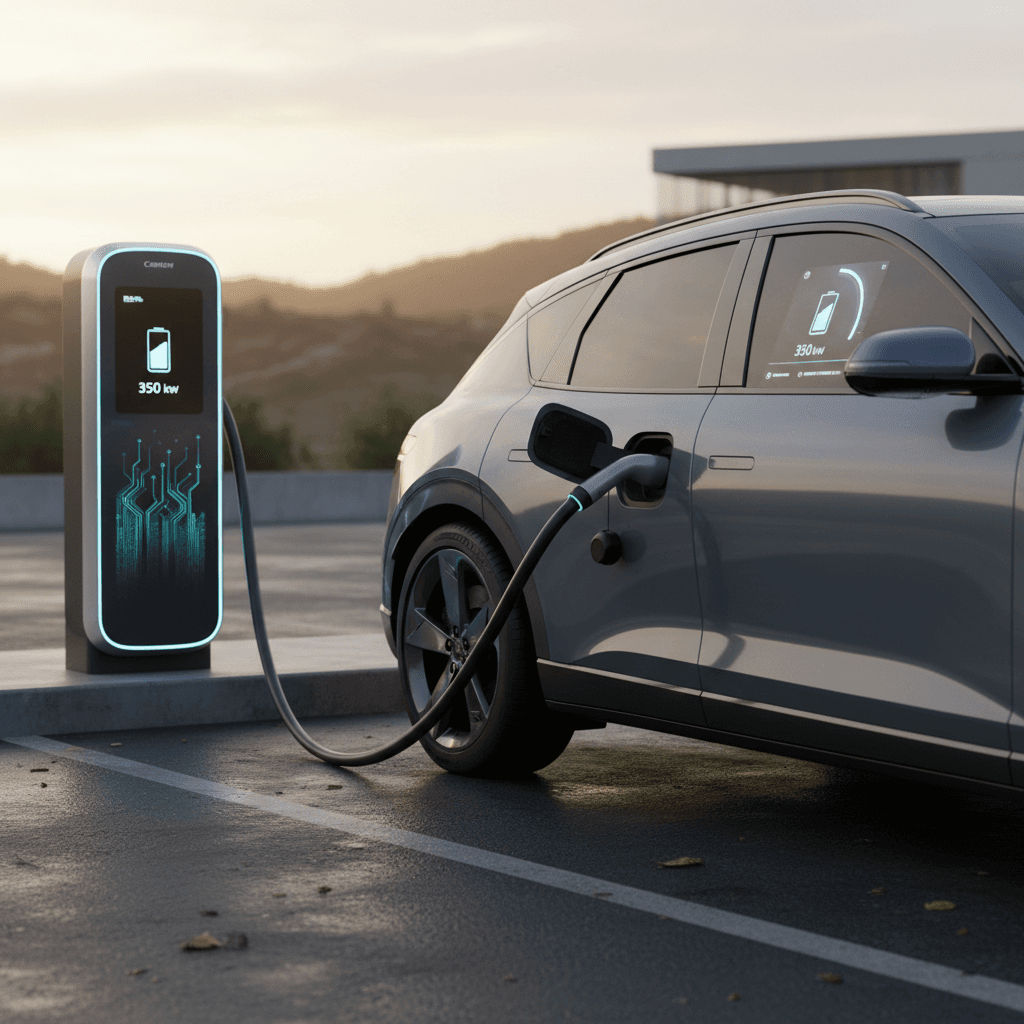
The Genesis GV60 is one of the quickest‑charging luxury EVs you can buy. Thanks to its 800‑volt E‑GMP platform and a ~77–84 kWh battery, a GV60 on a powerful DC fast charger can jump from about 10–80% in roughly 18 minutes in ideal conditions. This Genesis GV60 charging speed guide walks through how fast it really charges on Level 1, Level 2, and DC fast chargers, and how to charge in a way that’s kind to your battery, whether you’re buying new or shopping a used GV60 on Recharged.
Why the GV60 is special
Genesis GV60 charging speed overview
Key Genesis GV60 charging numbers (U.S. models)
Those headline numbers are impressive, but they don’t tell you what happens on your driveway outlet in February, or at a busy Electrify America station on a road trip. To understand that, you need to know what’s under the GV60’s skin.
GV60 battery size and charging hardware
Most U.S. Genesis GV60 trims, Advanced and Performance, have used a 77.4 kWh lithium‑ion pack on the E‑GMP platform. A recent update bumps usable capacity to around 84 kWh on some markets and trims but keeps the same 800‑volt architecture and roughly the same 10–80% fast‑charge time. Regardless of year, the GV60 is designed to DC fast charge from 10–80% in about 18 minutes on a healthy 350 kW charger with the battery properly preconditioned.
AC (Level 1 & Level 2)
- Onboard charger: ~10.9 kW max
- Connector: J1772 for AC charging in North America
- Home charging: Up to 48 A on a 240 V circuit with a capable wallbox
- Included cord: 120 V Level 1 trickle charger from the factory
DC fast charging
- Standard: CCS (Combined Charging System) in North America
- Peak power: Roughly 230–260 kW depending on model year and station
- Charge window: Strong power from ~10–60% state of charge (SoC)
- Network perks: Many GV60s include complimentary Electrify America DC fast charging for 3 years from new.
Used GV60 shopping tip
Level 1 charging: slow but usable backup
Level 1 charging means plugging your GV60 into a standard 120 V household outlet using the included portable cord. It’s the slowest way to charge any EV, and the GV60 is no exception, but it can work if your daily mileage is light.
- Typical power: 1.2–1.4 kW at 120 V and 10–12 A
- Real‑world rate: roughly 1–2 miles of range per hour of charging, depending on efficiency
- Useful for: drivers who park 12–16 hours a day and only use 15–30 miles of range daily
- Not ideal for: road‑trip recovery, heavy commuters, or cold‑weather owners without access to anything faster
Watch your circuit limits
Level 2 home and public charging speeds
Level 2 charging is where the Genesis GV60’s 10.9 kW onboard charger shines. On a 240 V circuit with a 32–48 amp home EVSE (wallbox), the GV60 can easily recharge a typical day’s driving while you sleep.
Genesis GV60 Level 2 charging speeds
Approximate charge times from 10–80% and max miles added per hour on common North American Level 2 setups.
| Charger / Circuit | Max Power to Car | 10–80% Time* | Miles per Hour Added** |
|---|---|---|---|
| 120 V Level 1 (12 A) | ≈1.4 kW | 30+ hours | 1–2 mi/hr |
| 240 V Level 2 (32 A) | ≈7.7 kW | ~7.5–8 hours | 22–28 mi/hr |
| 240 V Level 2 (40 A) | ≈9.6 kW | ~6.5–7 hours | 28–32 mi/hr |
| 240 V Level 2 (48 A, max) | ≈10.9 kW | ~6 hours | 30–35 mi/hr |
Real‑world times will vary with temperature, driving efficiency, and how the car manages battery temperature.
On a typical 40‑amp home unit, one of the sweet spots for price and performance, you’re looking at roughly 30 miles of range per hour of charge. Arrive home at 20% after a 60‑mile day, plug in, and by the time you’re making coffee in the morning the GV60 is quietly back at your chosen target, usually 80–90%.
Right‑size your home charger
DC fast charging: how the GV60 really behaves
On paper, the GV60 can accept more than 200 kW from a DC fast charger, and in independent testing it often peaks around 230–240 kW on a 350 kW unit. The magic isn’t just the peak, it’s how well the car holds power through the middle of the battery.
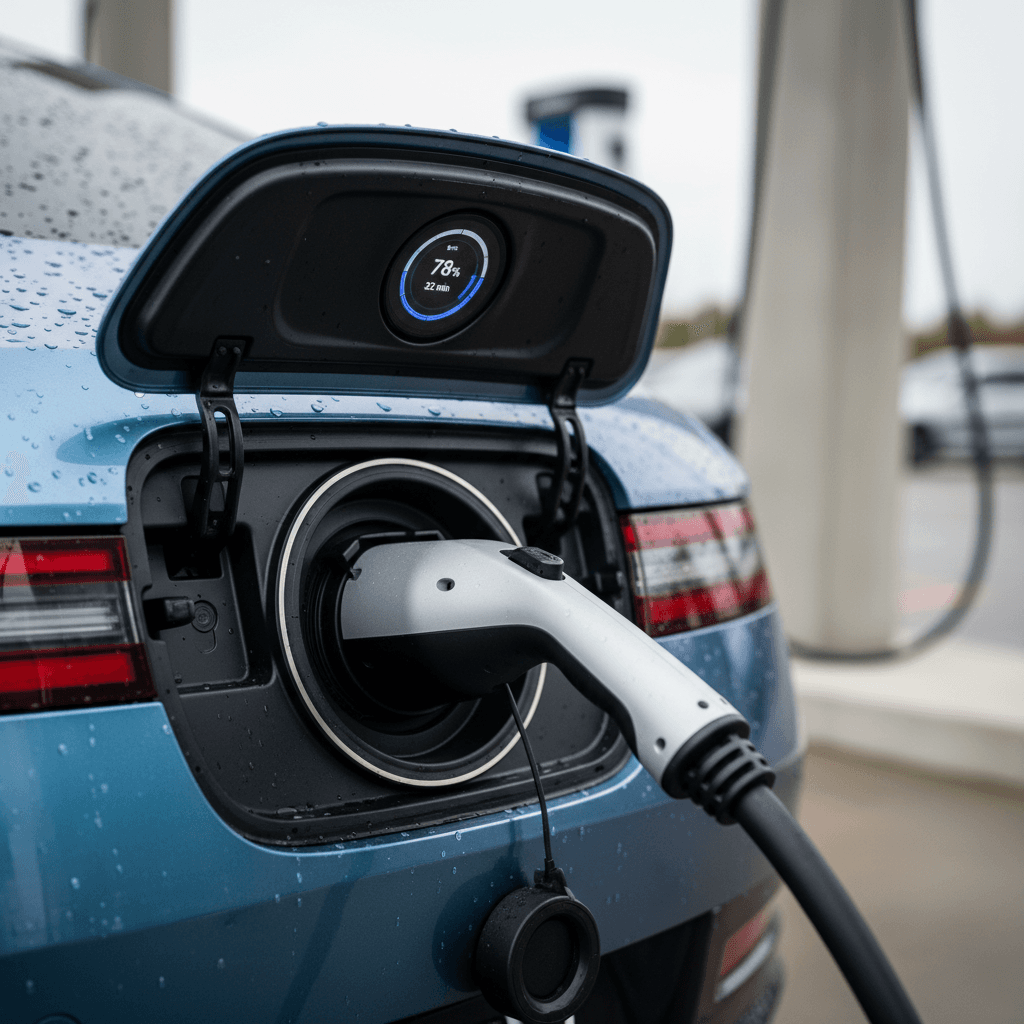
- Typical peak: 230–240 kW between ~10–30% SoC on a 350 kW charger
- Strong mid‑range: It often stays above 150 kW into the 50–60% range before tapering
- Headline time: 10–80% in ~18 minutes in warm weather on a healthy high‑power DC unit
- Practical road‑trip window: 15–25 minutes per stop if you start low and unplug around 70–80%
Think in “minutes, not 100%”
5 factors that change your GV60’s charging speed
If you’ve ever plugged into a 350 kW station and seen a disappointing 70 kW, you already know: the number on the pylon is only half the story. The GV60 is quick, but it’s not immune to the usual EV caveats.
Why your GV60 might charge slower than expected
The car, the charger, and the weather all get a vote.
Battery temperature
The GV60 likes a warm pack, roughly room temperature or warmer, for peak DC speeds. In cold weather, it may sit at 30–60 kW for a while unless you precondition.
State of charge (SoC)
Expect the fastest rates between 10–60%. Above 80%, the car deliberately slows charging to protect the battery, no matter how powerful the station is.
Charger limitations
Many “350 kW” sites share power between stalls or are limited by grid capacity. A busy station can cut speeds dramatically, even for an 800‑V car like the GV60.
Weather & HVAC loads
Extreme heat or cold forces the GV60 to spend more energy on battery conditioning and cabin climate, which can reduce net charge rate and increase losses.
Software & updates
Genesis has pushed charging‑behavior updates over time. A car that hasn’t had recent updates may charge differently than newer builds.
Your driving before charging
Arriving after a fast highway run often means the pack is already warm. Crawling through city traffic with the heater blasting may leave it cooler than you think.
Use built‑in preconditioning when you can
Battery health: how fast is too fast, how full is too full?
The GV60’s pack is engineered for fast charging, but the usual battery‑health rules still apply. High C‑rates, frequent 100% charges, and ultra‑hot or ultra‑cold conditions will age any lithium‑ion battery faster. Genesis builds in plenty of protections, yet your habits still matter.
GV60 battery‑friendly charging habits
Stay between ~20–80% for daily use
For commuting and errands, treat 80% as your practical “full” and avoid letting the car sit for days near 0% or 100%.
Save 100% charges for road trips
There’s nothing wrong with going to 100% when you need the range, just don’t leave the car full for long periods if you can avoid it.
Prefer Level 2 over constant DC
Daily use on a <strong>home Level 2 charger</strong> is gentler on the pack than relying on DC fast charging multiple times a week.
Precondition in extreme weather
Let the car warm or cool the pack before hard DC sessions in very hot or cold conditions to reduce stress on the cells.
Check for software updates
Charging behavior, thermal limits, and battery management can all be refined over time. Make sure any used GV60 you’re considering is up to date.
Don’t mask problems with speed
Daily charging strategies for GV60 owners
With an EV that charges this quickly, you have options. You can treat the GV60 like an appliance that quietly tops itself off every night, or like a tourer that gulps electrons in short, intense bursts on road trips. Here’s how to make the most of both worlds.
Pick the charging playbook that matches your life
Suburban commuter (20–60 miles/day)
Install a 32–40 A Level 2 charger at home or at least have reliable workplace Level 2 access.
Set a charge limit around 80–90% and schedule overnight charging to finish by your usual departure time.
Use DC fast charging only for occasional long weekends or when plans go sideways.
Apartment or street parker
Look for reliable Level 2 at your apartment, workplace, or favorite grocery/retail locations.
Treat Level 1 as emergency backup only, its 1–2 mi/hr rate is fine for topping up, not for deep recharges.
On longer drives, plan DC stops where you can stack errands, meals, or coffee on top of a 20‑minute session.
Frequent road‑tripper
Plan legs so you arrive at DC chargers around 10–20% and unplug around 70–80% for the best minutes‑per‑mile tradeoff.
Use the GV60’s built‑in route planning or third‑party apps to find 200+ kW capable sites along your route.
Keep an eye on station reliability, favor networks and locations with multiple high‑power stalls.
Used‑GV60 owner watching battery health
Use your car’s energy and charging stats to get a feel for efficiency and any unusual tapering.
Stick to home Level 2 for most charging and reserve DC for trips.
If you notice a big change in charging behavior over time, consult service records or consider a fresh battery health check.
Charging costs, Electrify America perks, and used‑GV60 shopping
Charging the GV60 can be significantly cheaper than filling a gasoline crossover, especially if you have access to off‑peak home rates. Many new GV60s have also come with three years of complimentary 30‑minute DC fast‑charging sessions on Electrify America, which is a real perk for early owners and something to ask about on used examples.
Typical charging costs
- Home Level 2: At $0.15/kWh, an 80% charge from 10% on a 77.4 kWh pack costs roughly $8–10.
- Public DC fast: Per‑kWh pricing can effectively land you in the $15–25 range for a similar 10–80% session.
- Per‑mile cost: At ~3.0–3.5 mi/kWh, you’re often around $0.04–0.07 per mile at home, still below most gas crossovers.
Questions to ask on a used GV60
- Has the car had all charging‑related software updates and recalls completed?
- How has it been charged, mostly home Level 2, or heavy DC fast use?
- Are any Electrify America benefits still transferable or active?
- Can the seller provide recent charging logs or screenshots of typical fast‑charge speeds?
Every GV60 sold through Recharged comes with a Recharged Score Report that includes battery health diagnostics and pricing grounded in real‑world data, so you’re not guessing how it’s been treated.
Genesis GV60 charging FAQ
Frequently asked questions about GV60 charging
Bottom line: what to expect from GV60 charging
Live with a Genesis GV60 for a week and you realize its real superpower isn’t just the punchy acceleration or spaceship interior. It’s how little time you spend baby‑sitting the charge cable. On a 40‑amp Level 2 at home, the car quietly refills your daily driving in a few hours. On a good DC fast charger, 15–20 minutes is enough to turn a low battery warning into another solid leg of highway. The key is understanding where each charging level fits into your life and how your habits affect battery health over the long haul.
If you’re already a GV60 owner, tweak your charge limits, pick the right home charger, and let the car’s 800‑V hardware do the hard work. If you’re shopping for a used Genesis GV60, this charging speed guide should give you a feel for what to expect, and what questions to ask. Every GV60 on Recharged comes with a Recharged Score Report that includes verified battery health and fair‑market pricing, so the fast‑charging promise you see on paper matches the experience you’ll have on the road.