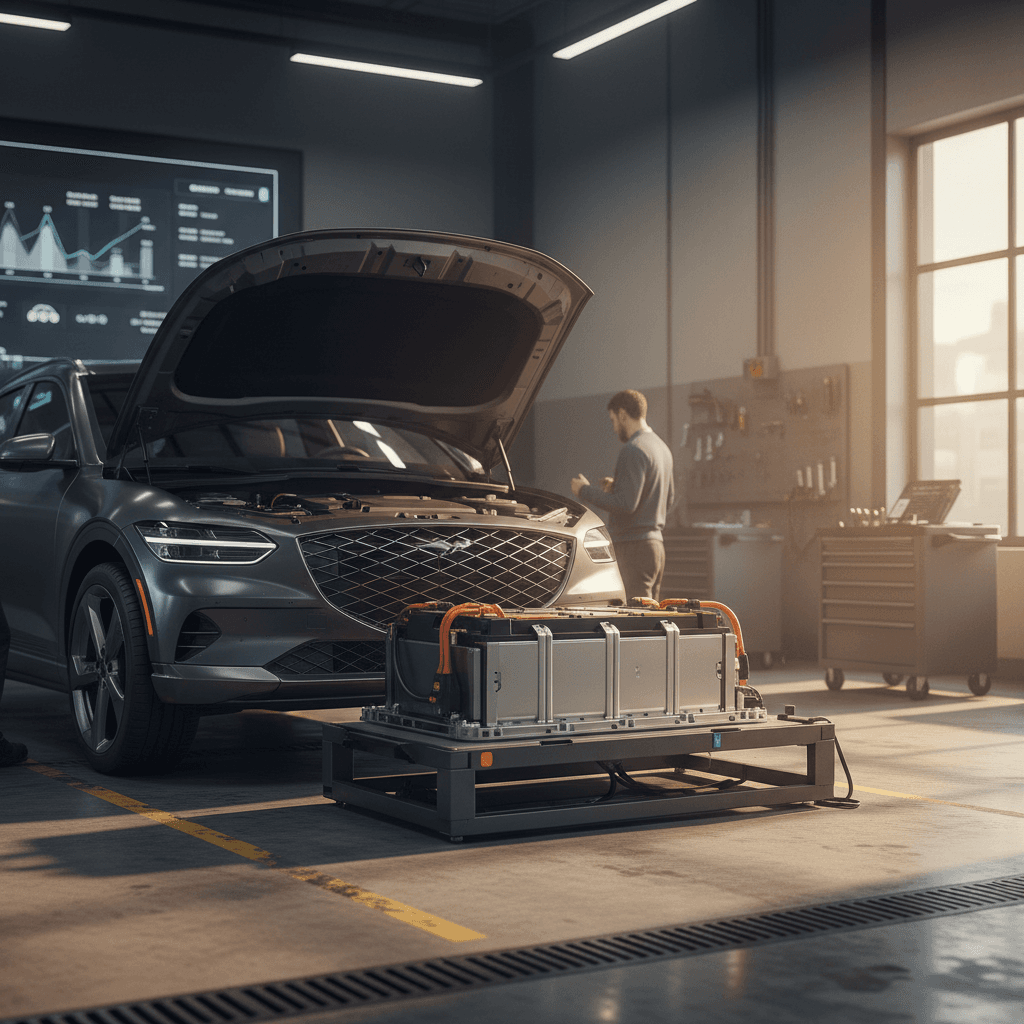
If you own or are shopping for a Genesis GV60, it’s natural to wonder about the **Genesis GV60 battery replacement cost in 2026**. The high‑voltage pack is the single most expensive component in the car, and online horror stories about five‑figure battery quotes can be unnerving. The good news: for most GV60 drivers, a full pack replacement is unlikely for many years, and often free if it happens under warranty. This guide walks through realistic 2026 cost ranges, what Genesis actually covers, and how to make smart decisions if a battery problem ever shows up.
Key takeaway for 2026
Genesis GV60 battery replacement cost in 2026: overview
Genesis GV60 battery cost snapshot (2026, U.S.)
Genesis doesn’t publish a public MSRP for a new GV60 battery pack, and individual dealer quotes can vary wildly. But we can triangulate from real‑world EV battery invoices, 2024–2025 pack‑level pricing, and what we know about Hyundai/Genesis E‑GMP vehicles like the Ioniq 5 and Kia EV6. At today’s typical **$110–$140 per kWh** pack‑level manufacturing cost for mainstream EVs, a 77.4 kWh pack represents roughly **$8,500–$11,000** of underlying hardware before markup. After OEM margins, dealer parts markups, and labor, the all‑in retail bill in 2026 will usually land in the mid–five‑figure range if you’re paying out of pocket.
Sticker‑shock caveat
How much is a Genesis GV60 battery pack in 2026?
Because exact Genesis GV60 battery replacement invoices are still rare in 2026, it’s more honest to give **brackets and scenarios** than a single number. Below is a grounded estimate using published 2024–2025 EV battery replacement data for comparable models and Recharged’s own battery cost research.
Estimated Genesis GV60 high‑voltage battery replacement cost (2026, U.S.)
Ballpark 2026 cost ranges for a full Genesis GV60 battery pack replacement. These numbers assume you are outside warranty and do not include sales tax or local environmental fees.
| Scenario | What’s Included | Estimated Parts Cost (Pack) | Estimated Labor & Misc. | Estimated Owner Total |
|---|---|---|---|---|
| Genesis dealer, new OEM pack | New 77.4 kWh pack, seals, coolant, programming | $16,000–$22,000 | $1,500–$3,000 | ≈$18,000–$25,000 |
| Independent EV specialist, used/salvage pack | Used GV60/EV6/Ioniq 5 pack, installation, programming | $8,000–$13,000 | $2,000–$3,500 | ≈$10,000–$16,000 |
| Module‑level repair (if available) | Replace failed module(s), labor, diagnostics | $2,500–$6,000 | $1,000–$2,000 | ≈$3,500–$8,000 |
Think of these as planning ranges, not quotes, actual pricing can vary by dealer, region, and model year.
These ranges assume U.S. conditions in **2026**, when pack‑level battery costs have continued to decline, but retail replacement pricing still carries healthy margins. For comparison, published 2024–2025 estimates for mid‑size EVs like Hyundai Ioniq 5, Volkswagen ID.4, and Chevy Bolt place full pack replacements (parts plus labor) mostly in the **$15,000–$24,000** range, depending on capacity and brand positioning, very similar to where a GV60 should land.
Don’t confuse **parts MSRP** with **what you’ll actually pay**
Labor, taxes, and related parts: what drives the final bill
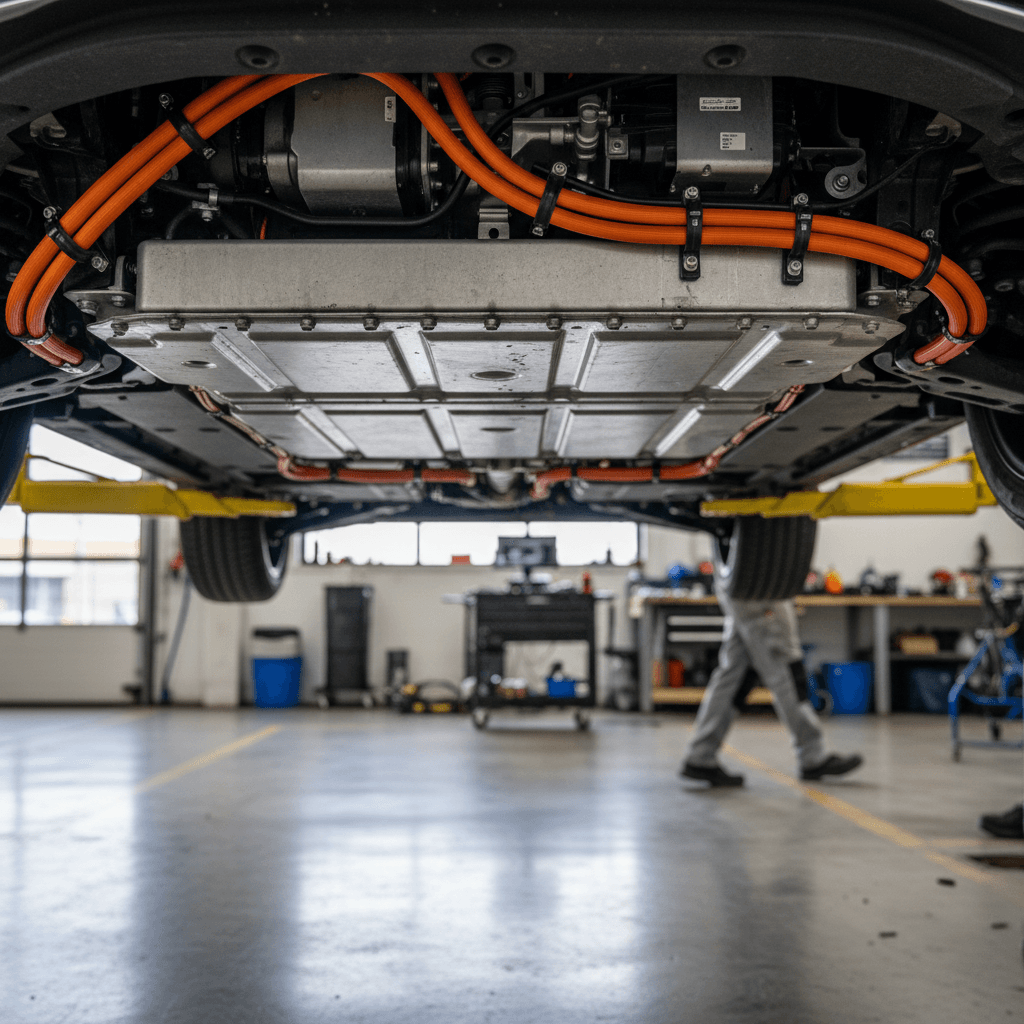
The GV60’s battery lives in a large structural pack bolted to the underside of the vehicle, connected via high‑voltage orange cabling and integrated into the E‑GMP platform’s cooling and safety systems. Swapping it is nothing like changing a 12V battery.
- **Labor hours:** A full pack swap typically books **8–15 hours** at dealer labor rates. At $150–$250/hour in many metro areas, that’s $1,200–$3,750 just in labor.
- **Shop supplies and fluids:** Technicians must drain and refill coolant loops, replace seals and fasteners, and perform leak checks. Expect **a few hundred dollars** here.
- **Diagnostics & programming:** The car’s battery management, power electronics, and security systems all need to be updated and validated after a pack change. This often shows up as flat diagnostic or programming fees.
- **Taxes & recycling fees:** Some states add specific EV battery fees or recycling surcharges on top of standard sales tax.
- **Towing & downtime:** If your GV60 is immobilized, you’ll cover towing to a dealer (unless roadside assistance or insurance picks it up) plus potential rental or rideshare costs while the repair is underway.
High‑voltage safety note
Warranty: when a GV60 battery is free vs. out-of-pocket
In the U.S., every new Genesis GV60 currently carries a **10‑year / 100,000‑mile high‑voltage battery warranty**, on top of a 5‑year / 60,000‑mile new‑vehicle warranty and 10‑year / 100,000‑mile powertrain coverage. That EV system warranty covers the traction battery and other key high‑voltage components from the original in‑service date.
How Genesis GV60 battery warranty works
Most early failures are covered, understanding the fine print is what matters.
Time & mileage
The high‑voltage battery in the GV60 is typically covered for 10 years or 100,000 miles, whichever comes first, starting from the original sale date.
What’s covered
Defects in materials or workmanship that cause failure or excessive capacity loss are covered. Software updates or BMS issues tied to a defective pack are usually included.
What’s not covered
Damage from collisions, floods, modification, or abuse can be denied. If the pack is physically compromised in a crash, your **insurance** may be on the hook, not Genesis.
For **second owners**, the specifics can be confusing because dealers sometimes mix up CPO program coverage with the separate EV system warranty. But Genesis documentation indicates that the **EV battery warranty itself remains in force** for the full 10‑year/100,000‑mile term from first sale, even if the car changes hands. What may not transfer are certain extended service contracts or CPO‑only perks.
Checklist: confirm your GV60’s battery warranty status
1. Look up the in‑service date
Ask a Genesis dealer to pull the **in‑service date** from the VIN, or check original paperwork. Your 10‑year clock starts there, not at your purchase date if you bought used.
2. Verify current odometer reading
The high‑voltage battery warranty expires at **100,000 miles**. If you’re already close, replacement might fall to you or your insurer instead of Genesis.
3. Get warranty coverage in writing
If a service advisor says your used GV60’s battery isn’t covered, politely insist on seeing the official warranty language or contacting Genesis customer care while you’re in the service lane.
4. Capture any battery‑related fault codes
If you get warnings or reduced‑power behavior, take photos of dash messages and ask the dealer for a printout of diagnostic codes. These help document that the issue arose under warranty.
5. Ask about goodwill if you’re just outside
If a pack fails slightly beyond 10 years or 100,000 miles, some manufacturers offer goodwill cost‑sharing. It’s not guaranteed, but it’s worth asking, especially if service history is clean.
Battery life, degradation, and when replacement is likely
The most overlooked part of **Genesis GV60 battery replacement cost in 2026** is the probability side of the equation. You only pay a five‑figure bill if the pack actually fails or degrades badly, and for modern EVs on Hyundai’s E‑GMP platform, that’s still relatively rare in the first decade.
- **Typical degradation:** Real‑world data across many modern EVs suggests average capacity loss of roughly **1–2% per year** under normal use. After 8 years, many packs still retain 80–90% of original capacity.
- **Use pattern matters:** High annual mileage, frequent DC fast charging, and hot‑climate parking can accelerate wear. The GV60’s active liquid cooling helps, but physics still applies.
- **Failure vs. gradual fade:** Most out‑of‑warranty replacements happen because of specific defects (like a bad module or BMS issue), not smooth linear degradation. That’s why some owners see a pack replaced at high mileage while others never do.
- **Mileage milestones:** With reasonable care, it’s realistic to expect the GV60’s pack to support **150,000–250,000 miles** before capacity becomes an everyday problem for most drivers, well beyond the average ownership period.
Why most GV60 owners will never pay for a pack
Repair vs. full replacement and salvage-pack options
Not every battery problem requires a brand‑new pack from Genesis. As the E‑GMP fleet ages, more **repair and reuse pathways** are emerging.
Dealer path: full pack replacement
At a Genesis dealer, the default is usually a complete pack swap. Technicians remove the GV60’s underbody pack and install a factory‑new unit. The old pack goes back into the OEM’s remanufacturing stream.
- Pros: New pack, clean paper trail, fully integrated with existing warranties.
- Cons: Highest cost if you’re out of warranty; limited flexibility.
Independent EV shop: repair or salvage
Specialist EV shops increasingly offer **module‑level repairs** or replacement with a used pack from a low‑miles GV60, Ioniq 5, or EV6 that was totalled in a crash.
- Pros: Potentially much lower cost; more options if OEM denies coverage.
- Cons: Availability varies by region; warranties are shop‑specific, not factory‑backed.
Second life & resale value
Genesis GV60 battery cost vs. other EVs
In the broader EV market, the GV60 sits in the **“mid‑size luxury crossover”** class. Its 77.4 kWh pack is roughly comparable to a Tesla Model Y Long Range or Hyundai Ioniq 5, smaller than big‑battery trucks like the Ford F‑150 Lightning, and larger than entry‑level compacts.
How GV60 battery replacement costs compare (2026 estimates, U.S.)
Approximate full pack replacement costs (parts and labor, before tax) for broadly comparable EVs. These are directional ranges based on 2024–2025 data, not quotes.
| Model | Battery Size (approx.) | Typical Replacement Range | Notes |
|---|---|---|---|
| Genesis GV60 | 77.4 kWh | $18,000–$25,000 | Luxury E‑GMP crossover; strong 10‑year/100k warranty eases early failures. |
| Hyundai Ioniq 5 | 77.4 kWh | $18,000–$24,000 | Same platform; similar underlying pack costs but less premium positioning. |
| Tesla Model Y LR | 75–82 kWh | $15,000–$23,000 | High volume helps but Tesla pack pricing varies widely by market. |
| Ford Mustang Mach‑E | 70–98.8 kWh | $20,000–$28,000 | Published estimates show higher pack costs for larger capacities. |
| Ford F‑150 Lightning | 98–131 kWh | $25,000–$35,000+ | Huge packs mean substantially higher replacement bills. |
The GV60’s likely replacement cost is in line with other mid‑size EVs, and often lower than large‑pack trucks and premium halo cars.
The pattern is simple: **pack size and brand positioning** drive costs. A GV60 battery replacement is expensive but not an outlier; it’s roughly what you’d expect for a premium EV with a ~77 kWh pack in 2026.
Budgeting strategies and insurance considerations
Knowing that a GV60 battery replacement could be a $20,000‑class event if it ever happens out of warranty doesn’t mean you need to stash that much cash in a savings account. But it should inform how you think about **insurance, ownership horizon, and exit options**.
Practical ways to manage GV60 battery risk
Most strategies cost little or nothing, just planning and paperwork.
Right‑size your insurance
Comprehensive and collision coverage matter more on EVs where the battery can make or break repairability. Make sure your policy clearly covers battery damage from crashes, floods, or road debris.
Align ownership with warranty
If you’re risk‑averse, plan to own or lease your GV60 for less than 10 years / 100,000 miles, when the battery is still fully covered.
Have a Plan B
If you’re far out of warranty and facing a huge bill, it might pencil out to sell or trade the vehicle instead of replacing the pack, especially if you were already thinking about a different EV.
Where Recharged can help
Used Genesis GV60 buyer’s guide: battery health
If you’re shopping for a **used Genesis GV60 in 2026**, battery health is one of the few things that can turn a great deal into an expensive headache. The flip side is that early‑build GV60s are still young; many will have a lot of warranty runway left. Here’s how to stack the odds in your favor.
How to evaluate a used GV60’s battery before you buy
1. Confirm warranty time and mileage
Ask for the VIN and have a Genesis dealer confirm the **original in‑service date** and remaining coverage. A 2023 GV60 sold new in late 2023, for example, would have battery coverage into late 2033.
2. Check DC fast‑charging history
Heavy fast‑charging isn’t a dealbreaker, but a car that lived on DC fast chargers in a hot climate has more risk. Connected‑car data or service records, when available, can give clues.
3. Look for range consistency
During a test drive, pay attention to how quickly the estimated range drops. Abrupt swings or unusually low range for the displayed state of charge can hint at imbalance or degradation.
4. Ask for a battery health report
Some dealers and EV specialists can pull a **state‑of‑health (SoH)** reading from the GV60. At Recharged, every car comes with a <strong>Recharged Score Report</strong> that includes battery health metrics, so you’re not guessing.
5. Inspect for underbody damage
Have a shop or seller provide clear underbody photos. Scrapes, dents, or prior collision damage near the pack area can affect both safety and insurability.
6. Avoid mystery dash lights
Any high‑voltage or battery warnings on the test drive are a hard stop. Ask the seller to resolve the issue and provide documentation, or move on.
FAQ: Genesis GV60 battery replacement cost 2026
Common questions about Genesis GV60 battery replacement in 2026
Bottom line on Genesis GV60 battery costs in 2026
A **Genesis GV60 battery replacement** is one of those big‑ticket items that can loom large in your imagination but rarely shows up in real life, especially during the first decade of ownership. In 2026, if you ever did have to pay out of pocket, you’d likely be looking at a total bill somewhere around **$18,000–$25,000** at a dealer, with potential savings if you pursue salvage or independent repair options. But for most owners, the more important story is the **10‑year / 100,000‑mile battery warranty**, the relatively slow pace of modern EV degradation, and the fact that many GV60s will change hands long before their packs become unusable.
If you’re on the fence about a used GV60 or wrestling with a big repair decision, it helps to think holistically about **total cost of ownership**, not just the worst‑case battery scenario. That’s exactly what Recharged was built for: transparent battery‑health reporting, fair‑market pricing, and support if you decide that replacing your current EV with a different one makes more sense than replacing its pack. In a market where the line between “repair” and “replace the whole car” is shifting, having that kind of data and guidance is quickly becoming as valuable as the hardware itself.