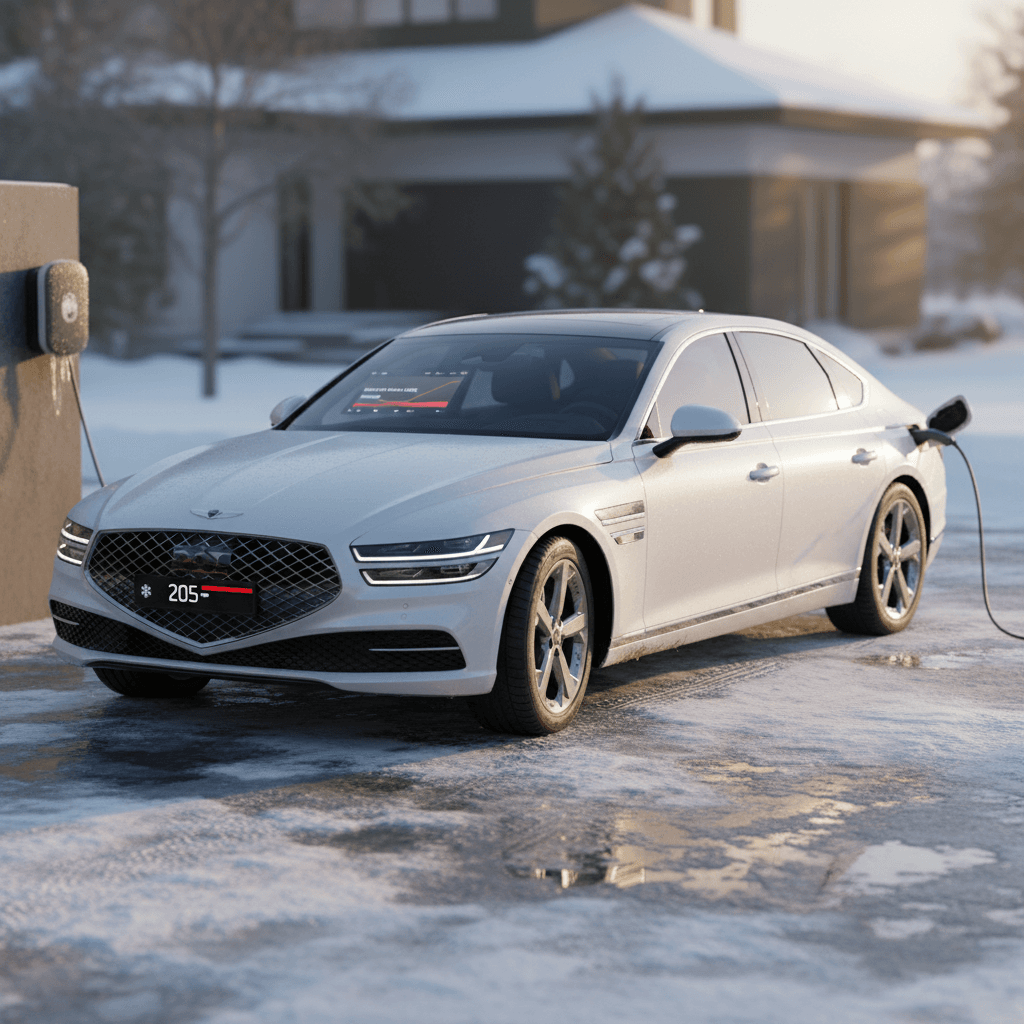
If you live where winter actually means winter, you’re right to worry about Genesis Electrified G80 winter range loss. On paper this big Korean luxury sedan promises about 282 miles of EPA range from its 87.2‑kWh battery, but sub‑freezing temps, highway speeds, and cozy cabin heat can carve a big bite out of that number.
Quick winter takeaway
Electrified G80 winter range loss at a glance
Genesis Electrified G80: key range + winter numbers
The Electrified G80 is a heavy, dual‑motor, all‑wheel‑drive luxury sedan. It’s quick, quiet and wonderfully plush, but it’s not a hyper‑efficient aero bullet. Its energy use is around 35 kWh per 100 miles in EPA testing, which translates to that 282‑mile rating in mild conditions. In winter, you’re starting from a less efficient baseline than a small Tesla or Hyundai Ioniq 6, so any cold‑weather penalty shows up sooner on the gauge.
Don’t panic at a low winter estimate
Why any EV – including the Electrified G80 – loses range in winter
Cold weather doesn’t magically “steal” miles from your Genesis; it just makes the car work harder to do the same things. The Electrified G80 shares fundamental physics with every other EV, whether it’s a Tesla Model 3 or a Kia EV6. The big differences are the size of its battery, the mass it has to move, and the way its climate system is tuned for quiet comfort.
- Cold batteries are less efficient. Lithium‑ion chemistry prefers mild temperatures. A cold pack has higher internal resistance, so it takes more energy to pull power in and out, especially in the first 20–30 minutes of a drive.
- Cabin heat is energy‑hungry. Unlike a gas car, there’s no free waste heat from an engine. The Electrified G80 uses an efficient heat pump in many trims, but keeping a big, glassy cabin at 72°F when it’s 20°F outside still costs you.
- Denser air increases drag. Air is thicker in cold temps. Combine that with highway speeds and this sleek but sizable sedan has to punch a slightly bigger hole in the atmosphere.
- Winter tires and wet roads add rolling resistance. Softer compounds and chunky tread blocks improve grip at the expense of efficiency. Snow, slush and standing water sap even more energy.
- Short trips are the worst. You pre‑heat, drive 8–10 miles, then park and let everything cool again. The car never gets to amortize the warm‑up cost over a long distance.
Genesis heat pump advantage
Real‑world Electrified G80 winter range loss: numbers, not guesses
Genesis doesn’t publish a separate winter range rating for the Electrified G80, so you’re left with owner reports and instrumented road tests. Luckily, there are a few good datapoints that show a consistent pattern: the G80 EV generally tracks close to its 282‑mile EPA rating in mild weather, and gives up a meaningful but manageable chunk of that in the cold.
Electrified G80 range: lab vs. mixed real‑world driving
Approximate results pulled together from early road tests and owner reports.
| Scenario | Temperature | Driving mix | Displayed or calculated range | Approx. loss vs EPA |
|---|---|---|---|---|
| EPA rating (baseline) | ~70°F | Lab cycle | 282 miles | 0% |
| Cold snap test with heavy heater use | Single digits to teens °F | Mixed, some DC fast charging | ~202 real miles on a "239‑mile" estimate | 25–30% |
| Mild weather road trip | 50–60°F | Highway‑weighted | ~260–270 miles | 5–10% |
| Owner report, moderate climate | 60–70°F | Mostly commuting | 285–315 miles per full charge | ~0–10% gain vs. rating |
Numbers are rounded and meant as realistic planning figures, not hard promises.
Use “miles per kWh,” not just miles
One extended test in an especially cold snap saw an Electrified G80 charged to 100% show 259 miles estimated instead of 282, and then deliver only about 202 miles before the driver decided it was time to plug in again. That’s roughly a 30% haircut from the nominal EPA number once you factor in brutal temperatures, high heater usage, and multiple fast‑charge sessions during the trip.
City vs highway: how winter hurts the G80 EV differently
Urban + suburban winter driving
In stop‑and‑go, the Electrified G80 can actually be fairly kind to you in the cold:
- Plenty of regenerative braking recaptures energy.
- Speeds are lower, so aero drag matters less.
- If you pre‑heat while plugged in, more cabin comfort comes “off the wall.”
Here, you might see winter efficiency drop from, say, 3.5 mi/kWh to around 2.8–3.0. That’s noticeable, but not catastrophic.
Highway winter driving
This is where the Electrified G80’s mass and frontal area show up on the bill:
- Sustained 70–80 mph in dense, cold air dramatically increases drag losses.
- The cabin heater runs nearly continuously just to maintain temperature.
- There’s little regen, because you’re cruising, not braking.
On a long, cold highway run, it’s completely plausible to see range dip toward 170–190 miles from a full charge on the coldest days – still usable, but you must plan.
The “comfort penalty”
Cold weather charging: Electrified G80 fast‑charging quirks
On paper, the Electrified G80 can DC fast‑charge from 10–80% in a little over 20 minutes on a 350‑kW station, thanks to its 800‑V architecture. In reality – particularly in winter – you won’t see that headline number very often.
- Cold packs charge more slowly. If the battery is cold‑soaked, the car will limit charging power to protect longevity. Owners of closely related Genesis and Hyundai EVs regularly report 60–90 kW peaks on 150–350 kW chargers in freezing conditions, even when the car should theoretically pull more.
- Preconditioning helps, but isn’t magic. Using navigation to a DC fast charger warms the battery on the way, but short drives or severe cold can still leave it below the ideal temperature window.
- Session shape matters. The Electrified G80 likes to charge hard from roughly 10–55%, then taper. In winter, that “hard” part of the curve is flattened and shifted upward in state‑of‑charge – so you’ll want to arrive lower and leave earlier to get the best bang for your buck.
Plan extra time at DC fast chargers in winter
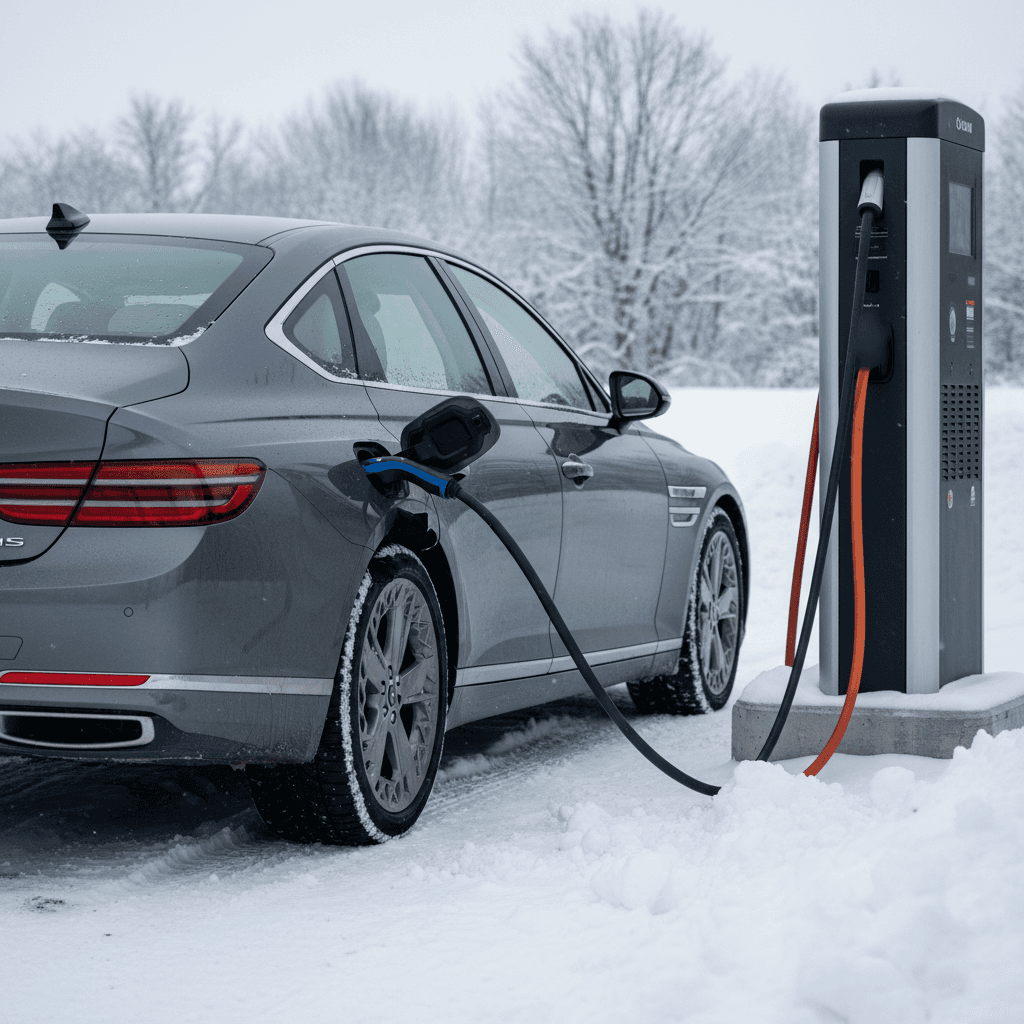
7 ways to cut Electrified G80 winter range loss
Practical steps to reclaim winter range
1. Always pre‑condition while plugged in
Use the climate‑timer or app to warm the cabin and battery while the car is still connected. That way, a big chunk of the energy needed to heat everything comes from the grid, not your battery.
2. Use the seat and wheel heaters first
The G80’s <strong>seat and steering wheel heaters</strong> draw far less power than blasting the cabin to sauna levels. You’ll feel warm faster, while the heat pump only has to maintain a modest cabin temperature.
3. Dial back highway speeds
Dropping from 75 mph to 65 mph on a cold day can be worth tens of miles of range over a long stint. In a big sedan like the Electrified G80, aero drag is king above about 55 mph – especially in dense winter air.
4. Avoid very short, back‑to‑back trips
Combine errands when you can. Every cold start forces the car to warm the cabin and drivetrain again. One 30‑mile outing is far easier on range than three 10‑mile hops with cooling periods in between.
5. Pre‑plan DC fast‑charge stops
Use built‑in navigation to route to your charger so the car can pre‑heat the battery. Aim to arrive in the <strong>10–20% state‑of‑charge</strong> range and leave around 60–70% for the best time‑to‑energy ratio in winter.
6. Check tire pressures monthly
Cold air drops tire pressure. Running several PSI low increases rolling resistance and can worsen range by a few percent. Keep the Electrified G80’s tires at the recommended pressures, particularly on winter rubber.
7. Use range‑aware trip planning
For longer drives, use a planner (or the in‑car navigation) that accounts for temperature, speed, and elevation. Over time you’ll learn what a realistic winter range looks like for your own G80 and driving style.
How Recharged helps here
Ready to find your next EV?
Browse VehiclesDoes winter range loss mean battery degradation?
The short answer: no. Cold‑weather range loss in your Electrified G80 is almost always a temporary, seasonal effect – not permanent battery damage. In fact, batteries tend to age more slowly in cooler climates than in extreme heat.
- Seasonal vs structural loss. When winter ends and temperatures rise, most owners see their predicted range and efficiency climb back up. True degradation is a long‑term, gradual reduction that persists across seasons.
- The software is guessing. The G80’s range estimator looks at recent consumption and conditions. A week of short, heater‑heavy trips in 20°F weather will make it pessimistic. A few mild days of efficient driving can reset that outlook.
- DC fast charging isn’t a villain if used wisely. Occasional fast charging – even in cold weather – isn’t going to brick your pack. Problems tend to arise with repeated 100% charging and long, hot soaks at high state‑of‑charge, which winter generally avoids.
What about a used Electrified G80?
Shopping a used Electrified G80? Winter questions to ask
The Electrified G80 has already been discontinued as a new model in the U.S., which makes the used market the only game in town. That can be a blessing: luxury sedans depreciate harder than crossovers, so you may find a lot of car for the money. But winter range performance should be part of your due‑diligence checklist when you’re shopping.
Winter‑focused checks for a used Electrified G80
Questions that separate a good deal from a future headache
Battery + range assessment
- Ask for the seller’s summer vs winter efficiency numbers (mi/kWh).
- Look for any reports of sudden range drops or charging issues.
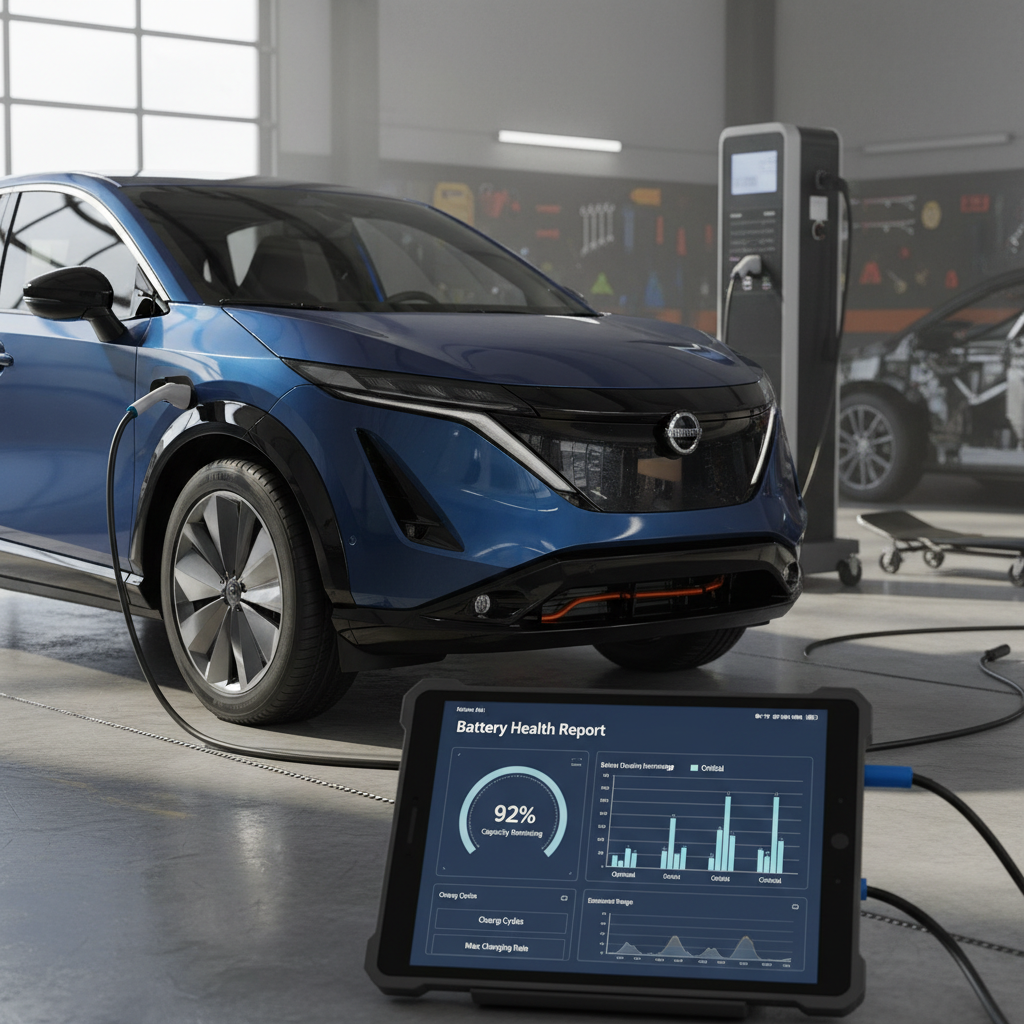
- Whenever possible, review a third‑party battery health report like Recharged Score.
Cold‑weather history
- Has the car lived in a harsh climate (Upper Midwest, Canada, mountain West)?
- Was it parked in a garage or outdoors most winters?
- Did the owner rely heavily on DC fast charging during ski‑season road trips?
Your charging situation
- Can you install a Level 2 home charger, or are you street‑parking?
- Is there workplace charging where the car can sit plugged in during the day?
- How far is your typical winter commute, round‑trip?
Actual winter needs
- Do you regularly do 150+ mile highway drives in cold weather?
- If so, are there reliable fast chargers along the route?
- Would a slightly more efficient but less plush EV suit your use case better?
Why a used G80 EV still makes sense
Genesis Electrified G80 winter range FAQ
Frequently asked questions about Electrified G80 winter range loss
Bottom line: Is the Electrified G80 a good winter EV?
The Genesis Electrified G80 is a wonderful car to be in when the world outside turns to slush – hushed, warm, and unflappable. But it is not a range king, and winter doesn’t magically make it one. If you go in expecting roughly a quarter of your range to evaporate when it’s bitterly cold, and you build your life around home charging plus sensible trip planning, the winter math works out.
Where it shines is as a used‑market luxury bargain: a big, beautifully finished sedan with modern EV tech and a realistic winter range that still covers most daily use with miles to spare. If you’re curious how an individual car stacks up, Recharged can pair you with a Recharged Score battery health report, financing, trade‑in options, and nationwide delivery so you spend more time enjoying that quiet cabin – and less time worrying about what the thermometer is doing.