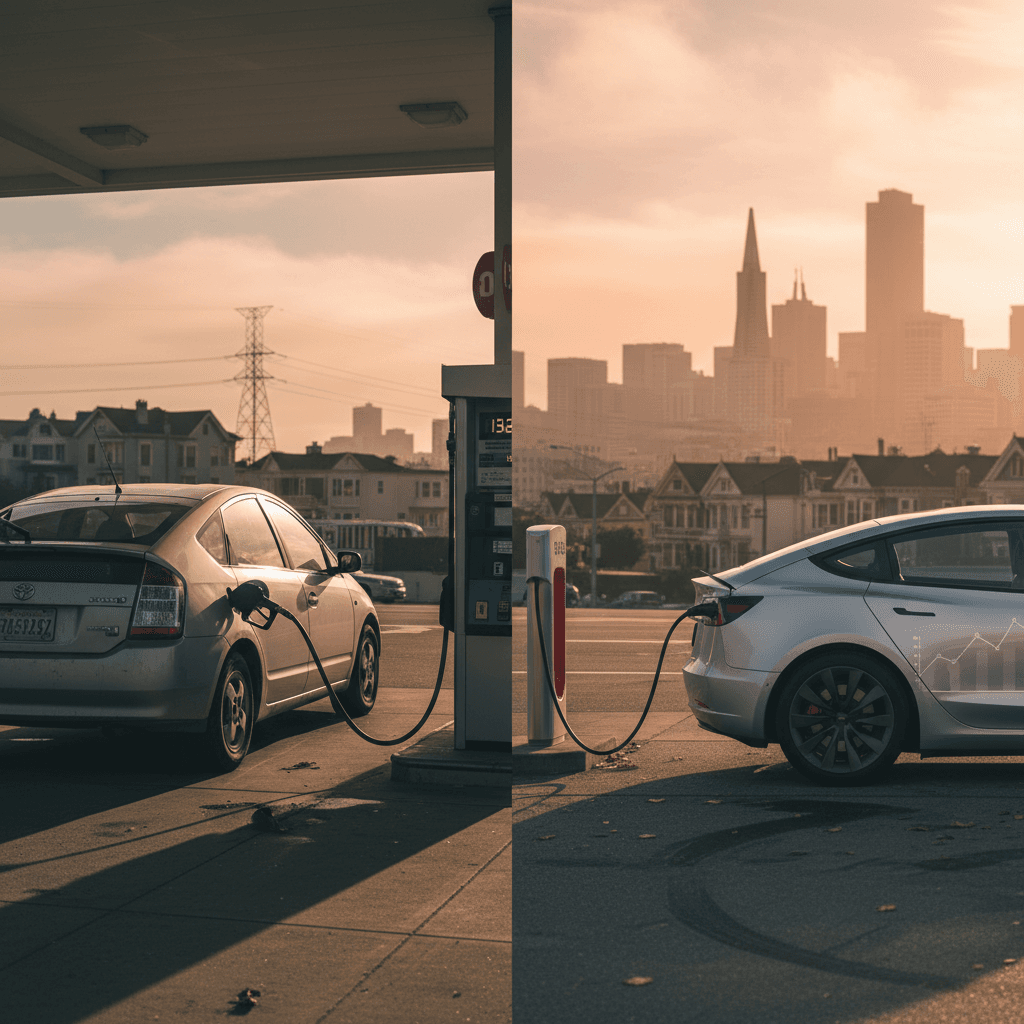
If you live in San Francisco in 2026, it’s impossible to ignore gas station billboards creeping well above $5 a gallon again. At the same time, EV chargers are popping up in garages, curbside spots, and office lots. The natural question is: how do gas prices vs EV charging costs in San Francisco really stack up this year?
2026 in a nutshell
Why compare gas and EV costs in San Francisco in 2026?
San Francisco is one of the most EV-heavy cities in the country, but it’s also one of the most expensive places to drive anything. You’re dealing with high gas prices, high electricity rates, and short city trips mixed with weekend drives over bridges and into wine country. The result: a very specific cost picture that’s different from the national averages you see in headlines.
This guide focuses on three core questions: - How expensive is gasoline in San Francisco in early 2026? - What does it realistically cost to charge an EV at home and in public around the Bay Area? - At today’s prices, how many dollars per mile are you actually spending with gas vs electric? We’ll walk through real numbers, then translate them into monthly budgets so you can decide whether your next daily driver should drink gasoline or electrons.
San Francisco driving cost snapshot (early 2026)
Snapshot: Gas prices in San Francisco in 2026
Because of the 2026 conflict in the Middle East and California’s already-high fuel taxes, gasoline in the state has once again broken away from the national average. The U.S. average crossed about $4.00 per gallon in late March 2026, but California is substantially higher, with statewide averages in the mid‑$5 range and some metro areas flirting with $6 again.
How current gas prices break down in and around San Francisco
These are ballpark figures for early April 2026; exact prices change daily and station to station.
| Location / area | Fuel type | Typical price per gallon (early 2026) | Notes |
|---|---|---|---|
| U.S. national average | Regular unleaded | ≈ $4.00 | AAA national average in late March 2026 |
| California statewide average | Regular unleaded | ≈ $5.50–$5.80 | Prices spiked above $5 in March as oil markets tightened |
| Bay Area urban stations | Regular unleaded | ≈ $5.50–$6.00 | Higher real‑estate costs and local demand |
| Premium fuel in SF | Premium | Often $6.00+ | Performance cars pay an extra penalty |
California’s mix of taxes, refinery constraints, and imported crude has pushed gas far above the national average again in 2026.
Gasoline price volatility
So if you’re budgeting around $5.50 a gallon for regular in the Bay Area today, that’s a fair working number. For a compact gasoline car that averages 30 mpg in real‑world city driving, that’s about $0.18 per mile in fuel alone. For a larger SUV that gets closer to 20 mpg in stop‑and‑go traffic, you’re suddenly around $0.28 per mile just to keep it moving.
How much does EV charging cost in San Francisco?
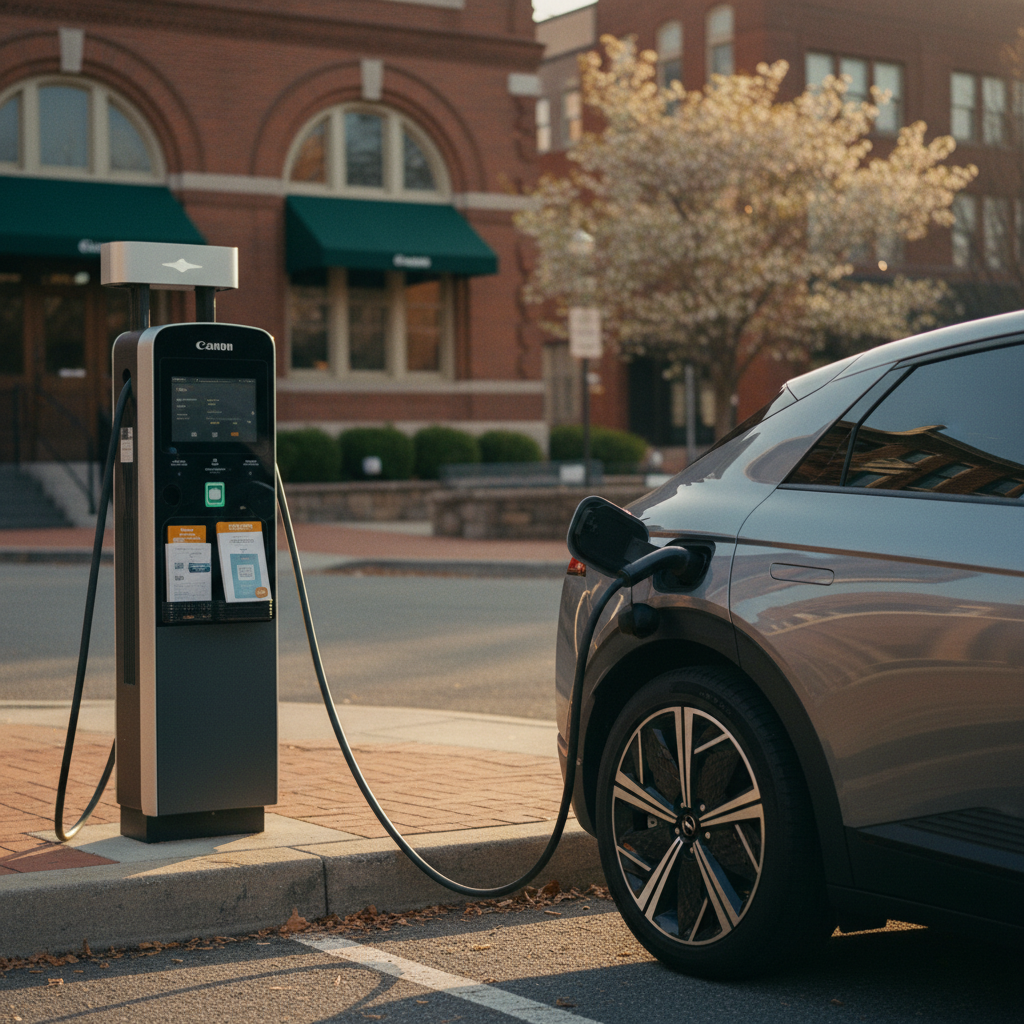
EV charging costs in San Francisco depend on three variables: where you plug in (home vs public), what rate plan you’re on, and when you charge. Let’s break it down into numbers you can actually use.
Home charging in San Francisco
Most San Franciscans get electricity from a combination of PG&E delivery and a supply program such as CleanPowerSF. Both now emphasize time‑of‑use (TOU) rates: power is cheaper overnight and more expensive late afternoon and early evening.
- Off‑peak / overnight: often in the rough range of $0.20–$0.30 per kWh
- Peak late‑afternoon / evening: can run closer to $0.35–$0.45+ per kWh
- New fixed charges in 2026: a higher daily meter charge plus lower energy rates for many customers
If you can plug in after 9 p.m. and be done by breakfast, you’ll usually land near the low end of that range for EV charging.
Public charging in the Bay Area
Public prices vary by network and location, but recent Bay Area data and network rate cards paint a fairly consistent picture:
- Public Level 2 (AC): about $0.40–$0.50 per kWh in San Francisco
- DC fast charging: roughly $0.50–$0.70 per kWh at many urban fast chargers, sometimes more along busy corridors
- Session or idle fees: some networks charge extra if you stay plugged in after your session ends or during peak hours
In other words, public charging is convenient, but it often erodes a chunk of the savings you’d enjoy by charging primarily at home.
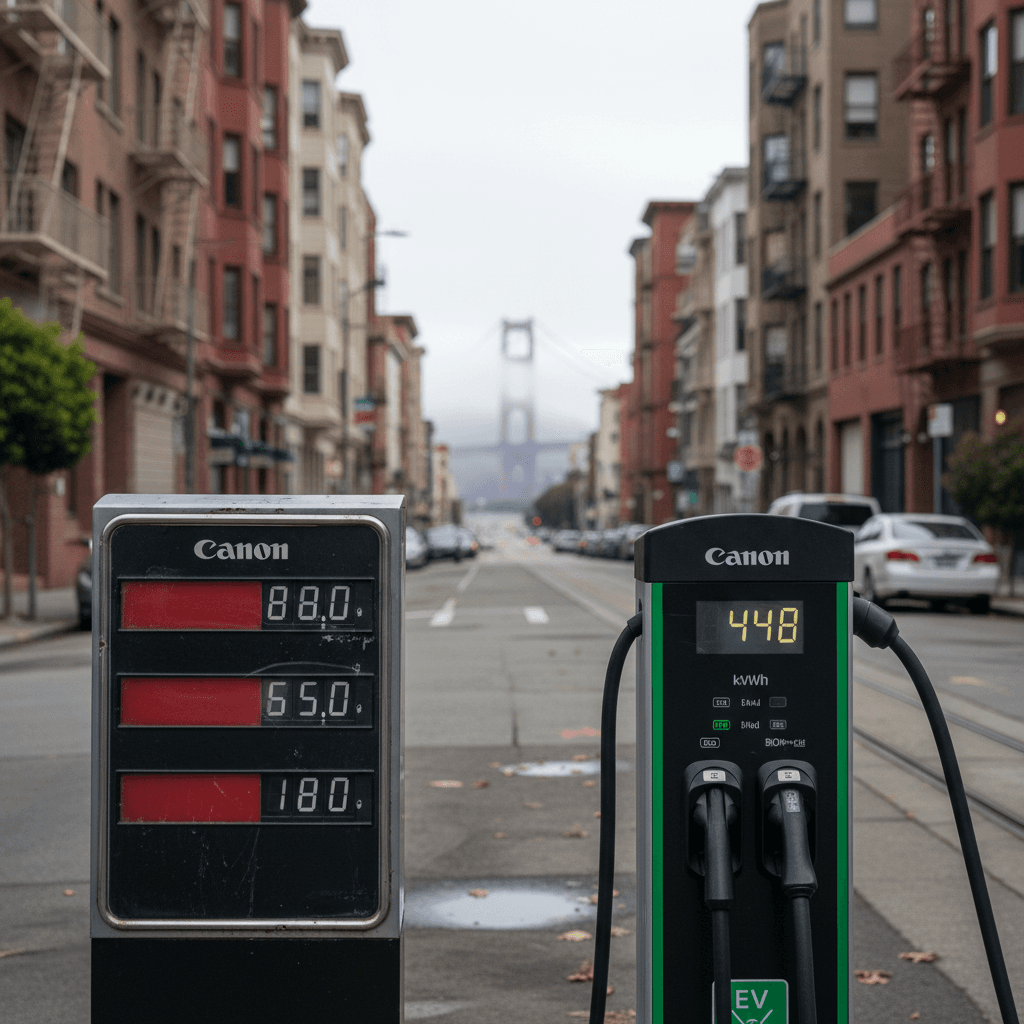
Think in cost per kWh, not "free vs not free"
Cost per mile: Gas vs electric in San Francisco
To compare apples to apples, you need to translate both gasoline and electricity into cost per mile. Let’s use two realistic benchmarks: - A typical compact gas car: ~30 mpg in mixed SF driving - A popular crossover EV (think Tesla Model Y, Hyundai Ioniq 5, VW ID.4): about 28–30 kWh per 100 miles in the real world (0.28–0.30 kWh per mile) We’ll assume $5.50 per gallon for regular and a few different electricity prices.
Approximate fuel/energy cost per mile – San Francisco 2026
These are rounded estimates for illustration, not exact quotes for any one vehicle or utility plan.
| Scenario | Energy price assumption | Typical vehicle efficiency | Approx. cost per mile |
|---|---|---|---|
| Gas compact car | Gasoline $5.50/gal | 30 mpg in city use | $5.50 ÷ 30 = $0.18/mi |
| Gas midsize SUV | Gasoline $5.50/gal | 22 mpg in city use | $5.50 ÷ 22 ≈ $0.25/mi |
| EV – home off‑peak | Electricity $0.25/kWh | 0.28 kWh/mi | 0.28 × $0.25 ≈ $0.07/mi |
| EV – home peak | Electricity $0.40/kWh | 0.28 kWh/mi | 0.28 × $0.40 ≈ $0.11/mi |
| EV – public Level 2 | Electricity $0.46/kWh | 0.28 kWh/mi | 0.28 × $0.46 ≈ $0.13/mi |
| EV – DC fast charge | Electricity $0.65/kWh | 0.28 kWh/mi | 0.28 × $0.65 ≈ $0.18/mi |
Even with expensive Bay Area electricity, a reasonably efficient EV usually beats a comparable gas car on energy cost per mile.
The sweet spot: home overnight charging
Monthly driving budget examples for SF drivers
Let’s turn those per‑mile numbers into something you can feel in your checking account. Below are rough monthly fuel vs electricity costs for three common Bay Area driving patterns, assuming mostly city driving with some bridge and freeway time mixed in.
Gas vs EV monthly cost examples (San Francisco 2026)
Assumes gas at $5.50/gal and an efficient EV charged mostly at home off‑peak.
Urban commuter (~500 miles/month)
Typical SF setup: Short daily commute, weekend errands, very little highway.
- Gas compact (30 mpg): 500 ÷ 30 ≈ 17 gallons × $5.50 ≈ $94/month
- EV – home off‑peak: 500 × 0.28 kWh ≈ 140 kWh × $0.25 ≈ $35/month
- EV – public Level 2 only: Same 140 kWh × $0.46 ≈ $64/month
Even at public Level 2 prices, you’re still spending less than the gas car in this low‑mileage scenario.
Bridge commuter (~800 miles/month)
Typical SF setup: Live in the city, commute over a bridge, plus weekend trips.
- Gas compact (30 mpg): 800 ÷ 30 ≈ 27 gal × $5.50 ≈ $149/month
- Gas crossover (25 mpg): 800 ÷ 25 = 32 gal × $5.50 ≈ $176/month
- EV – 75% home, 25% public: 800 mi ≈ 224 kWh
→ 168 kWh @ $0.25 + 56 kWh @ $0.46 ≈ $70/month
Here the EV is roughly half the monthly fueling cost of an equivalent gas crossover.
Road‑tripper (~1,200 miles/month)
Typical SF setup: Regular Sonoma/Napa trips, Tahoe runs, longer commutes.
- Gas crossover (25 mpg): 1,200 ÷ 25 = 48 gal × $5.50 ≈ $264/month
- EV – 60% home, 40% DC fast: 1,200 mi ≈ 336 kWh
→ 202 kWh @ $0.25 + 134 kWh @ $0.65 ≈ $153/month
Fast charging does eat into savings, but the EV can still come out ahead by roughly $100+ per month.
Tolls and parking still hit both sides
Home charging vs public charging in the Bay Area
If you own or can control a dedicated parking space, driveway, garage, deeded spot, home charging is your biggest weapon against high San Francisco energy prices. If you rely entirely on street parking or shared garages, the math changes, but it doesn’t necessarily break in favor of gas.
When home charging wins big
- You can charge overnight at off‑peak TOU rates (often ~$0.25/kWh or less with some programs).
- You drive at least 600–800 miles a month.
- You’re willing to schedule charging in your car or app so it doesn’t all happen during the 4–9 p.m. peak window.
In this scenario, the EV can be so cheap to run that it offsets some of the city’s higher registration fees and insurance costs.
When public charging levels the field
- You park on the street or in a building with limited or no overnight charging.
- You depend heavily on DC fast chargers at $0.60+ per kWh.
- Your mileage is low (say under 400 miles a month), so gas costs are a smaller line item overall.
If you’re paying top‑tier prices for most of your kWh, your savings over a very efficient gas hybrid shrink, and convenience may matter more than pure dollars.
Watch for "convenience" markups
Beyond fuel costs: Additional savings with EVs
Fuel or electricity is only part of the story. In San Francisco, where cars already cost a lot to own, the quieter savings from EVs can be just as important as the gas pump shock.
Other cost levers that favor EVs in San Francisco
You feel these over years, not months, but they still count.
Less routine maintenance
EVs don’t need oil changes or smog checks, and they have fewer moving parts than internal‑combustion engines.
- Fewer fluids to service
- Brake pads often last longer thanks to regenerative braking
- Fewer failure points as the car ages
Over 5–8 years, that’s hundreds, possibly thousands, of dollars you don’t spend in the service lane.
Local incentives & perks
San Francisco and California have a revolving door of rebates, utility programs, and HOV perks that tend to favor EVs.
- Periodic rebates on home charging installation
- Discounted TOU EV rate plans for overnight charging
- Access to carpool lanes with the right clean‑air stickers (for qualifying vehicles)
The specifics change year to year, but EV drivers are usually first in line when new programs roll out.
The big counterweight is battery health and long‑term range. That’s where a used EV buying decision can feel risky, unless you have real data.
How Recharged reduces the battery gamble
How to lower your EV charging costs in San Francisco
Practical ways to keep your SF EV charging bill down
1. Get on the right time‑of‑use rate
Ask your electricity provider (PG&E or CleanPowerSF) which EV‑friendly TOU plans are available in your neighborhood. Plans with cheaper overnight power can cut your charging cost per mile by a third or more compared with always‑on peak rates.
2. Schedule overnight charging
Use your car’s built‑in charging scheduler or your charger’s app to start and stop charging when rates are lowest, typically late at night and early morning. Many EVs let you simply "depart by" a certain time and handle the timing for you.
3. Treat DC fast charging like highway gas stops
Fast charging is fantastic for road trips and emergencies, but it’s usually the most expensive way to add miles. Think of it the way you think about filling up at that pricey station right off the freeway: convenient when you need it, not your weekly routine.
4. Use free or low‑priced workplace charging when it’s truly cheaper
If your employer or garage offers free or discounted charging, run a quick comparison. If it’s lower than your home off‑peak rate, plug in at work. If it’s priced like a premium public charger, you might actually be better off topping up at home.
5. Right‑size the EV for your driving
Bigger batteries cost more to charge; high‑performance models usually use more energy per mile. If most of your life happens inside the city, a smaller, efficient used EV can be dramatically cheaper to run than a big dual‑motor SUV, no matter what you fuel it with.
6. Shop used EVs with transparent energy usage
When you browse used EVs on Recharged, look at the efficiency and range numbers alongside the Recharged Score Report. An EV that uses fewer kWh per mile will save you money every single month, especially in a high‑cost city like San Francisco.
Is an EV worth it in San Francisco in 2026?
Run the numbers with today’s prices and a pattern emerges: even with elevated electricity rates, EVs usually cost less per mile to drive than gasoline cars in San Francisco, especially if you can do most of your charging at home on off‑peak power. The higher your mileage and the thirstier your current SUV, the faster the math tilts toward electric.
If you depend heavily on DC fast charging or live in a building where every kWh comes from an expensive public charger, the gap narrows. In that scenario, a very efficient hybrid or plug‑in hybrid might be a closer competitor. But in many real‑world Bay Area situations, bridge commuters, weekend road‑trippers, rideshare drivers, the combination of lower fuel cost per mile and reduced maintenance makes an EV a compelling financial upgrade as well as an environmental one.
If you’re weighing a switch, start with your actual mileage and your access to charging. Then look at specific vehicles, not just “EV vs gas” in the abstract. A used EV with a healthy battery and strong efficiency numbers, backed by transparent diagnostics like the Recharged Score, can turn those painful $5.50 gas receipts into a much smaller, much more predictable electricity line on your monthly budget.