If you feel like gas prices in Virginia in 2026 are all over the place, you’re not imagining it. Global tensions, higher crude prices, and steady state fuel taxes mean the cost of filling up has climbed sharply compared with just a year ago. For many Virginia drivers, that’s forcing a hard look at monthly budgets, and at whether a switch to an electric vehicle might finally make sense.
Key takeaway for 2026
Overview: Gas prices in Virginia in 2026
When you zoom out from daily price swings at the corner station, a clearer picture emerges. Over the past few years, **gas prices in Virginia** have followed the national boom–bust–boom pattern: a pandemic-era crash, a sharp rebound tied to inflation and war in Ukraine, a bit of relief in late 2024–2025, and now another surge in 2026 driven by conflict in the Middle East and higher crude prices.
Virginia fuel costs at a glance (2025–2026)
You’ll see wide variation by metro area. Northern Virginia and coastal regions tend to run higher due to demand and real estate costs, while rural areas may sit a few cents below the state average. But everywhere in the Commonwealth, 2026 is shaping up as an **expensive year to drive on gasoline** compared with the recent past.
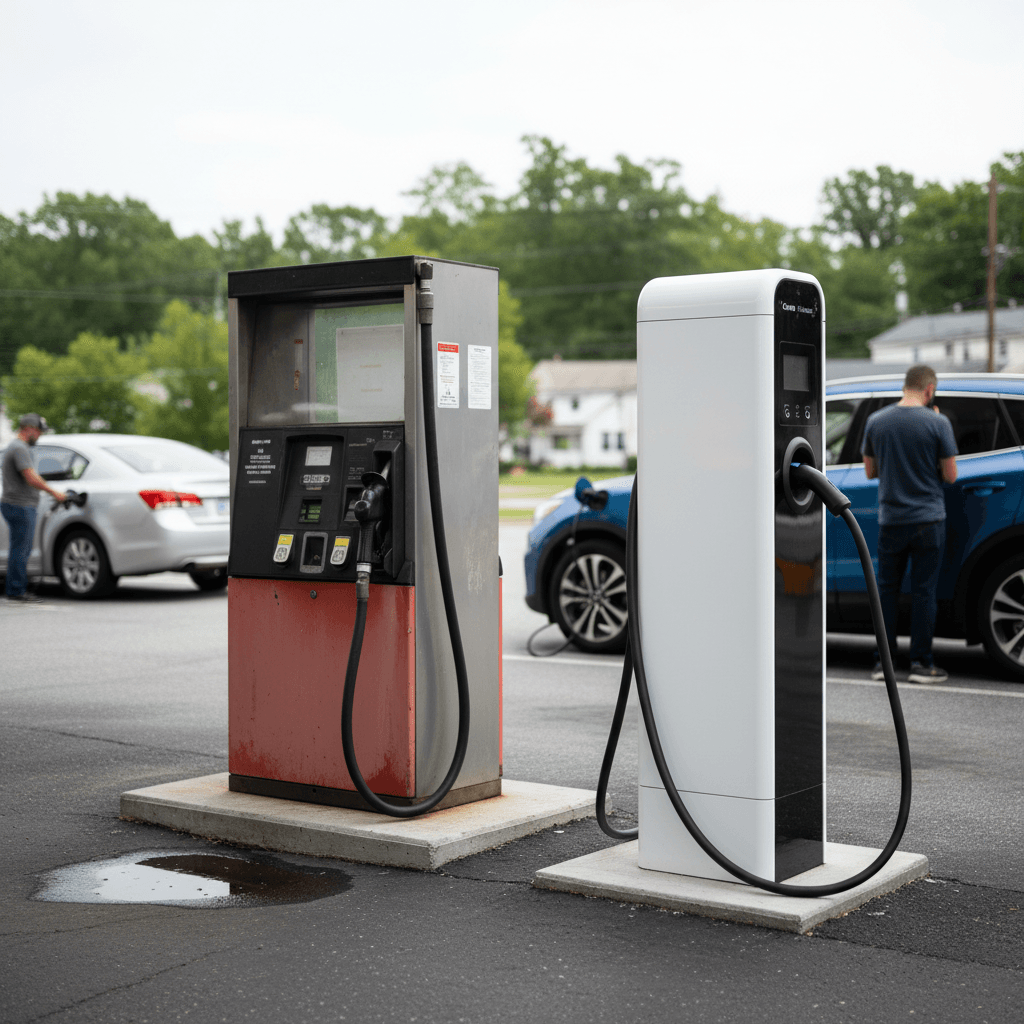
What are gas prices in Virginia right now?
On April 6, 2026, many Virginia stations are posting **regular unleaded in the upper-$3s to just over $4 per gallon**, depending on location. Northern Virginia suburbs that track closely with D.C. pricing are often on the higher side, while smaller towns and truck stops along I‑81 and I‑95 can be a bit lower, though even there, mid‑$3 gas is becoming rare.
Expect volatility, not stability
- National vs. Virginia averages: When you hear that the U.S. average is flirting with $4 per gallon, Virginia typically comes in slightly below that thanks to moderate taxes and proximity to East Coast fuel infrastructure.
- City vs. highway locations: Stations right off busy interstates or in dense urban areas may tack on an extra 10–25 cents over the citywide average.
- Brand spread: Warehouse clubs and independent retailers often undercut major brands by 10–30 cents per gallon, though you may drive farther or wait longer to access them.
Why gas is so expensive in Virginia in 2026
Gas prices in Virginia are shaped by a mix of local and global forces. You can’t control most of them, but understanding what’s happening explains why that pump number feels so punishing right now.
Four big forces behind 2026 gas prices
Only one of them lives in Richmond, most are global.
1. Crude oil prices are elevated
2. Refining and distribution costs
3. Taxes and environmental fees
4. Supply, demand, and seasonal swings
Virginia still fares better than some neighbors
Virginia gas taxes and fees in 2026
Virginia doesn’t have the rock‑bottom fuel taxes of some Deep South states, but it’s far from the most expensive. The state charges a per‑gallon excise tax on gasoline, which is periodically adjusted, plus minor environmental fees and the federal gas tax layered on top.
Approximate fuel tax breakdown in Virginia (regular gasoline)
These figures are rounded for simplicity. Exact rates vary slightly with periodic adjustments and local add‑ons.
| Component | Approx. rate per gallon | Who collects it | What it funds |
|---|---|---|---|
| Virginia state gasoline tax | ~30–32¢ | Commonwealth of Virginia | Transportation projects, road maintenance, transit |
| Additional state/local fees | ~10–12¢ | State & local | Environmental programs, regional transportation, other funds |
| Federal gasoline tax | 18.4¢ | U.S. federal government | Highways, infrastructure |
| Total taxes & fees | ~60¢ | State + federal | Built into every gallon you buy |
Fuel taxes are only part of the price, but they’re the part Richmond directly controls.
Why this matters for your budget
How much does it cost to drive on gas vs electric in Virginia?
To put 2026 gas prices in perspective, it helps to compare them directly with what it costs to drive the same miles in an electric vehicle. Here’s a simple, apples‑to‑apples way to think about it using typical Virginia numbers.
Typical gas SUV or crossover
- Fuel economy: about 28 mpg combined for a modern compact SUV.
- Gas price: assume $3.80 per gallon (a reasonable 2026 Virginia figure).
- Cost per 100 miles:
- 100 miles ÷ 28 mpg ≈ 3.6 gallons
- 3.6 gallons × $3.80 ≈ $13.70 per 100 miles
- Annual fuel cost at 12,000 miles: about $1,640.
Typical electric crossover (home charging)
- Efficiency: many EV crossovers use ~30 kWh per 100 miles.
- Electric rate: around 15¢/kWh for Virginia residential power.
- Cost per 100 miles:
- 30 kWh × $0.15 ≈ $4.50 per 100 miles
- Annual charging cost at 12,000 miles: about $540.
Even if your rate is a bit higher, a home‑charged EV typically delivers 3x the miles per dollar compared with a similar gas SUV at current Virginia prices.
Realistic long‑term savings
Of course, not every mile in an EV is at cheap home rates. If you frequently rely on DC fast chargers at highway stations, your cost per mile goes up. But for most Virginia commuters with access to overnight charging, even in shared parking, the numbers still heavily favor electricity over gasoline in 2026.
Budgeting for fuel costs in 2026
Sharp swings in **gas prices in Virginia 2026** make it harder to set, and stick to, a transportation budget. The key is to run the numbers based on realistic assumptions instead of hoping prices magically drift back to $2‑and‑change.
Sample monthly fuel budgets for Virginia drivers
Assuming 12,000 miles per year (~1,000 miles per month).
Conservative scenario
- Gas price: $3.40/gal
- Economy: 32 mpg compact car
- Monthly cost:
- 1,000 ÷ 32 ≈ 31 gallons
- 31 × $3.40 ≈ $105/month
Typical SUV driver
- Gas price: $3.80/gal
- Economy: 24 mpg SUV
- Monthly cost:
- 1,000 ÷ 24 ≈ 42 gallons
- 42 × $3.80 ≈ $160/month
Home‑charged EV owner
- Power rate: 15¢/kWh
- Use: 30 kWh per 100 miles
- Monthly cost:
- 1,000 miles → 300 kWh
- 300 × $0.15 ≈ $45/month
The risk of planning on “cheap gas later”
Should you switch to an EV in Virginia to beat gas prices?
When gas jumps over $3.50 or $4.00 in Virginia, a lot of drivers have the same thought: "Is it finally time to go electric?" The answer depends on your driving patterns, budget, and how long you plan to keep your next vehicle, but rising fuel costs tilt the math strongly toward EVs.
When an EV makes strong financial sense
- You drive 10,000+ miles per year and keep cars for several years.
- You can charge at home or reliably at work overnight.
- You’re currently spending over $140/month on gas.
- You’re open to buying a used EV to avoid new‑car price tags.
In these cases, fuel and maintenance savings often outweigh a slightly higher monthly payment, especially on a fairly priced used EV.
When you might wait or run the numbers carefully
- You drive very few miles (under 6,000 per year).
- You rent without access to any overnight charging.
- Your current gas car is paid off and in great condition.
- Most of your driving is on long rural routes with limited charging.
Here, the fuel savings are smaller, and you should compare the total cost of ownership of your current vehicle versus a used EV, not just gas vs electricity.
How Recharged can help you compare
If you’re curious but not ready to commit, you can browse used EVs online, estimate your fuel savings, and even get pre‑qualified for financing without impacting your credit. That way, if gas prices spike again, you already know what switching would look like.
Checklist: practical ways to cut your fuel costs
Nine moves Virginia drivers can make in 2026
1. Know your true cost per mile
Track how many gallons you actually buy in a typical month and divide your monthly miles by that number. Seeing a concrete "cents per mile" figure makes it easier to compare gas vs electric options.
2. Lock in the cheapest station on your normal routes
Use apps and station loyalty programs to identify the <strong>consistently cheapest station</strong> on routes you already drive. Saving 15–25 cents per gallon every fill‑up adds up fast over a year.
3. Adjust your driving style
Smooth acceleration, using cruise control, and respecting speed limits can improve fuel economy by 10% or more. That’s like getting a surprise discount on every gallon you buy, without changing cars.
4. Keep tires properly inflated
Underinflated tires increase rolling resistance and burn more fuel. Check pressures monthly, especially in temperature swings, to keep efficiency up and tire wear down.
5. Combine errands and avoid peak congestion
Cold starts and stop‑and‑go traffic both hurt fuel economy. Group errands into fewer trips and avoid the worst rush‑hour segments when you can to reduce fuel burned sitting in traffic.
6. Question that next vehicle upgrade
If you’re already shopping, compare similar gas and electric models side by side. A used EV may have a higher sticker than a base gas sedan but a <strong>lower total monthly cost</strong> once fuel and maintenance are included.
7. Explore used EV options
Look at certified used EVs with strong battery health scores. Platforms like Recharged include <strong>battery diagnostics and fair pricing</strong>, making it easier to avoid problem cars and overpaying.
8. Think about where you can charge
Before you switch, identify where you’d plug in: home driveway, apartment garage, workplace, or nearby public Level 2 chargers. Every cheap overnight charge displaces a more expensive gallon of gas.
9. Revisit your insurance and maintenance plan
Rising fuel prices are only part of ownership costs. Shop your insurance, and if you move to an EV, account for savings on oil changes, belts, and exhaust repairs that simply don’t exist on electric cars.
FAQ: gas prices in Virginia in 2026
Frequently asked questions about 2026 gas prices in Virginia
Bottom line: gas prices and your next car
Gas prices in Virginia in 2026 are higher and more volatile than drivers have grown used to, and there’s no guarantee they’ll glide back to the comfortable levels of the mid‑2010s. If you plan to keep driving a gasoline car, you’ll need to budget around mid‑$3 to low‑$4 fuel and focus on efficiency wherever you can. If you’re open to change, though, the same forces making gas expensive are strengthening the financial case for electric vehicles, especially well‑priced, verified used EVs.
The smartest move is to treat 2026 as a decision point rather than a crisis: run your own cost‑per‑mile numbers, compare your current vehicle with realistic gas assumptions to a used EV with transparent battery health, and decide how much volatility you’re willing to tolerate at the pump. And if you decide an EV is your hedge against the next price spike, Recharged can help you find, finance, and confidently buy a used electric car that fits your budget and the way you drive.