If you feel like gas prices in New Jersey in 2026 never stay put, you’re not imagining it. Between one of the nation’s higher fuel taxes, new laws that raise those taxes through 2029, and global oil volatility, what you pay at the pump is anything but stable. At the same time, generous EV incentives and a growing used electric vehicle market are giving Garden State drivers a realistic way to get off the gas-price roller coaster.
Key takeaway for 2026
Overview: Gas prices in New Jersey in 2026
New Jersey fuel and EV cost snapshot for 2026
No one can tell you the exact statewide average price of gasoline in New Jersey on any future date in 2026. Pump prices change daily by station and region. But you can understand the **forces that keep New Jersey gas relatively expensive** and why, over the next few years, the bias is toward higher, not lower, prices.
- New Jersey has one of the higher gas tax burdens in the country, and it is scheduled to ratchet up again through 2029.
- A formula built into state law automatically adjusts the per‑gallon tax to hit revenue targets for the Transportation Trust Fund.
- Global oil prices and refinery capacity still drive big seasonal and geopolitical swings on top of state and federal taxes.
- At the same time, more New Jersey drivers are switching to EVs, spreading road costs over fewer gallons of fuel.
How to read this guide
How New Jersey’s gas tax works in 2026
New Jersey doesn’t just set a gas tax and forget it. Since 2016, and strengthened again by a 2024 law, the state uses a formula that **automatically raises or lowers the per‑gallon tax each year** to hit a required revenue target for the Transportation Trust Fund, money that pays for roads, bridges, and transit projects.
Pieces of New Jersey’s gas price puzzle
These are some of the key building blocks that sit underneath the final pump price you see on the road.
| Component | What it is | What it looked like heading into 2026 |
|---|---|---|
| State per‑gallon gas tax | New Jersey’s motor fuels and petroleum gross receipts taxes on gasoline | Rose by 4.2¢ per gallon on January 1, 2026, lifting the combined state gas tax burden to roughly 49.1¢/gal before federal tax. |
| Diesel fuel tax | Similar structure for diesel | Increased to about 56.1¢/gal in early 2026, pushing diesel prices even higher than gasoline for truckers and diesel SUVs. |
| Federal gasoline tax | Nationwide tax on gas | 18.4¢/gal; unchanged for years, and layered on top of New Jersey’s state taxes. |
| Market price of gasoline | Wholesale fuel cost | Driven by crude oil prices, refining margins, and regional supply/demand, this can move quickly independent of taxes. |
| Local competition & fees | Station‑level factors | Delivery costs, credit card fees, and local competition can add or shave several cents per gallon from one corner to the next. |
Components are simplified for clarity; actual rates and adjustments are set by statute and annual calculations.
Important nuance
What drivers actually pay at the pump in 2026
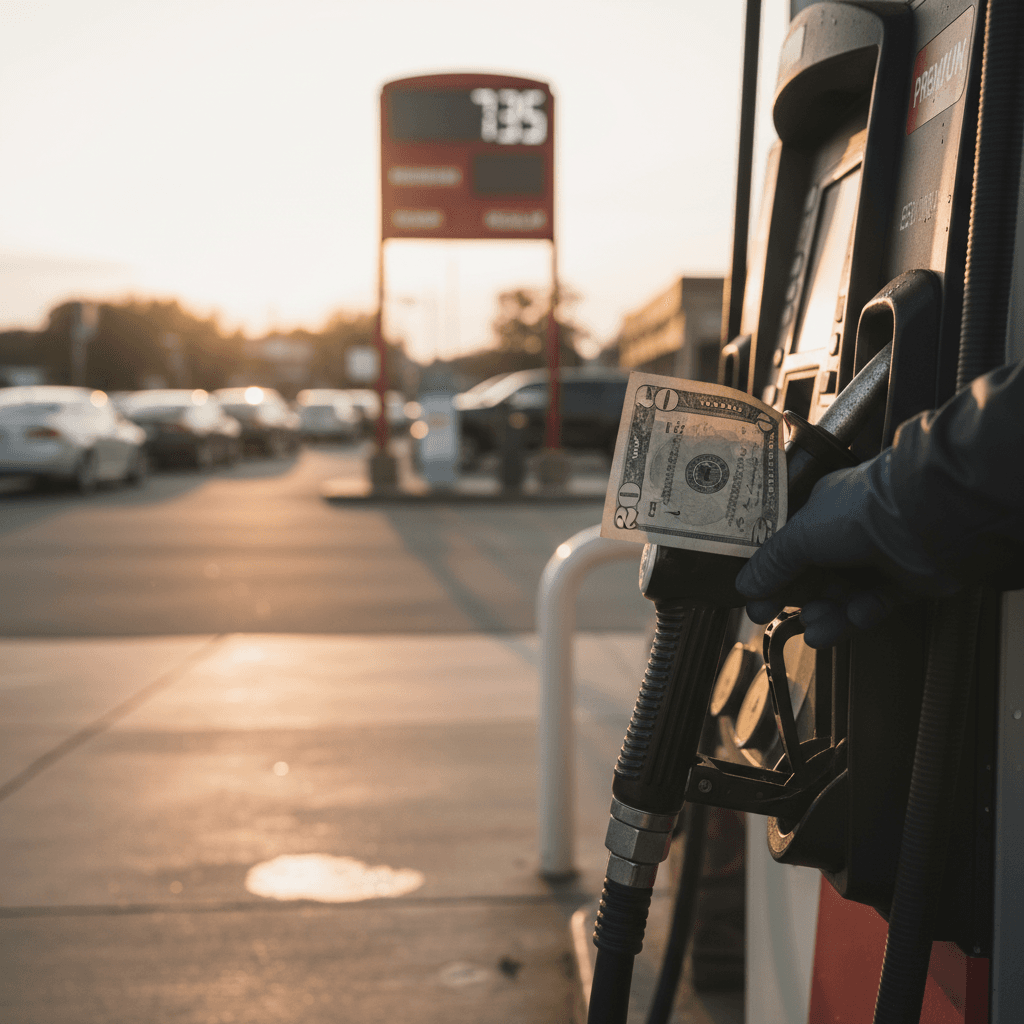
Because station prices move daily, the better question for planning is, “What’s a realistic range?” In early 2026, many New Jersey drivers are seeing **regular gas hovering somewhere in the mid‑$3s per gallon**, with common fluctuations above and below that mark depending on the week and the station.
Everyday scenario
If you commute in North or Central Jersey, you may find:
- Cheaper stations along major corridors posting prices in the low‑to‑mid $3 range.
- Convenience-oriented stations (close to highways, urban centers) closer to the high‑$3s.
- Occasional price spikes after storms, refinery issues, or global news.
Budgeting rule of thumb
For a **practical 2026 budget**, many drivers assume:
- Regular: somewhere around $3.50–$3.90/gal over the course of the year.
- Premium: typically 40–60¢ more per gallon than regular.
- Diesel: often higher than premium, partly due to a bigger state diesel tax.
Actual prices in your area can be lower or higher; always check local apps before a long trip.
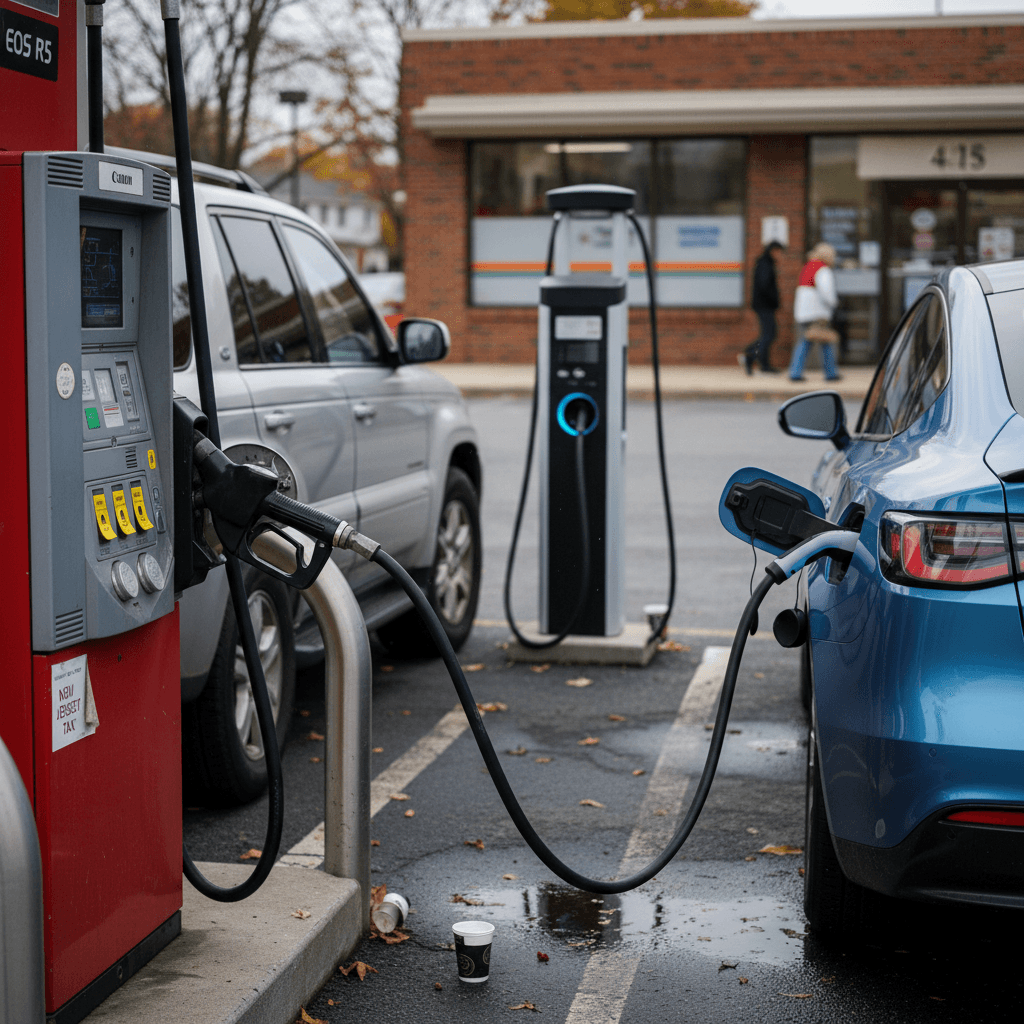
Why gas prices are so unpredictable
Even with a predictable tax formula, the actual price of gas in New Jersey can move sharply in a matter of days. That’s because the state overlay sits on top of a global commodity whose price is anything but stable.
- Crude oil prices climb or fall with global demand, OPEC policy, and geopolitical events.
- Refinery outages, whether from maintenance, accidents, or storms, can pinch supply in the Northeast and cause short‑term spikes.
- Seasonal gasoline blends and summer driving demand typically push prices higher in warmer months.
- Retailers adjust quickly to wholesale moves; when wholesale prices jump, pump prices can follow within days.
What this means for you
How EV adoption is reshaping gas demand in New Jersey
New Jersey has been aggressive about electric vehicles for years. Through the **Charge Up New Jersey** program, the state has committed at least $30 million per year in EV purchase incentives, and as of early 2026 it still offers **up to $4,000 off a new eligible battery‑electric vehicle** plus **a separate rebate for a Level 2 home charger**.
That policy is doing what it was designed to do: more New Jersey households are switching to EVs, and more of the miles driven in the state are now electric. For gas prices, that has two important side effects:
- Fewer gallons of fuel are sold each year, even as the state still needs billions for transportation projects.
- To keep road funding whole, the law now leans more heavily on **raising the per‑gallon gas tax**, especially between 2025 and 2029.
EVs won’t make gas free
Gas vs. EV in New Jersey 2026: A cost comparison
To understand what gas prices in New Jersey in 2026 really mean for your wallet, it helps to run a simple apples‑to‑apples comparison between a typical gas car and a comparable EV. The numbers below are illustrative, not exact, but they show why many Garden State drivers are now seriously considering used EVs.
Illustrative 2026 cost comparison: gas sedan vs. EV in New Jersey
Assumes 12,000 miles per year, mid‑$3.70s gasoline, and home charging at typical New Jersey residential rates. Actual costs depend on your vehicle, driving habits, and local utility rates.
| Gasoline sedan (25 MPG) | Electric vehicle (~3.2 mi/kWh) | |
|---|---|---|
| Fuel or electricity use per year | ≈480 gallons | ≈3,750 kWh |
| Assumed unit price (2026) | $3.75 per gallon | $0.15 per kWh home charging |
| Annual “fuel” cost | ≈$1,800 | ≈$560 |
| 5‑year “fuel” cost | ≈$9,000 | ≈$2,800 |
| Typical maintenance pattern | Oil changes, transmission service, exhaust work, more brake wear | Tire rotations, cabin filters; far fewer moving parts and fluids |
| Estimated 5‑year maintenance* | Higher | Lower |
Example only, check your own numbers before making a purchase decision.
How to estimate your own numbers
This is exactly where used EVs become interesting. You don’t have to buy a brand‑new electric car to capture most of the savings. With a solid battery health report and fair pricing, a used EV can dramatically cut your monthly fuel and maintenance costs compared with a similar‑age gas car.
Incentives, fees, and taxes New Jersey drivers should know
New Jersey is slowly shifting how it pays for transportation infrastructure, away from just taxing gasoline and toward a mix of fuel taxes, general funds, and **fees on zero‑emission vehicles**. If you’re planning for 2026 and beyond, it pays to understand both sides of that ledger.
Key New Jersey policies affecting your driving costs
The state is turning the screws on gasoline while nudging drivers toward electric.
Ratcheting gas tax
Under recent legislation, New Jersey’s gas tax formula is set to raise highway fuel revenue targets through 2029. That’s why you saw another **4.2¢/gal increase on January 1, 2026**, after earlier hikes in 2024 and 2025.
EV purchase incentives
The Charge Up New Jersey program continues to offer up to $4,000 off a new qualifying EV, plus up to a few hundred dollars for a Level 2 home charger, subject to annual funding and eligibility rules.
Zero‑emission vehicle fees
Recent legislation also introduced an **additional annual fee for zero‑emission vehicles**, designed to ensure EV owners help pay for roads even as they buy less or no gasoline. The fee is scheduled to rise gradually over the next several years.
Gas tax vs. EV fee: which costs more?
How to protect yourself from future gas price spikes
You can’t control world events or New Jersey’s tax formula, but you do have control over **how much you rely on gasoline at all**. Here are practical strategies to insulate your household budget from the next round of price spikes.
Five smart moves for New Jersey drivers in 2026
1. Know your fuel exposure
Pull your card or bank statements and total up how much you actually spent on gas in the last 12 months. Turning that into a yearly dollar figure makes the true cost of volatility impossible to ignore.
2. Trim the low‑hanging miles
Carpool days, transit for some commutes, and smarter errand‑planning can often knock 5–10% off your annual mileage with very little sacrifice, directly cutting your gas bill.
3. Consider a “two‑car strategy”
Many New Jersey households are keeping one gas vehicle for long trips and towing, and adding a **used EV** as the daily driver. That lets you slash fuel use without reinventing how you travel on holidays.
4. Shift miles to electricity where possible
If you already own a plug‑in hybrid, make sure you’re actually charging it routinely at home. Every electric mile displaces a gasoline mile, and those savings are magnified in a high‑tax state like New Jersey.
5. Run the numbers on a used EV
Use a total cost of ownership calculator or sit down with an EV‑savvy retailer like Recharged. When you add up purchase price, fuel, maintenance, and insurance over 3–5 years, a well‑priced used EV can often **beat** a similar gas model in monthly cost.
Finding and financing a used EV in New Jersey
If gas prices in New Jersey in 2026 have you thinking about an electric car, the used market is where you’ll often find the best balance of price and technology. The key is to buy with **good information about battery health and fair value**, not just a low sticker price.
What to look for in a used EV
- Verified battery health: Ask for a third‑party battery diagnostics report, not just a seller’s assurance.
- Charging history: Frequent DC fast charging isn’t a deal‑breaker, but it’s useful context for long‑term degradation.
- Range that fits your life: Be honest about your daily and weekly mileage, then build in a cushion for weather and errands.
- Warranty coverage: Many EV batteries carry longer warranties than the rest of the car, know what’s left.
How Recharged fits in
At Recharged, every used EV comes with a Recharged Score Report that includes:
- Verified battery health diagnostics.
- Fair market pricing based on real‑world EV data.
- Clear estimated fuel and maintenance savings versus a comparable gas car.
You can browse, finance, trade in your old vehicle, and arrange nationwide delivery entirely online, or visit our Experience Center in Richmond, VA if you prefer an in‑person walkthrough.
Why many New Jersey shoppers start with used EVs
FAQs: Gas prices in New Jersey 2026
Frequently asked questions about New Jersey gas prices in 2026
Bottom line: What New Jersey drivers should do in 2026
Gas prices in New Jersey in 2026 are the product of two forces you don’t control, global oil markets and a state tax formula that’s programmed to pull more revenue out of each gallon through at least 2029. That combination makes gasoline a riskier line item in your household budget each year, not a safer one.
What you *can* control is how much your family depends on that gallon of gas. Trimming miles, planning smarter trips, and shifting even part of your driving to electricity with a used EV can dramatically reduce your exposure to the next price spike. With substantial state EV incentives still on the table and a robust used EV pipeline, New Jersey drivers have more leverage than ever to step off the gas‑price roller coaster.
If you’re ready to see how that looks in real dollars, you don’t have to figure it out alone. Recharged can help you compare specific used EVs against your current gas car, estimate your fuel and maintenance savings, secure financing, value your trade‑in, and deliver the right vehicle to your driveway, so the next time gas prices jump, it’s mostly someone else’s problem.