If you’re buying or leasing an electric car, you’ve probably heard you “should” get gap insurance for your EV because they depreciate faster. That’s not wrong, but it’s not the whole story either. Whether gap coverage is smart protection or wasted money depends on how you buy the car, how quickly it loses value, and how long you plan to keep it.
Quick definition
What is gap insurance for an electric car?
Traditional auto insurance (comprehensive and collision) pays you the actual cash value (ACV) of your electric car if it’s totaled or stolen. ACV is basically market value on the day of the loss, what a similar EV would sell for on the used market, not what you paid for it.
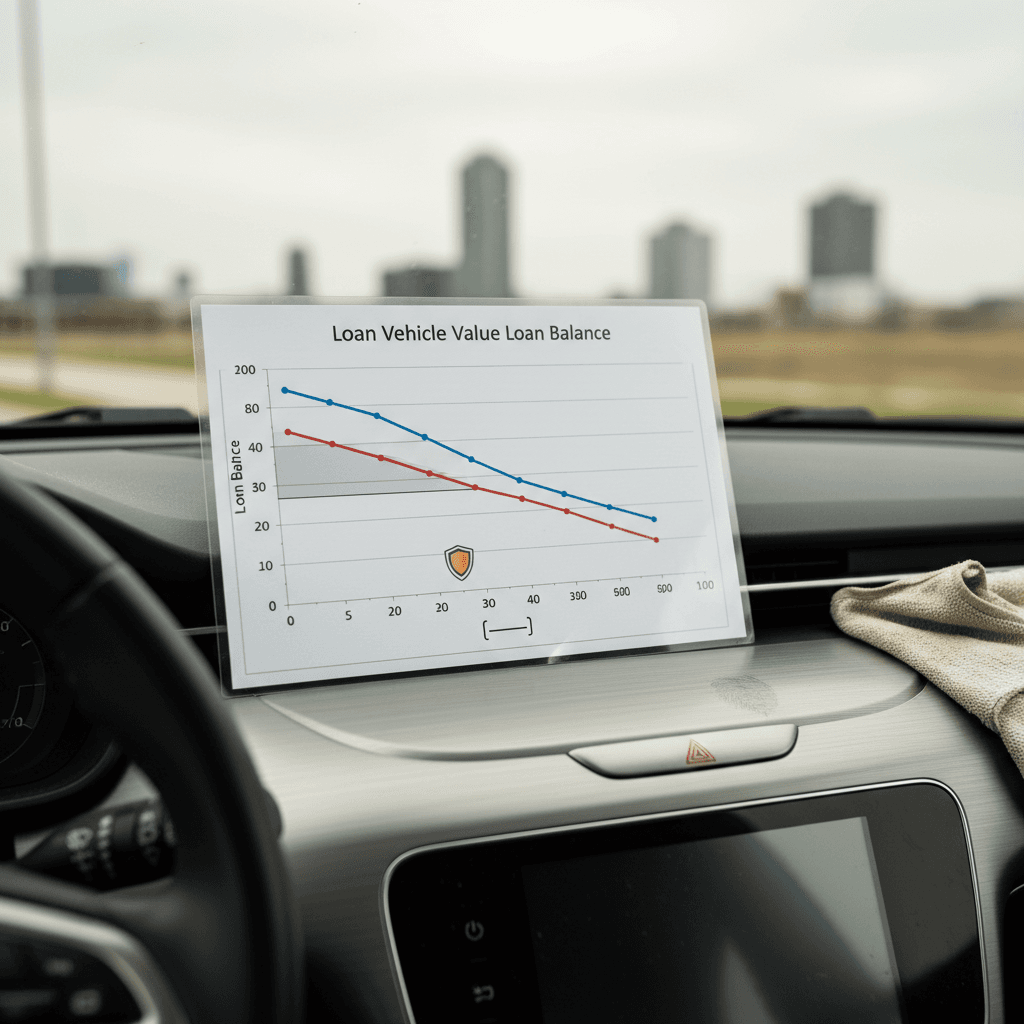
Because most EV buyers finance or lease, there’s usually a period where you owe more on the loan than the car is worth. That negative equity is the “gap.” Gap insurance is optional coverage that steps in to pay that shortfall so you’re not stuck making payments on a car you no longer have.
- You finance or lease an EV, often with a small or no down payment.
- In the first few years, the car’s value drops faster than your loan balance.
- Your EV is totaled in a crash or declared a total loss after flood, fire, or theft.
- Your primary insurer pays its market value, not the full loan payoff.
- Gap insurance pays the remaining balance so you can walk away clean.
What gap insurance doesn’t cover
Why gap insurance matters more with EVs
The case for gap insurance is stronger with electric vehicles than many gas cars for one simple reason: EV values can move fast, especially in the first three to five years.
How EV depreciation affects your risk
At the same time, EVs deliver savings on fuel and maintenance over the long haul, but those don’t help you if you total the car in year two. That’s where gap insurance becomes a hedge against short‑term price swings and steep early depreciation.
1. Rapid tech improvements
EV technology is moving quickly. New models with better range, faster charging, and upgraded driver-assistance features arrive every year. That can push down resale values of older EVs faster than comparable gas cars.
2. Incentives and pricing shifts
Manufacturer discounts, changing tax credits, and price cuts on new EVs can hit used values hard. If a new version of your EV suddenly becomes cheaper, the market value of your car may fall almost overnight.
Used EV buyers benefit, loan holders carry the risk
Situations when EV gap insurance is worth it
High‑risk scenarios for EV owners
If any of these sound like you, gap insurance deserves a closer look.
Low or no down payment
If you put less than 10–20% down on your electric car, your loan balance will sit above market value for longer. Gap coverage can protect you during that negative‑equity stretch.
Long loan terms
Financing your EV for 72 or 84 months keeps payments low but slows how quickly you build equity. A total loss in years 1–3 could leave you thousands underwater.
High‑priced or fast‑depreciating models
Luxury EVs, discontinued models, or vehicles with controversial reputations can lose value faster than the average. That makes the gap between value and payoff wider, and gap insurance more valuable.
High‑risk driving environment
If you drive in dense traffic, park on city streets, or face frequent storms, theft, or flood risk, the odds of a total loss are higher. Gap insurance becomes cheap peace of mind.
Leasing an EV
Many leases require gap coverage and build it into your monthly payment. Even when it’s optional, leasing almost always creates a gap early on.
Rolling in old negative equity
Traded in a previous vehicle with negative equity and rolled it into your EV loan? That old balance increases your gap risk and makes coverage more compelling.
5‑question self‑check: Do you need gap insurance for your EV?
1. Did you put less than 10% down?
Small or zero down payments mean you’re more likely to owe more than the EV is worth in the first few years, prime territory for gap coverage.
2. Is your loan term longer than 60 months?
The longer the term, the slower your principal drops. That keeps you in negative equity longer, increasing the potential size and length of the gap.
3. Is your EV a higher‑priced or fast‑changing model?
Premium brands, performance trims, and models facing heavy incentives or price cuts are more likely to see steep depreciation spikes.
4. Would a surprise $3,000–$8,000 bill be a problem?
Gap insurance is about cash‑flow protection. If covering a several‑thousand‑dollar shortfall out of pocket would strain your budget, coverage may be worth the premium.
5. Are you in the first 3–4 years of ownership?
Gap is most valuable early on. If you’re still within that window, especially with a newer EV, your risk exposure is highest.
When you can probably skip gap insurance on an EV
Not every electric‑car owner needs gap insurance. In some situations, the risk of a meaningful gap is low enough that the premium just isn’t justified.
- You paid cash for the EV or made a very large down payment (25–30%+).
- Your loan term is short (36–48 months) and you’re already halfway through it.
- The EV is older (six to eight years+) and has already done most of its depreciating.
- Your remaining loan balance is close to or below what similar EVs are selling for locally.
- You could comfortably write a check to cover a small shortfall if the car were totaled.
Rule of thumb
How much does gap insurance for an electric car cost?
Like everything in insurance, the price of gap coverage depends on who sells it to you and how they structure the policy. The coverage amount is tied to your loan balance and vehicle value, not to your driving record or mileage.
Where to buy gap insurance for your EV
Typical pricing patterns in the U.S. market (actual costs vary by lender, insurer, and state).
| Source | How you pay | Typical pricing pattern | Pros | Cons |
|---|---|---|---|---|
| Auto insurance company | Added to your existing policy | Often a small additional monthly premium | Easy to manage, usually cheapest, can drop it mid‑term | Not every insurer offers standalone gap coverage |
| Dealership / lender | Flat fee financed into loan | One‑time charge that may run a few hundred dollars | Convenient to roll into financing paperwork | Interest applies on that fee; harder to cancel and get full refund |
| Standalone provider | Separate policy, sometimes online | Varies widely by provider | Works even if your main insurer doesn’t offer gap | Another bill to manage; coverage terms can be more complex |
In many cases, adding gap to your existing auto policy is cheaper than buying it from the dealership or lender.
Watch the finance office markup
Gap insurance for leased vs. financed EVs
Leasing an EV
- Most mainstream leases include gap insurance automatically in the contract, though it may be labeled differently.
- If it’s included, you don’t need to buy separate gap coverage, but it’s worth confirming before you drive off the lot.
- Ask the lessor: “Is gap coverage included, and will it cover the entire difference between insurance payout and lease payoff?”
Financing an EV
- When you take out an auto loan, gap coverage is almost always optional.
- You can buy it from the lender, the dealership’s F&I office, your insurance company, or in some cases a third‑party provider.
- With EVs that depreciate quickly, financed buyers have the most to gain, or lose, from getting this decision right.
Don’t double‑buy gap coverage
Special considerations for used EVs and battery health
Used electric vehicles are often the best deals in the EV market because the first owner already absorbed the steepest depreciation. But they also add a twist to the gap‑insurance conversation: battery health becomes a much bigger driver of value.
If a used EV’s range has dropped well below what buyers expect, its resale value can lag similar‑year gas cars. On the flip side, a well‑maintained battery with documented health can support stronger pricing, and give you more confidence that your loan balance won’t outpace the car’s value.
How Recharged helps here
Used EV + gap insurance: what to look at
Confirm real market value, not just asking prices
Look at completed sales or trustworthy pricing tools for your EV’s exact trim, mileage, and battery condition. A realistic value is the starting point for any gap decision.
Compare loan payoff vs. conservative value
Use the lower end of the range when comparing. If similar cars are selling for $22,000–$25,000, run your math off $22,000.
Check remaining battery warranty
Factory battery warranties often run 8–10 years. A vehicle near the end of that coverage may face a sharper resale drop if buyers worry about replacement costs.
Understand how the battery was used
Charging habits, climate, and mileage matter. A trusted inspection or diagnostic report can give you more confidence that your EV’s value will track as expected.
How to buy gap insurance for an EV
Once you’ve decided gap coverage makes sense, buying it is straightforward. The key is choosing the right channel and getting the terms in writing.
Step‑by‑step: adding gap insurance to your electric car
1. Check whether you already have gap coverage
Review your lease or financing contract and your auto policy declarations. Look for terms like “GAP,” “loan/lease payoff,” or “contract payoff coverage.”
2. Get a quote from your auto insurer
Ask your current insurer what it would cost to add gap to your EV. This is often the cleanest, lowest‑friction option and usually one of the cheapest.
3. Compare to the dealer or lender offer
If the dealership is pitching gap coverage, compare the <strong>total cost</strong> over the life of the loan, including any interest on financed add‑ons.
4. Confirm coverage limits and exclusions
Make sure the policy covers the full difference between ACV and payoff and doesn’t cap payouts at an unhelpfully low number. Ask how negative equity from a trade‑in is treated.
5. Set a reminder to review in 2–3 years
You probably won’t need gap coverage for the entire loan term. Put a reminder in your calendar to reassess once your EV’s value and payoff get closer.
Common mistakes EV owners make with gap coverage
Avoid these gap‑insurance pitfalls
They’re common, but easy to steer around once you know what to watch for.
Assuming “new car replacement” = gap
Some auto policies offer new‑car replacement coverage for the first year or two. That’s not the same as gap insurance, and it often disappears long before your negative equity does.
Paying for gap long after it’s needed
Plenty of drivers keep gap coverage for the whole loan term, even after their payoff drops below market value. That’s money out the door for risk you no longer have.
Not reading the fine print on caps
Certain gap policies cap payouts at a percentage of the car’s value or a fixed dollar amount. On a fast‑depreciating EV, that might not fully protect you.
Ignoring deductible impact
Gap doesn’t cover your deductible. If your comprehensive/collision deductible is high, a total loss can still mean a couple thousand dollars out of pocket.
“The biggest shift I’m seeing in the used‑EV market is how quickly values can change when a new model or a big price cut hits. Gap insurance is one of the few ways buyers can insulate themselves from that volatility in the early years of a loan.”
FAQ: Gap insurance for electric cars
Frequently asked questions about EV gap insurance
Bottom line: Is gap insurance for your EV worth it?
Gap insurance isn’t an automatic yes or no for electric cars. It’s a targeted tool for a specific kind of risk: the years when your loan balance is higher than your EV’s market value and a total loss would create a serious financial hit. Because EV prices can swing quickly, that risk window is often wider, and the potential gap larger, than with many gas vehicles.
If you’re financing a newer, higher‑priced EV with little money down or stretching the loan over six or seven years, gap coverage is usually cheap protection. If you’re buying a well‑priced used EV, especially one with documented battery health and realistic market‑based pricing, like the cars listed on Recharged, you may find you can safely go without, or drop it sooner.
Before you decide, run the numbers: compare your payoff to a conservative estimate of your EV’s value, price out gap from your insurer and lender, and think honestly about what kind of surprise bill you could handle. A half‑hour of homework now can save you from paying for coverage you don’t need, or from writing a painful check later if the worst happens.