If you’re thinking about a full electric car, you’re not alone. Battery electric vehicles (BEVs) now make up roughly a quarter of new-car sales in some markets, and global EV sales were up about 29% year-over-year in early 2025. Yet there’s still a lot of confusion about what living with a fully electric car is actually like, especially if you’re considering a used one.
Quick definition
What is a full electric car, really?
You’ll hear a few different terms, full electric car, battery electric vehicle (BEV), “all‑electric.” They all mean the same thing: the car uses a battery pack and one or more electric motors for propulsion, and you recharge it from the grid instead of filling a tank with gasoline or diesel.
- No internal combustion engine. There’s no engine, exhaust, fuel tank, or traditional transmission.
- Large traction battery. Typically 45–100 kWh of usable capacity in today’s mainstream EVs, giving 180–350+ miles of EPA‑rated range depending on model.
- Onboard charger. Converts AC power from your home or a Level 2 station into DC to charge the battery.
- DC fast‑charge capability. Most modern BEVs can accept DC fast charging on road trips for 20–80% top‑ups in roughly 25–45 minutes, depending on the car and charger.
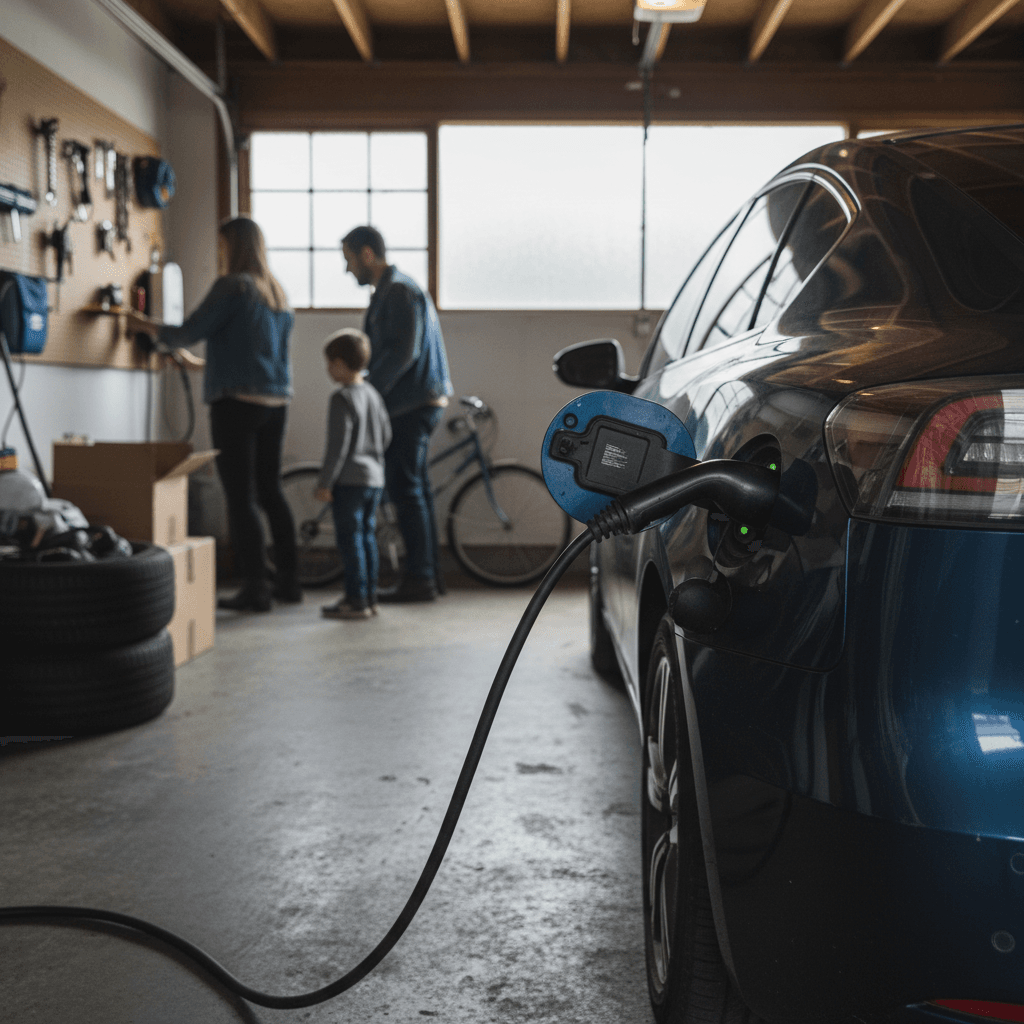
Full electric cars in the market today
Think of it like a smartphone
Full electric vs hybrid vs plug‑in hybrid
Before you decide if a full electric car fits your life, it helps to understand how it compares with hybrids (HEVs) and plug‑in hybrids (PHEVs). All three use electricity, but in very different ways.
Full electric vs hybrid vs plug‑in hybrid
How full electric cars differ from hybrids and plug‑in hybrids in everyday use.
| Type | Drivetrain | Electric‑only range | Gasoline usage | Best for |
|---|---|---|---|---|
| Full electric (BEV) | Battery + electric motor only | 150–350+ miles per charge | None | Drivers who can charge regularly and want zero tailpipe emissions |
| Hybrid (HEV) | Gas engine + small battery, self‑charging | A few miles, at low speeds | Primary energy source | Drivers who can’t plug in but want better mpg in city traffic |
| Plug‑in hybrid (PHEV) | Gas engine + larger battery, can plug in | 20–60 miles typically | Uses gas once battery is depleted | Drivers with inconsistent charging who want electric around town, gas for backup |
Full electric cars eliminate gasoline completely, while hybrids still depend on fuel to varying degrees.
Don’t confuse “hybrid” with “electric”
Why drivers switch to full electric cars
Real‑world benefits you’ll notice every day
Smooth, instant power
Lower running costs
Zero tailpipe emissions
Range: how far a full electric car really goes
Range is the first thing most people ask about. On paper, many 2025 full electric cars advertise EPA ranges between about 220 and 340 miles on a full charge, with a few budget models below that and long‑range models above. In real life, things are a little more nuanced.
- Driving style. High speeds and hard acceleration burn range quickly, just like they burn fuel in a gas car.
- Weather. Very cold or very hot temperatures can cut usable range by 10–30%, especially on short trips where the cabin has to be heated or cooled from cold.
- Terrain. Long climbs eat energy; long descents give some of it back through regenerative braking.
- Wheel and tire choices. Big wheels and aggressive tires look great but can shave noticeable range compared with more efficient setups.
How much range do you really need?
Quick range‑planning checklist
1. Map your normal week
Look at a typical week of driving, not your annual road trip. Add up your longest day, including errands. Many drivers are under 70 miles even on their “busy” days.
2. Add a comfort buffer
Take that longest day and add 30–50% as a buffer. If your peak day is 70 miles, a 150–200 mile real‑world range is more than enough.
3. Consider worst‑case weather
If you live in a region with harsh winters or blazing summers, assume you’ll lose some range during those months and size accordingly.
4. Think about road trips honestly
How often do you actually drive 300+ miles in a day? If it’s once or twice a year, an EV plus careful charging stops might be fine. If it’s weekly, you’ll want a stronger fast‑charging network and more range.
Charging full electric cars: home, public and fast charging
Charging is where a full electric car really changes your routine, for the better, if you can plug in at home. Instead of detouring to gas stations, you “refuel” while you sleep or work.
Level 1: Standard 120V outlet
Every full electric car can charge from a regular household outlet using the included portable cord. It’s slow, think 3–5 miles of range per hour, but overnight it can be enough for light commuters.
- Great for: very low daily mileage, backup charging, or while waiting on a Level 2 install.
- Setup: usually just a dedicated 15–20A outlet on a properly wired circuit.
Level 2: 240V home or public charging
This is the sweet spot for daily use. A 32–48 amp Level 2 charger typically adds 20–40 miles of range per hour, fully recharging most EVs overnight.
- Great for: almost anyone with off‑street parking.
- Setup: 240V circuit (similar to an electric dryer). Many homes can add this for roughly $500–$1,500 installed, depending on panel capacity and wiring distance.
DC fast charging for road trips
- Networks. In the U.S., you’ll see Tesla Supercharger (increasingly open to non‑Tesla EVs), Electrify America, EVgo and regional networks.
- Connectors. Newer EVs in North America are moving toward the NACS connector (Tesla’s standard), while many current models still use CCS. Adapters are bridging the gap.
- Pricing. Public DC fast charging often costs more per kWh than home electricity, sometimes close to or above the per‑mile cost of gasoline. Think of it as an occasional convenience, not your primary fuel source if you want to save money.
If you can’t charge at home
Costs and incentives: what a full electric car really costs
Sticker price is only half the story. Full electric cars often cost more up front than comparable gas cars, but they can win over a few years thanks to lower running costs and available incentives.
Where a full electric car can save (or cost) you money
Look beyond the monthly payment
Energy costs
Maintenance
Incentives & taxes
Typical cost differences: full electric vs gas car
High‑level comparison for a mainstream compact SUV over 5 years, assuming mostly home charging.
| Category | Full electric car | Comparable gas SUV |
|---|---|---|
| Purchase price | Higher MSRP, incentives may reduce it | Lower MSRP, fewer incentives |
| Fuel/energy | Lower cost per mile when home charged | Higher, tied directly to fuel prices |
| Maintenance | Lower (no oil changes, fewer wear items) | Higher (engine, transmission, exhaust) |
| Depreciation | Historically steeper but improving as demand grows | More predictable, varies by brand |
| Home setup | Potential $500–$1,500 for Level 2 charger | None, but gas station visits forever |
Your numbers will vary by model, electricity rates and fuel prices, but the pattern, higher purchase price, lower running costs, is common.
Run the math for your situation
Battery life and used full electric cars
For many shoppers, the biggest worry about a used full electric car is the battery. That’s reasonable, a replacement pack can cost thousands, but the picture is a lot better than the early horror stories make it sound.
- Slow, gradual degradation. Most modern EV batteries lose roughly 1.5–2% capacity per year on average, depending on climate and usage. After eight years, many still have 70–80% of their original range.
- Long warranties. Automakers typically warranty EV batteries for around 8 years or 100,000 miles (sometimes more), usually guaranteeing a minimum of about 70% capacity.
- Usage matters. Lots of DC fast charging, living in extreme heat, or consistently storing the battery at 100% can accelerate degradation. Gentle daily use with mostly Level 2 charging is easiest on the pack.
Why you don’t want to guess on a used EV battery
This is exactly why Recharged built the Recharged Score Report for used EVs. It goes beyond a Carfax by including verified battery health diagnostics, so you can see how a car’s pack is performing relative to when it was new, along with pricing that reflects that reality. That’s crucial when two identical‑looking used EVs might have very different remaining ranges.
How Recharged helps with used full electric cars
Ready to find your next EV?
Browse VehiclesWho a full electric car is right (and wrong) for
Full electric cars are fantastic for some drivers and a headache for others. The key is to line up your daily reality with what EVs do best.
Great candidates for a full electric car
- Home chargers. You have a driveway or garage and can install (or already have) at least a Level 1, ideally Level 2 outlet.
- Predictable commuting. Your daily driving is fairly consistent and well within current EV ranges.
- Multi‑car households. You have another vehicle for long‑distance or towing heavy loads if needed.
- Stop‑and‑go driving. You spend a lot of time in city traffic, where EVs are quiet, efficient and pleasant.
Situations where you might wait
- No reliable overnight charging. Street parking with limited public chargers nearby makes EV ownership harder.
- Frequent long‑distance travel. You road‑trip 400–600 miles in a day, every week, through areas with sparse fast‑charging infrastructure.
- Heavy towing needs. You regularly tow near a vehicle’s max rating; range drops sharply when you do, and charging with a trailer is still awkward in many places.
How to shop for a full electric car, new or used
Shopping for a full electric car in 2025 doesn’t have to be overwhelming. Focus on the stuff that will actually affect your life: charging, range, comfort, and long‑term costs.
Step‑by‑step checklist for choosing a full electric car
1. Start with your charging reality
Decide where and how often you can charge: at home, at work, or at public stations. This one factor will narrow your choices more than any spec sheet.
2. Choose your range band
Based on your weekly driving pattern and comfort buffer, decide if you’re a 220‑mile shopper, a 280‑mile shopper, or you truly need 320+.
3. Look at charging speed
Check how quickly the car can add miles on both Level 2 and DC fast charging. A car that charges faster can feel “bigger‑ranged” in real life than one with a larger battery but slow charging.
4. Compare total monthly cost
Include payment, insurance, home charging installation, and realistic fuel and maintenance savings. Don’t forget potential tax credits or rebates.
5. For used EVs, insist on battery data
Whether you’re browsing marketplace listings or shopping on Recharged, always look for <strong>objective battery health information</strong>, not just a dashboard guess.
6. Take a real test drive
In a full electric car, pay attention to one‑pedal driving, brake feel, infotainment, and driver‑assist systems. If you’re buying used, listen for wind or tire noise that might signal worn components.
Try before you commit
FAQ: full electric cars
Frequently asked questions about full electric cars
Bottom line on full electric cars
A full electric car turns the old ownership routine on its head. You charge where you park instead of hunting for gas, you trade engine noise for quiet torque, and you spend more time driving and less time maintaining. For the right household, especially one with home charging and predictable driving, it can be the most relaxing, lowest‑stress way to own a car.
If you’re not ready to commit to new‑car prices, a used full electric car can deliver all of those benefits at a lower cost, provided you understand the battery’s health and how it fits your lifestyle. That’s where Recharged is built to help, with transparent diagnostics, fair pricing, and experts who live and breathe EVs. Do a clear‑eyed look at your charging options, your weekly miles and your budget, then choose the path that fits. The technology is ready; the question now is how you want your next few years of driving to feel.