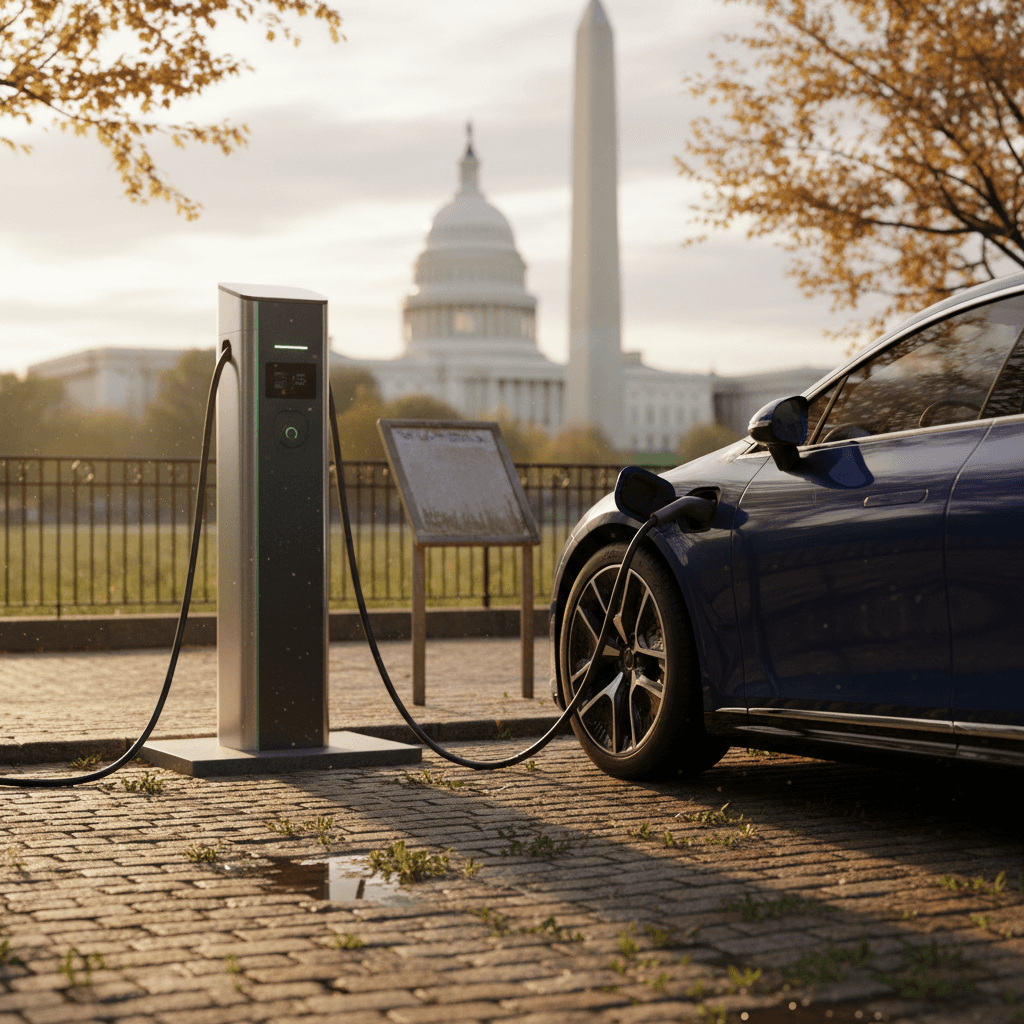
If you drive an EV in the District, you’ve probably wondered if there’s any truly free EV charging in Washington DC, or if those stories are just urban legend. In 2026, completely free public charging is rare, but there are still pockets of zero‑cost or heavily discounted charging scattered across the city if you know where to look and how to plan.
Quick reality check
How “free” EV charging actually works in DC today
Before you go hunting for unicorns, it helps to understand the kinds of situations where you’re most likely to find free charging in DC. In 2026, the term “free EV charging” usually falls into one of three buckets rather than permanent, citywide free power.
- Temporary promotions – Automakers, utilities, or charging networks comping charging for a few months after purchase or at new stations.
- Subsidized parking amenities – A property owner (office, apartment, grocery store, hotel) quietly picks up the charging tab to attract tenants, shoppers, or guests.
- Pilot programs and grants – The District and private partners experimenting with curbside or neighborhood charging may offer free or introductory rates while they gather data.
You should assume that DDOT-owned curbside chargers and most public Level 2 or DC fast chargers are paid. Some garages also require you to pay for parking even if the electricity is free. That’s why your strategy in DC is less about finding one magical free station and more about building a routine that leans on cheap or zero‑cost charging when it’s convenient for you.
Washington DC EV charging snapshot
Where to look first: free or cheap charging in DC
If you’re trying to keep your fuel bill low, there are a few high‑probability places to look for free or inexpensive charging in Washington DC before you pay top dollar for DC fast charging along the highway.
Highest‑odds places to find free charging
Start here before you default to paid DC fast charging
1. Your workplace
Many employers quietly offer free Level 2 charging as an employee perk, especially at offices that have recently installed chargers.
- Check your HR or facilities portal.
- Ask security or the garage attendant.
- Look for time limits (often 2–4 hours).
2. Apartment or condo
Newer multifamily buildings in DC increasingly install Level 2 charging in garages and sometimes roll the cost into rent or HOA fees.
- Ask if any spots include complimentary charging.
- Some buildings offer free charging while they ramp up usage.
3. Retail & groceries
Select grocery stores, shopping centers, and big‑box retailers around the region use free or discounted charging to draw shoppers.
- Many are on ChargePoint or other networks.
- Always verify in the app, pricing can change month to month.
Outside of those, look at regional commuters’ patterns: a lot of DC drivers charge for free once or twice a week at the office, then top up at a paid curbside or garage charger as needed. That hybrid pattern can keep your average cost per mile extremely low even if most public chargers aren’t actually free.
Using apps to spot free or discounted chargers
The single most effective way to track down free EV charging in Washington DC is to use crowd‑sourced and network apps. Pricing and policies change faster than any static list can keep up, but the apps update in near real time.
Apps and tools to find low‑cost charging in DC
Let the data do the hunting for you
PlugShare & similar apps
PlugShare, Chargeway, and other map apps show user‑reported pricing and notes.
- Filter by price = free where supported.
- Read recent check‑ins for “still free?” comments.
- Watch for notes about parking fees that apps don’t always show clearly.
Network apps
Apps from ChargePoint, FLO, EVgo, Electrify America, and others list their stations’ current tariffs.
- Some Level 2 stations at workplaces or universities show up as $0.00/kWh.
- Watch for promotions on new stations in the region.
Tesla & “it’s electric”
Even if you don’t own a Tesla, check the Tesla app and newer curbside providers like it’s electric to see pricing.
- Not all will be free, but some pilots launch with intro rates.
- App screens usually spell out whether you pay just for energy or also for parking.
Use recent reviews, not just icons
Curbside EV charging pilots in DC
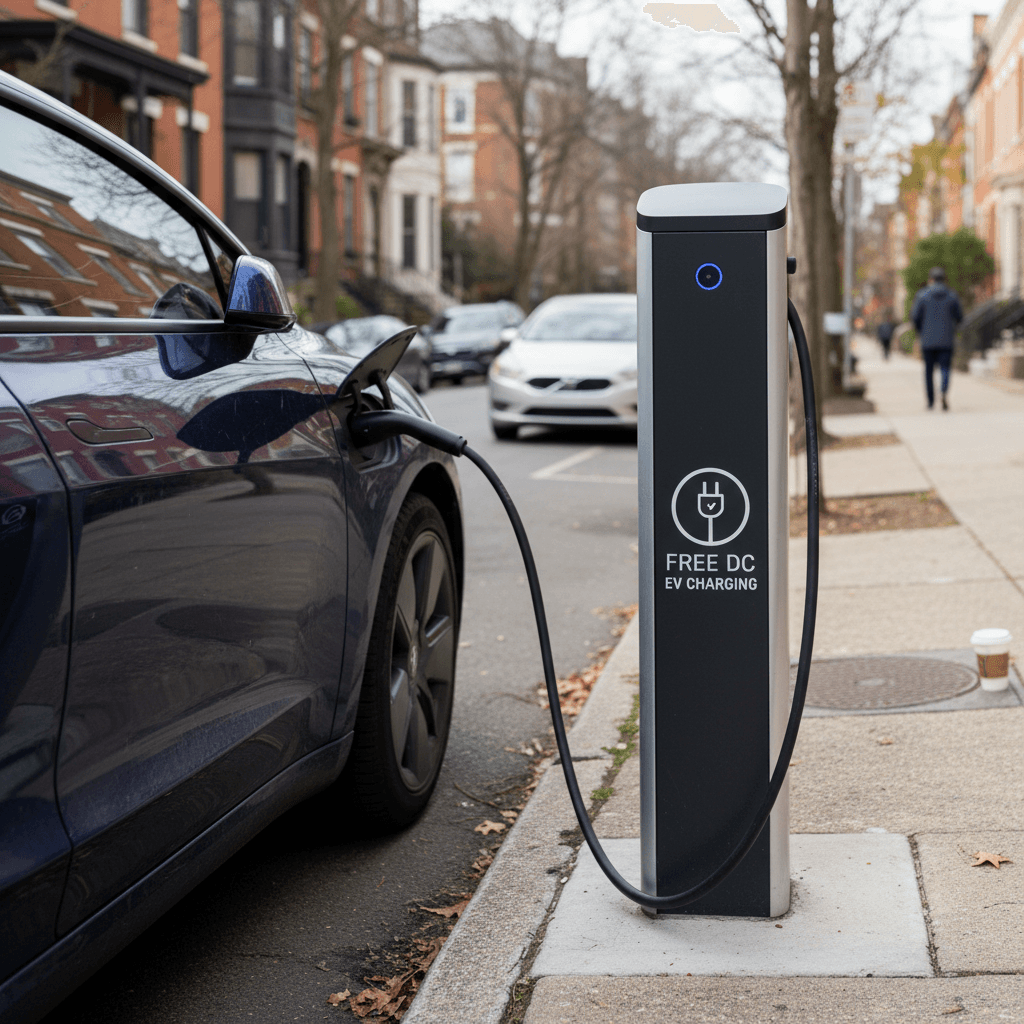
In February 2026, DC’s transportation and energy agencies kicked off a Neighborhood Curbside Electric Vehicle Charging Station Pilot that installs Level 2 chargers at the curb in residential neighborhoods. These pilots are run in partnership with companies that specialize in curbside hardware and software.
The details of pricing can vary by operator and phase of the pilot, but the pattern in other cities, and in early DC rollouts, is familiar: introductory periods with low or even zero charging fees to encourage adoption, followed by normal per‑kWh or per‑hour pricing once utilization stabilizes.
- Curbside chargers are generally paid parking for EVs only, enforced by signage and meter rules.
- Don’t assume curbside stations are free just because they’re new; always open the app or meter screen before plugging in.
- When you see a brand‑new curbside post with very low rates, it may be a good time to grab cheap energy while the pilot is ramping up.
Respect curbside rules
Garages, hotels, and retail locations that may offer free charging
Around downtown and the federal core, many garages now advertise EV charging, but pricing is all over the map. Some charge market rates for both parking and energy. Others quietly bundle power into your parking fee or monthly contract, creating effectively “free” charging once you’re in the garage.
Downtown garages
Nearly every major garage or lot in central DC now has some EV charging. What varies is who pays:
- Monthly parkers may get complimentary Level 2 charging on a first‑come basis.
- Some garages bill only for parking time; the electricity is included.
- Others charge per kWh or per hour on top of parking.
Ask the garage operator to clarify whether EV spots come with bundled charging or a separate fee.
Hotels and retail
Hotels near the Mall, convention center, or business districts often provide charging as a guest amenity.
- Guest‑only chargers may be free to use but require a room key.
- Attached public garages frequently charge for parking but keep energy free.
- Some big‑box or grocery stores in the region offer free charging during store hours as a loyalty perk.
Check your booking confirmation or call ahead if you’re choosing a hotel based on charging access.
Watch for “parking only” charges
Workplace and multifamily charging perks
For many DC drivers, the most reliable source of free EV charging isn’t public at all, it’s behind a badge reader at work or behind a gate at home. That’s by design: DC policy and federal incentives both push building and fleet owners to install more charging at workplaces and multifamily buildings.
How to uncover hidden free charging where you live or work
Ask HR or facilities directly
Don’t assume you’d already know if your employer offered free charging. New stations sometimes go live with little fanfare. An email or intranet search for “EV charging” can surface perks you’re already eligible for.
Check lease and amenity lists
If you’re apartment‑hunting, treat charging like any other amenity. Ask whether Level 2 charging is included in rent, billed separately, or currently free while they encourage adoption.
Clarify time limits
Free or low‑cost workplace chargers usually come with 2–4‑hour limits to prevent squatting. Build your schedule around those windows so more drivers can share the plugs.
Coordinate with coworkers or neighbors
If there are more EVs than plugs, informal rotation systems, Slack channels, group texts, parking calendars, can keep things civil and make sure everyone gets a fair shot at those free kilowatt‑hours.
Stack the perks
How to build a low-cost charging routine in DC
Instead of chasing every rumored free charger, it’s more effective to design a routine that keeps your average cost per mile low and predictable. Here’s a simple framework that works well for many DC‑area drivers.
Example weekly charging mix for a DC commuter
An illustrative routine for a driver who parks on the street and commutes downtown 3 days a week.
| Charging location | Type | Approx. frequency | Typical cost | Notes |
|---|---|---|---|---|
| Workplace garage | Level 2 | 1–2x per week | Often free | Top up to 80–100% while you’re at the office. |
| Neighborhood curbside pilot | Level 2 | 1x per week | Low / variable | Use when you can park near home for a few hours. |
| Grocery/retail stop | Level 2 | Every other week | Free or low | Charge while you shop; watch posted limits. |
| Highway DC fast charger | DCFC | Trips only | Market rate | Use mainly for out‑of‑town weekends or emergencies. |
Your exact mix will depend on your job, neighborhood, and EV, but the principle is to lean on cheap or free sources first.
If you own or are considering a used EV, pairing this kind of routine with a realistic look at your car’s efficiency and battery health is crucial. That’s where tools like the Recharged Score report come in: when you shop for a used EV through Recharged, you get a verified view of battery health and realistic range, which makes it easier to decide how much you’ll actually need public charging in your DC life.
Take advantage of slower Level 2
Pitfalls to avoid with free EV charging
Free or discounted charging is great, but there are tradeoffs. A few habits will keep your costs low without aggravating other drivers, or getting you ticketed.
- Don’t squat on chargers. Once your session is done, move your car, especially at curbside or in small garages.
- Read the fine print. Time limits, idle fees, and parking rules can turn “free” into an expensive mistake if you overstay.
- Watch your opportunity cost. Driving across town for free Level 2 might cost more in time and stress than paying a few dollars closer to home.
- Assume policies can change. What’s free today may be metered tomorrow as pilots evolve. Treat every free charger as a bonus, not a foundation of your budget.
Don’t chase free DC fast charging at all costs
How free charging fits into buying a used EV in DC
If you’re shopping for a used EV in the DC region, it’s tempting to fixate on whether you can live off free public charging. In practice, your experience will come down to three questions: where you park at night, what your daily mileage looks like, and how healthy the battery is in the car you choose.
1. Be honest about your parking reality
If you have a driveway or dedicated space where you can eventually install home charging, that will beat any hunt for free public charging over the long run. DC and federal incentives can offset a large chunk of the installation cost.
If you rely on street parking, free workplace and curbside pilots matter more, but you’ll also want an EV whose usable range fits your lifestyle with infrequent fast charging.
2. Start with the right car, not the right coupon
It rarely makes sense to buy a particular EV just because it came with a short‑term free‑charging promotion when it was new. What matters now is:
- Battery health and real‑world range.
- Efficiency in stop‑and‑go DC traffic.
- Compatibility with the charging networks you’ll actually use.
Every EV sold through Recharged comes with a Recharged Score battery health report and fair‑market pricing, so you can project your long‑term fuel and charging costs realistically, free charging or not.
Free EV charging in Washington DC is best treated as a bonus, not a baseline. If you build a routine around realistic workplace, curbside, and retail options, and choose a used EV whose range and battery health match your life, you can keep your running costs low without living in fear of your next plug. Use apps to spot short‑term deals, keep your expectations grounded, and think of every free session as one more reason that electric miles in the District can be dramatically cheaper and cleaner than gas.