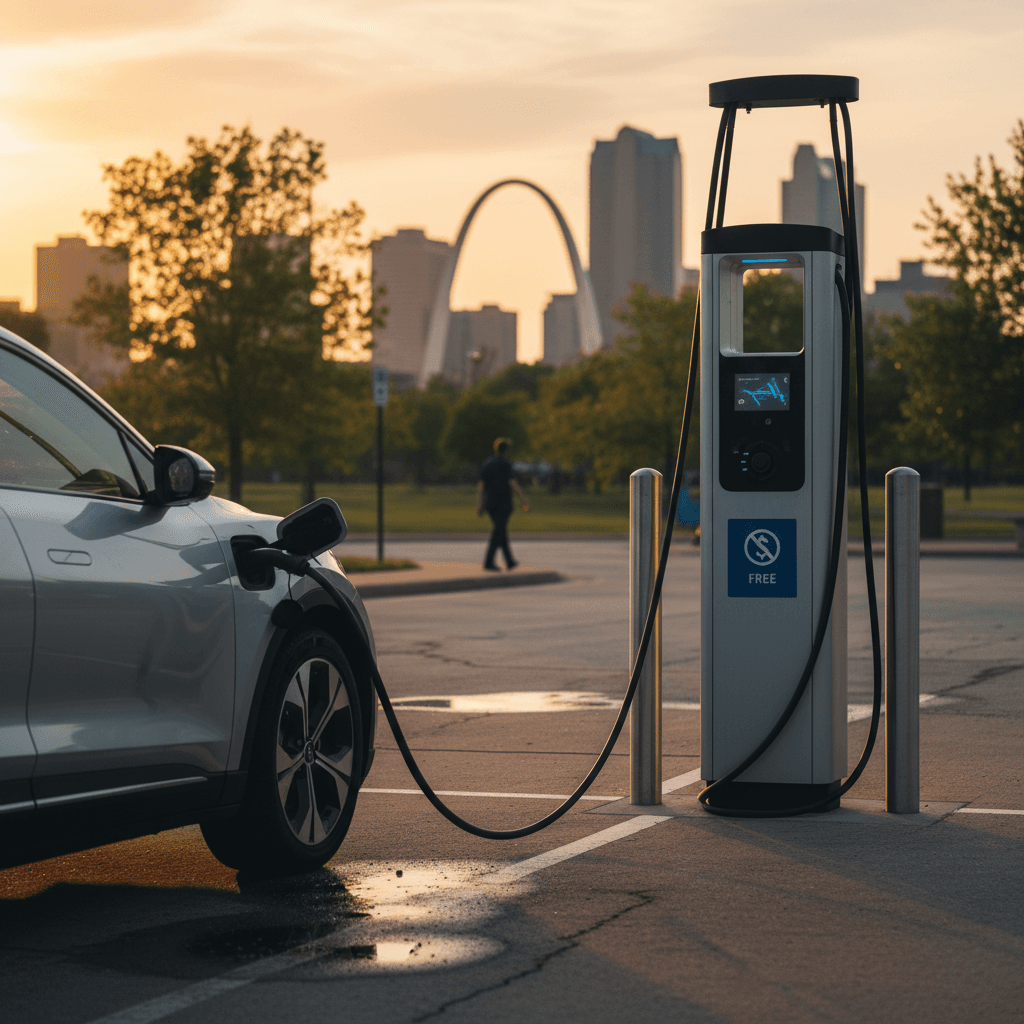
If you’re searching for free EV charging in St. Louis, MO, you’ve probably noticed two things: public chargers are more common than they were a few years ago, and genuinely free ones can feel like a scavenger hunt. This guide walks through where free (or close-to-free) charging actually exists around St. Louis today, how to find it with apps, and how to keep your overall charging costs low even when the plug isn’t free.
Quick reality check
How much free EV charging really exists in St. Louis?
St. Louis has been steadily building out public charging, helped by Ameren Missouri’s EV programs, city policy, and private networks. The region now has dozens of public Level 2 and DC fast chargers, but only a slice of them are fully free to use. A 2025 snapshot from the American Council for an Energy-Efficient Economy estimated that St. Louis has around 53 public charging ports per 100,000 residents, putting it in the middle of the pack among U.S. cities for access, but not all of those are no-cost stations.
EV charging landscape in the St. Louis region
In other words, you should think of free charging as a bonus, not a guarantee. It’s usually offered by organizations that want you to park, visit, or shop, universities, museums, municipal garages, hotels, and some grocery stores, rather than by the big charging networks themselves.
Pricing can change
Types of places that offer free or cheap charging
Where you’re most likely to find free or low-cost charging
Focus your search on these property types around St. Louis
Universities & hospitals
City garages & public lots
Grocery & retail
Parks, museums & zoos
Hotels & event venues
Workplaces & apartments
In practice, each of these property types sets its own rules. One garage might offer free charging but paid parking, while a university lot flips it with paid charging in a free lot. That’s why using the right apps, and reading recent user comments, matters just as much as finding a green “free” icon on the map.
Notable free or low-cost charging opportunities in St. Louis
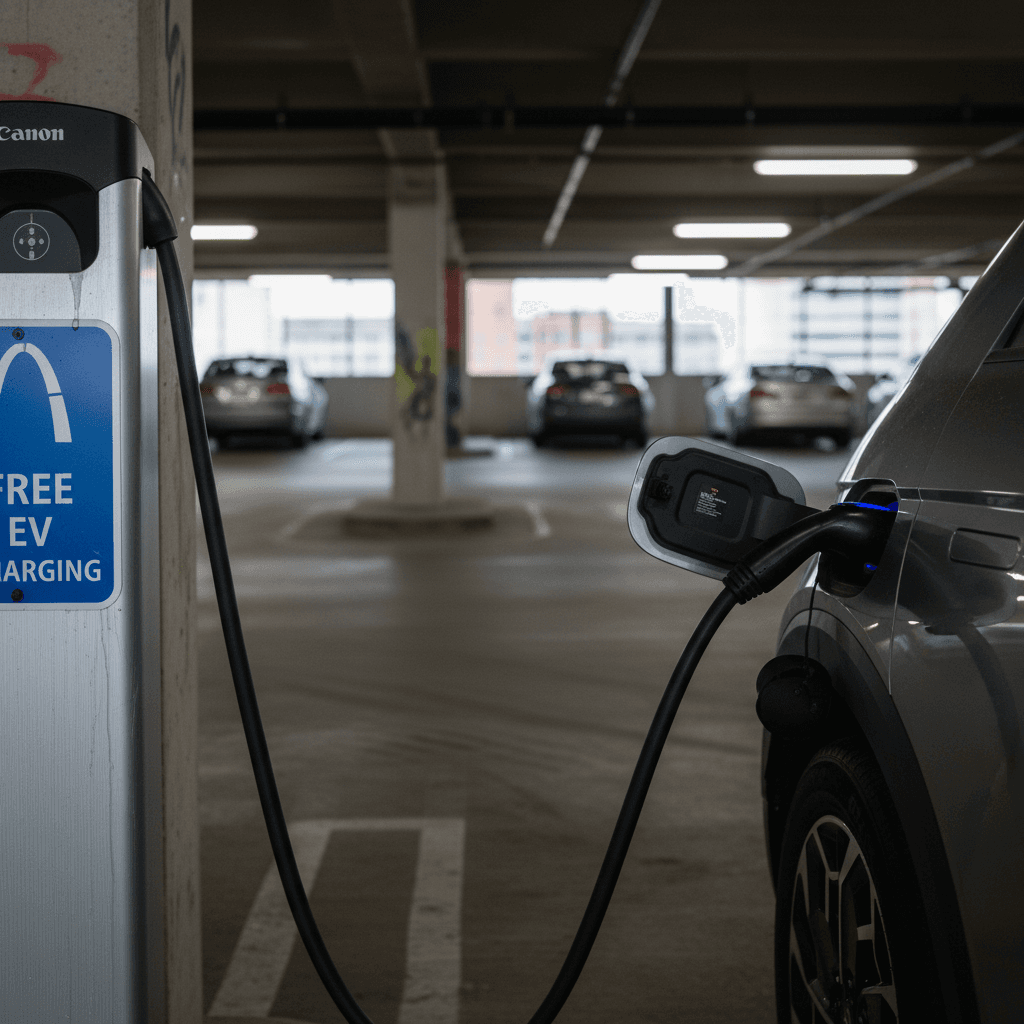
Because pricing and access change, you’ll want to verify any spot in a charging app before counting on it. But a few local patterns are worth knowing about if you’re hunting for no‑cost electrons around the metro area.
- City-owned garages and lots downtown: The City of St. Louis has added charging around civic buildings and downtown parking facilities over the last several years. At some locations, charging is free once you’ve paid for parking, effectively rolling the cost into your parking fee.
- Washington University in St. Louis (Danforth Campus): WashU expanded its Level 2 charging network to 39 ports and is offering free charging through July 31, 2025 in certain lots before moving to a per‑kWh model. Access is primarily for permit holders, but it’s a good example of how institutions structure free periods.
- Cultural institutions near Forest Park: Chargers near the Missouri History Museum and other district‑funded attractions have historically offered free or very low‑cost Level 2 charging for visitors, though you should always confirm in your app for the latest pricing.
- Grocery and retail locations: Some regional grocery stores and national chains on the Missouri side of the river have offered complimentary Level 2 charging as a customer perk. The specific stores change over time, but user reports in PlugShare and ChargePoint will surface them.
- Ameren-influenced sites: Ameren Missouri’s incentives have helped businesses and property owners install charging infrastructure, especially Level 2 chargers. While Ameren doesn’t mandate free pricing, some hosts choose to keep charging free for customers to encourage traffic.
Use patterns, not one-off tips
How to use apps to find free EV charging in St. Louis
The most reliable way to track down free EV charging in St. Louis is to let the maps do the heavy lifting. A few apps stand out for filtering by price, charging speed, and network.
Best tools for spotting free or cheap charging
Combine a crowdsourced map with network apps for the clearest picture
PlugShare
ChargePoint & network apps
In-car navigation
Step-by-step: finding free charging near you
1. Start with PlugShare filters
Open PlugShare, center the map on St. Louis, and apply filters for Level 2 and DC fast chargers. Turn on the Free cost filter so you only see no‑fee locations.
2. Read recent user check-ins
Tap into each pin and scroll recent check‑ins. Drivers usually note whether the station is still free, how fast it charges, and if the parking fee covers charging.
3. Cross‑check in the network app
If the station is run by ChargePoint, EVgo, or another network, open that app to confirm pricing and any idle or parking fees that might apply.
4. Look at station photos
Photos help you avoid surprises like chargers tucked behind a valet stand or in a permit‑only section of a garage, even if the hardware itself is listed as public.
5. Save a short list of go‑to spots
Once you’ve found a few reliable free or low‑cost chargers near home, work, or your favorite parks, save them as favorites so you’re not repeating the search every week.
Pro move for apartment dwellers
Strategies to keep your EV fueling costs low (even if charging isn’t free)
Chasing free kilowatt‑hours can be worth it, but so is stepping back and looking at your overall charging strategy. In most cases, cheap, predictable home or workplace charging beats occasional free public sessions in both convenience and total cost of ownership.
Lean on home Level 2 when you can
With Ameren Missouri’s relatively low residential rates, home charging is usually the cheapest way to fuel an EV over the long run. Many owners install a 240‑volt Level 2 charger in the garage and schedule charging overnight to take advantage of off‑peak pricing when available.
If you’re planning to live with an EV for several years, it’s worth comparing the cost of an installation against what you currently spend on gas each month.
Use public charging strategically
Think of public stations, free or paid, as top‑offs rather than your primary fuel source. Plug in while you’re already paying for parking downtown, walking Forest Park, or buying groceries, instead of making special trips.
Even paid Level 2 charging is typically far cheaper per mile than gas, and smart planning can keep your reliance on DC fast charging, and its higher rates, to a minimum.
- Avoid overusing DC fast charging for daily use. It’s convenient but usually the most expensive way to charge, and frequent use can add heat stress to your battery over time.
- Watch for idle fees. Some networks add per‑minute idle fees once your session ends or after a grace period. Those can wipe out the benefit of free or low‑cost charging if you leave your car plugged in all afternoon.
- Pair errands with charging. Choose grocery stores, gyms, and parks where you know there’s reliable charging, even if it’s not free. You’ll save time and reduce range anxiety.
Don’t block chargers chasing free power
Home and work charging incentives in Missouri
If you’re willing to invest up front, incentives in Missouri can bring the cost of a home Level 2 charger down enough that it feels almost like getting free charging over time, especially compared with what you’d spend at a gas pump.
Key EV charging incentives affecting St. Louis drivers
Programs that can lower the cost of installing a home or workplace charger
| Program | Who it’s for | Benefit | Notes |
|---|---|---|---|
| Federal 30C credit | Homeowners | 30% of charger + installation cost, up to $1,000 | Available for residential EV charging equipment and electrical work through at least 2032. |
| Ameren Missouri Level 2 rebate | Ameren Missouri residential customers | Up to $500 rebate on a qualifying Level 2 charger | Requires an ENERGY STAR–certified charger; funds are limited each year. |
| Business/public site rebates | Commercial customers & multifamily properties | Utility incentives covering a portion of make‑ready and hardware costs | Designed to expand public and workplace charging, including in the St. Louis metro. |
| Local electrical contractors | Home and business customers | Bundled quotes that factor in rebates and credits | Many St. Louis–area installers will estimate your incentive savings as part of the proposal. |
Always confirm current eligibility and amounts before you start a project; incentive details can change.
Stack incentives for near-“free” home charging
What free charging means when you’re shopping for a used EV
If you’re weighing a used EV, especially if you live in or near St. Louis, free or cheap charging is only one piece of the cost puzzle. Battery health, charging speeds, and your daily driving pattern often matter more than the occasional free plug at a city garage.
Look beyond the “free charging” perk
Some dealerships and automakers advertise a year of free DC fast charging with a new EV, but those programs usually don’t extend to used vehicles, or they only apply on specific networks. Even if you do get a perk, fast charging is best treated as an occasional tool, not your primary fuel source.
Focus on battery health and realistic range
A healthy battery and an EV that fits your daily mileage are far more valuable than a handful of free sessions scattered around St. Louis. Knowing how much range you’ll have on a cold January morning is what lets you rely on cheaper home or workplace charging instead of expensive emergency top‑offs.
How Recharged fits in
Free EV charging in St. Louis: FAQ
Frequently asked questions about free charging in St. Louis
Bottom line: What to expect from “free EV charging” in St. Louis
Free EV charging in St. Louis, MO is best viewed as a money‑saving bonus, not your primary fueling plan. Universities, civic institutions, city garages, and some retailers do offer no‑cost or bundled charging, but locations and policies change as grants roll off and networks mature.
If you live in the metro area, your most reliable setup is a healthy used EV that fits your range needs, backed by affordable home or workplace Level 2 charging and smart use of public stations. Use PlugShare and network apps to surface free or low‑cost chargers where you already spend time, and treat DC fast chargers as an occasional tool rather than a lifestyle.
And if you’re in the market for a used EV, starting with accurate battery health, like the Recharged Score Report that comes with every vehicle on Recharged, will give you a clear picture of how that car will behave on real St. Louis roads and what your charging life will truly cost, with or without those precious free plugs.