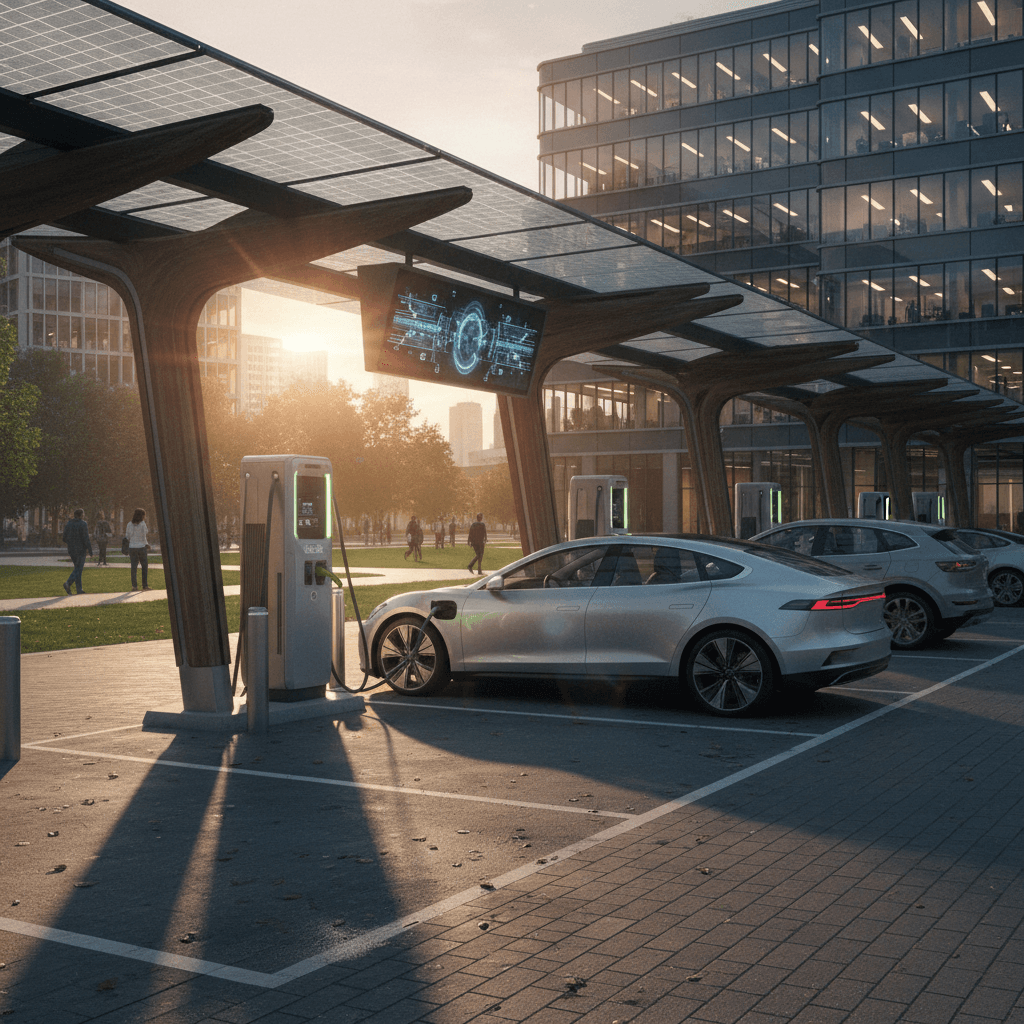
You’ve probably seen them on plug-in maps: little green icons promising free EV chargers. When electricity prices and public charging rates feel steep, the idea of never paying to fuel your car again is irresistible. But how free is “free,” where do you actually find these chargers, and is it worth planning your life around them?
Quick takeaway
Why free EV chargers exist in the first place
To understand where to find free EV chargers, it helps to know why anyone gives away electricity in the first place. Almost every free charger you’ll use is part of a larger strategy: attracting customers, rewarding employees, meeting sustainability goals, or unlocking tax credits and grants.
Who is paying for “free” charging?
Different groups cover the bill for different reasons.
Employers
Workplace charging is one of the most common sources of free EV charging. Companies use it as an employee perk, a way to hit sustainability targets, and a signal that they’re serious about clean transportation.
Retailers & hotels
Stores, restaurants, and hotels often offer free Level 2 charging so you’ll stay longer and spend more. The electricity cost can be tiny compared with getting you inside the door.
Utilities & governments
Utilities and local governments sometimes sponsor free chargers to encourage EV adoption, meet climate goals, or study charging behavior, especially in underserved areas.
Free charging in the bigger EV picture
Think like the host
Where to actually find free EV chargers
Free EV charging tends to cluster around a few familiar places. Some are obvious (your workplace), some are more hidden (a city-owned garage that never got around to turning on billing). Here’s where to look first.
Top locations for free EV chargers
Start with these spots before you hunt randomly on plug-in maps.
1. Workplace parking
Many employers give staff free Level 2 charging in office or campus lots. Sometimes it’s entirely free, sometimes it’s a limited number of kWh or hours per day.
If your workplace offers charging at all, it’s worth asking HR or facilities what it costs, policies range from fully free to a small fee pegged to local residential rates.
2. Hotels and resorts
Mid‑range and upscale hotels often advertise free charging to win your booking. The electricity for an overnight top‑up is a small marketing expense compared with an empty room.
Always confirm whether charging is complimentary for guests only or open to the public, and whether you need to be parked in a specific area or register at the front desk.
3. Grocery stores & shopping centers
Retailers sometimes offer free or time‑limited free charging while you shop. You’ll see this both with store-owned chargers and with third‑party networks that run promotional pricing.
Expect these deals to change, what’s free today may be a paid session next quarter once the pilot ends.
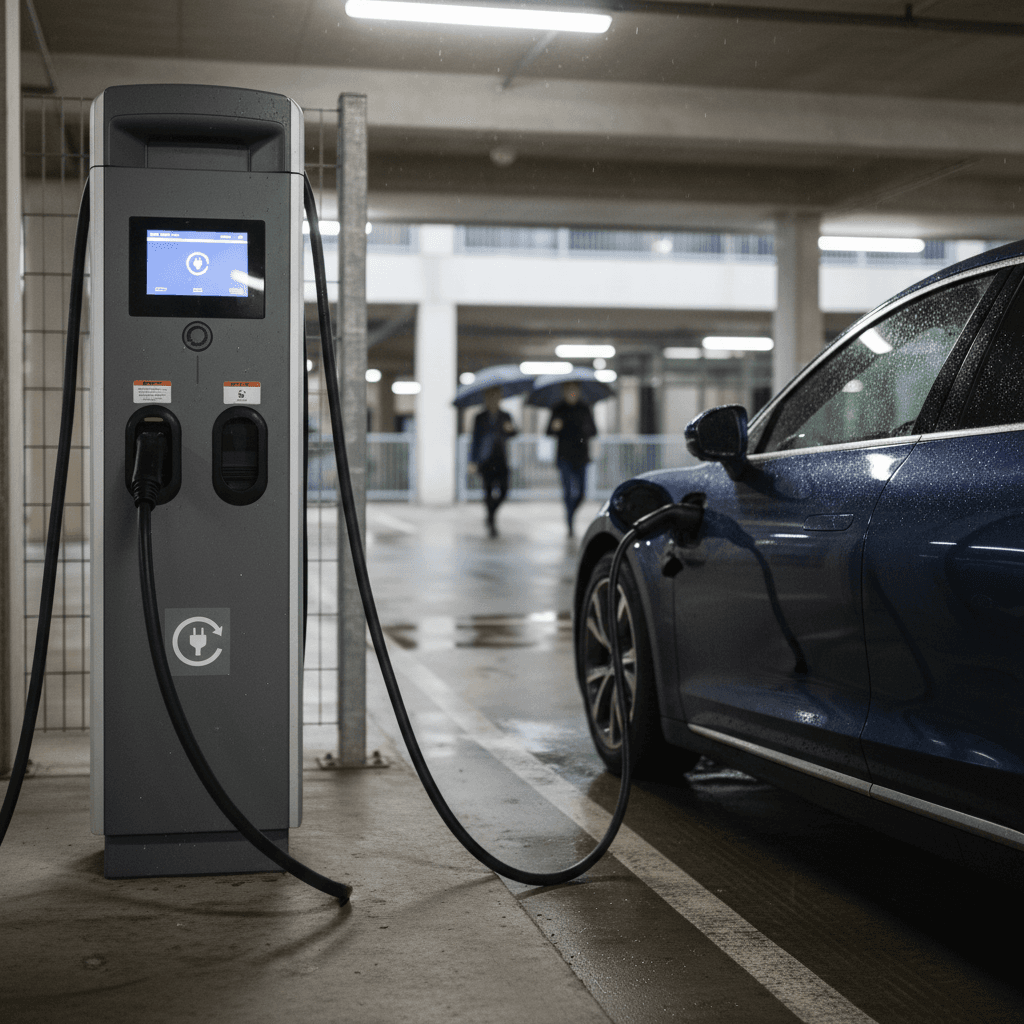
4. Municipal lots, libraries & campuses
City governments, universities, and hospitals often installed chargers with grant funding, and some still offer free charging as they gather data or meet clean‑fleet goals.
Signage isn’t always clear, so check your charging app and ask a parking attendant if you’re unsure about pricing.
Don’t count on DC fast being free
How to search for free EV charging in the real world
Once you know where free EV chargers are likely to hide, the next step is using apps and filters effectively. The good news: you don’t need a secret map, just better habits with the tools you already have.
Step‑by‑step: hunting down free EV chargers
1. Turn on “free” filters in your charging app
Apps like PlugShare, ChargeHub, and some network apps let you filter by price or show free locations. Toggle those filters on, then zoom out until you see clusters, those are often workplace or municipal sites.
2. Read recent user check‑ins
Tap on a charger and scroll through recent check‑ins. Drivers will often note if pricing changed, if free hours ended, or if a site that used to be free has switched to paid.
3. Check your employer’s benefits portal
If you work on a campus or in a larger office, search your intranet or benefits portal for “EV charging” or “commuter benefits.” Many free workplace chargers are never listed in public apps at all.
4. Look at hotel amenities when booking
On hotel booking sites, use filters or amenity lists for “EV charging.” Then visit the property’s site or call the front desk to confirm whether charging is free for guests and what plug types they have.
5. Scout city websites for pilot programs
Search your city or county website for “electric vehicle charging pilot” or “sustainability EV charging.” Municipalities often list locations, pricing, and time limits for public chargers they operate.
6. Save and label your personal “free route”
Once you’ve found two or three reliable free chargers on your commute or errands, favorite them in your app and name the list something like “Free weekday charging” so you can plan trips around them.
Charging network apps
Use your main network apps (like Electrify America, EVgo, ChargePoint) to look for promotional pricing, free first‑session offers, or automaker‑branded discounts. These deals often show up as banners or special pricing in the session details.
Community‑driven apps
Community apps like PlugShare excel at surfacing off‑the‑radar free chargers, think a library that never turned billing on, or a small business that offers free charging behind the building. Sort by rating and recent activity to avoid dead entries.
The fine print: what “free charging” usually means
Now for the part many listings gloss over. When you tap a pin marked “free,” there are often limits built in, some written in the app, others tucked into parking rules or company policies. Understanding those limits keeps a sweet perk from turning into a parking ticket or a dead battery.
Common rules and limits on free EV chargers
Watch for these terms any time you rely on free charging.
| Limit type | What it looks like | How to handle it |
|---|---|---|
| Time limit | "EV charging only – 2 hour limit" | Set a timer on your phone and move when it dings, even if you’re not full. |
| Session cap | "Up to 30 minutes free, then standard rate" | Use it for a top‑up, not a deep charge from 5% to 90%. |
| Guest‑only rule | "For hotel guests while registered" | Ask before plugging in if you’re not staying there; some properties will tow. |
| Parking fee | "Garage parking $3/hr, charging free" | Charging may be free, but the parking is not, factor that into your cost math. |
| Access hours | "Lot closed 10 p.m.–6 a.m." | Don’t rely on overnight charging unless the lot is explicitly 24/7. |
| Policy changes | "Free during pilot program" | Expect pilots to end; have a backup plan if pricing goes live mid‑year. |
Always read both the charger listing and the nearby parking signs, enforcement usually follows the stricter of the two.
Don’t block the plug
“Free” home EV chargers and tax credits
You won’t usually get truly free home electricity, but you can get surprisingly close to a free home Level 2 charger when you stack rebates, tax credits, and smart rate plans. The biggest lever in 2025 is still the federal Alternative Fuel Vehicle Refueling Property Credit, known as section 30C.
Federal 30C credit in plain English
For many households, that credit, combined with occasional state or utility rebates, shrinks a $1,200–$1,500 Level 2 install into something that feels very close to free over the first few years you own the car. And unlike hunting public free chargers, a home unit gives you predictable, cheap energy every single night.
- Check whether your address is in an eligible census tract (low‑income or non‑urban) using the latest federal maps.
- Look for stackable local incentives from your state energy office or utility, some offer $300–$1,000 rebates for home chargers.
- Ask your utility about time‑of‑use rates that make overnight home charging dramatically cheaper than daytime public fast charging.
Home vs. public: do the math
Build a smart charging strategy around free chargers
Chasing free EV chargers can feel like coupon clipping: satisfying when it works, frustrating when it doesn’t. The trick is to treat free charging as one piece of a larger strategy that keeps your costs low and your life simple.
A practical charging game plan
Balance free, cheap, and convenient options instead of chasing only one.
Daily routine
Rely primarily on home or workplace Level 2. If workplace charging is free, use it to arrive home with a comfortable buffer so you rarely need public chargers during the week.
Errands & weekends
Layer in free retail or municipal chargers when they’re already on your route. Pull into the grocery store with 40–60% state of charge and leave with 70–80%, instead of starting from nearly empty.
Road trips
Assume you’ll pay for fast charging on long drives. If a hotel on your route offers free Level 2 for guests, treat it as a bonus that offsets some highway fast‑charge costs.
Measure savings over months, not sessions
Free charging and used EVs: what matters most
If you’re shopping for a used EV, free EV chargers are only one piece of the ownership puzzle. The bigger story is how efficiently the car turns those free, or cheap, kWh into miles, and how healthy the battery is after a few years on the road.
Battery health vs. free electricity
A generous workplace charging perk loses its shine if your battery has lost a big chunk of usable range. A healthy pack means fewer charging stops and more flexibility to choose when and where you plug in, free or not.
That’s why tools like the Recharged Score matter: every EV sold through Recharged comes with a detailed battery health and pricing report, so you know exactly what kind of range and efficiency you’re paying for.
Financing and incentives still count
Even as federal EV purchase credits change, it’s worth looking at the whole financial picture. A fairly priced used EV with solid battery health, smart financing, and affordable charging access can beat a newer vehicle with flashier free‑charging perks.
At Recharged, EV‑specialist support can help you run that math and line up financing, trade‑in, and delivery, so you’re not buying a car just because it comes with a few months of free fast charging.
Don’t buy a car for a short‑term perk
FAQ: common questions about free EV chargers
Frequently asked questions about free EV charging
Free EV chargers are one of the quiet pleasures of electric driving, but they’re unpredictable, and they’re always paid for by someone. Use them strategically: lean on free workplace, hotel, and municipal Level 2 charging when it fits your routine, install affordable home charging if you can, and accept that you’ll pay for reliable fast charging on the road. Do that, and your fueling costs stay low without turning every drive into a treasure hunt for the next free plug. And if you’re considering a used EV, pairing that smart charging strategy with a transparent Recharged Score report gives you the full picture of what ownership will really cost.