If you just bought an EV, or you’re shopping for a used one, you’ve probably heard about free electric charging stations at malls, workplaces, and even along highways. The idea of fueling your car for $0 is compelling, but the reality is more nuanced: most “free” charging comes with limits, tradeoffs, or strings attached. This guide walks you through where to find free charging, how these programs really work, and when it actually makes financial sense.
Quick reality check
Why free electric charging stations exist at all
On the surface, giving away electricity to drivers seems irrational. But for many businesses and institutions, free EV charging is a calculated investment, not charity. They’re trading a few dollars of electricity for more foot traffic, employee satisfaction, or climate goals.
Who pays for “free” charging, and why
Understanding motivations helps you predict where free stations show up
Retail & grocery parking lots
Big-box stores, grocery chains, and shopping centers often host free Level 2 chargers as a way to:
- Keep you on-site longer
- Attract higher-income EV drivers
- Differentiate from nearby competitors
Employers and campuses
Companies, universities, and hospitals use free or discounted charging to:
- Offer a tangible employee perk
- Support sustainability goals
- Make commuting by EV more attractive
Cities & utilities
Local governments and utilities sometimes subsidize free or ultra-low-cost charging to:
- Kick-start EV adoption
- Meet climate targets
- Gather data for future pricing
Follow the incentives
The main types of free electric charging stations
Not all free stations are created equal. Some are slow but truly $0, others are fast but limited-time promos, and some are only free if you’re part of a specific program. Understanding the flavors helps you prioritize which are worth going out of your way for.
Common free EV charging setups in the U.S.
Use this as a cheat sheet when you see “Free” in an app listing.
| Type | Typical Speed | Who Can Use It | What’s the Catch? |
|---|---|---|---|
| Retail Level 2 (mall, grocery, hotel) | 6–11 kW | Anyone parked there | Limited plugs, sometimes time limits or parking fee |
| Workplace Level 2 | 6–11 kW | Employees (sometimes visitors) | Only during work hours, may require RFID or app |
| City- or utility-funded Level 2 | 6–11 kW | Public | May move to paid later; often time-limited per session |
| Network promos (fast charging) | 50–350 kW | Brand-specific or new-vehicle buyers | Limited to first X minutes/months/years |
| Apartment or condo chargers | 3–11 kW | Residents & guests | Cost baked into rent/HOA; hours or stall rules |
| Hotels & Airbnbs | 3–11 kW | Guests | Charging may be "free" but reflected in nightly rate |
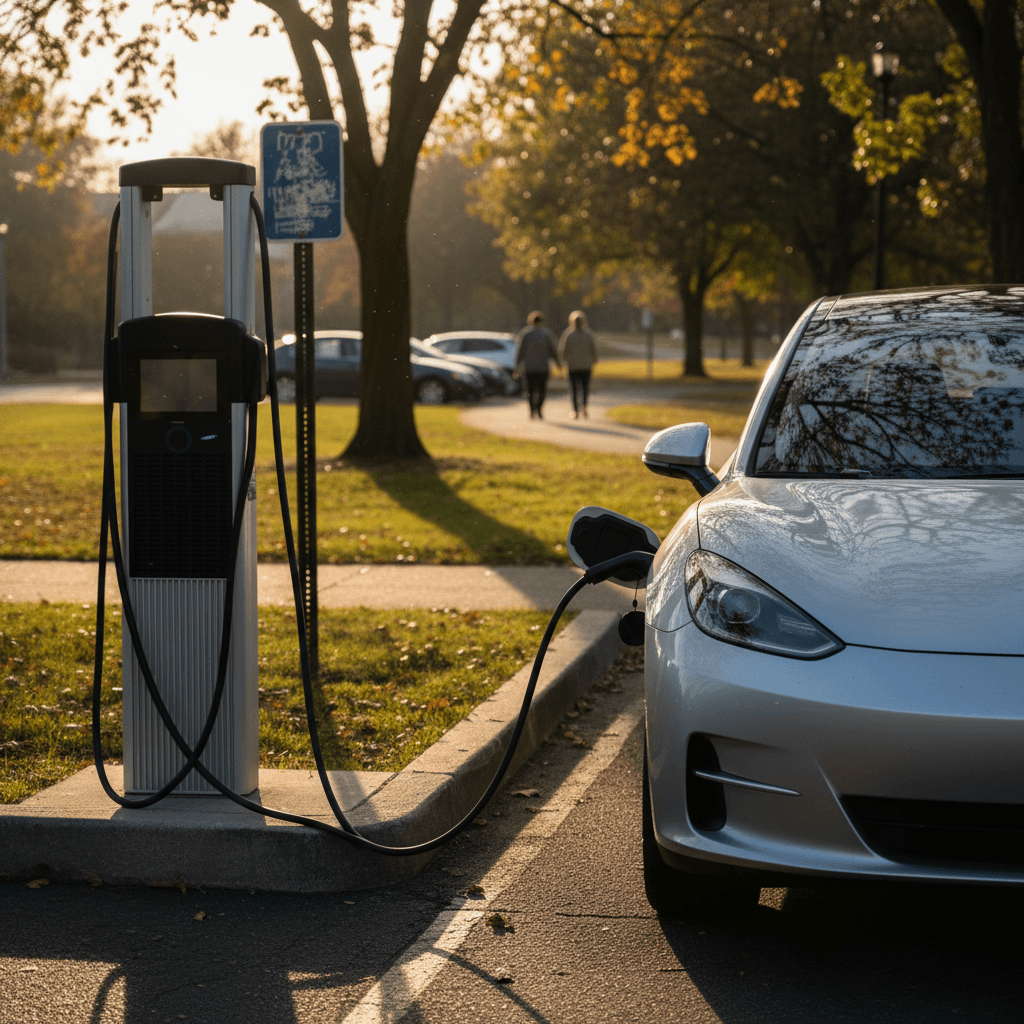
Most free charging today is Level 2 AC, often supported by retail, employers, or local governments.
“Introductory free” isn’t forever
How to find free charging near you (apps, maps, and filters)
The easiest way to discover free electric charging stations near you is to lean on apps that crowdsource price data and filter by cost. Most major charging apps now distinguish between $0.00/kWh stations and those that simply require an RFID or app to start.
What paid public charging costs in 2025
1. Universal charging maps
Use community-driven apps to see most networks in one place:
- PlugShare: Filter by price ($0), plug type, and power level. User check-ins and photos help you avoid broken stations.
- ChargeHub, A Better Routeplanner (ABRP): Useful for planning trips with specific price or network preferences.
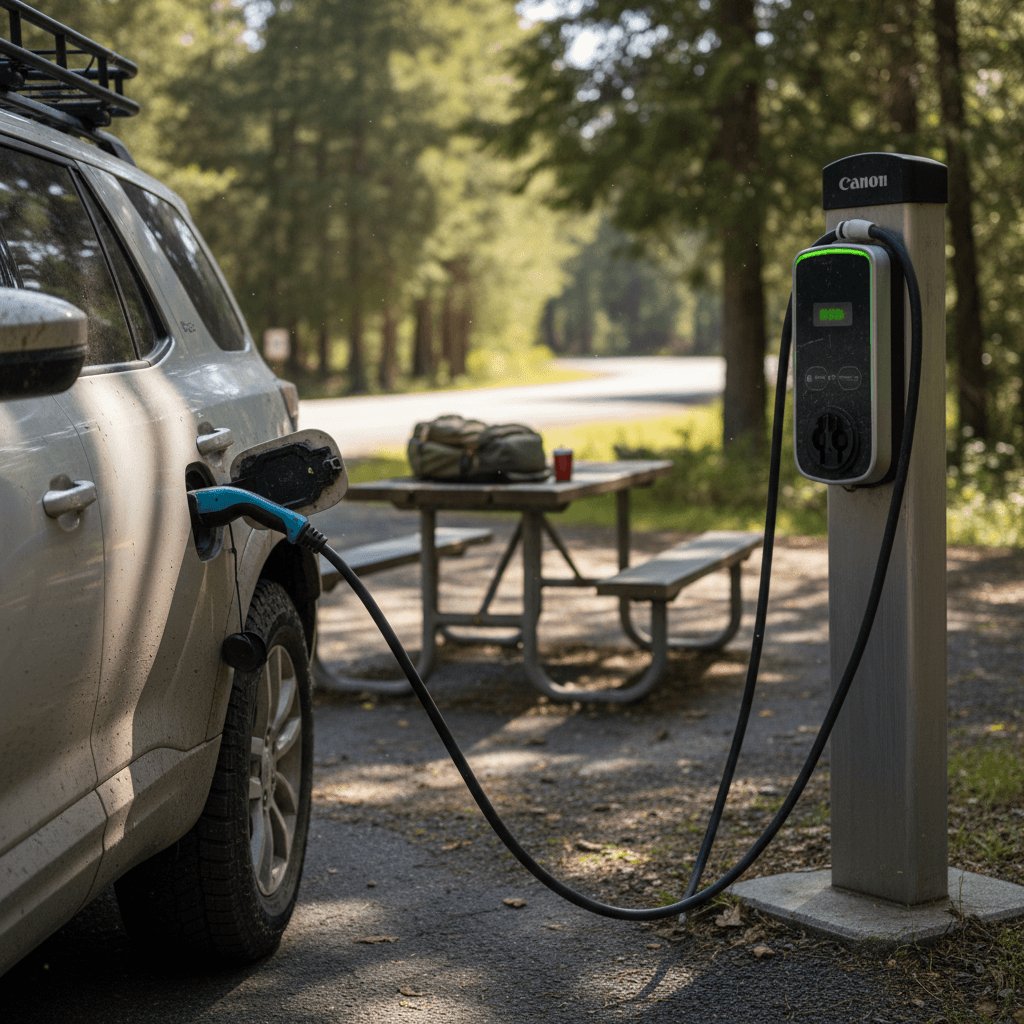
These tools are especially good for spotting free Level 2 stations at parks, libraries, and small businesses that don’t show up in big network apps.
2. Network and automaker apps
Some “free” charging is tied to specific brands or promos:
- Charging network apps: Electrify America, EVgo, ChargePoint and others occasionally run free or discounted sessions at new sites.
- Automaker apps: Many new EVs include free DC fast charging bundles. The app often highlights which stations qualify and how long the promo lasts.
If you buy a used EV, check whether any remaining free-charging benefits transfer to you, often they don’t, but some legacy offers still do.
- Open PlugShare or a similar map and set the price filter to show only $0 stations.
- Filter by connector type that matches your EV (CCS, NACS, J1772, CHAdeMO for older Leafs).
- Zoom into grocery stores, malls, libraries, and city parking garages, these are common free Level 2 hotspots.
- Tap into each listing to confirm the latest price in recent check-ins and look for time limits in the description.
- Before you rely on a free charger for a trip, save a paid backup nearby in case it’s full or offline.
Name your favorites
The fine print: Time limits, idle fees, and other gotchas
Most free EV charging comes with conditions. To avoid surprise fees, or annoying other drivers, it’s worth understanding the most common limitations before you plug in and walk away for the day.
Things to double-check before counting on free charging
1. Session time limits
Many free Level 2 stations cap sessions at 1–4 hours. After that, charging stops or switches to a paid rate. Set a timer on your phone so you’re not stranded with less charge than you expected.
2. Parking vs charging rules
Some locations only allow free parking while you’re actively charging. Once you’re done, you’re expected to move, even if the parking is normally free.
3. Idle or overstay fees
Networks and garages increasingly charge idle fees if your car stays plugged in after it’s full. Free electricity doesn’t mean free parking all day.
4. Access requirements
Corporate campuses and garages might list as “public” but require a badge, reservation, or check-in at reception. When in doubt, check recent user comments in your charging app.
5. Power levels and sharing
Some pedestals share power between two plugs. If both are occupied, your charge rate could be half what you expect, even if the session is free.
6. Promo end dates
Automaker or network promotions often have hard end dates or total kWh caps. Screenshot the offer details so you remember what you’re actually getting.
Don’t be the charger squatter
Is free charging really cheaper than home charging?
On paper, $0/kWh beats any home electricity rate. In reality, your time and driving patterns matter just as much as the raw price of energy. For many drivers, home Level 2 charging remains the cheapest and least stressful option, even compared with free public stations.
Home charging economics
If you charge at home, your cost per kWh is usually tied to your residential rate, often around $0.12–$0.20/kWh in the U.S., sometimes less at night on time-of-use plans.
- No detours or waiting in line
- Overnight charging when your car would be parked anyway
- Predictable costs; no hunting for working stations
Some utilities even pay you small incentives to let them shift your charging to off-peak hours, effectively lowering your net cost further.
When chasing free charging makes sense
Free public charging can beat home charging when:
- You’d be at that location anyway (work, gym, grocery store)
- You don’t have reliable home or apartment charging
- The station is fast enough to matter in the time you’ll be parked
If you’re regularly driving out of your way or waiting in your car just to use a free station, your time is subsidizing the electricity bill.
A balanced strategy
Free charging for road trips vs daily driving
Daily commuting and road tripping are very different use cases. Free Level 2 charging at your office can meaningfully cut your monthly costs. Free DC fast charging on a road trip sounds amazing, but it’s much harder to count on in practice.
When free charging really moves the needle
Think of road trips and daily life as separate charging problems
Daily driving
- Best opportunities: Workplace Level 2, apartment chargers, grocery store or gym chargers you already visit.
- Approach: Plug in whenever it’s convenient; don’t stress about hitting 100% every time.
- Impact: Can easily cover most of a typical U.S. commute on free or low-cost energy.
Road trips
- Best opportunities: Occasional hotel or casino promos, rare free DC fast at city-funded sites.
- Approach: Treat free DC fast as a bonus, not the backbone of your route plan.
- Impact: Nice when it works, but you still need reliable paid fast-charging options mapped out.
Don’t route a trip around one free station
Workplace, apartments, and other semi-free charging strategies
If you don’t have a driveway or you live in a dense urban area, semi-free charging, where the cost is bundled into rent, parking, or employment benefits, can be the difference between an easy EV experience and a constant scramble.
Workplace charging playbook
- Ask HR or facilities if EV charging is available or planned. Employers sometimes add chargers quietly without a big announcement.
- Propose a pilot: If there’s nothing yet, a small 4–6 stall Level 2 installation can support dozens of employees when cars rotate during the day.
- Suggest cost-sharing: Even a modest per-kWh fee or daily cap can make the program sustainable while still undercutting public fast chargers.
Framed as a recruiting and retention tool, workplace charging often gets more traction than as a pure sustainability project.
Apartments & condos
- Check your lease or HOA docs for parking and electrical policies before you ask for anything.
- Look for shared Level 2 spots in garages; the cost is often baked into rent or a small monthly parking premium.
- If nothing exists yet, point your landlord or HOA to utility rebate and tax credit programs that reduce installation costs.
Even one or two shared Level 2 chargers can dramatically improve EV ownership in a multifamily building if residents coordinate fairly.
Leverage incentives, not just freebies
How free charging offers affect used EV buying decisions
Automakers and charging networks have used free charging bundles as a way to sell new EVs, "two years of free fast charging" is an easy message to market. But if you’re considering a used EV, you need to be clear-eyed about what, if anything, still applies to you.
Most promo plans don’t transfer
Historically, many free DC fast charging plans were tied to the first owner or a specific lease term. When the vehicle changes hands, the benefit usually disappears, even if the time window hasn’t expired.
When you look at a used EV listing that touts free charging, ask for a screenshot from the automaker app or a written confirmation from a dealer. Assume nothing.
Focus on battery health, not gimmicks
Free charging is temporary; battery health is forever. A pack with strong remaining capacity will save you money and stress long after a promo ends.
At Recharged, every vehicle includes a Recharged Score Report that verifies battery health and benchmarks pricing. That matters far more to your long-term cost of ownership than a few months of discounted energy.
How Recharged can help
Ready to find your next EV?
Browse VehiclesFAQ: Free electric charging stations
Frequently asked questions about free EV charging
Bottom line: Build a smart, low-cost charging mix
Free electric charging stations are a useful tool, not a full replacement for home or paid public charging. The sweet spot for most drivers is a hybrid strategy: charge at home or at work for the bulk of your miles, opportunistically plug into free Level 2 when it fits your routine, and use paid DC fast charging selectively for long trips and true emergencies.
If you’re in the market for a used EV, focus less on flashy free-charging offers and more on fundamentals like battery health, fair pricing, and how you’ll realistically charge day to day. That’s exactly what Recharged’s Score Report, EV-specialist support, and financing options are designed to help you evaluate, so that whichever EV you choose stays both enjoyable and affordable to live with, with or without free juice.