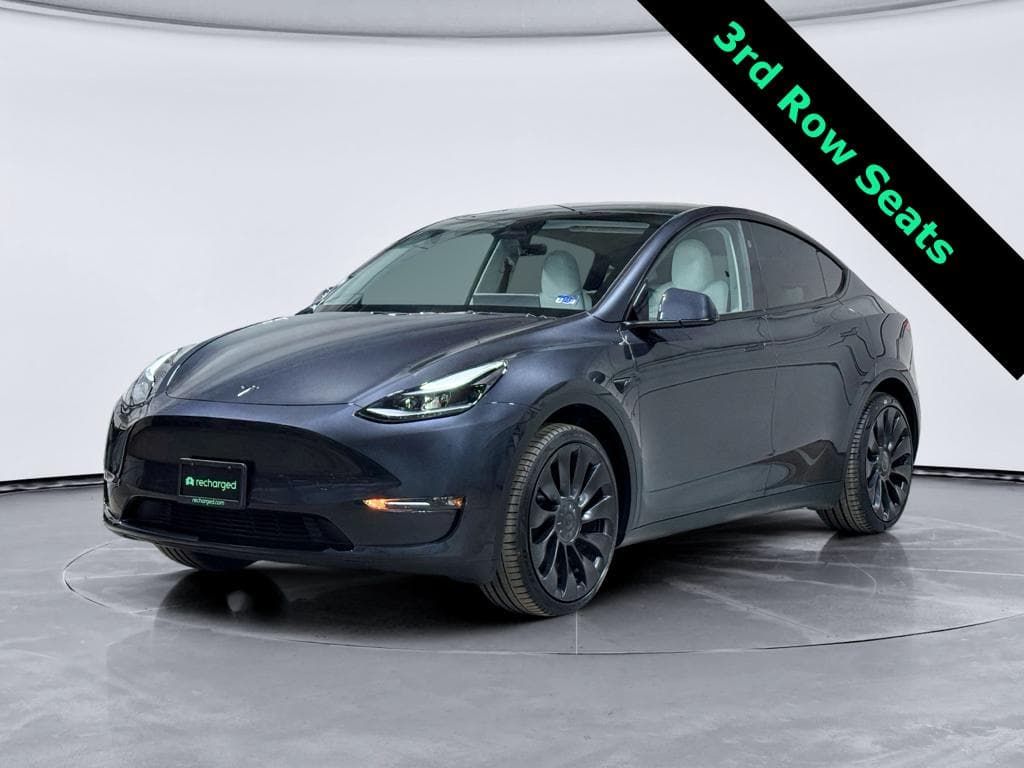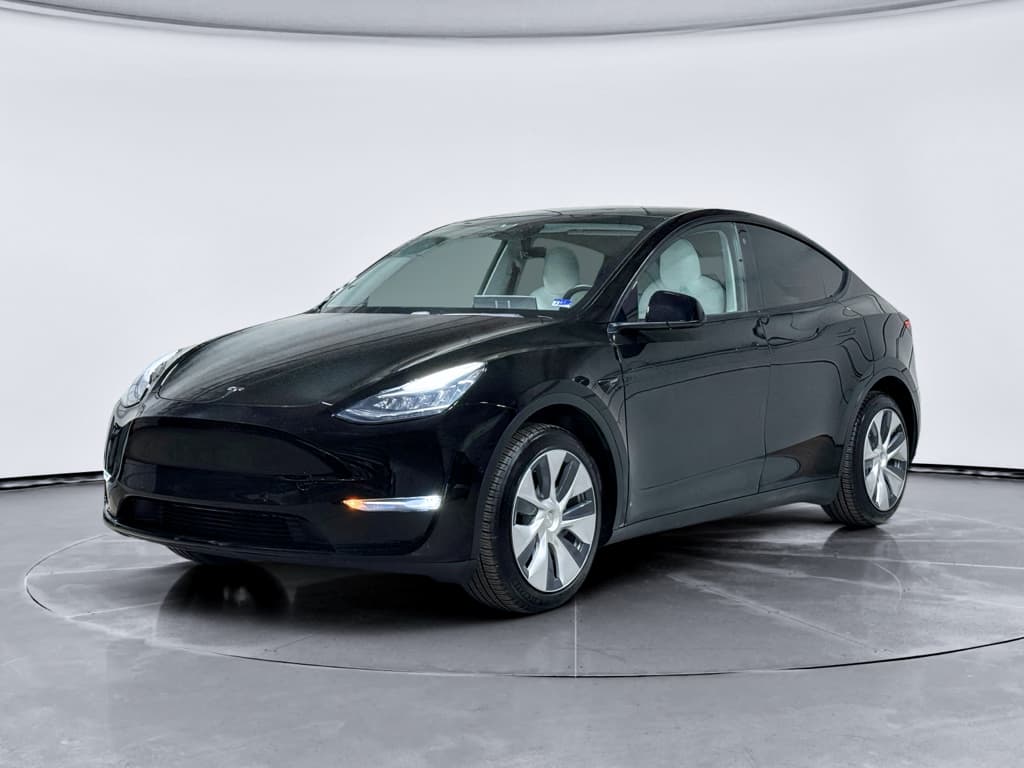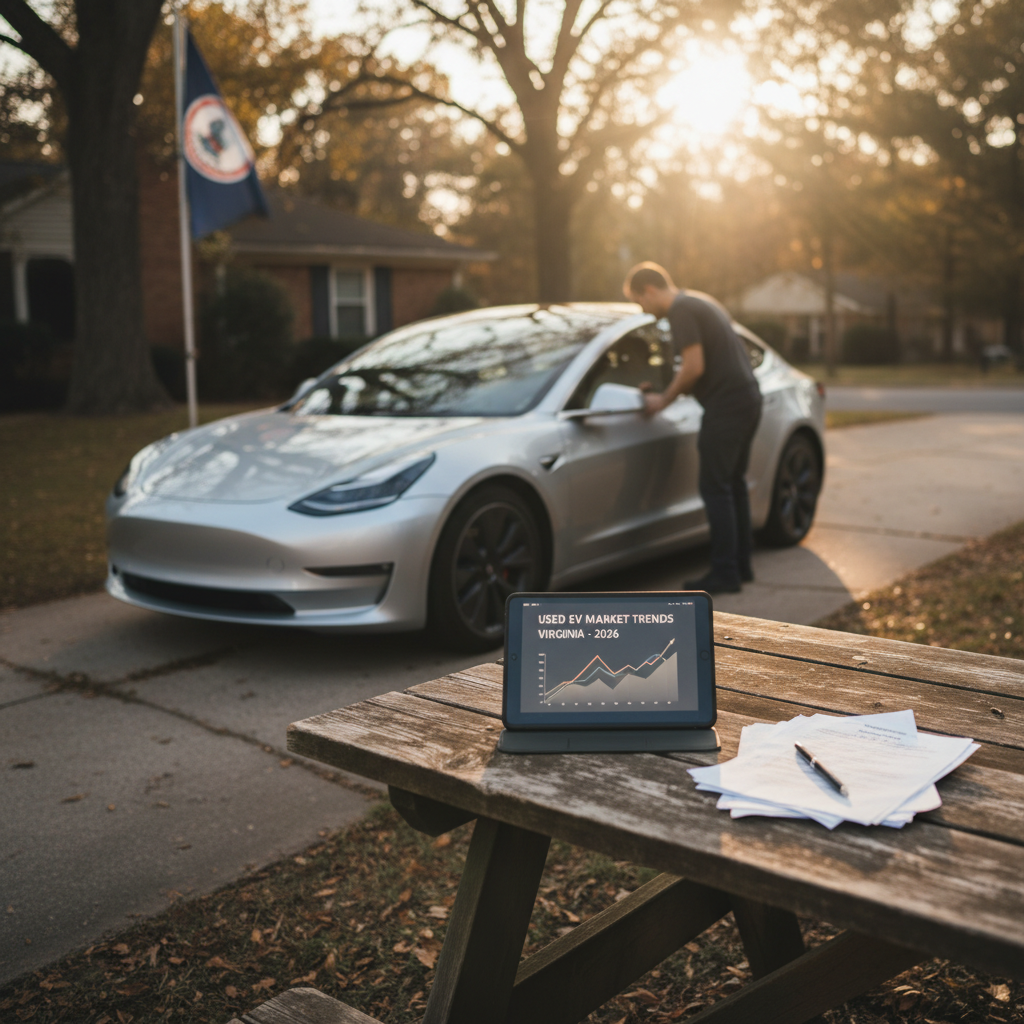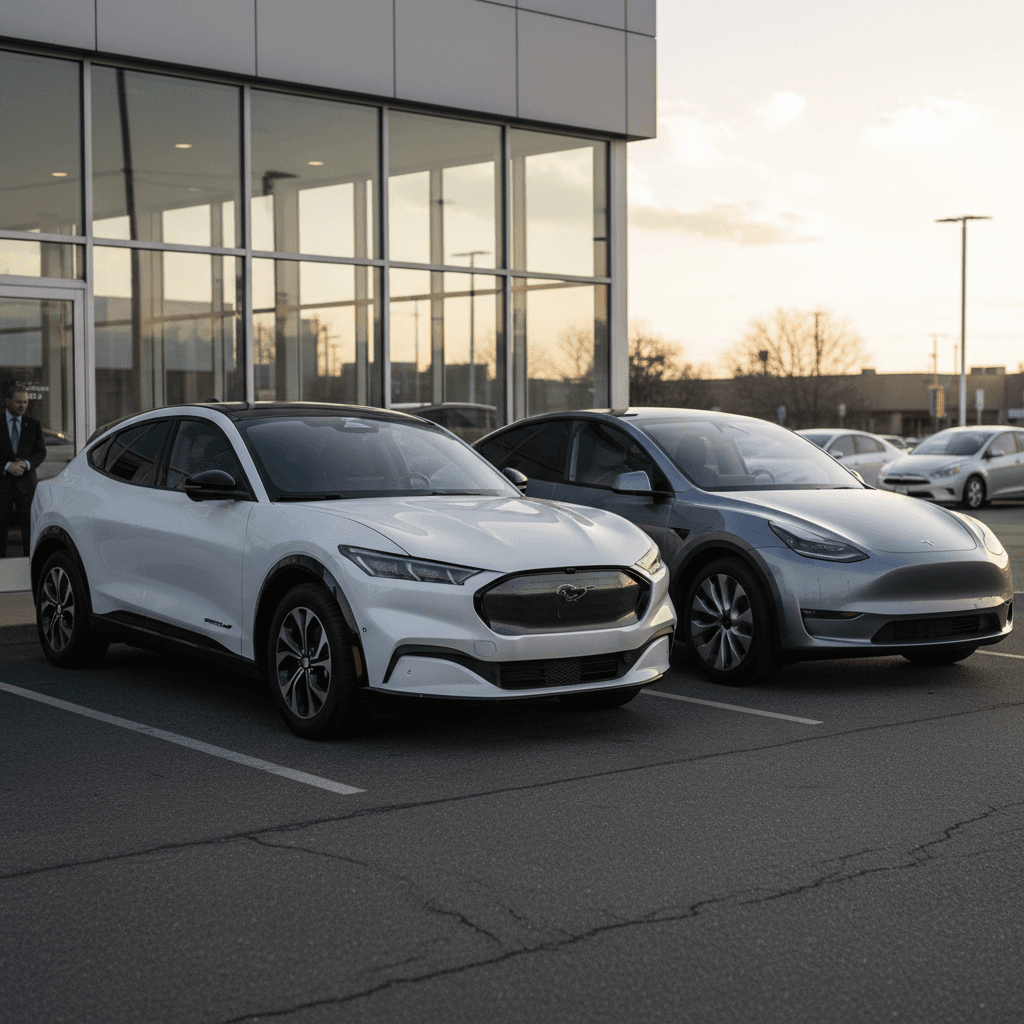
If you’re cross‑shopping a used Ford Mustang Mach‑E vs a used Tesla Model Y, you’re right in the heart of today’s EV market. These two electric SUVs overlap on size, price, and performance, but they feel very different to live with. This guide walks you through the trade‑offs so you can buy with eyes wide open, not just follow the loudest fanbase.
Model years this guide focuses on
Who this used EV comparison is for
- You’re shopping a used electric SUV under roughly $25,000–$40,000.
- You’re comparing real‑world range, charging, and tech, not just 0–60 bragging rights.
- You want to understand depreciation and long‑term costs before you dive in.
- You’re deciding whether Tesla’s ecosystem or Ford’s more traditional feel fits you better.
We’ll keep things practical: what you can expect to pay, how far you’ll actually drive on a charge, what breaks the budget over time, and which one better matches your daily life.
Quick take: Mustang Mach-E vs Model Y used
At a glance: strengths of each
Both are excellent EVs, your lifestyle decides the winner.
Why pick a used Mustang Mach‑E
- Lower entry price than a comparable Model Y in many markets.
- More traditional interior with physical controls and a driver display.
- Available BlueCruise hands‑free driving on some trims and years.
- Sporty styling that reads more "muscle crossover" than tech pod.
Why pick a used Tesla Model Y
- Generally better range per kWh and strong road‑trip efficiency.
- Seamless access to Tesla’s Supercharger network for most trims.
- Clean, minimalist cabin and slick over‑the‑air software experience.
- Stronger resale so far than most non‑Tesla EVs, including Mach‑E.
30‑second verdict
Pricing: what you’ll pay for a used Mach-E vs Model Y
Used prices move quickly, but by early 2026 there are clear patterns. Ford has discounted new Mach‑E pricing and EV demand has cooled, so Mach‑E depreciation has been steeper than Tesla’s. Recent analyses show 5‑year depreciation for Mach‑E often landing north of 55–60%, while Model Y tends to hold value better, closer to many popular gasoline SUVs.
Typical U.S. used price ranges (early 2026)
Approximate retail asking prices for clean‑title, average‑mileage examples. Local markets vary.
| Model / years | Typical mileage | Rough price band | Notes |
|---|---|---|---|
| 2021–2022 Mustang Mach‑E Select/Premium | 25k–45k mi | $22,000–$30,000 | Strong value; check early‑build quirks and software updates. |
| 2023–2024 Mustang Mach‑E Premium/GT | 10k–35k mi | $28,000–$38,000 | Newer hardware, often still under factory warranty. |
| 2020–2021 Tesla Model Y Long Range | 30k–55k mi | $28,000–$36,000 | Older UI and build variations, but strong range and charging. |
| 2022–2024 Tesla Model Y Long Range/Performance | 15k–45k mi | $33,000–$42,000+ | Higher prices, but generally best combination of range and tech. |
These are ballpark ranges, condition, options, and incentives still matter.
Watch the fine print on pricing
Range, battery, and real-world efficiency
On paper, the Model Y generally edges out the Mach‑E on range, especially in Long Range form. In the real world, tire choice, climate, and your right foot matter more than brochure numbers, but it’s still useful to compare typical specs you’ll see in listings.
EPA-rated range snapshots by popular trims
Representative figures for common trims and wheels; exact numbers vary by year and configuration.
| Model / trim | Battery size (approx. usable) | EPA range when new | Real‑world highway feel |
|---|---|---|---|
| Mustang Mach‑E RWD Standard Range | ~68 kWh | ~210–250 mi | Plan around 170–200 miles between charges at 70–75 mph. |
| Mustang Mach‑E RWD Extended Range | ~88–91 kWh | ~260–310 mi | Comfortable 200+ mile highway legs; efficient for its size. |
| Mustang Mach‑E AWD GT/Performance | ~88–91 kWh | ~230–270 mi | Quick but thirstier; expect range closer to the low end at speed. |
| Model Y RWD (various years) | mid‑60s kWh | ~230–260 mi | Good urban efficiency; highway range similar to SR Mach‑E ER trims. |
| Model Y Long Range AWD | high‑70s to low‑80s kWh | ~300–330 mi | One of the best real‑world highway ranges among compact EV SUVs. |
| Model Y Performance | similar to LR pack | ~270–303 mi | Performance tires and driving style can trim range noticeably. |
Think of these as ballpark expectations for a healthy battery in mild weather.
Battery health on used EVs
Battery and range: how they stack up for used buyers
Range rules of thumb
Charging and road-trip ability
Here’s where things start to diverge in daily life. Both SUVs charge happily at home on Level 2, but Tesla still has an edge on fast‑charging convenience, especially if you road‑trip outside major metro corridors.
Home charging: essentially a tie
- Both support Level 2 charging around 32–48 amps on a 240V circuit.
- A properly installed 40A or 48A home charger will refill either overnight from typical commute use.
- If you rent, both can live on a 120V outlet for light use, but it’s slow.
Installation cost will depend more on your electrical panel than on whether it’s a Ford or Tesla.
DC fast charging: Tesla advantage (for now)
- Tesla’s Supercharger network is still the gold standard for reliability and station density.
- Many newer non‑Teslas, including Mach‑E, are gaining NACS access, but rollout is uneven and adapter‑dependent.
- Mach‑E’s peak DC fast‑charge rates can be solid, but charge curves are more sensitive to temperature and state of charge.
If you see frequent road trips in your future, the Model Y makes life simpler today.
NACS, adapters, and future‑proofing
Road‑trip checklist for a used Mach‑E or Model Y
1. Confirm connector and network access
For Mach‑E, verify whether you’ll be using CCS or a NACS adapter and which fast‑charge networks you can access. For Model Y, confirm Supercharger access and any third‑party charging you might rely on.
2. Check peak charge rate vs. charge curve
Don’t fixate on the highest kW number. Ask how long the car can hold strong speeds between 10–60% state of charge, that’s what shapes your road‑trip rhythm.
3. Look at your actual routes
If you mainly drive one specific highway, pull up PlugShare or A Better Routeplanner and compare station density for each connector along your real routes.
4. Factor in winter driving
Both models lose range in cold weather. If you live in a northern state, give yourself extra range headroom and consider preconditioning features for fast charging.
Tech, interior, and driving feel
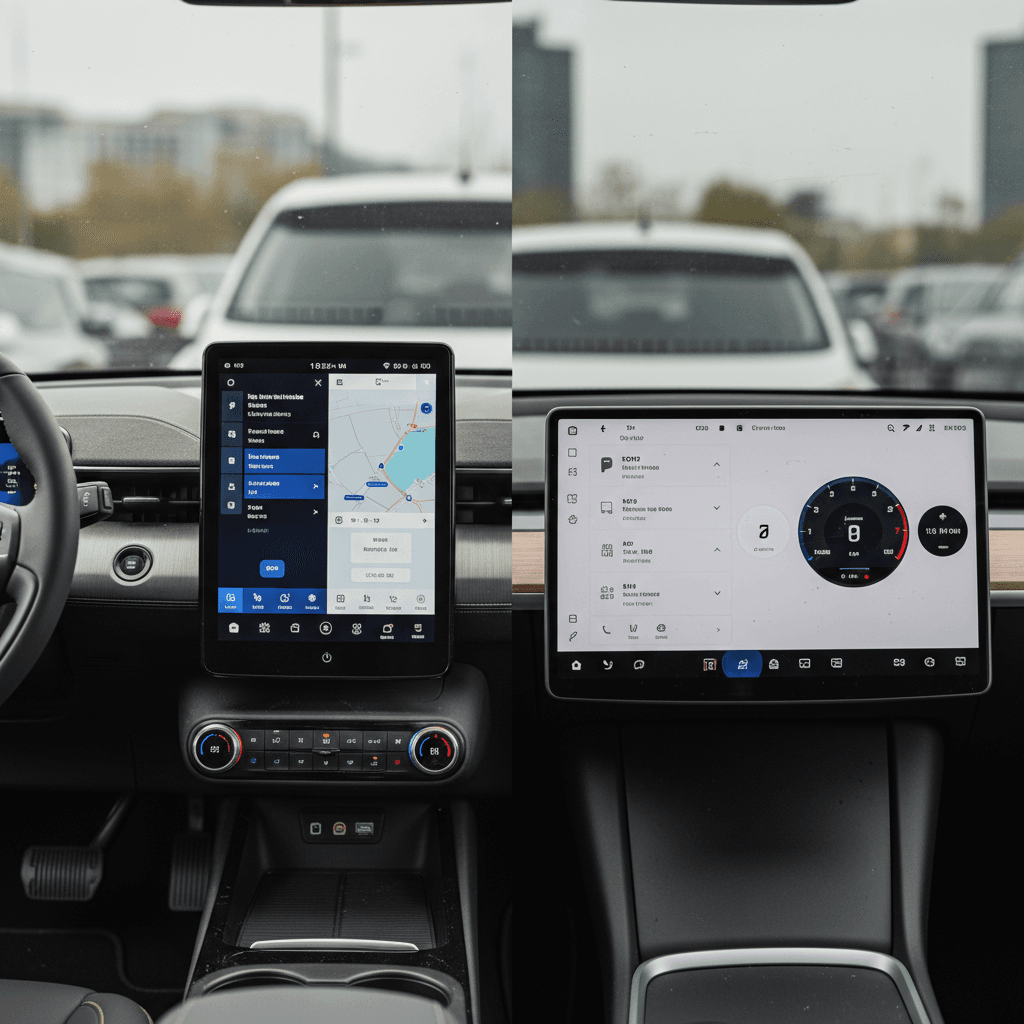
Ford Mustang Mach‑E: familiar with flair
- Two displays: a central tablet plus a small digital cluster behind the wheel.
- More physical controls and traditional stalks; easier transition from gas cars.
- Ford’s SYNC / Google‑based infotainment (on newer years) is improving but still less slick than Tesla’s UI.
- BlueCruise (on eligible years/trims) offers hands‑free driving on mapped highways, when it’s activated and subscribed.
- Ride quality can be a touch more comfortable, especially on non‑GT trims.
Tesla Model Y: minimalist tech bubble
- Single center screen runs everything, HVAC, mirrors, drive modes, even wiper controls.
- Over‑the‑air updates continuously tweak UI, features, and sometimes efficiency.
- Autopilot is standard; Enhanced Autopilot or FSD capability may or may not transfer on a used car, verify before you pay for it.
- Sparse interior can feel airy and modern, but some drivers miss a traditional gauge cluster.
- Cabin noise and ride can be firmer, especially on Performance trims.
How they feel from behind the wheel
Both are quick. The rest is personality.
Acceleration
Steering & handling
Comfort & space
Test‑drive them back‑to‑back
Reliability, depreciation, and resale value
Neither of these SUVs is a disaster, but both have early‑build quirks and the usual EV growing pains. The bigger story in 2026 is how they hold value and how that affects your used‑buying strategy.
Used‑market reality check
What owners and market data are telling us so far.
Ford Mustang Mach‑E patterns
- Early 2021 builds saw software glitches, 12‑V battery issues, and recalls that Ford has largely addressed with updates.
- Later years (2023–2024) tend to be more sorted but face faster market depreciation.
- 5‑year depreciation around 55–60% isn’t unusual, which makes used pricing attractive if you’re the second owner.
Tesla Model Y patterns
- Some build‑quality complaints (panel gaps, wind noise), but core powertrain has proven robust for many owners.
- Software updates can fix annoyances but occasionally introduce new ones.
- Resale values have been stronger than most rival EVs, including Mach‑E, especially when new EV incentives shift.
How depreciation can work for you
“The Mach‑E has settled into the middle of the EV pack for resale value, no longer overhyped, not a bargain‑bin special either, while the Model Y continues to behave more like a hot compact SUV in the used market than a tech gadget that’s out of date in three years.”
Ownership costs: insurance, maintenance, and warranty
- Maintenance: Both SUVs have simple EV drivetrains, no oil changes, fewer moving parts. Expect tires, cabin filters, brake fluid, and the occasional software or hardware fix.
- Insurance: Quotes can swing more on your ZIP code and driving record than on Ford vs Tesla, but Teslas can be pricier to insure in some regions due to repair costs.
- Out‑of‑warranty repairs: Tesla parts and body work can be expensive and sometimes slower to source. Ford dealers are everywhere, but not all are equally EV‑savvy.
- Battery and drivetrain warranty: Look closely at remaining years and miles. Many 2021–2022 examples of both are still within their 8‑year / 100k‑ish mile battery and electric‑drive warranties, but the clock is ticking.
Don’t guess on warranty timelines
Which used EV fits you? Buyer scenarios
Match yourself to the right used EV
Four common shopper profiles and which SUV usually fits best.
Mostly local commuter, rare road trips
- Best fit: Used Mustang Mach‑E RWD (SR or ER), especially 2022–2024.
- Why: Lower purchase price, comfortable ride, familiar controls. Range is more than enough with home charging.
Frequent road‑tripper
- Best fit: Tesla Model Y Long Range AWD.
- Why: Strong highway range, integrated trip planning, and dense Supercharger coverage simplify long‑distance driving.
Growing family hauler
- Best fit: Model Y (especially with optional third row) if budget allows.
- Why: Bigger cargo area and flexible seating layout; Mach‑E works too, but space is tighter in back.
Value‑hunter on a budget
- Best fit: 2021–2022 Mustang Mach‑E Premium or Select with solid battery health.
- Why: Heavy early depreciation means you get lots of features and range for a used‑car price that undercuts most Model Ys.
How Recharged helps with used Mach-E and Model Y
Choosing between a used Ford Mustang Mach‑E and a Tesla Model Y isn’t just about which spec sheet looks better, it’s about which specific car you’re looking at. That’s where Recharged steps in.
What you get when you shop used EVs with Recharged
Built to make EV ownership simple and transparent.
Recharged Score battery health report
Trade‑in and instant offers
Financing & nationwide delivery
Ready to find your next EV?
Browse VehiclesFAQ: Ford Mustang Mach-E vs Tesla Model Y used
Common questions about used Mach‑E vs Model Y
Bottom line: how to choose between a used Mach-E and Model Y
A used Ford Mustang Mach‑E and a used Tesla Model Y are both excellent ways to get into an EV without paying new‑car money. The Mach‑E gives you stronger up‑front value, familiar controls, and a slightly more relaxed driving feel. The Model Y returns the favor with cleaner software, easier long‑distance charging, and stronger resale so far.
If you mostly commute and run errands with the occasional weekend away, a well‑vetted used Mach‑E, especially with a Recharged Score battery report, can be the smarter financial choice. If you see yourself hammering across states every month and you want the smoothest charging experience, a used Model Y Long Range is still hard to beat.
Whichever way you’re leaning, take the time to drive both, look beyond the badges, and focus on the specific car in front of you: its battery health, how it’s been cared for, and how it fits your daily routes. And if you want an EV‑savvy partner in your corner, Recharged is built to make that decision, and everything after it, a lot simpler.