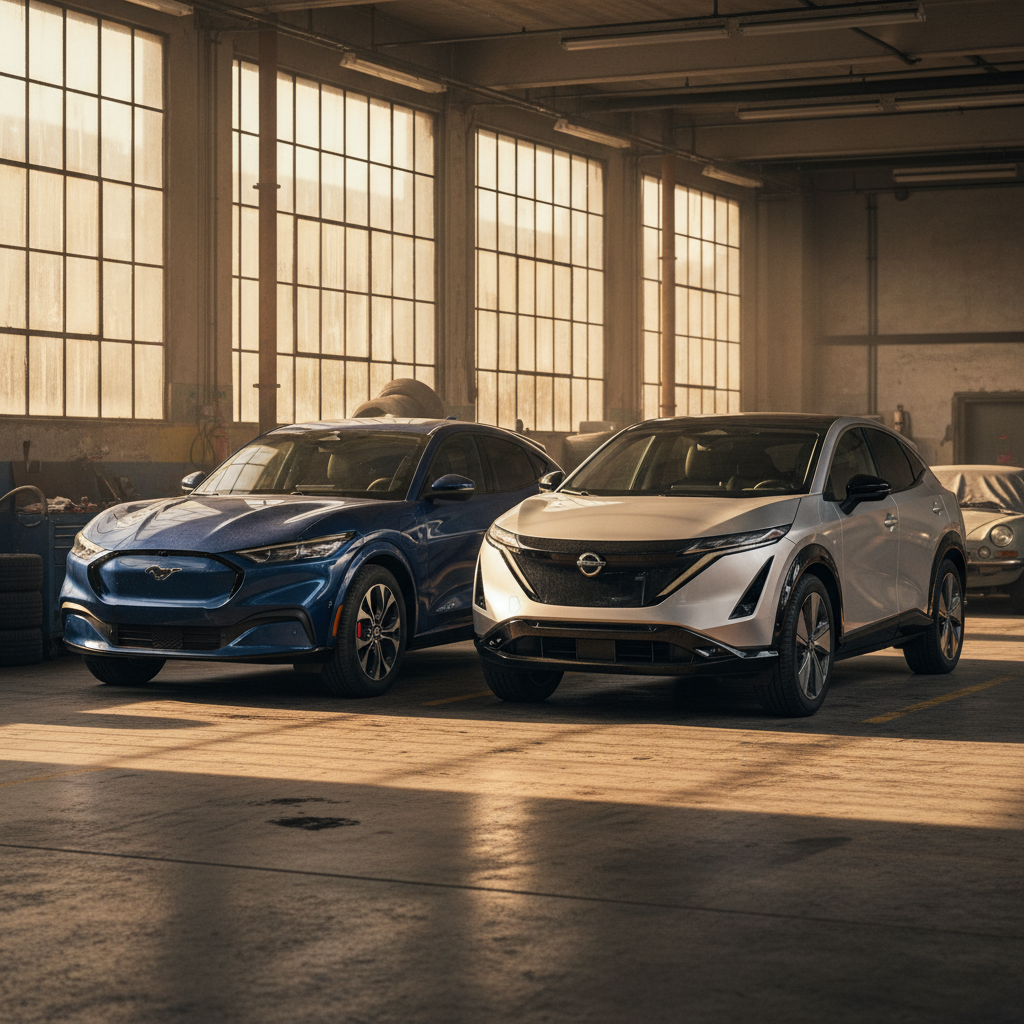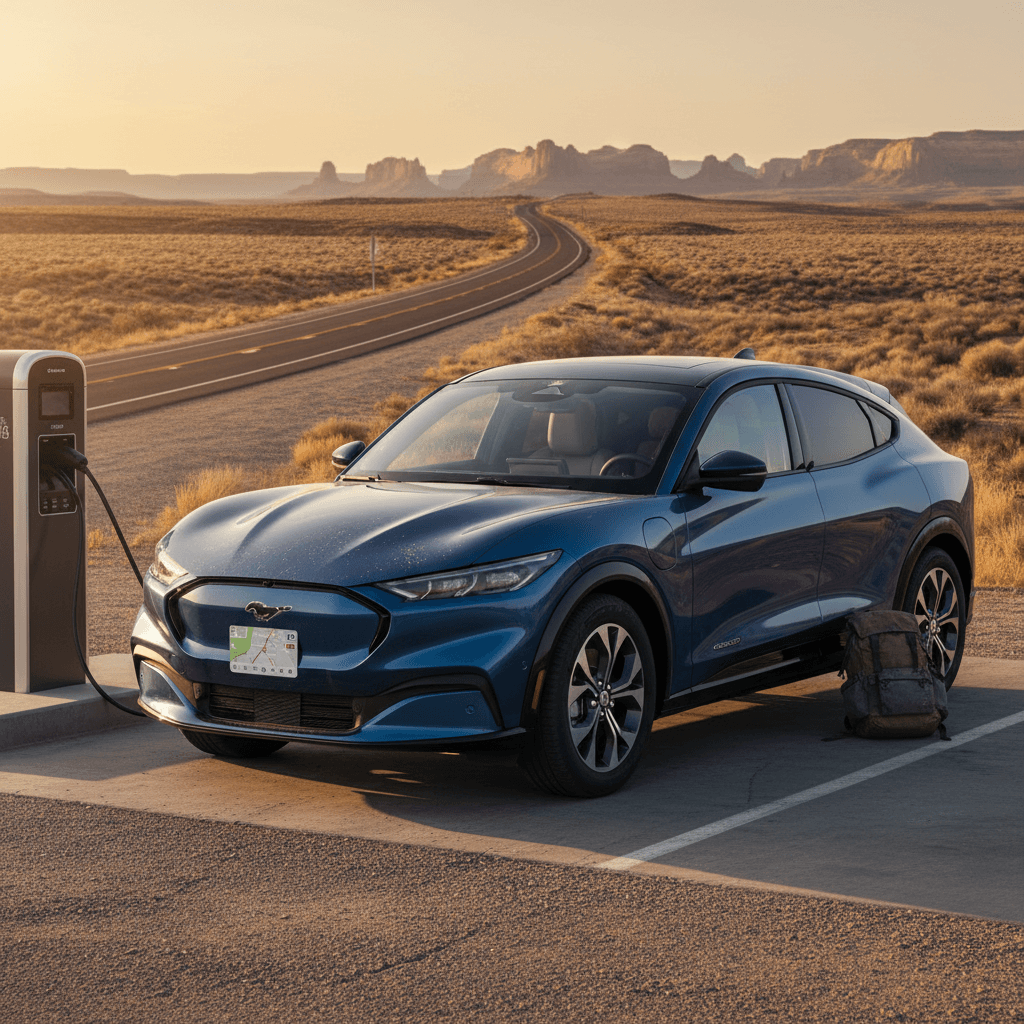
If you’re eyeing a Ford Mustang Mach‑E as your next family hauler or weekend escape vehicle, you’re probably wondering how it performs on a real highway run. On paper the Mach‑E offers up to about 320 miles of range, fast DC charging up to roughly 150 kW, and a roomy cabin. On the road, though, range, comfort, and charging behavior all look a little different than the brochure would suggest, especially if you’re buying a used Mach‑E and planning serious road trips.
Quick verdict
Who this Ford Mustang Mach‑E road trip review is for
This Ford Mustang Mach‑E road trip review is written for two types of drivers:
- Current Mach‑E owners who want to confidently stretch beyond their daily commute and tackle multi‑state drives.
- Shoppers, especially used‑EV buyers, who are comparing the Mach‑E to rivals like the Tesla Model Y, Hyundai Ioniq 5, or Kia EV6 and want to know how it actually behaves when you’re 300 miles from home.
We’ll focus on the trims most people road‑trip with: extended‑range battery models (around 88–91 kWh usable) in both RWD and AWD, including the popular Premium and GT variants. Many of the same lessons apply to standard‑range versions, but with shorter legs between stops.
Ford Mustang Mach‑E road trip by the numbers
Mustang Mach‑E road trip range: what to really expect
On the window sticker, the Mustang Mach‑E can show EPA estimates from the low‑220s up to about 320 miles, depending on battery, drivetrain, and model year. Extended‑range RWD trims sit at the top of that band, while early standard‑range AWD models are at the lower end.
EPA‑rated range (ballpark)
- Standard‑range Mach‑E: often ~224–250 miles EPA, depending on drive type and year.
- Extended‑range AWD: commonly in the 260–290 mile EPA band.
- Extended‑range RWD: top of the range, around 300–320 miles on newer models.
Exact figures vary by trim, wheel size, and model year, but this gives you a realistic envelope.
Highway range in the real world
- At a steady 70–75 mph, many owners see 200–260 miles per charge on extended‑range packs.
- Cold weather, headwinds, and high speeds (80+ mph) can drop that into the 180–220 mile window.
- In milder temps and with a lighter right foot, 260+ miles between fast‑charge stops is realistic in extended‑range RWD trims.
The key is planning your stops around this more conservative “real” range, not the headline number on the Monroney.
Plan by percent, not miles
In independent 70‑mph range testing, an extended‑range AWD Mach‑E has shown high‑200s of real‑world range under favorable conditions, slightly undercutting the most efficient Tesla Model Y but still solid for its class. The trade‑off is that the Mach‑E feels planted and confident at speed, which many drivers actually prefer on long stints.
Highway charging in a Mustang Mach‑E
On a road trip, charging speed and charger availability matter just as much as rated range. The good news is that the Mach‑E supports competitive DC fast‑charging, especially with the extended‑range battery.
Mustang Mach‑E charging on the road
Approximate DC fast‑charging behavior for common Mach‑E configurations.
| Trim type | Battery (usable) | Max DC power | Typical 10–80% time | Best‑case miles added (10–80%) |
|---|---|---|---|---|
| Standard‑range RWD/AWD | ~68–73 kWh | Up to ~115–130 kW | 30–35 minutes | ~150–190 miles |
| Extended‑range RWD | ~88–91 kWh | Up to ~150 kW | 30–40 minutes | ~200–230 miles |
| Extended‑range AWD / GT / Rally | ~88–91 kWh | Up to ~150 kW | 30–40 minutes | ~190–220 miles |
Always check your specific trim’s specs and your charger’s capabilities; real‑world times depend on temperature and how busy the station is.
Ford fast‑charging reality check
What charging a Mach‑E on a road trip actually feels like
From finding plugs to handling payment, Ford has made long‑distance charging more straightforward than it was a few years ago.
Finding chargers
The Mach‑E’s built‑in navigation can route you to DC fast chargers and estimate arrival state of charge. Many drivers also lean on apps like PlugShare and Electrify America’s app for redundancy and user reviews.
When possible, favor 150 kW or 350 kW stations to keep your stop times reasonable.
Plug & Charge support
Many newer Mach‑E trims support Plug & Charge on compatible networks. You just plug in and billing happens automatically in the background, no cards or apps at 11 p.m. in the rain.
Check that your charging account is properly set up before departing.
Stop rhythm
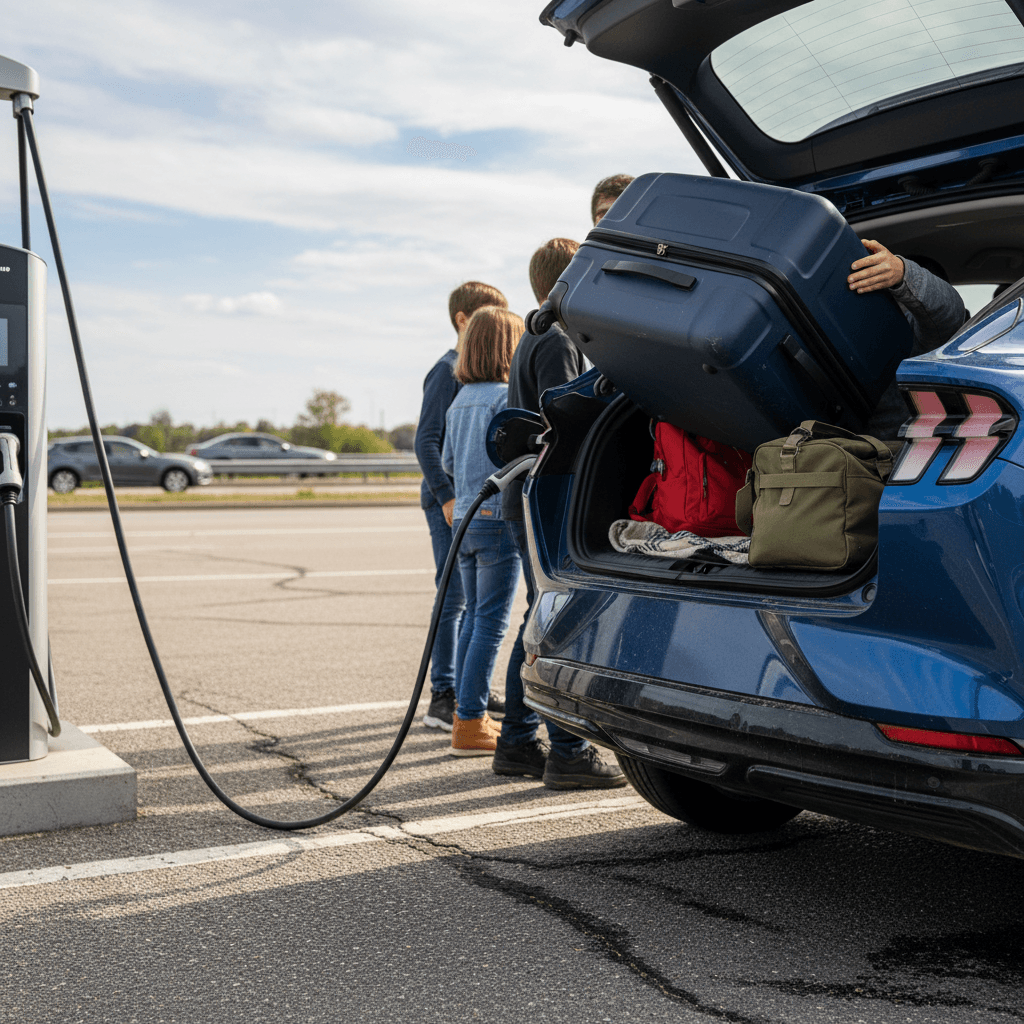
Most Mach‑E owners settle into a rhythm of 2.5–3 hours of driving, then 25–40 minutes of charging. That gives you time for bathrooms, stretching, and food while the car fills from roughly 10–70 or 80%.
If you’re traveling with kids, those breaks may feel like a feature, not a bug.
Be realistic about public charging
Comfort, cabin, and cargo on long drives
Where some EV crossovers feel like science projects inside, the Mach‑E leans into familiar Ford ergonomics. On a long highway run, that matters more than you might think.
Comfort & practicality highlights for road trips
How the Mustang Mach‑E treats you after six hours behind the wheel.
Supportive seating
Front seats are generally comfortable for medium and larger drivers, with a driving position closer to a sporty crossover than a tall SUV. In GT and Rally trims the bolstering is more aggressive, which keen drivers appreciate, though some passengers may prefer the softer feel of Select and Premium trims.
Cargo & frunk space
With the rear seats folded, the Mach‑E offers generous cargo room for luggage, strollers, and camping gear. The front trunk (frunk) adds a handy, washable bin for messy items like charging cables or beach gear.
Many families find it easily swallows a week’s worth of bags for four people.
Ride quality is on the firm side but not punishing, especially compared with some rivals. The Mach‑E feels stable at 70–80 mph, and body control is good over undulating pavement. On rougher concrete, you’ll hear some tire thrum and wind, but the absence of engine noise makes cabin conversations easy.
Quiet and composed
Driver assistance and BlueCruise on the highway
Many newer Mustang Mach‑E models offer Ford BlueCruise, a hands‑free driver‑assistance system that works on thousands of miles of mapped highways. Even without BlueCruise, the Mach‑E includes adaptive cruise control and lane‑centering on most trims.
With BlueCruise
- On approved divided highways, you can take your hands off the wheel (eyes must stay on the road) while the car maintains lane position and speed.
- On a long interstate day, this can meaningfully reduce fatigue, especially in stop‑and‑go traffic or endless straight stretches.
- Updates over the air can expand the BlueCruise coverage map and refine behavior over time.
Without BlueCruise
- Conventional adaptive cruise and lane centering still work well, taking care of speed and most steering corrections.
- You’ll keep your hands on the wheel, but the car helps with the tedious parts of traffic and long freeway runs.
- For used buyers, lack of BlueCruise isn’t a deal‑breaker, but it is a nice‑to‑have if you do frequent interstate travel.
Check subscription status on used Mach‑E models
Mustang Mach‑E road trip advantages vs. other EVs
In the real world, road‑tripping a Mustang Mach‑E feels different than road‑tripping a Tesla Model Y or a Hyundai Ioniq 5. Some differences are obvious on a spec sheet; others only show up after eight hours on the road.
Where the Mach‑E shines as a road‑trip EV
Relative strengths that make Ford’s electric crossover appealing beyond the daily commute.
Engaging to drive
The Mach‑E has quick steering and confident handling, especially in GT and Rally trims. If you enjoy driving, it feels closer to a sporty wagon than a tall SUV.
That can make winding highways and mountain passes a highlight rather than just “range miles.”
Predictable efficiency
While not class‑leading for efficiency, the Mach‑E’s energy use is consistent once you learn how speed and temperature affect it. That predictability simplifies planning when you’re stringing together multiple DC fast‑charge stops.
Familiar brand & dealer network
Ford’s national dealer footprint can be reassuring if you’re buying a used EV for cross‑country trips. Even though most issues are handled via software, having local support matters to many first‑time EV owners.
Limitations and what to watch for
No EV is perfect, and the Mustang Mach‑E has a few quirks you should know about before you commit to a big road trip, especially if the car is out of its initial warranty window.
- Charging curve sensitivity. If you plug in with a cold battery or arrive with a very high state of charge, the Mach‑E will charge much more slowly. Precondition the battery when routing to fast chargers where your software supports it, and try to arrive near 10–20%.
- Not the most efficient in segment. Versus a Tesla Model Y, you’ll typically stop a bit more often or charge a bit longer. For many drivers the difference is modest, but it’s worth factoring in if you regularly drive 500+ mile days.
- Door‑latch recall awareness. Ford has recalled a large number of 2021–2025 Mach‑E models for electronic door latches that can fail when the high‑voltage battery is low. This is addressed via a software update; ensure any used example you consider has had the recall performed.
- Subscription creep. Features like BlueCruise can require ongoing subscriptions. That’s not unique to Ford, but it does add to long‑term cost if you want every available convenience feature on your road trips.
Safety and software updates matter
Road trip planning checklist for Mach‑E owners
Pre‑trip checklist for a smooth Mach‑E road trip
1. Confirm software, recalls, and BlueCruise
In your FordPass app and vehicle settings, verify that software is up to date. For 2021–2025 models, confirm that any open recalls, especially door‑latch and high‑voltage battery‑related campaigns, are closed out before you leave.
2. Map your DC fast‑charging backbone
Use a planner such as A Better Routeplanner, plus your Mach‑E’s built‑in nav, to sketch your main DC fast‑charging stops at 150 kW stations where possible. Add backup chargers 20–30 miles down the road in case your first choice is down or crowded.
3. Set realistic range expectations
Base your plan on <strong>200–240 miles between stops</strong> for extended‑range trims at typical interstate speeds, adjusting down for winter travel or mountain grades. That margin will make your day feel relaxed instead of stressful.
4. Prep charging accounts and cards
Make sure your most relevant charging apps (Electrify America, EVgo, etc.) are logged in and funded. Enable Plug & Charge where it’s supported by both your Mach‑E and your preferred network.
5. Pack charging essentials
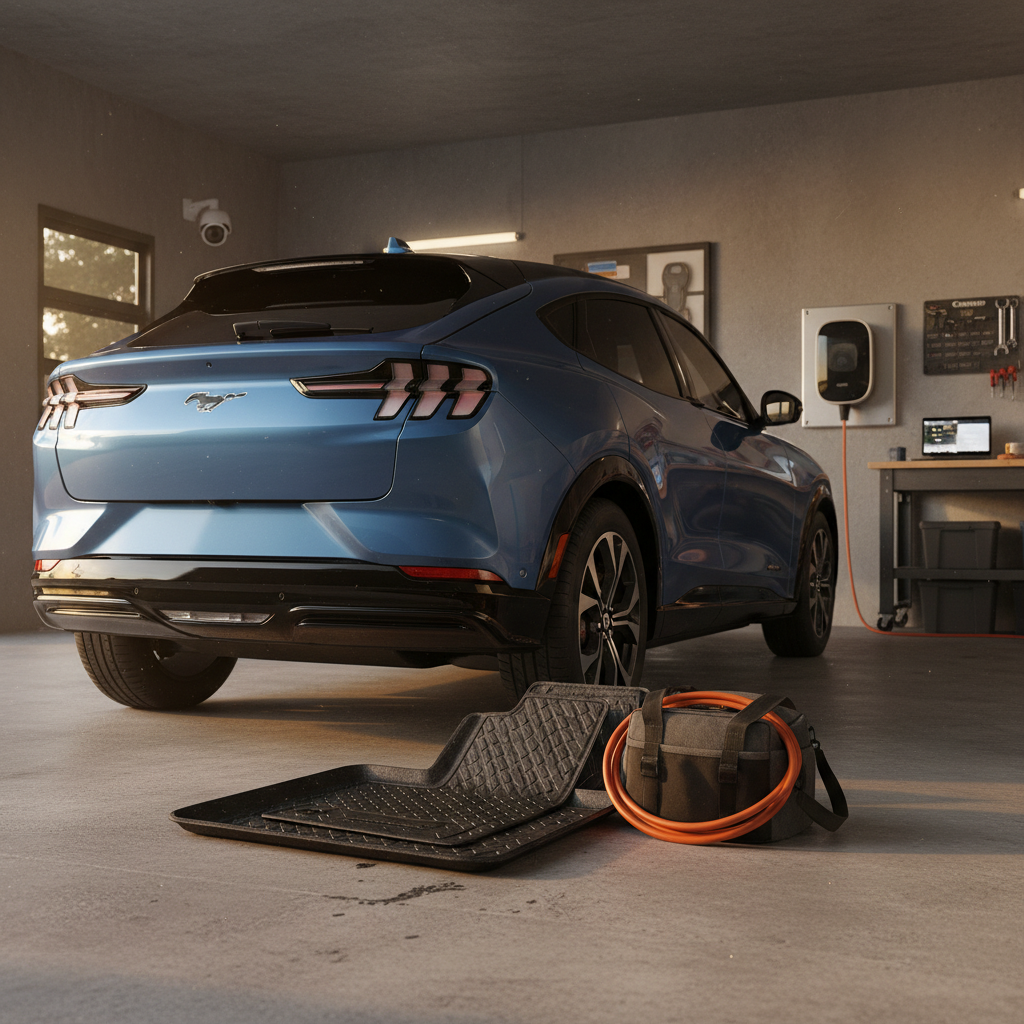
Bring your Ford mobile charger, any adapters you use at relatives’ homes or RV parks, and a small towel or gloves for handling dirty cables. Stash them in the frunk so they’re easy to reach at busy stations.
6. Plan people breaks, not just car breaks
Treat each 10–80% charging session as a meal, bathroom, or stretch break. If you have kids, consider playgrounds or parks near fast‑charge sites so they look forward to stops instead of dreading them.
Shopping a used Mustang Mach‑E specifically for road trips
If you’re buying a used Mustang Mach‑E with road‑trip duty in mind, you’ll want to prioritize the right hardware and verify battery health as carefully as you’d check the engine on a used gas SUV.
Key priorities when choosing a used Mach‑E for road trips
Focus on trims, options, and condition items that most affect long‑distance usability.
| Priority | Why it matters on road trips | What to look for |
|---|---|---|
| Extended‑range battery | Longer legs between stops and more flexibility in bad weather. | EPA rating in the high‑200s or above; look for Premium, GT, or Rally with the larger pack. |
| DC fast‑charging behavior | Determines how long each stop takes on a 600‑mile day. | Charging history, recent software, and owner reports; test a 10–80% DC session if possible. |
| BlueCruise capability | Reduces fatigue on monotonous highway stretches. | Build sheet or window sticker; test‑drive on a BlueCruise‑enabled highway if available. |
| Recall & warranty status | Reduces risk of unpleasant surprises far from home. | Documented recall completion and remaining battery/electrical warranty coverage. |
A battery‑healthy, extended‑range Mach‑E with DC fast‑charging sorted is far more important than the last 0.2 seconds in 0–60 mph.
How Recharged can help with a road‑trip‑ready Mach‑E
If you already own a gas vehicle you’d like to move on from, Recharged can also provide an instant offer or consignment option and help you explore EV‑friendly financing before you commit to a Mach‑E purchase.
Ford Mustang Mach‑E road trip FAQ
Frequently asked questions about Mach‑E road trips
Bottom line: Is the Mustang Mach‑E a good road trip EV?
If you’re looking for an EV that can comfortably handle family road trips without feeling like an appliance, the Ford Mustang Mach‑E belongs on your short list. It delivers honest, usable highway range, predictable charging, and a cabin that stays pleasant hour after hour. It isn’t the absolute range or efficiency champ, but for most drivers its blend of performance, comfort, and practicality makes it easy to live with on the open road.
If you’re shopping used, pairing a carefully chosen Mach‑E, ideally with the extended‑range battery and a clean battery‑health report, with expert guidance from a retailer like Recharged can remove much of the uncertainty around EV road trips. Do your planning up front, understand the car’s strengths, and you’ll discover that crossing state lines in a Mustang Mach‑E can be every bit as enjoyable as in a traditional SUV, just quieter, smoother, and a lot cleaner.