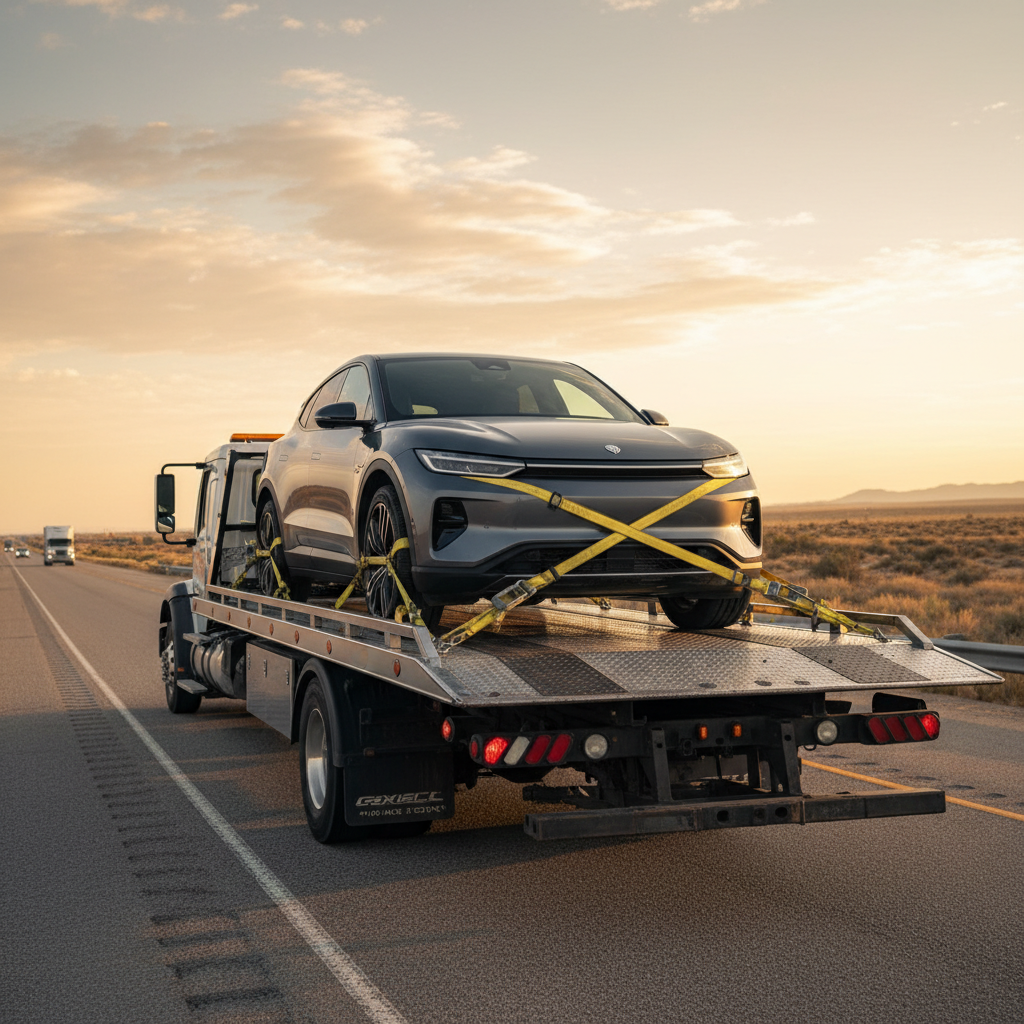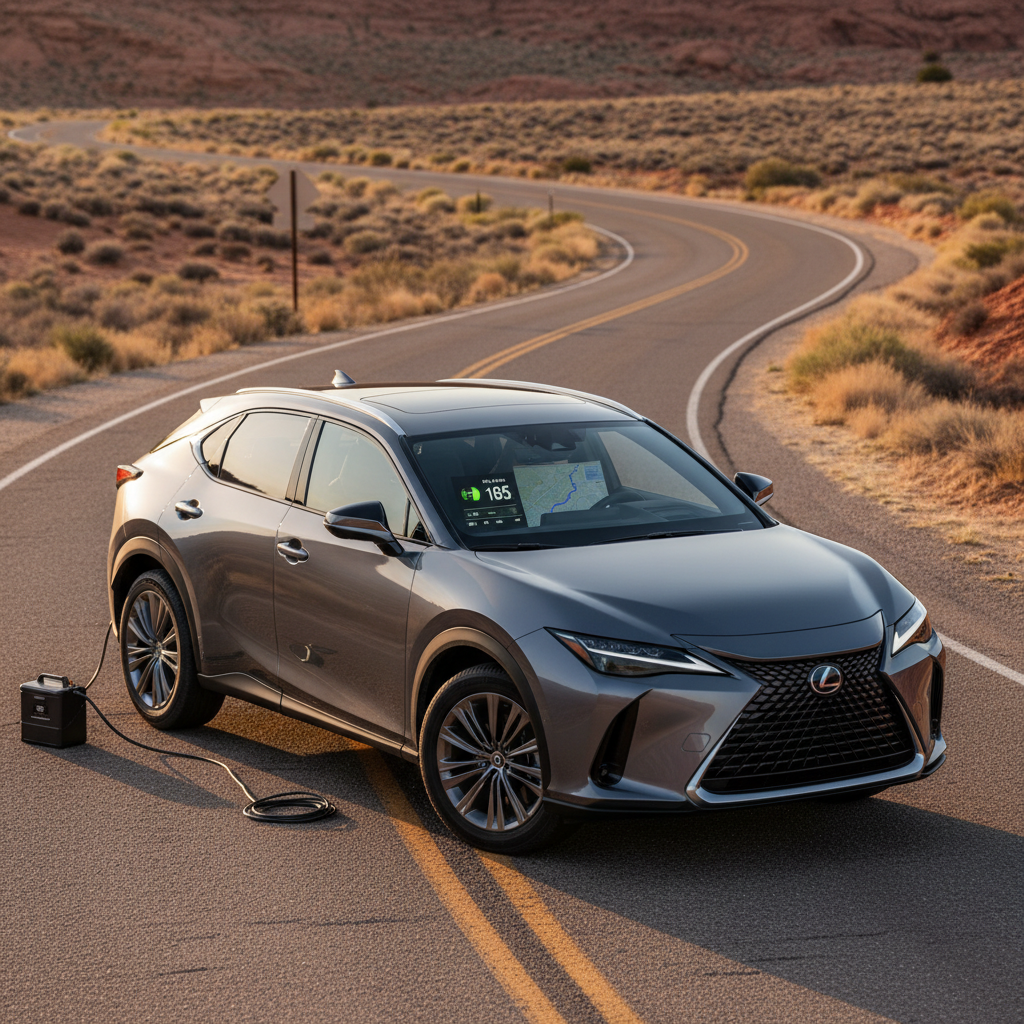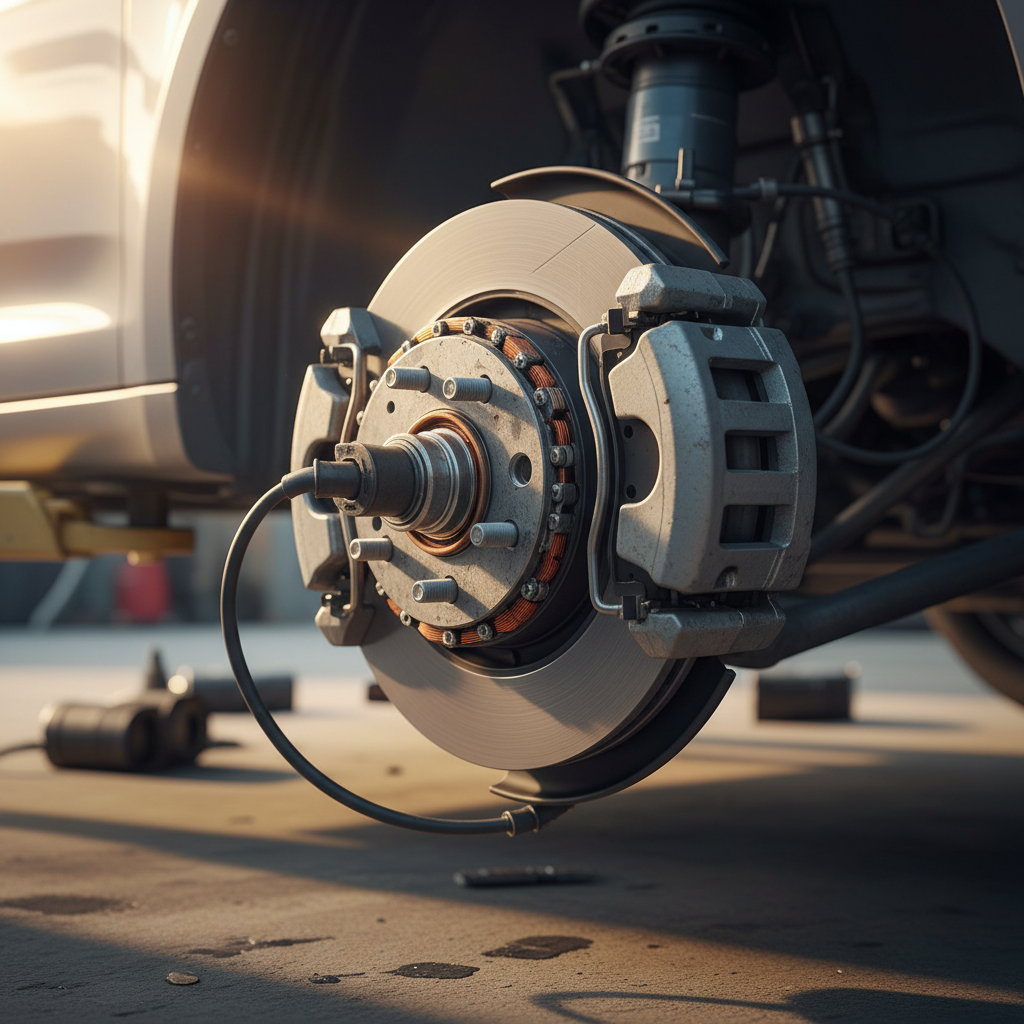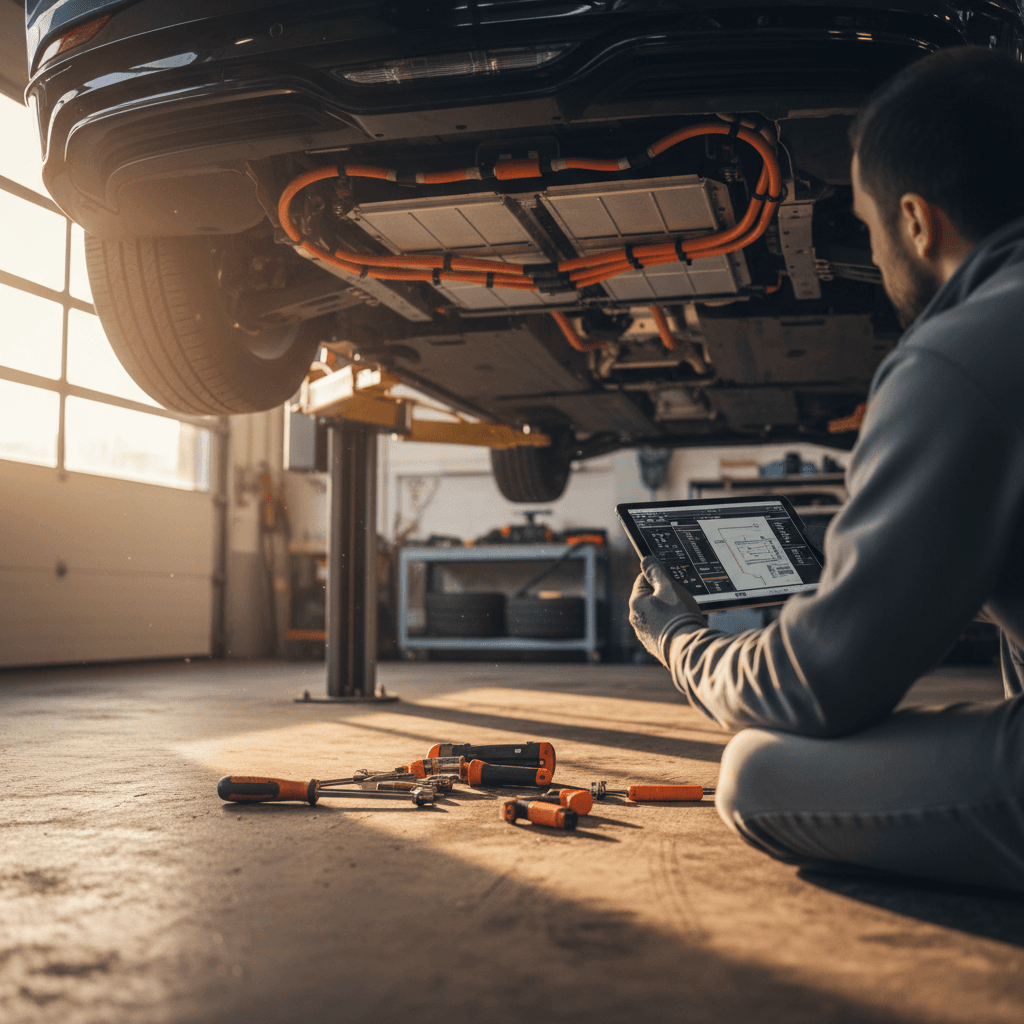
If you’re eyeing a Ford Mustang Mach-E, especially on the used market, you’re probably asking one question: **what’s the average repair cost, and is it higher than a gas SUV?** The answer matters, because an EV that looks affordable on paper can become painful if repair bills spike once the warranty runs out.
Quick takeaway
Ford Mustang Mach-E repair cost at a glance
Mustang Mach-E repair & upkeep snapshot (first 5 years)
It’s important to keep those numbers in context. For many EV buyers, the big savings come from **fuel and routine maintenance**, while **repairs**, especially outside warranty, can still sting, just like on any modern, tech-heavy SUV.
What “average repair cost” actually means for a Mach-E
When you see an **“average repair cost”** for the Ford Mustang Mach-E, it usually comes from total-cost-of-ownership models by firms like Kelley Blue Book and Edmunds. Those models look at **how much an owner is likely to spend on repairs beyond routine maintenance** over the first five years.
5-year repair & maintenance benchmarks for the Mustang Mach-E
These figures blend recent cost-to-own data from new Mach-E models and longer-term independent estimates. Real-world costs will vary by mileage, climate, and how strictly you follow the service schedule.
| Cost bucket | Typical 5-year total | Average per year | When costs usually appear |
|---|---|---|---|
| Repairs (unexpected) | $1,900–$2,400 | $375–$480 | Mostly years 3–5 as components age and warranties taper. |
| Scheduled maintenance | $2,600–$3,000 | $520–$600 | Steady each year, slightly higher in years with fluid changes. |
| Total service spend | $4,500–$5,400 | $900–$1,080 | Includes both routine maintenance and out-of-pocket repairs. |
Approximate averages for a typical U.S. driver putting ~12,000 miles per year on a Mach-E.
How to read these numbers
Scheduled maintenance vs. unexpected repairs
Scheduled maintenance (predictable)
The Mach-E has a relatively simple service schedule compared with a gas SUV:
- Every 10,000 miles / 1 year: Tire rotation and multipoint inspection (brakes, steering, suspension, cooling).
- Every ~20,000 miles: Cabin air filter replacement.
- Every 3 years: Brake fluid change.
Typical retail pricing for these services runs about $40–$50 for a tire rotation, $70–$90 for a cabin air filter, and $165–$200 for brake fluid service in many U.S. markets.
Unexpected repairs (less predictable)
Repairs are anything not on the regular service menu, failed sensors, infotainment glitches, door latches, control modules, and so on.
- Many of these items are covered by warranty in the first few years.
- Once out of warranty, some electronic components can cost $400–$1,200+ per visit.
This is where owning a used Mach-E can get expensive if you don’t know the vehicle’s history or software update status.
Warranty matters
Common Mach-E issues and typical repair bills
Like most first‑generation EVs, the Mustang Mach-E has worked through a number of early software and hardware issues. Many have been solved via recalls and over‑the‑air updates, but they’re still relevant if you’re shopping used or driving an early build.
Most-reported Mach-E issues & repair cost ranges
Not every Mach-E will experience these problems, but they’re worth understanding before you buy.
12V battery & charging faults
Early Mach-E owners have reported 12V battery failures, "vehicle won’t start" messages, and charging sessions that stop unexpectedly.
- Common fix: software updates, 12V battery replacement, or charging control-module replacement.
- Out-of-warranty cost: $300–$600 for a 12V battery and programming; $900–$1,500 if a battery junction or charge controller module is needed.
Infotainment & screen glitches
Owners sometimes report frozen reverse cameras, blacked-out center screens, or laggy SYNC infotainment.
- Common fix: system reset, software update, or module/screen replacement.
- Typical costs: $0 if fixed by OTA update; $200–$500 for in‑dealer diagnosis and module work; $800–$1,200+ if a full screen replacement is required out of warranty.
Door-latch & software recalls
Recent recalls have targeted door-latch behavior that could leave passengers stuck if the system doesn’t unlock as intended.
- Fixes are usually handled via free software updates through a dealer or over the air.
- Cost to owner: $0 if repair is recall-related; otherwise, latch-related work can run $250–$600 per door.
Representative out‑of‑warranty repair estimates
Rough retail ranges based on typical EV service pricing and Mach-E–specific component estimates. Actual costs depend on dealer, region, and parts availability.
| Component or system | Example symptom | Typical out-of-warranty range |
|---|---|---|
| Brake inspection & cleaning | Noise or uneven wear | $120–$220 |
| Coolant system service | Thermal system check, fluid exchange | $200–$350 |
| High-voltage battery junction box | Charging faults, warnings | $1,200–$1,800 |
| Battery/charge control module | Car won’t charge correctly | $800–$1,400 |
| Headlamp control module | Headlights misbehaving or inoperative | $650–$900 |
| Infotainment screen | Cracked or failed display | $800–$1,200+ |
| Power mirror assembly | Broken or malfunctioning mirror | $900–$1,300 |
These aren’t guarantees, just guideposts to help you budget.
High-voltage work is specialized
How Mach-E repair costs compare to gas SUVs
The Mach-E’s average **repair** costs are in the same ballpark as many well-equipped compact or midsize SUVs, but its **maintenance** costs are typically lower because there’s no engine oil, spark plugs, or complex transmission to service.
Where the Mach-E saves you money
- No oil changes: That’s $70–$120 avoided every 6–12 months versus a typical gas SUV.
- Fewer moving parts: No exhaust system, timing belt, or fuel-injection hardware to maintain.
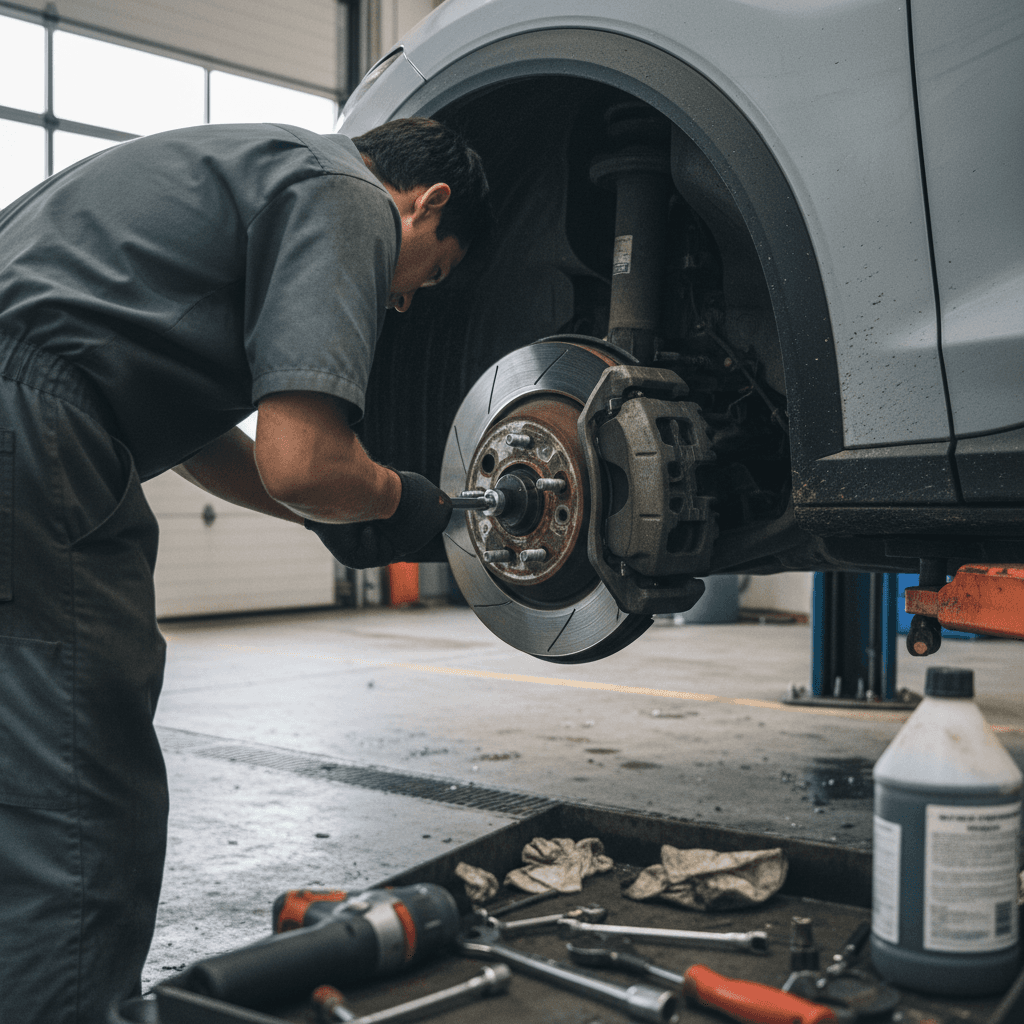
- Brake wear is lighter: Regenerative braking means brake pads and rotors last longer, often well past 60,000 miles.
Over five years, this can shave **hundreds of dollars** off your service budget compared with a comparable gas model.
Where the Mach-E can be more expensive
- Electronics and modules: Complex infotainment systems and driver-assist tech aren’t cheap to fix out of warranty.
- Body & trim parts: EV‑specific panels, glass, or lighting can cost more, and collision repairs may require EV-certified shops.
- Insurance premiums: Average Mach-E insurance costs are slightly higher than many mainstream SUVs in part due to its higher average repair/replacement cost.
Net effect for most owners
What makes your Mach-E cheaper or pricier to own
- Model year and build date: Later model years tend to have more bugs ironed out via running changes and updated parts.
- Mileage and duty cycle: High-mileage commuters may hit wear items (tires, suspension, brakes) sooner, even with an EV.
- Climate: Harsh winters and hot summers can accelerate wear on seals, suspension components, and the 12V battery.
- Software update history: Mach-E reliability has improved as Ford has pushed over‑the‑air updates. Vehicles that haven’t been updated can be more glitch-prone.
- Previous repair quality: A car repaired by an EV-certified shop after a collision is more likely to age gracefully than one with cut‑rate fixes.
- Warranty coverage: A Mach-E still under bumper‑to‑bumper or extended coverage will be dramatically cheaper to own if something fails.
Three ways to keep repair costs in check
Buying a used Mustang Mach-E: how to avoid a money pit
Used EV buyers care about **predictable costs** as much as sticker price. With the Mach-E, that means looking beyond the Carfax report and digging into battery health, software status, and how the previous owner treated the car.
Used Mach-E buying checklist: repair-cost edition
1. Verify recall & software update status
Ask for proof that all open recalls and major software updates, especially those involving door latches, charging, and infotainment, have been completed. This can wipe out entire categories of potential repair bills.
2. Check high-voltage & 12V battery health
The main battery is usually well-covered by warranty, but you still want an objective health reading. A weak 12V battery is a common failure point and a relatively cheap pre‑emptive replacement vs. getting stranded.
3. Inspect tires, brakes, and suspension
Uneven tire wear or noisy suspension at low mileage can hint at alignment issues or hard use. These aren’t unique to EVs but can generate expensive repair tickets if ignored.
4. Test all doors, latches & windows
Given the Mach-E’s history of latch‑related recalls, spend a few minutes cycling every door and window from multiple switches. Sticky or inconsistent operation now can become tomorrow’s repair bill.
5. Live-test charging at Level 2 and DC fast
If possible, plug into both types of chargers and watch for errors or early cutoffs. Charging problems often point to control modules that can cost **hundreds to over a thousand dollars** out of warranty.
6. Get an independent EV-focused inspection
A pre‑purchase inspection from an EV‑literate shop, or via a marketplace like <strong>Recharged</strong> that already performs battery and systems diagnostics, can reveal hidden costs before you sign.
How Recharged reduces your risk
Real-world examples: what owners actually pay
To put all of this into practical terms, here’s how typical Mach-E ownership can look from a repair-cost standpoint. Think of these as illustrative scenarios rather than guarantees.
Scenario 1: Low-mileage, mostly in warranty
Profile: 2024 Mach-E Premium, 18,000 miles, mostly city driving.
- Repairs: $0 out of pocket, one infotainment glitch fixed via over‑the‑air update.
- Maintenance: Two annual services (~$180 total) for tire rotations and inspections.
Effective annual repair cost: $0 (coverage + updates took care of issues).
Scenario 2: 3–5 years old, mixed mileage
Profile: 2022 Mach-E Select, 55,000 miles, highway commuter.
- Repairs: One 12V battery replacement and a charging‑port module, about $900 combined out of warranty.
- Maintenance: Around $600 per year in tires, rotations, inspections, and a brake fluid change.
Average repair cost: roughly $300 per year so far, in line with national averages.
Scenario 3: Early build, out of warranty & neglected
Profile: 2021 Mach-E, sketchy service history, 75,000 miles.
- Repairs: Door‑latch work, infotainment screen replacement, suspension bushings, easily $2,000–$3,000 if multiple items stack up.
- Maintenance: Tires and brakes overdue, adding $1,000+ quickly.
Average repair cost: Could spike well above the typical $400–$500 per year if issues pile up.
Why history matters more than the model nameplate
FAQ: Ford Mustang Mach-E repair costs
Ford Mustang Mach-E repair cost FAQs
Bottom line: is a Mustang Mach-E expensive to repair?
When you zoom out, the **average Ford Mustang Mach-E repair cost** is neither dirt cheap nor outrageous, it’s roughly in line with other modern, tech‑heavy crossovers. The difference is that you’re saving money on fuel and engine service, and trading that for the possibility of pricier electronic or high‑voltage repairs down the road.
If you buy a Mach-E with clean history, current software, and documented battery health, and you budget a few hundred dollars per year for repairs, you’re unlikely to be blindsided. And if you’d rather not roll the dice at all, shopping a used Mach-E through Recharged means you’ll see a transparent **Recharged Score Report**, verified battery diagnostics, and expert support to help you understand the true cost of ownership before you commit.