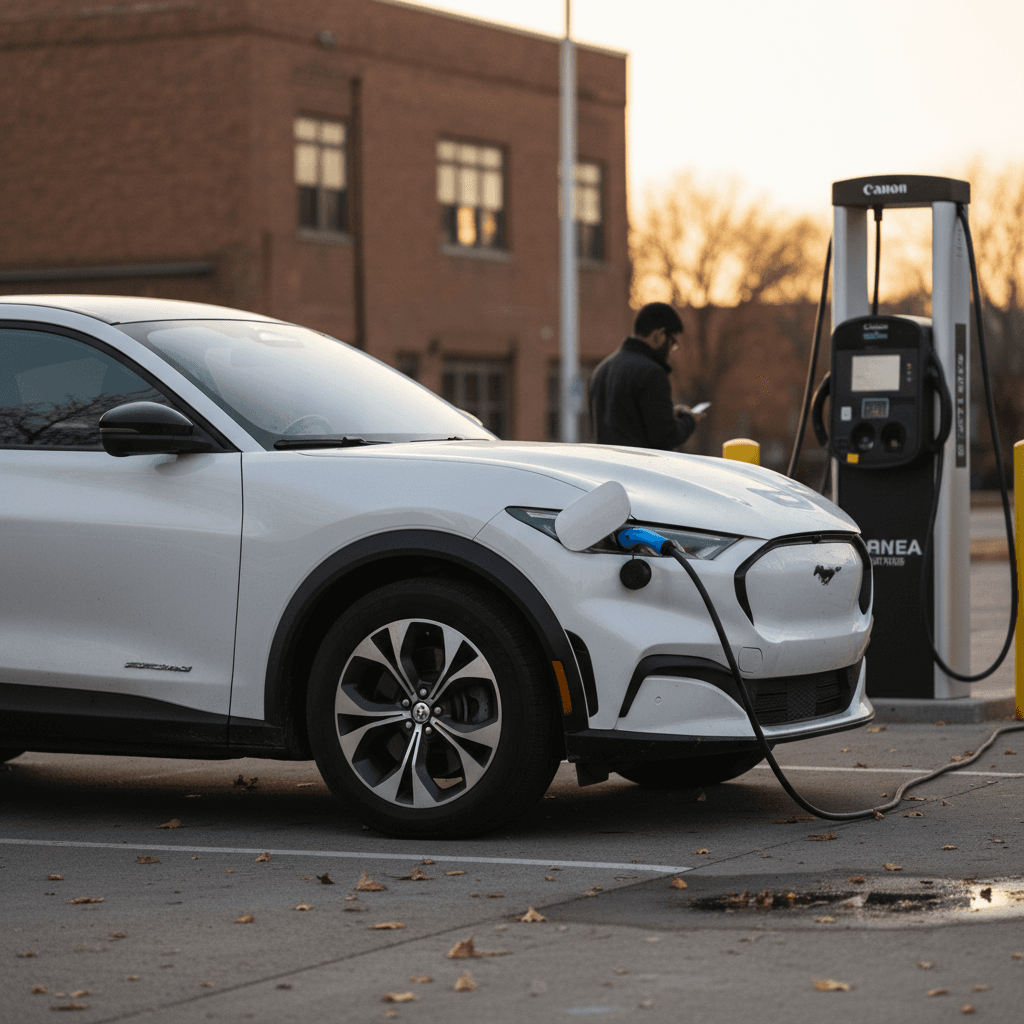
The Ford Mustang Mach-E has now been on sale long enough that the honeymoon is over. Early adopters have real mileage, multiple winters, and more than one software recall under their belts. If you’re considering a new 2026 model or a used 2021–2025 car, this long-term review of the Ford Mustang Mach-E in 2026 is about what the spec sheet can’t tell you: how it ages, what breaks, how the battery holds up, and whether it’s actually a smart buy today.
Quick take
Who this Mach-E long-term review is for
- Shoppers cross-shopping a used Mustang Mach-E against a Tesla Model Y, Hyundai Ioniq 5, or Kia EV6.
- Owners of early 2021–2022 cars wondering how their experience compares to later builds.
- Buyers curious about battery health, real-world range, and whether the Mach-E’s early quality complaints have been ironed out.
- Anyone trying to make sense of the Mach-E’s steep-looking depreciation and whether that’s a red flag or an opportunity.
We’ll focus primarily on the U.S. market through early 2026, pulling in long-term owner data, recall history, and what we see every day in the used EV marketplace at Recharged.
The Mach-E story so far: 2021–2026 in fast-forward
Mustang Mach-E at a glance (2021–2026)
Launched for 2021 as Ford’s first serious Tesla fighter, the Mustang Mach-E arrived with an identity crisis baked into the sheet metal: a practical electric crossover wrapped in Mustang cosplay. Underneath the branding exercise, the fundamentals were solid, good performance, usable range, and a big battery warranty, but the first model years were also guinea pigs for Ford’s new EV software and electronics strategy.
From 2021 through 2024, Ford pushed a drumbeat of over-the-air updates and running hardware changes: smoothing out charging curves, tweaking range estimates, refining one-pedal drive, and addressing early bugs. By the time you get to the 2025–2026 model years, the Mach-E feels less like a beta test and more like a fully developed product, even if some long-term quirks remain baked into the platform.
Battery health and real-world range
Let’s start with the big existential question for any used EV: Is the battery holding up? Real-world reports from fleets and owners suggest the Mach-E’s high-voltage pack is behaving like a modern, liquid‑cooled EV battery should, meaning modest, predictable degradation rather than horror‑story drop-offs.
How Mach-E batteries age in the real world
What we typically see by 2026 on well-cared-for cars
Early years (0–3 years)
For 2021–2023 cars now at 30,000–50,000 miles, most owners report roughly 5–10% loss versus original range, depending on climate and charging habits.
Middle age (3–6 years)
As 2021 models head toward 2027, we expect a slow taper rather than a cliff. Think another few percent loss, not half your range vanishing overnight, assuming no chronic fast‑charging abuse.
Warranty safety net
Ford’s 8‑year/100,000‑mile battery warranty covers excessive degradation or pack failure, which is important peace of mind on higher‑mileage used examples.
Battery-health buying tip
Range realism is another matter. EPA numbers in the low‑to‑mid‑300s on extended-range trims translate to more like 230–260 miles at highway speeds, less in winter. Heat‑pump availability and software tweaks have helped later cars, but if you commute long distances at 75 mph, budget for a chunk of range to evaporate in real use.
Charging experience: home and road trips
Living with a Mach-E at home
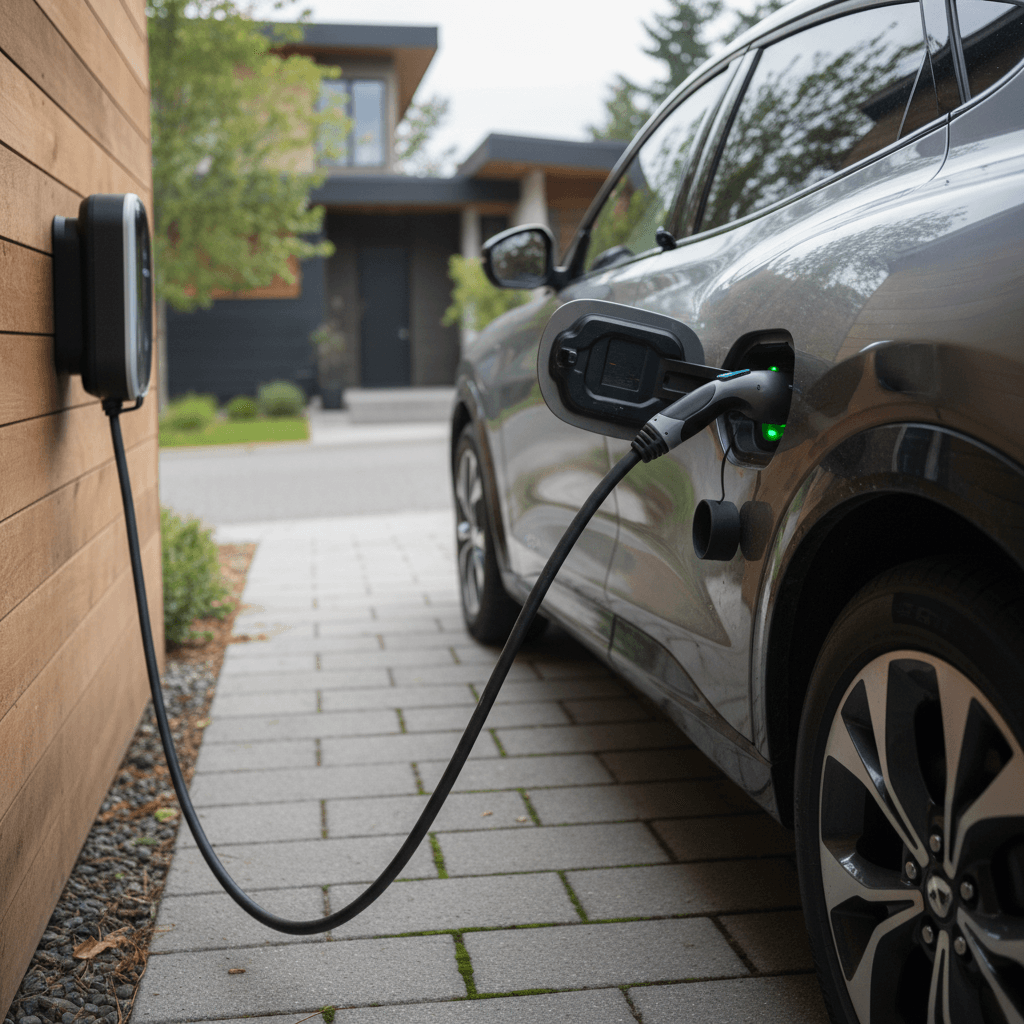
The Mach-E is happiest on a 240V Level 2 home charger. Most owners recover a day’s worth of commuting in a few hours overnight. Later software builds have made scheduled charging and charge limits less glitchy than the launch versions.
If you try to survive on 120V Level 1 at home, you’ll quickly learn the meaning of the word "compromise." This is a 4,500‑pound SUV, not a plug‑in Prius.
DC fast charging and road trips
On a good DC fast charger, extended‑range Mach-E models can add usable miles quickly enough to make road trips entirely viable. But Ford’s charging curve is more conservative than the Korean hotshots, and you’ll feel that on cold packs or if you arrive near 80%.
By 2026, wider access to the Tesla Supercharger network via NACS adapters has improved things, but you still need to plan routes and avoid the temptation to "charge to 100% and stew for an hour" every stop.
12‑volt battery can strand you
Reliability: what actually breaks on a Mach-E
Mechanically, the Mach-E’s motors and gearboxes have been largely drama‑free. The trouble lives in the electronics, low‑voltage system, and software that tie the whole thing together. In other words, it’s not the electric heart that complains, it’s the nervous system.
Common long-term Mustang Mach-E issues
Patterns we see repeatedly in owner reports and used-car inspections
| Issue | How it shows up | Long-term concern | What to check before buying |
|---|---|---|---|
| 12‑volt battery weakness | Car unresponsive, "system off to save power" message, won’t start or charge | Medium – inconvenient and potentially stranding, but fixable | Service history for 12‑volt replacement, recent software updates, any Ford recall work |
| Door latch / lock glitches | Doors that won’t open from inside or out, especially rears | High – safety concern but addressed by recalls and software | Verify all doors open from inside and outside, check recall completion |
| Infotainment lag / freezes | SYNC 4A slow to boot, frozen screen, random reboots | Low‑medium – annoying more than dangerous | Confirm latest software, test CarPlay/Android Auto, check for previous module replacements |
| Rearview camera faults | Intermittent or blank camera image when reversing | Medium – safety/visibility issue | Test camera repeatedly, confirm recall campaigns closed |
| Charging quirks | Won’t start charging, stops unexpectedly, charge-port door issues | Medium – frustrating, can mask 12‑volt problems | Test both home Level 2 and public DC fast charging during pre‑purchase inspection |
Severity assumes issues are ignored; many are manageable with timely software and recall updates.
Don’t skip the recall check
Software experience and over-the-air updates
Ford promised the Mach-E would "get better over time" via over-the-air (OTA) updates, and to its credit, it mostly has. Charging logic, range estimates, driver‑assist behavior, and interface polish are all markedly better on a current‑software 2021 car than they were when it rolled off the lot.
Mach-E software: the good, the bad, the glitchy
Why your experience depends heavily on updates
The good
- OTA updates address many early bugs without a service visit.
- BlueCruise driver-assist has improved steadily on supported trims.
- Navigation and charger data are more accurate than launch.
The bad
- Updates can be slow to roll out and sometimes introduce new quirks.
- Some owners report long installs that temporarily sideline the car.
- Experience varies widely depending on how diligently prior owners updated.
What to do
- On a test drive, check software version and pending updates in the settings menu.
- Ask the seller for records of major OTA or dealer-performed software campaigns.
- Expect at least one “big” update during your ownership that changes behavior.
Used-car pro move
Comfort, driving dynamics, and daily livability
Ford called it a Mustang for marketing reasons, but in daily life the Mach-E behaves like a well‑sorted, slightly sporty family crossover. Long‑term owners tend to be satisfied not because it’s the quickest thing on the block, but because it’s quiet, easy to park, and doesn’t make kids carsick.
- Ride and noise: Earlier GT and big‑wheel trims ride firmly; later years got some tuning improvements, but if you live on cratered pavement, consider a Select or Premium on smaller wheels.
- Seats and space: Adults fit fine in both rows, and the flat floor makes the rear bench more usable than some rivals. The cargo area is squared‑off and useful; the frunk is modest but handy for cords.
- Steering and feel: The steering is light but accurate. You’re not going to carve canyons like a sports coupe, but as EV crossovers go, the Mach-E feels planted and confident.
- Cabin aging: Materials hold up reasonably well, but piano-black plastics scuff easily and the big center screen shows fingerprints like a crime scene. Check driver-seat bolsters and steering-wheel stitching on higher‑mile cars.
Depreciation, resale value, and used pricing in 2026
If the Mach-E has a true character flaw, it’s not in the drivetrain, it’s in the spreadsheet. Like many early EVs, the Mustang Mach-E has seen heavy front‑loaded depreciation. For a new buyer that stings. For a used buyer, it’s the whole point.
Mach-E value reality check
Why this is good news for used buyers
At Recharged, we see most used Mustang Mach‑E models in the U.S. selling around the mid‑$20,000s to low‑$30,000s for clean 2023–2024 examples, and into the low‑$30,000s to low‑$40,000s for very low‑mile late‑model cars. Spec, mileage, and, critically, battery health can swing that by many thousands of dollars.
Long-term cost of ownership: what you’ll really spend
Mach-E long-term cost drivers
Energy vs. fuel
Most Mach-E owners in typical U.S. electricity markets spend dramatically less per mile on energy than they would on gasoline, especially if they charge off‑peak at home. Frequent DC fast charging narrows the gap but usually doesn’t erase it.
Maintenance and wear items
No oil changes, spark plugs, or exhaust work. But you’ll still buy tires (EV‑rated if you’re smart), cabin air filters, brake fluid, and the occasional wiper motor or door handle fix. Budget like you would for a compact luxury SUV, not an econobox.
Insurance and taxes
Insurance varies wildly by region, but some owners report higher premiums than equivalent gas crossovers due to repair costs. In many states, EVs get reduced registration or HOV perks that help offset this.
Out-of-warranty repairs
Once past the 3‑year/36,000‑mile basic warranty, electronic gremlins, camera modules, and 12‑volt‑related visits become your out‑of‑pocket problem. The big high‑voltage pack is still covered longer, but everything around it is not.
Depreciation hit
If you buy new in 2026 and sell in three to four years, expect a bruising resale value. If you buy a well‑priced used Mach-E that’s already taken its big drop, you’re more likely to come out ahead.
Run the full picture
Who should, and shouldn’t, buy a Mustang Mach-E in 2026
Great fit for
- Suburban commuters with a driveway or garage who can install Level 2 home charging.
- Drivers who value a calm, quick, practical EV more than bleeding‑edge tech or track times.
- Shoppers who want a deal in the used market and are willing to buy a car that’s depreciated heavily already.
- Families that like the idea of a Mustang badge but live in the real world of car seats and Costco runs.
Probably not for
- Road‑warrior sales reps who fast charge three times a week in the dead of winter, there are better long‑legs options.
- People with no home charging and unreliable access to public stations.
- Buyers who cannot tolerate occasional software weirdness or recall visits; early‑gen EVs demand a little patience.
- Shoppers purely chasing the latest tech status symbol, by 2026, newer EVs have flashier screens and more avant‑garde interiors.
How Recharged evaluates used Mach-E models
Because the Mach-E’s story is so dependent on software state, battery health, and recall history, a surface‑level test drive isn’t enough. That’s why every Mach-E on Recharged comes with a Recharged Score Report that looks past the shiny paint and Mustang badges.
What’s inside a Recharged Score for a Mach-E
Going deeper than a basic pre-purchase inspection
Battery health diagnostics
We run high‑voltage battery health checks to estimate usable capacity and spot signs of past abuse, such as chronic DC fast charging or overheating events.
Safety & recall status
We verify door latch, camera, and 12‑volt‑related recalls, and confirm that critical software campaigns are completed before you take delivery.
Ownership cost clarity
Our reports highlight projected depreciation, likely maintenance items, and charging cost estimates so you know the real cost of living with that specific car.
Ready to find your next EV?
Browse VehiclesYou can handle everything digitally, financing, trade‑in, even an instant offer if you’re replacing a current car, and have a vetted Mustang Mach-E shipped to your driveway, or visit our Experience Center in Richmond, VA if you’d rather kick the tires in person.
Ford Mustang Mach-E long-term FAQs
Mustang Mach-E long-term ownership questions
Bottom line: Is the Mustang Mach-E still worth it?
In 2026, the Ford Mustang Mach-E is no longer the new kid; it’s a known quantity. The long-term verdict is nuanced: a fundamentally sound EV platform wrapped in sometimes‑messy software and let down by early‑adopter depreciation. If you insist on buying new and trading out quickly, the financial math is hard to love. If you’re shopping the used market, the Mach-E looks a lot like a bargain, especially once you confirm battery health, recall status, and charging behavior.
If that kind of grown‑up Mustang appeals to you, your next move is straightforward: decide on your must‑have range and features, then look for a car whose history matches its odometer. A Recharged listing with a full Recharged Score Report, battery diagnostics, fair‑market pricing, financing, trade‑in options, and delivery support takes much of the risk out of that decision, so you can enjoy the EV without living in fear of its résumé.