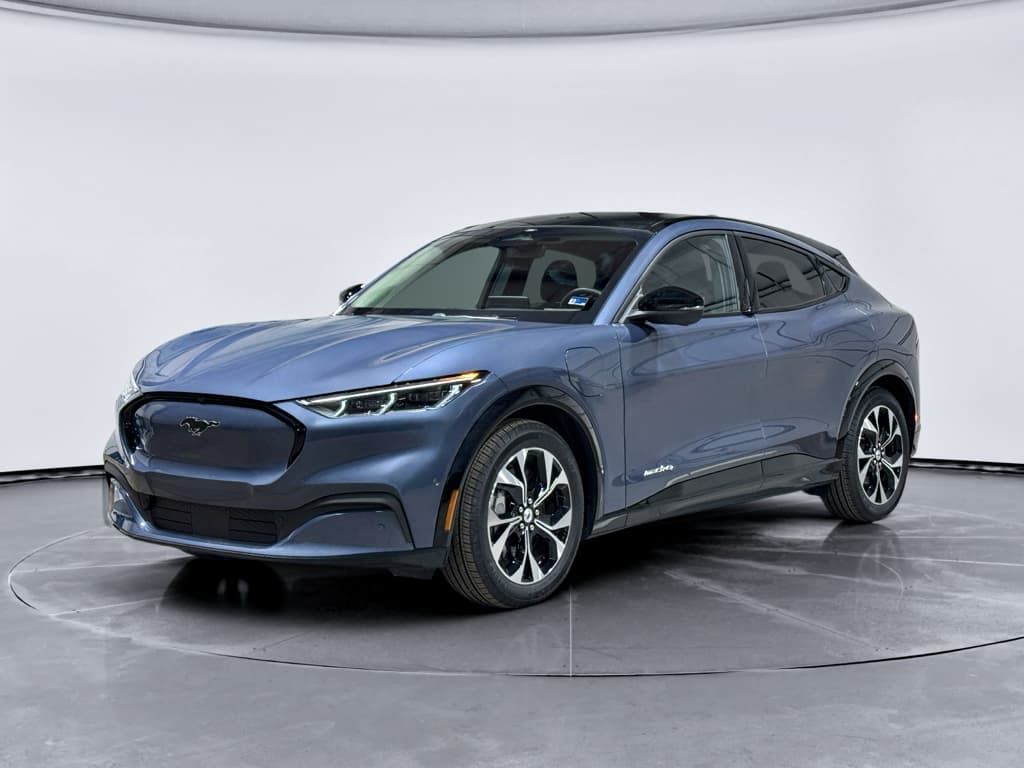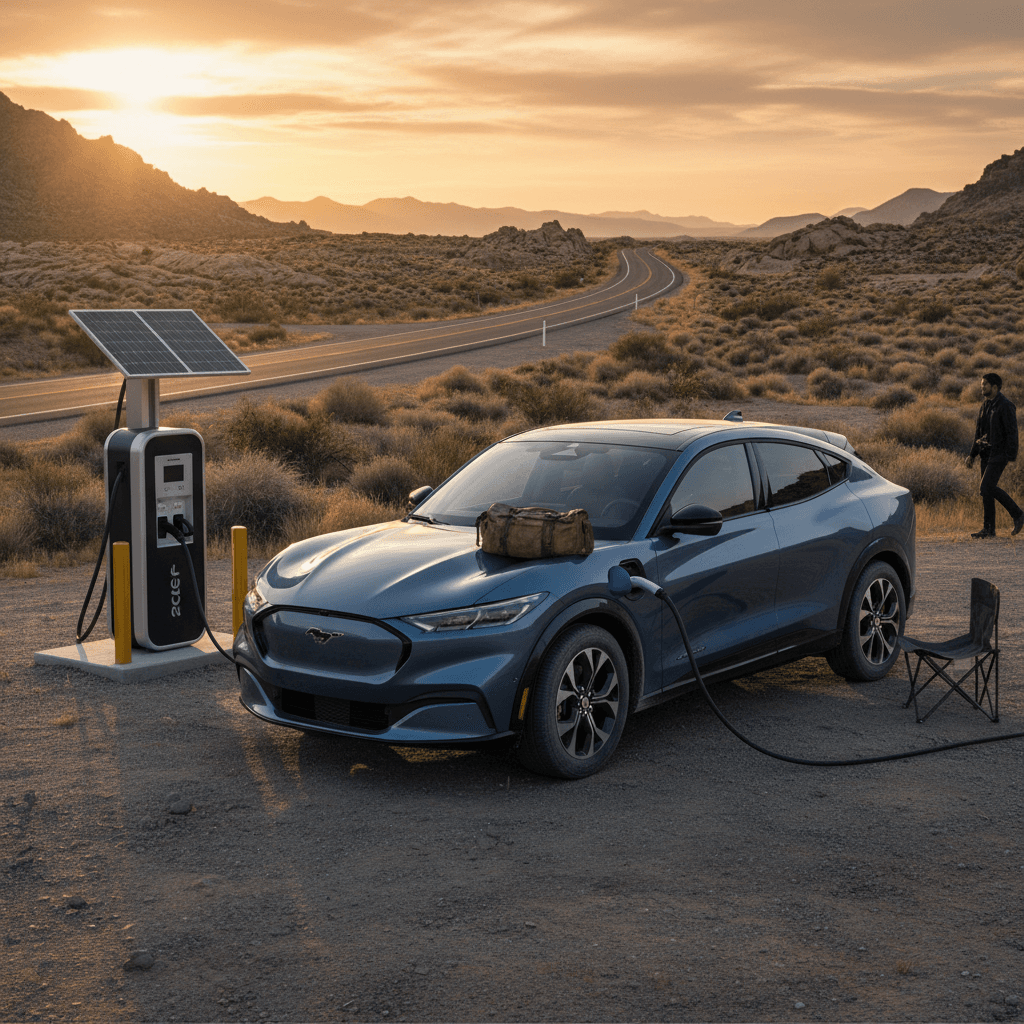
If you own a Ford Mustang Mach-E or you’re shopping for a used one, long-distance driving is probably the big question: will it really handle road trips, or is it just a city commuter with cosplay bodywork? The good news is that, driven intelligently, the Mach-E is a legitimately capable highway car. These Ford Mustang Mach-E long-distance driving tips will help you squeeze more range out of the pack, spend less time at chargers, and arrive fresher at the end of the day.
Quick take
Why the Mustang Mach-E Makes a Compelling Road Trip EV
On paper, the Mustang Mach-E has the bones of a good long-distance machine. Depending on year and trim, you’re looking at EPA-estimated ranges from roughly the low‑220s to around 300 miles on a full charge, with extended-range (ER) all-wheel-drive models commonly rated near 300 miles in recent model years. Real-world Recharged testing on 2023–2025 models shows that in mild weather at 70 mph, many ER trims can deliver roughly 90–100% of their EPA rating when driven smoothly.
Mustang Mach-E Road Trip Snapshot
The Mach-E is also quiet, with a planted highway ride and strong driver-assist tech like BlueCruise hands-free driving (on equipped models), making it much less tiring to cover distance than a traditional pony car. The trick is learning how your specific battery, trim, and driving style play together.
Know Your Mach-E Battery and Real-World Range
Mach-E Battery Options in Plain English
Different packs, different expectations on the interstate
Standard-Range (SR)
Usable capacity is roughly in the low‑70 kWh range on recent model years.
- EPA range often in the 220–250 mile zone.
- Best for shorter road days or more frequent charging stops.
- Great if you live near dense DC fast charging.
Extended-Range (ER)
Usable capacity roughly high‑80s to low‑90 kWh depending on year.
- EPA range commonly mid‑ to high‑200s, up to ~300 mi.
- More buffer for cold weather, headwinds, or higher speeds.
- Clearly the better pick if you road-trip often.
Use your trip computer, not just the guess‑o‑meter
A simple back-of-the-envelope rule: on extended-range trims, assume around 2.6–3.0 miles per kWh on the highway in mild weather if you’re driving 65–70 mph. On standard-range trims, expect a bit less buffer. Multiply that by your usable pack size to get a conservative highway range. Then lop off another 10–15% if it’s winter, very hot, or you drive at 75–80 mph.
Plan Your Route Like an EV Driver, Not a Gas Driver
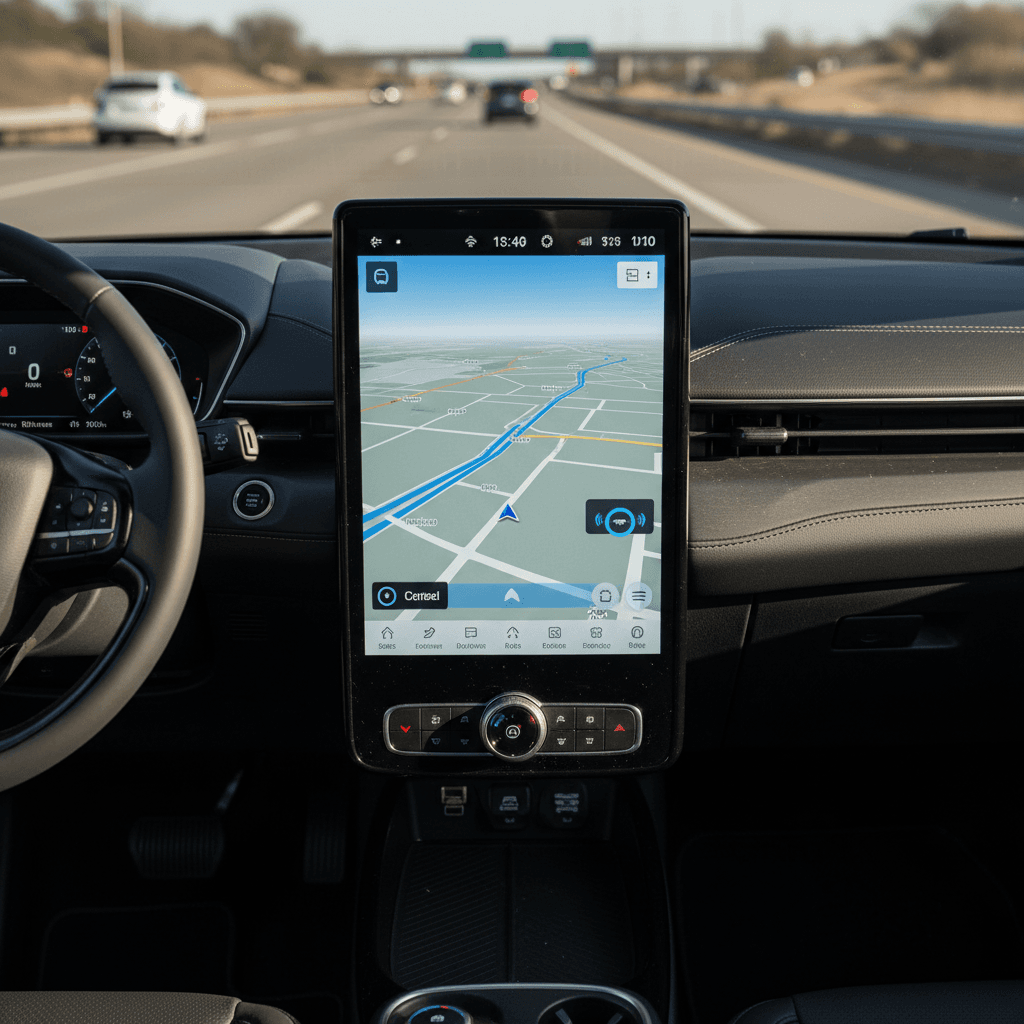
Gas drivers live by the rule of "run it low, then fill it full." In a Mustang Mach-E, that approach just creates anxiety and slow charging sessions. For long-distance drives, you want to think in segments and waves of state of charge (SoC), surfacing between about 10% and 80%.
Best Tools for Planning a Mach-E Road Trip
Use at least two apps; trust but verify what your car and apps predict.
| Tool | What it’s best at | Pro tip for Mach-E owners |
|---|---|---|
| Ford navigation (SYNC / in-car | En‑route charging suggestions on major corridors | Turn on EV routing and check proposed SoC at arrival; treat it as a starting point, not gospel. |
| FordPass app | Finding BlueOval Charge Network stations, starting sessions | Add your trip stops before you leave; confirm plug types and power (kW). |
| A Better Routeplanner (ABRP) | Fine-tuned energy modeling and multi-stop routing | Create a vehicle profile for your exact Mach-E trim and year; enter your real-world highway consumption. |
| PlugShare | Recent user check-ins and reliability data | Read recent comments to avoid broken or perennially busy sites. |
| Google Maps / Apple Maps | General routing and traffic avoidance | Layer this over your EV plan to dodge traffic that will trash your consumption. |
Mixing planning tools gives you redundancy if one network is busy or offline.
Beware the empty-map problem
For most Mach-E trims, this cadence works well on interstate runs: start the day around 90–100%, drive down to roughly 15–20%, then fast-charge back to 70–80%. Repeat. It feels counterintuitive coming from gas, but doing more frequent, shorter charging stops almost always beats a few long “fill to 100%” sessions.
Smart Highway Driving: Speed, Modes, and One-Pedal
1. Speed is your biggest lever
A Mach-E at 65 mph and the same car at 80 mph are two different vehicles thermodynamically. At higher speeds, aerodynamic drag rises exponentially and your Wh/mi goes up accordingly.
- As a rough idea, jumping from 65 to 75 mph can cost you 10–20% of your range.
- In thin charging territory, set cruise closer to the right lane than the left.
- If you have BlueCruise, use its set speed to enforce discipline when you’re tired.
2. Drive modes and regen
Ford’s drive modes (Whisper, Engage, Unbridled) mainly change throttle mapping and climate aggressiveness. For long highway days:
- Whisper tends to be the most efficient and relaxed.
- One-Pedal Drive is brilliant in traffic and on rolling terrain; it helps recapture energy rather than scrubbing it off as heat.
- On dead-flat interstates with light traffic, conventional cruise with gentle inputs can be just as efficient.
Use one-pedal like a scalpel, not a hammer
Also pay attention to tire pressure. Many Mach-E trims leave the factory with pressures tuned more for handling and load than maximum efficiency, but running significantly under the doorjamb spec will drag your range down. Check pressures before you leave, especially in temperature swings.
DC Fast Charging Strategies for the Mach-E
Every EV has a characteristic "charging curve", how quickly it takes on power at different states of charge. The Mach-E tends to charge fastest between roughly 10–60%, tapering more noticeably above 70–80%. Your goal on a road trip is to live where the curve is steep, not where it flattens out.
Optimal Charging Windows for Mach-E Road Trips
Use this as a guideline; your exact numbers will vary by trim, weather, and charger.
| Battery state | What usually happens | Road-trip strategy |
|---|---|---|
| 0–10% | Pack is low; charging power may be limited briefly to protect the battery | Try not to arrive below ~5–7%; if you do, be patient while it ramps up. |
| 10–60% | Sweet spot where the charger often holds close to peak power when the pack is warm | Ideal place for fast road-trip charging. Plan most stops in this window. |
| 60–80% | Taper phase; speeds begin to fall off | Only charge this high if the next leg is long or chargers are sparse. |
| 80–100% | Slowest part of the curve; power often drops significantly | Avoid DC charging to 100% unless absolutely necessary for the next stretch. |
Short, sharp DC sessions usually get you down the road faster than a single long soak.
Precondition your battery for faster fast charging
- Favor the highest-power station available (e.g., 150 kW+), but don’t drive 30 miles out of your way for a 350 kW unit if a 150 kW charger is right on your route. The Mach-E can’t fully exploit 350 kW anyway.
- If you’re sharing a cabinet-style charger (two plugs tied to one power module), avoid pairing with another high-draw car if possible; you may both get less power.
- Use the car’s timer, your watch, or the app to avoid the "we accidentally sat for 70 minutes at 40 kW" syndrome.
- When traveling with kids or pets, alternate short charging stops with longer meal or park breaks so you can unplug promptly once you’re past ~70–80%.
Using Ford BlueCruise and Driver Assists on Long Trips
One of the Mach-E’s secret weapons for long-distance work is its suite of driver-assist tech. On properly mapped divided highways, BlueCruise (on equipped vehicles) allows true hands-free steering while an infrared camera watches your eyes. It’s not autonomous driving, but it is a superb fatigue reducer on endless interstate segments.
How to Get the Most from BlueCruise and Co-Pilot360
Comfort and safety without turning your brain off
Pick the right roads
BlueCruise only works on approved divided highways (“Blue Zones”). For everything else, you still have adaptive cruise and lane centering, which are excellent for taking the edge off stop‑and‑go or two-lane slogs.
Manage fatigue, not boredom
Use hands-free stretches to rest your shoulders and hands, drink water, and mentally reset. Don’t use it as a license to multitask; the system will insist you watch the road for a reason.
Combine with smart routing
Let BlueCruise eat miles on easy interstate sections, then drop back into more hands-on driving for scenic diversions, mountain passes, or detours to better charging.
Don’t over-trust lane centering in bad conditions
Weather, Hills, and Cargo: How Conditions Hit Range
Official range figures are like EPA fuel economy stickers: useful, but aspirational. Your Mach-E’s real highway range swings a lot with temperature, elevation, wind, and payload. The more you understand those swings, the less alarming they feel.
Cold and heat
- Cold weather thickens lubricants, reduces battery output, and piles on heater use. In deep winter, it’s common to see 20–35% less range on the highway.
- Precondition the cabin while plugged in before you leave, and favor the heated seats and steering wheel over blasting cabin heat.
- In very hot weather, the pack and cabin cooling systems draw extra power; a few percent loss isn’t unusual.
Elevation, wind, and load
- Climbing mountains eats energy; descending gives some back via regen, but not all of it. Plan extra margin on sustained climbs.
- Headwinds can quietly destroy range. If your Wh/mi spikes on a flat road, check the wind forecast.
- Roof boxes and bike racks murder aero. If you must use them, assume a serious range penalty at freeway speeds.
Watch the consumption gauge, not just the range number
Protecting Battery Health on Frequent Road Trips
Modern Mach-E packs are liquid-cooled and managed by sophisticated software. You don’t have to baby them. But if you road-trip often, or you’re shopping for a used Mustang Mach-E as a highway car, it’s worth knowing the habits that keep long-term battery health in the green.
Battery-Friendly Habits for Road-Trippers
Avoid living at 100%
Use 90–100% SoC mostly as a launch pad for a long leg, not as your everyday parking level. If your Mach-E lets you set a charge limit, aim for ~80–90% for daily use.
Minimize hot-soak fast charging
Back-to-back DC fast charges on a blazing summer day will heat the pack. It’s fine occasionally, but if you can, mix in slower stretches or a medium-length AC top-up at a hotel.
Don’t fear DC fast, just be smart
Regular fast charging on trips is expected; the car’s thermal management is designed for it. The bigger issue is <strong>how long</strong> you sit at high SoC and high temperatures, not how many times you’ve plugged in.
Keep software up to date
Ford’s over-the-air updates have improved charging behavior and range on earlier Mach-E model years. Take the time to install them before a big drive.
Get a battery health snapshot on used cars
If you’re buying used, look for a <strong>third-party battery health report</strong> like the Recharged Score, which uses diagnostics to estimate current capacity and fast-charge history.
How Recharged helps on used Mach-E battery health
Ready to find your next EV?
Browse VehiclesChecklist: Prepping Your Mach-E for a Road Trip
A little prep before you hit the interstate can save you an hour of headaches down the line. Think of this as your Mach-E preflight checklist.
Mach-E Road-Trip Prep
1. Update software and maps
Install any pending Ford Power‑Up updates and ensure your navigation data is current so you get the latest EV routing and BlueCruise coverage.
2. Inspect tires and set pressures
Check for uneven wear and set pressures to the doorjamb recommendation, adjusting for load if necessary. Don’t forget the compact spare, if fitted, or your tire repair kit.
3. Test your charging cards and apps
Make sure your FordPass account is active and linked to the BlueOval Charge Network, and that any third‑party networks you’ll use are set up with payment methods.
4. Pack the right charging gear
Bring your Level 1 cord, any Level 2 adapters, and gloves for grimy cables. A small tarp or mat is handy for kneeling in bad weather at rural stations.
5. Pre-plan anchor chargers
Identify at least one "primary" and one "backup" fast charger for each leg. Save them in your phone and in‑car nav so you’re not fumbling with apps at 5% SoC.
6. Set realistic daily mileage
For most drivers, <strong>400–500 miles per day</strong> in a Mach-E is both doable and humane. Beyond that, fatigue matters more than efficiency.
FAQ: Ford Mustang Mach-E Long-Distance Driving
Common Mach-E Road Trip Questions
Should You Buy a Used Mach-E as a Road-Trip EV?
If you’re reading this before buying, you’re already ahead of the game. The real question isn’t whether the Mustang Mach-E can do long distances, it can, but whether a given used example is the right partner for how and where you travel.
Why a used Mach-E makes sense
- Depreciation has been… generous. You can often buy an extended-range Mach-E for far less than its original sticker.
- Plenty of cars were used mainly as commuters, with gentle mileage and limited fast charging.
- Software updates have steadily improved range estimates and charging curves.
What to verify before you buy
- Battery health: Ask for diagnostic reports or a third‑party test like a Recharged Score.
- Charging history: Many prior DC fast sessions are fine; hundreds of abusive, back‑to‑back 100% blasts in the desert are less ideal.
- Trim and pack: If you live in the wide-open West, it’s worth holding out for an extended-range pack.
How Recharged fits in
Bottom Line: Take the Mach-E on That Road Trip
Driven thoughtlessly, the Mustang Mach-E will punish you with slow charge stops and a nervous eye glued to the range readout. Driven with a bit of craft, moderate speeds, smart planning, and disciplined charging windows, it becomes exactly what it looks like: an all-electric grand-tourer in crossover drag, happy to gobble up interstates and mountain passes alike.
Use the tips here to build your own rhythm: test your real-world consumption, plan segments around 10–80% state of charge, treat fast chargers as sprints instead of marathons, and let BlueCruise shoulder some of the tedium when the road gets dull. And if you’re still in the shopping phase, consider browsing Recharged’s used EV inventory, every Mach-E there comes with a battery health report and expert guidance so your first big trip is memorable for the scenery, not the stress.