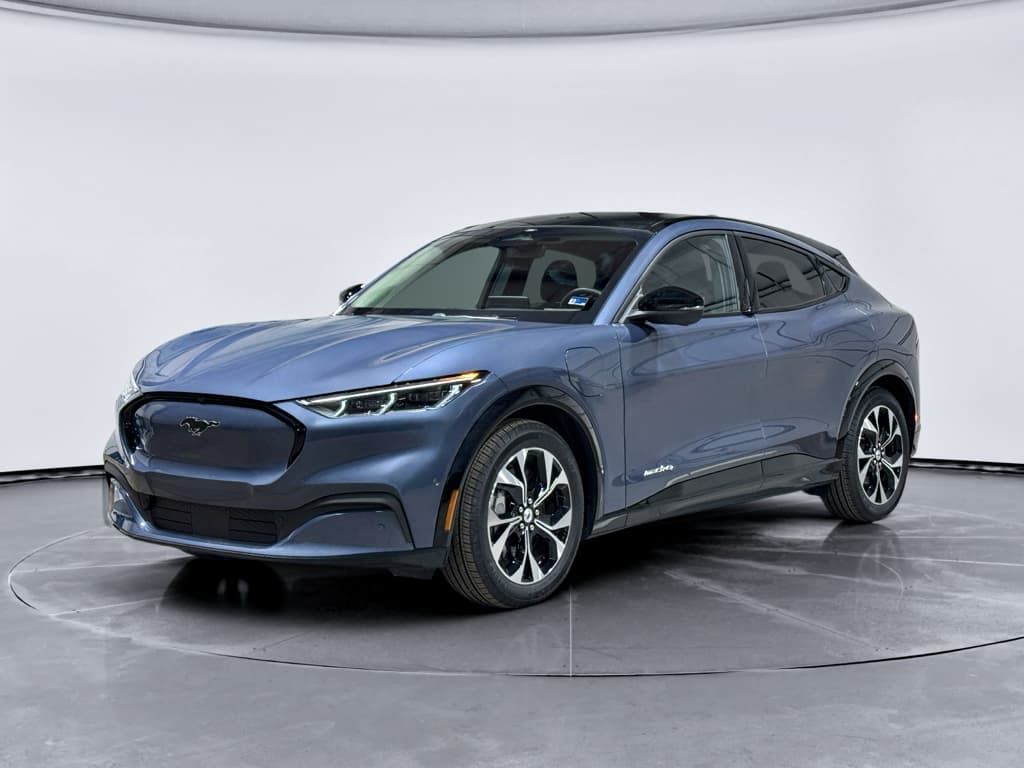
If you’re looking at a Ford Mustang Mach‑E, especially a used one, “how much battery degradation per year should I expect?” is probably near the top of your list. The good news: real‑world data from owners, fleet vehicles, and warranty claims suggests that the Mach‑E’s high‑voltage battery is holding up better than many early estimates, even at very high mileage.
Quick takeaway
Mustang Mach‑E battery degradation at a glance
Ford Mustang Mach‑E battery life snapshot
How much Mach‑E battery degradation per year should you expect?
No automaker, including Ford, publishes an official “battery degradation per year” number for the Mustang Mach‑E. Instead, you have to triangulate from owner data, generic EV studies, and the battery warranty. When you put those pieces together, a reasonable expectation for a Mach‑E driven and charged in a typical way looks like this:
- Years 0–2: roughly 3–6% total capacity loss as the pack stabilizes. Many owners see their state‑of‑health (SoH) settle in the mid‑90% range after the first couple of years.
- After year 2: degradation tends to slow to about 1–2% per year under moderate mileage and mostly home Level 2 charging.
- Over 8 years / 100,000 miles: most Mach‑E packs should remain above 80% capacity, which is comfortably above Ford’s 70% warranty floor.
- Outliers (very hard or very gentle use): heavy DC fast charging, extreme heat, or very high annual mileage can push that number higher, while gentle use can do even better than the averages.
Degradation is not perfectly linear
What real‑world Mach‑E owner data shows so far
Because the Mustang Mach‑E only launched for the 2021 model year, we’re still in the early chapters of its long‑term story. Even so, there’s already a useful mix of owner‑reported data, high‑mileage case studies, and broader EV research you can lean on.
Real‑world Mach‑E degradation signals
From everyday owners to 300k‑mile workhorses
Everyday owners (1–3 years)
Data from owner forums, EV analytics platforms, and Recharged’s own Mach‑E reviews points to:
- 3–6% loss in the first 1–2 years for typical 10,000–15,000 miles per year.
- After that, capacity tends to decline more slowly, in the ballpark of 1–2% per additional year.
- Most 2‑ to 3‑year‑old Mach‑Es are still reporting mid‑90% state of health.
High‑mileage fleet example
One well‑documented 2022 Mustang Mach‑E Premium used for rideshare work has crossed roughly 316,000 miles in about three years and still reports only about 8% battery degradation. That’s far better than generic EV averages.
EV industry studies often quote around 1.8–2.2% per year as a typical long‑term degradation rate across modern EVs, which lines up with this kind of result.
Industry‑wide EV benchmarks
Large‑scale EV degradation studies (across many brands and models) usually land in the range of:
- ~10% loss after 100,000 miles on average.
- Degradation driven more by heat, high state of charge, and fast charging than by age alone.
- The Mach‑E’s real‑world examples so far suggest it’s on the better‑than‑average side of those curves when used reasonably.
Don’t over‑interpret single data points
NMC vs. LFP Mach‑E batteries: does chemistry change degradation?
Ford has used two main battery chemistries in the Mustang Mach‑E so far: NMC (nickel‑manganese‑cobalt) for most extended‑range packs and early standard‑range cars, and LFP (lithium‑iron‑phosphate) on some newer standard‑range models. Chemically, they age a bit differently, and that shows up in how you should treat them day to day.
NMC packs (most extended‑range Mach‑Es)
- Used in the majority of Mach‑E trims, especially extended‑range models.
- Tend to have slightly higher energy density (more kWh in the same space).
- More sensitive to spending long periods at very high state of charge (near 100%) and to high temperatures.
- Best practice: daily‑charge to around 70–80% when you can, and park in shade/garages in hot climates.
LFP packs (newer standard‑range Mach‑Es)
- Used on some 2023–2025 standard‑range trims.
- More tolerant of frequent 100% charges and dislike being kept very low for long periods.
- Often show a bit more early variability in displayed range as the BMS “learns” the pack.
- Best practice: regular full charges (to help calibration), but still avoid prolonged exposure to extreme heat when full.
Which Mach‑E battery do you have?
Battery warranty: when does Ford replace a Mach‑E pack?
Every new Ford Mustang Mach‑E in North America comes with an 8‑year / 100,000‑mile high‑voltage battery warranty (some Canadian documentation lists 8 years / 160,000 km). That warranty is transferable to subsequent owners and is a critical part of the degradation story, especially for used buyers.
Ford Mustang Mach‑E warranty basics
Key coverage pieces that matter for battery degradation and used‑EV shoppers.
| Coverage type | Duration | What it covers | Why it matters for degradation |
|---|---|---|---|
| Bumper‑to‑bumper | 3 years / 36,000 miles | Most vehicle components excluding wear items. | Less relevant for battery but useful for early‑life issues. |
| Powertrain | 5 years / 60,000 miles | Electric drive unit and related components. | Doesn’t govern capacity loss, but covers major drivetrain failures. |
| High‑voltage battery | 8 years / 100,000 miles | Defects in materials/workmanship and capacity loss below about 70% under normal use. | If usable capacity falls under roughly 70% within this window, Ford may repair or replace the pack. |
Exact terms vary slightly by market and model year; always confirm with the specific vehicle’s warranty booklet.
What the 70% threshold really means
6 biggest factors that speed up, or slow down, Mach‑E degradation
Two Mach‑Es built on the same day can age very differently, depending on how they’re driven, charged, and stored. Here are the levers you control that make the biggest difference to per‑year degradation.
What actually affects Mach‑E battery life
1. Average state of charge (SoC)
Living at 100% most of the time is rough on NMC packs. If you can, set a daily limit around <strong>70–80%</strong> and only charge to 100% when you need the full range. LFP packs are more tolerant but still dislike sitting full in extreme heat.
2. DC fast charging frequency
Occasional fast charging on road trips is fine; using a DC fast charger multiple times per day as your primary fuel source will heat the pack and accelerate wear. Home Level 2 charging is much gentler and usually cheaper.
3. Climate and parking
Batteries hate heat more than cold. Regularly parking a fully charged Mach‑E in direct sun during hot summers is a recipe for faster degradation. Garages, shade, and lower SoC targets are your friends.
4. Annual mileage and usage patterns
High miles per year don’t automatically kill a battery, especially with good charging habits. That 300k‑plus‑mile Mach‑E example shows that a pack can handle heavy use when it’s managed well.
5. Deep discharges and storage behavior
Running down to near 0% occasionally is OK; letting the car sit for days or weeks at very low state of charge is not. For storage over a week, aim to leave it around <strong>40–60%</strong> SoC.
6. Software and thermal management
Ford’s battery management system and active liquid cooling do a lot of heavy lifting behind the scenes. Keeping software up to date and not overriding thermal warnings helps the pack protect itself.
Habits that quietly hurt your Mach‑E battery
Shopping used? How to check Mach‑E battery health in practice
When you’re considering a used Mustang Mach‑E, “battery degradation per year” turns into a very concrete question: How healthy is this specific pack right now, and how was it treated? Here’s how to get closer to a real answer.
4 practical ways to gauge a used Mach‑E’s battery
You don’t need to be an engineer, just systematic
Check real‑world range vs. EPA
Start with something simple and repeatable:
- Look up the car’s original EPA range for its trim and battery.
- Ask the seller (or test yourself) how many miles the car shows on a 100% or 90% charge in mild weather.
- If the car consistently delivers within about 5–10% of its original range in similar conditions, that’s usually a good sign.
Use the Ford app and in‑car data
The Mach‑E doesn’t surface a perfect "battery health" number to owners, but:
- You can see estimated range, charging history, and recent trip efficiency in the FordPass app and on the car’s screen.
- Large, unexplained swings in range, especially in mild weather, are worth a deeper look.
Have an EV‑savvy shop scan it
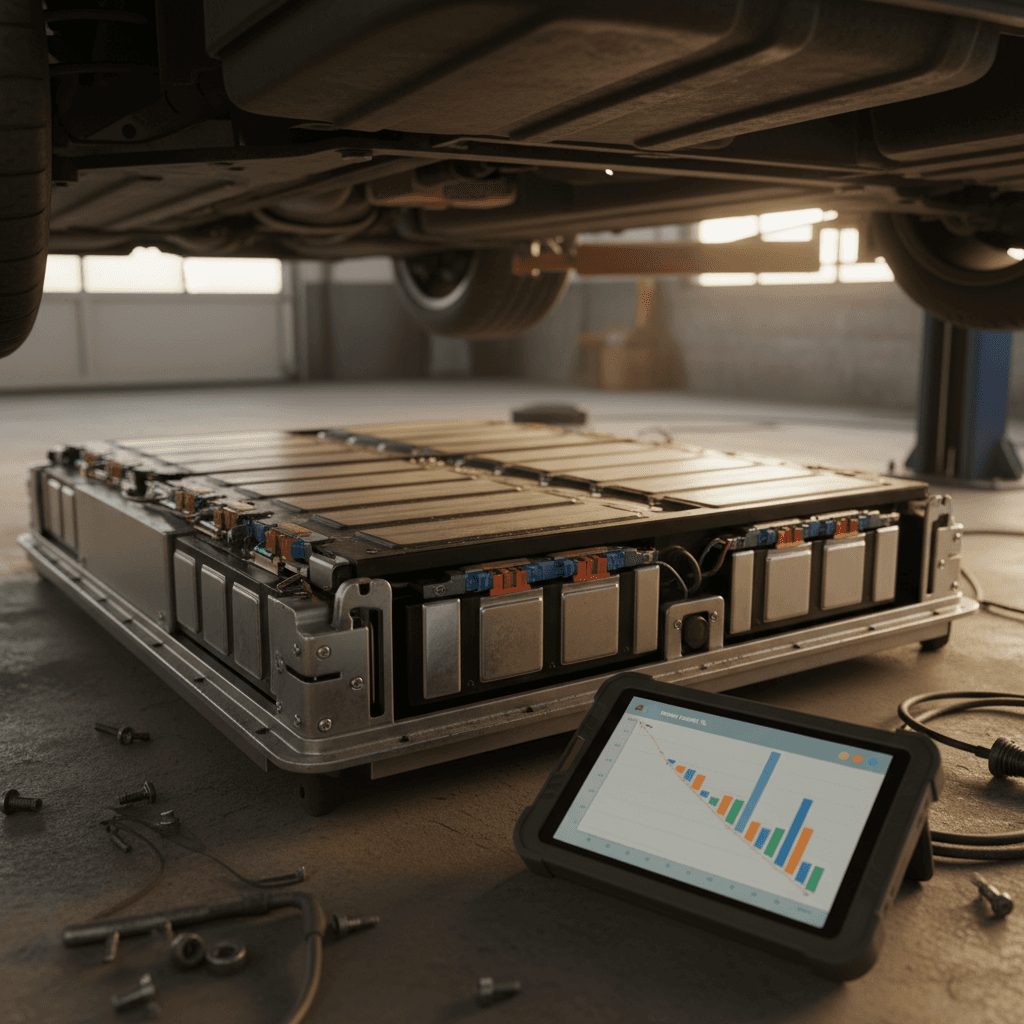
An independent EV shop or specialist can connect a scan tool to read deeper battery metrics (cell balance, usable capacity estimates, fault codes). For higher‑mileage cars, this is often worth the small inspection fee.
Lean on structured reports
Buying through a modern used‑EV retailer like Recharged gives you a Recharged Score Report that includes:
- Verified battery health based on live data.
- Charge‑pattern analysis where available (fast‑charge usage, etc.).
- Fair market pricing that reflects real‑world range, not just the original brochure number.
That’s the fastest way to turn “How much does a Mach‑E battery degrade per year?” into a concrete, car‑specific answer.
Mach‑E battery degradation examples by mileage and usage
To make all this more tangible, it helps to translate “percent per year” into rough scenarios. These aren’t guarantees, just realistic examples based on what we know today about the Mustang Mach‑E and modern EV batteries in general.
Sample Mustang Mach‑E degradation scenarios
Illustrative outcomes assuming a 300‑mile extended‑range Mach‑E when new. Real‑world results vary with climate and charging habits.
| Usage profile | Years / miles | Approx. capacity left | Approx. usable range left | Notes |
|---|---|---|---|---|
| Light commuter | 5 years / 50,000 miles | ~92–95% | ~276–285 miles | Mostly home Level 2 charging, 70–80% daily limit, few DC fast‑charge sessions. |
| Typical owner | 5 years / 75,000 miles | ~88–92% | ~264–276 miles | Mix of commuting and road trips, occasional DC fast charging, decent SoC habits. |
| Road‑warrior renter / rideshare | 3 years / 150,000–200,000 miles | ~90%+ | ~270+ miles | High mileage but careful charging; real‑world cases show single‑digit loss even above 250k miles. |
| Hard‑use fast‑charge heavy | 5 years / 100,000 miles | ~80–85% | ~240–255 miles | Frequent fast charging to high SoC in hot weather, high speeds, and little SoC management. Still above most warranty thresholds. |
These examples assume moderate climates and typical driving; hard use in heat or heavy DC fast charging can increase degradation, while very gentle use can do better.
Think "range you actually need," not perfection
How Recharged measures Mach‑E battery health for used buyers
Because battery health is the single most important factor in used‑EV value, Recharged builds it into every step of the buying process for vehicles like the Mustang Mach‑E.
- Every used EV on the platform gets a Recharged Score Report that includes a battery‑health assessment, not just a visual inspection.
- Where data access allows, Recharged analyzes charging patterns, for example, how often the car was DC fast charged vs. charged at home, and how frequently it sat near 100% or near empty.
- Pricing is aligned with real‑world range, so a higher‑mileage Mach‑E with a strong battery can still be an excellent buy, while an abused pack is priced (or filtered) accordingly.
- EV‑specialist advisors can walk you through what a specific Mach‑E’s data means in plain language and how it compares to the 8‑year / 100,000‑mile warranty envelope.
Why this matters more for EVs than gas cars
FAQ: Ford Mustang Mach‑E battery degradation per year
Common questions about Mach‑E battery life
Bottom line: should you worry about Mach‑E battery degradation?
If your main concern about the Ford Mustang Mach‑E is "battery degradation per year," today’s real‑world data should be reassuring. The typical Mach‑E is losing only a few percent of capacity in its first couple of years, then aging slowly after that, often staying well above 90% capacity into six figures of mileage when it’s cared for reasonably.
For new buyers, that means you can plan on a long service life before capacity loss materially changes your daily routine. For used‑EV shoppers, it means the right 3‑ or 5‑year‑old Mach‑E can be a terrific value, so long as you understand how it’s been used and have a clear, data‑backed view of its battery health.
If you’d rather not decode all that yourself, buying through Recharged gives you a Recharged Score Report with verified battery health, charge‑pattern insights, and pricing aligned with real‑world range. That way, you’re not just betting on averages, you’re making an informed decision about the exact Mach‑E in front of you.