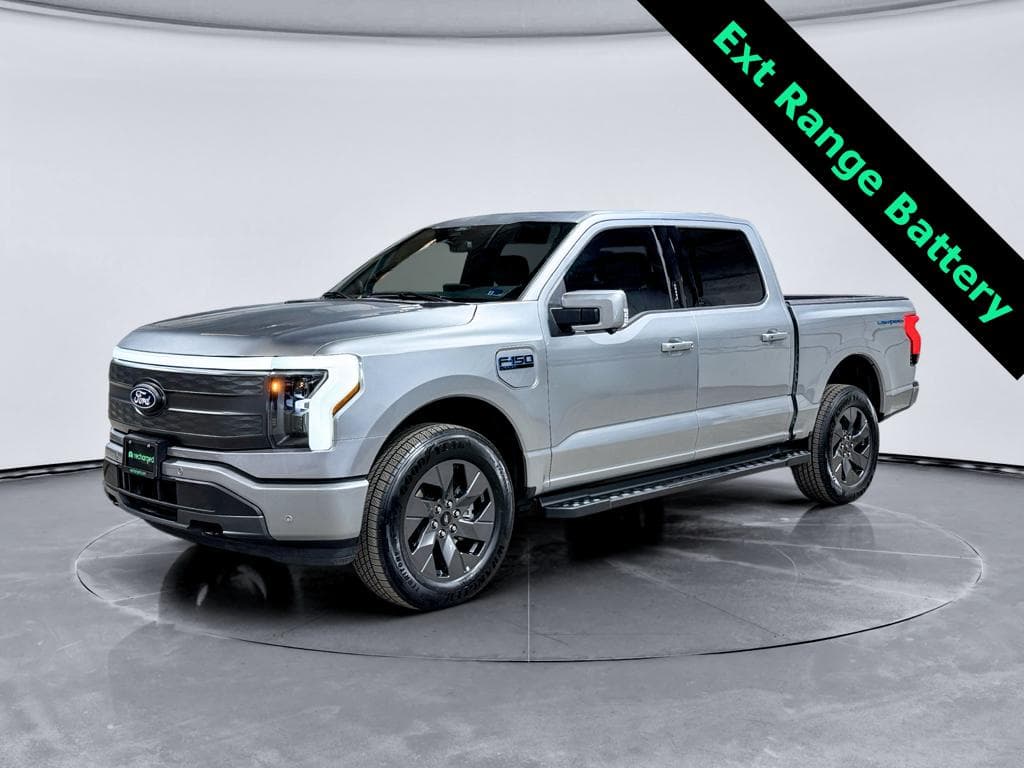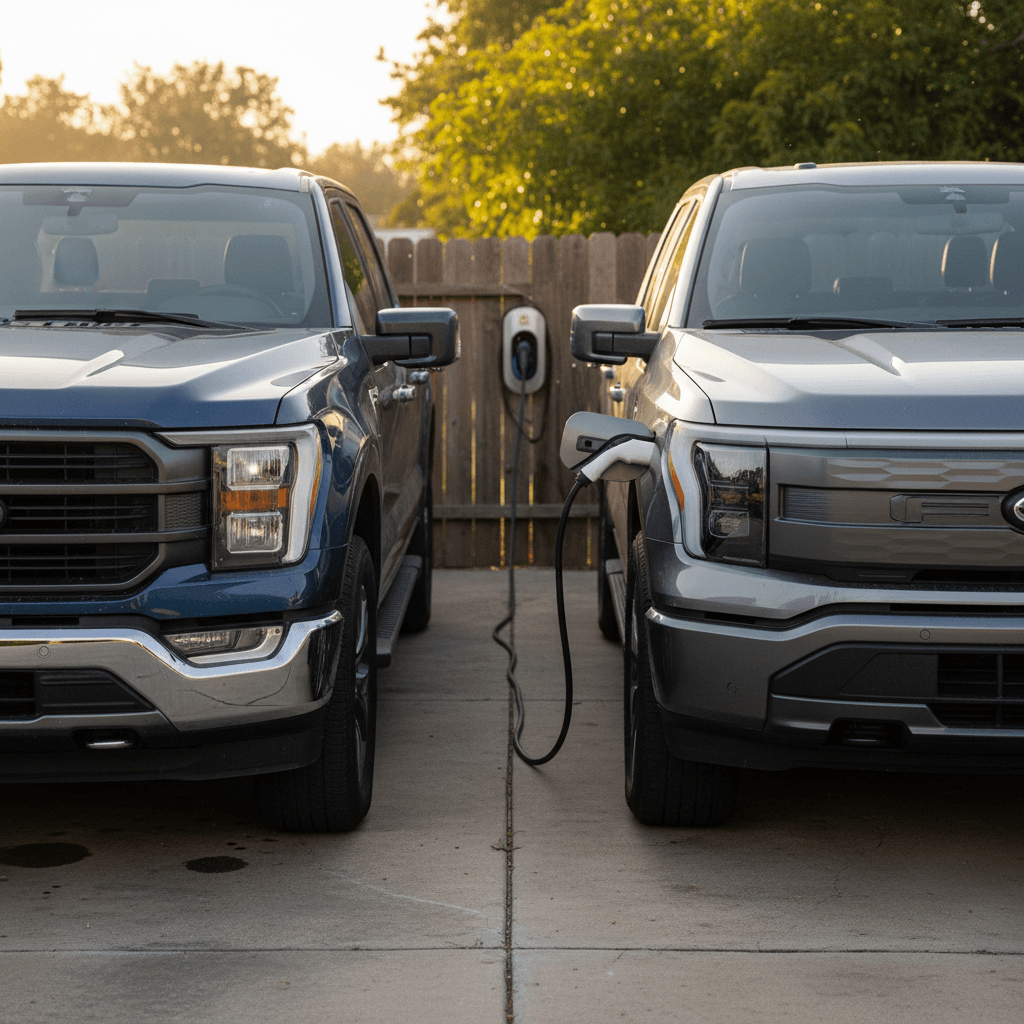
If you’re a longtime Ford F-150 owner kicking around the idea of trading your gas truck for a Ford F-150 Lightning, you’re not alone. Thousands of owners have already made that switch, and their real‑world experiences paint a clear picture of what you’ll love, what you’ll miss, and what you’ll need to plan for before going electric.
Context: the Lightning is now a short-lived first gen
Who this F-150 to Lightning review is for
This review is written for current or recent F‑150 owners, XL work trucks, XLT family haulers, Lariat and Platinum luxury trims, who are considering a Ford F-150 owner switch to Ford F-150 Lightning. We’ll focus on how the truck feels if you’re coming from a gas or EcoBoost F‑150, with an emphasis on towing, hauling, range, charging, and the growing used‑truck market.
- You daily a gas or diesel F‑150 and want lower running costs.
- You tow occasionally, boats, landscaping trailers, small campers, and wonder if an EV truck can really handle it.
- You’re EV‑curious but don’t want to give up full‑size‑truck comfort or capability.
- You’re eyeing a used Lightning and want to know how it compares to the F‑150 in your driveway.
Quick take: should an F-150 owner switch to a Lightning?
Ford F-150 vs F-150 Lightning: snapshot
The one-sentence verdict
Specs: what actually changes when you go Lightning
On paper, the Ford F-150 Lightning looks familiar: four doors, 5.5‑foot bed, crew‑cab‑focused lineup. Underneath, it’s a different animal. Here’s how the key numbers stack up when you move from a recent‑generation gas F‑150 into a typical 2023–2024 Lightning.
Ford F-150 vs F-150 Lightning: key spec comparison
Approximate figures for common configurations. Always check the specific truck’s door‑jamb label and window sticker for exact ratings.
| Spec | Gas F‑150 (typical V6/V8 | F‑150 Lightning Std‑Range | F‑150 Lightning Ext‑Range |
|---|---|---|---|
| Horsepower | 290–400 hp | ~452 hp | ~580 hp |
| Torque | 265–500 lb‑ft | 775 lb‑ft | 775 lb‑ft |
| EPA range / tank or pack | ~450–700 mi (on gasoline) | ~240 mi | Up to ~320 mi |
| Max towing (properly equipped) | 12,000–14,000 lb+ | ~7,700 lb | Up to 10,000 lb |
| Max payload (approx.) | 1,800–3,300 lb | Up to ~2,235 lb | Up to ~1,952 lb |
| Drivetrain | RWD or 4x4 | Dual‑motor AWD | Dual‑motor AWD |
The Lightning preserves most of the F‑150’s dimensions and comfort, but swaps fuel economy for battery range and instant torque.
Trim & battery cheat sheet
Daily driving: from V8/V6 to instant torque
Most owners who move from a gas F‑150 to a Lightning describe the day‑to‑day experience in one word: effortless. There’s no engine noise, no shifts, no delay, just a smooth surge of torque whenever you toe into the accelerator. If you’re used to a 5.0‑liter V8 or 3.5‑liter EcoBoost, the Lightning feels at least as strong around town, often quicker.
How daily life changes when you go Lightning
The core truck is familiar; the way it behaves is not.
Power & performance
Dual electric motors deliver 775 lb‑ft of torque from zero rpm. Around town and on ramps, the Lightning feels quicker than most F‑150s, even heavier‑duty EcoBoost models.
Noise & comfort
No engine, no upshifts, and fewer vibrations. Former F‑150 owners often say highway driving feels more like a luxury SUV than a traditional work truck.
Driving feel
Low center of gravity thanks to the battery pack means less body roll in corners. Steering feel is similar, but the truck feels more planted and stable in crosswinds.
Adjustment curve: one-pedal driving
Towing and hauling: how the Lightning really compares
If you own an F‑150, you probably care what happens when you hitch up. The honest answer: the F‑150 Lightning can absolutely tow, up to 10,000 pounds when properly equipped, but you pay in range. Gas F‑150 drivers are used to watching mpg drop into the single digits while towing; Lightning owners see their usable range shrink instead.
- Light towing (2,000–4,000 lb): boat, small utility trailer, light camper.
- Moderate towing (4,000–7,000 lb): mid‑size camper, equipment trailer.
- Heavy towing (7,000–10,000 lb): larger travel trailer, car hauler, heavier equipment.
What gets better vs your gas F‑150
- Control and stability: Instant torque makes merging and passing with a trailer feel easy, and the low center of gravity helps stability.
- Tow tech: Available Tow Technology and Max Trailer Tow packages add smart range estimates and trailer profiles that factor weight into your remaining miles.
- No downshifts: On grades, you don’t hear a V6 hunting gears; you just feel smooth, consistent pull.
What gets harder vs your gas F‑150
- Dramatic range hit: Real‑world owner reports show range can drop to roughly 1–1.7 miles per kWh when towing medium to heavy loads, often half (or less) of the EPA rating.
- Charging logistics: You’ll plan stops around DC fast chargers that can handle a truck and trailer, and sometimes have to drop the trailer to fit.
- Cold‑weather towing: Combine winter and a big trailer, and your comfortable towing radius can shrink to well under 100 miles between fast charges.
Reality check on tow range
Range, charging and planning your life differently
Range is where the Ford F-150 owner switch to Ford F-150 Lightning review gets very real. A modern gas F‑150 can easily travel 500–700 highway miles on a tank. A Lightning, even with the extended‑range pack, lives in a different world, especially at 70–80 mph or in cold weather.
What Lightning range looks like in the real world
Owner reports are remarkably consistent once you account for speed, temperature, and load.
Mild weather, mixed driving
Extended‑range owners often see 2.0–2.5 mi/kWh in mixed driving. With roughly 131 kWh usable battery, that’s about 260–325 real‑world miles between 100% and 0%.
Cold weather hits harder
At 20–40°F, with heat running, many owners report 25–35% range loss. Plan closer to 170–220 miles usable on an extended‑range truck when it’s truly cold.
Highway & towing
At 70–75 mph or while towing, it’s common to see 1.2–1.8 mi/kWh. That can shrink comfortable between‑charge distance to the 120–200‑mile ballpark depending on battery and load.
Charging questions to answer before you switch
1. Can you install Level 2 at home?
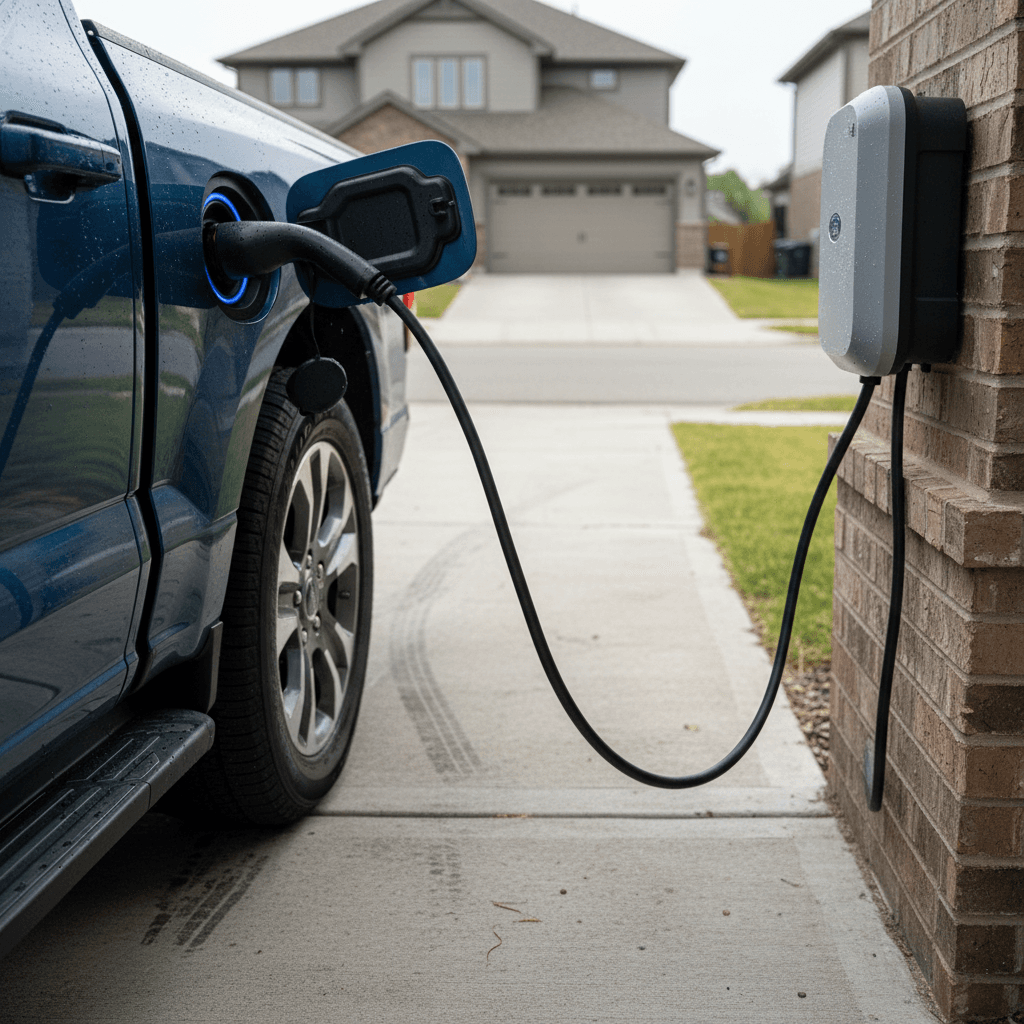
A 240‑volt Level 2 charger turns the Lightning into a plug‑in appliance. Most owners who are happy with the switch have a home charger that can fully recharge overnight.
2. What’s your longest regular trip?
If you regularly drive 250–300+ miles in a single day, especially in rural areas, map out fast‑charging options before committing.
3. Do you tow long distances often?
Occasional short‑range towing is fine. Weekly 300‑mile towing runs are where gas or hybrid trucks still shine.
4. How harsh are your winters?
If you live in a cold‑weather state, assume winter range will be significantly lower and make sure your routes still work.
5. Are you comfortable planning charging stops?
Road‑tripping a Lightning is doable but involves apps, charger maps, and backup plans. If that sounds miserable, be honest about it.
Home charging is the make-or-break factor
Ownership costs: paying at the pump vs at the plug
Ford F‑150 owners tend to be very price‑sensitive when it comes to fuel, maintenance, and resale. Here’s how a Lightning changes that math. Electricity isn’t free, and insurance on a new EV truck can be higher, but you do slash fuel spend and some maintenance items.
Where you save vs gas F‑150
- Energy cost per mile: Home charging often works out to the equivalent of paying $1–$2 per gallon, depending on your utility rates.
- Maintenance: No oil changes, fewer moving parts, and less brake wear thanks to regen.
- Stop‑and‑go efficiency: City driving, where many trucks live, actually favors EVs instead of punishing them.
Where costs can increase
- Insurance: New, high‑tech trucks can carry higher premiums, especially in the first years.
- Depreciation: Lightning values fell faster than many gas F‑150s as Ford cut new prices and demand cooled, painful for early buyers, helpful if you’re buying used now.
- Home charging setup: Installing a 240‑volt circuit and wallbox can run from a few hundred to a few thousand dollars depending on your panel and distance.
How Recharged helps you see the true cost
Used F-150 Lightning market 2025–2026: what owners should know
Because Ford trimmed Lightning prices in 2023–2024 and then ended production of the first‑gen truck in 2025, used F‑150 Lightning prices in 2026 are far more approachable than they were at launch. That’s especially true for higher‑trim extended‑range trucks that originally stickered well into luxury‑truck territory.
Why the 2026 used Lightning market favors buyers
Early adopters absorbed the steepest depreciation curve.
Rapid early depreciation
Price cuts on new trucks plus shifting EV demand pushed used Lightning prices down faster than comparable gas F‑150s. If you’re buying now, you benefit.
Battery warranties still active
Ford’s battery and EV component warranties extend for years, so many used trucks still have substantial coverage left on the expensive bits.
More realistic pricing
With the hype cycle cooling, asking prices more closely track actual market demand. Tools like Recharged’s fair‑value estimates help you avoid overpaying.
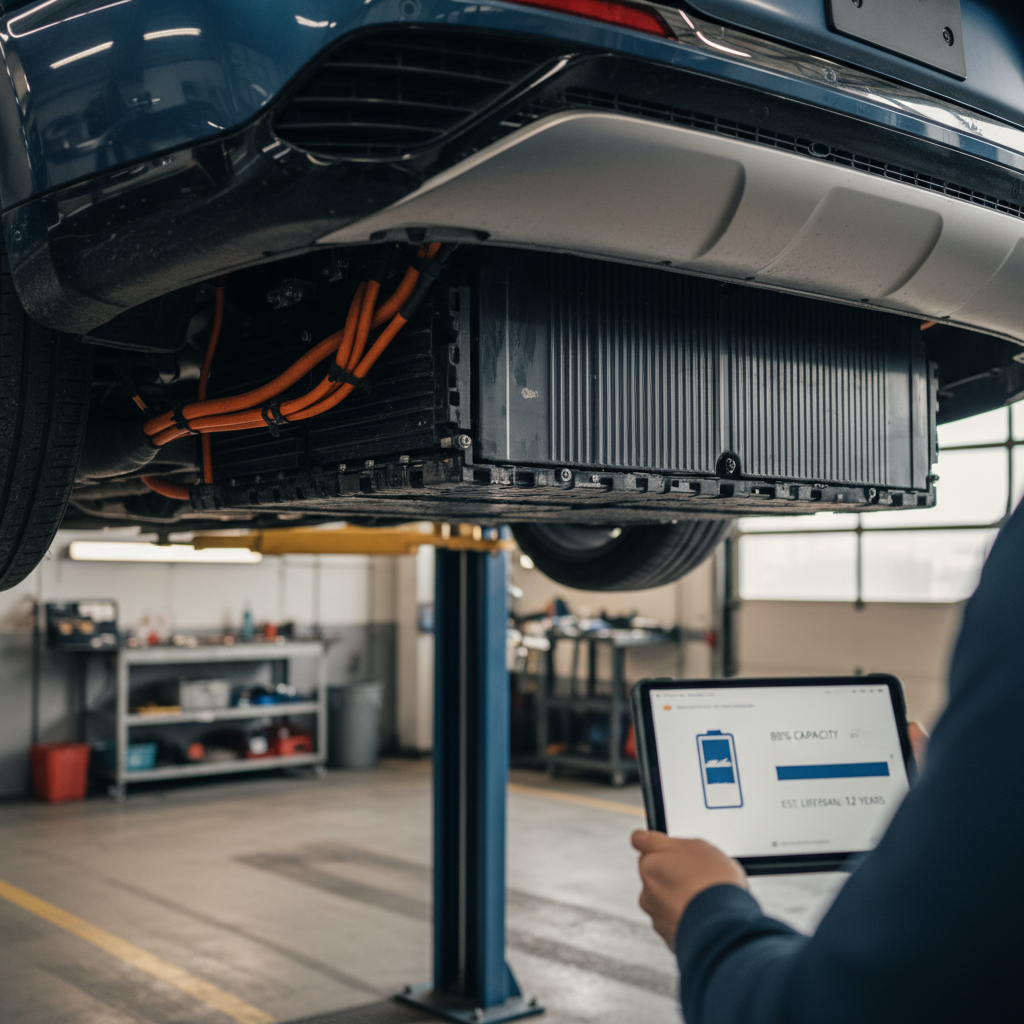
Don’t skip a battery health check
When a Lightning swap makes sense, and when it doesn’t
At this point in the Ford F-150 owner switch to Ford F-150 Lightning review, the pattern is clear: this truck is brilliant for certain owners and frustrating for others. The trick is being brutally honest about how you use your F‑150 today.
Who should (and shouldn’t) switch from F-150 to Lightning
Great candidates for a Lightning
You own your home and can install Level 2 charging in your driveway or garage.
Most of your driving is under 150 miles a day, even in winter.
You tow occasionally but usually within 50–100 miles of home.
You want a quieter, smoother, quicker version of the F‑150 you already like.
You’re interested in lower operating costs and are comfortable using apps to plan the occasional long trip.
Probably better off in gas or hybrid
You tow heavy loads long distances several times a month.
You live in a rural area with sparse fast‑charging infrastructure.
You park on the street or in a shared garage with no charging options.
You routinely drive 300–400+ miles in a day with little time to stop.
You prefer to ‘gas and go’ without planning charging around your schedule.
Step-by-step: how to go from F-150 to F-150 Lightning
If you’ve read this far and still like the idea of trading your gas F‑150 for a Lightning, you’re probably a good candidate. Here’s a practical roadmap to make the switch with as few surprises as possible.
Six smart steps for a smooth F-150 → Lightning transition
1. Audit your real usage
Track a few weeks of your actual daily miles, towing trips, and favorite routes. Most F‑150 owners drive fewer miles than they think, which makes a Lightning more viable.
2. Map your charging options
Confirm you can add a 240‑volt circuit at home and identify convenient DC fast chargers along your common long‑distance or towing routes.
3. Decide on battery and trim
Extended‑range batteries are strongly recommended for ex‑F‑150 owners, especially if you do any highway driving or towing. Lariat and Platinum trims feel closest to a well‑equipped gas F‑150.
4. Get your trade and financing lined up
Used Lightnings are still relatively new, so shop around for financing and trade‑in offers. Recharged can <strong>evaluate your current F‑150</strong> and help you structure a trade or sale into a used Lightning.
5. Demand a battery health report
Whether you’re buying on Recharged or elsewhere, insist on a <strong>third‑party battery health assessment</strong>. It should include state of health (SOH), fast‑charging history, and any fault codes.
6. Live with it for 30–60 days before towing big
Use the first month or two to learn your real‑world range patterns on your commute and local errands. Once you’re comfortable, then start pushing into longer towing or road‑trip duty.
FAQ: switching from a gas F-150 to an F-150 Lightning
Common questions from F-150 owners
Bottom line: should you make the switch?
For many Ford F‑150 owners, the F‑150 Lightning feels like the truck they always wanted: the same familiar cab and bed, wrapped around instant torque, quiet cruising, and much lower day‑to‑day running costs. The catch is that you trade gasoline flexibility for range limitations and charging logistics, especially if you tow heavy or live far from fast‑charging infrastructure.
If you can charge at home, rarely exceed 150–200 miles in a day, and tow within a few hours of your driveway, a used F‑150 Lightning can be a smart, enjoyable upgrade from your gas F‑150, particularly at today’s softer used‑truck prices. If your work or lifestyle depends on long‑distance towing and spur‑of‑the‑moment 400‑mile runs, it may be smarter to keep (or replace) your gas F‑150 now and revisit electric trucks when Ford’s next‑generation extended‑range models arrive.
When you’re ready to explore specific trucks, Recharged can help you trade out of your current F‑150, compare used F‑150 Lightnings side‑by‑side, and see verified battery health before you sign anything. That way, your switch from F‑150 to Lightning is driven by data, not just hype.