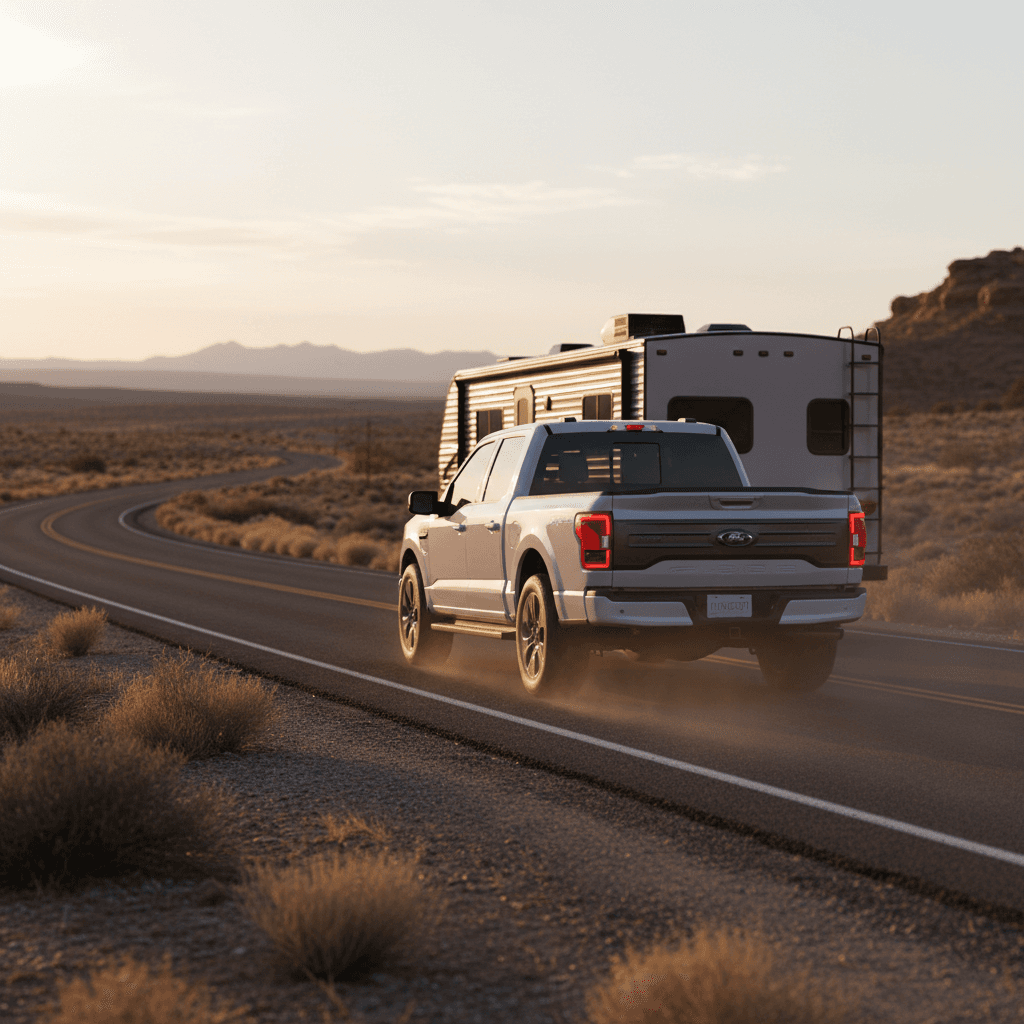
If you’re looking at a Ford F-150 Lightning towing review, you’re probably wondering two things: can it tow like a “real” truck, and what happens to range when you hook up a trailer. The short answer: the Lightning will absolutely move a serious load, but you need to think differently about distance, charging, and trip planning than you would in a gas F-150.
Important context for 2026 shoppers
Overview: Can the F-150 Lightning Really Tow?
On paper, the F-150 Lightning looks every inch a work truck. Dual electric motors, standard 4x4, up to 580 hp and 775 lb-ft of torque, and a maximum tow rating of 10,000 pounds on properly equipped extended‑range models with the Max Trailer Tow Package. That’s solidly in half-ton territory and in the same ballpark as many gas F-150 configurations.
In the real world, the Lightning tows beautifully from a powertrain standpoint, it launches confidently, climbs grades without drama, and feels incredibly stable. Where it differs from a gas truck is usable range: under a heavy trailer at highway speeds, you should expect roughly 100–150 miles between fast‑charge stops, depending on conditions and trailer size.
Think in legs, not total trip distance
Ford F-150 Lightning Towing at a Glance
Key Towing Specs: Capacity, Payload & Trims
Ford configures tow ratings on the Lightning much like the gas F‑150: your exact capacity depends on battery, trim, wheels, and packages. Here’s how the big numbers break down for the first‑generation electric truck (2022–2025 model years):
Ford F-150 Lightning Towing & Payload by Configuration (Approximate)
Always confirm the specific tow and payload ratings on the truck’s door‑jamb sticker and in the owner’s manual, these numbers are general guidelines.
| Configuration | Battery | Max Tow Rating | Max Payload | EPA Range (Unloaded) |
|---|---|---|---|---|
| Pro / XLT Standard Range | ~98 kWh | Up to 7,700 lbs | ~2,000+ lbs | ~240 miles |
| Flash / Lariat Extended Range | ~131 kWh | Up to 10,000 lbs | ~1,700–2,200 lbs | ~320 miles |
| Platinum Extended Range | ~131 kWh | 8,500 lbs | ~1,600–1,800 lbs | ~300 miles |
Max ratings assume the correct hitch and the Max Trailer Tow Package where required.
How to verify towing numbers on a used truck
Two other specs matter as much as the headline tow rating:
- Payload: This is how much weight you can put in the cab and bed plus tongue weight. Heavier passengers, gear, and hitch weight all eat into payload.
- Frunk capacity: The Lightning’s “Mega Power Frunk” can hold around 400 pounds. That’s lockable, weather‑proof storage that doesn’t touch your payload rating, which is handy for tools or camping gear.
Real-World Range When Towing
Unloaded, an extended‑range F‑150 Lightning is EPA‑rated around 300–320 miles depending on trim, with standard‑range trucks around 240 miles. In independent highway tests, some trims have matched or exceeded their EPA numbers when driven without a trailer.
Hook up a trailer, though, and the numbers change quickly. Third‑party tow tests with a ~6,100‑pound trailer at 70 mph have seen range drop to roughly 100 miles per charge. Lighter, more aerodynamic trailers at 60 mph can do better; tall boxy campers at 75 mph will do worse. The pattern is clear: assume about half of the unloaded EPA range as a planning baseline, then adjust for your trailer and route.
The big towing mistake with EV trucks
- Heavy, high‑drag trailers (tall RVs, enclosed car haulers) hurt range much more than low, streamlined ones (boats, flatbeds, utility trailers).
- High speed kills EV towing range, there’s a big difference between 60 and 75 mph.
- Cold weather and strong headwinds are double trouble; plan extra charging stops in winter.
- Regenerative braking helps recover energy on long descents, but it won’t cancel out the uphill penalty.
Driving Experience: How the Lightning Feels Under Load
Power & Stability
- Instant torque: With up to 775 lb-ft on tap, the Lightning pulls away from stops and up on‑ramps with ease, even with a heavy trailer.
- Low center of gravity: The battery pack sits in the floor, which helps stability and makes the truck feel planted with a load.
- Quiet towing: No engine roar under load makes long days less fatiguing for you and your passengers.
Control & Confidence
- Built‑in trailer brake controller and tow/haul modes tailor throttle and braking for towing.
- Available Pro Trailer Backup Assist and surround cameras take stress out of tight maneuvers.
- Regenerative braking provides a natural, confident feel on descents, especially in one‑pedal mode.
Where the Lightning actually beats gas trucks
Charging & Route Planning With a Trailer
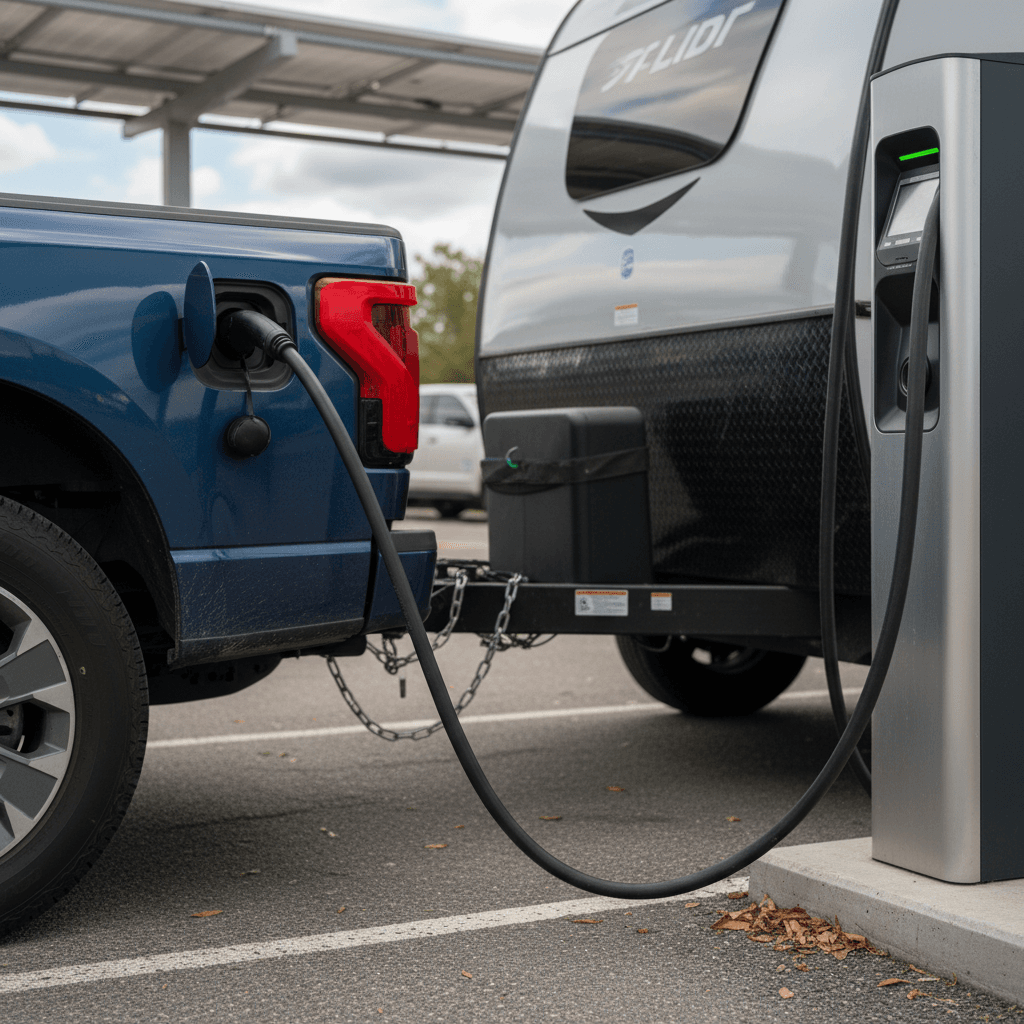
The other half of any honest F-150 Lightning towing review is charging logistics. When you’re towing, you’re not just thinking about electrons, you’re thinking about where you can physically fit truck plus trailer at a charger.
The Three Big Charging Challenges When Towing
Most can be managed with planning and a few simple habits.
1. Access & Layout
Many DC fast chargers are designed for solo cars, not trucks with trailers. Often you’ll need to:
- Pull across multiple spaces (if allowed and not busy).
- Drop the trailer temporarily in the lot.
- Favor stations with pull‑through truck/RV lanes.
2. Shorter Usable Legs
At highway speeds, plan conservative legs:
- Assume 80–120 miles between stops.
- Leave a buffer to handle wind, hills, or detours.
- Use apps that show charger reliability and amenities.
3. Time at the Plug
On a high‑power charger, a Lightning can add useful range quickly, but:
- Charging slows down above ~80%.
- Multiple 30–45 minute stops add up.
- Build those stops into meals and rest breaks.
Plan with EV‑specific tools
Quick Planning Checklist Before a Long Tow
Confirm your real-world tow range
Do a shorter shakedown trip with your trailer, 40–60 miles out and back, to see how quickly the truck uses energy at your typical speed.
Map chargers that work with trailers
Prioritize locations near large parking lots, truck stops, or pull‑through DC fast chargers, even if they’re slightly off the main route.
Build in extra time
Assume each DC fast‑charge stop will take 30–45 minutes door‑to‑door when towing, including maneuvering and restroom/meal breaks.
Have a Plan B and Plan C
For each stop, know an alternate charger in case your first choice is crowded or offline.
F-150 Lightning vs Gas F-150 for Towing
On spec sheets, the gas F‑150 still has the upper hand in maximum tow rating and long‑distance practicality. Properly configured gas and hybrid F‑150s are rated up to about 13,500 pounds, and they can often tow 300–500 miles on a tank, refuel in minutes, and keep going.
Ford F-150 Lightning vs Gas F-150: Towing Comparison
How the first‑gen electric Lightning stacks up against a similarly equipped gas F‑150 for towing‑focused use.
| Aspect | F-150 Lightning (Extended Range) | Gas F-150 (EcoBoost / Hybrid) |
|---|---|---|
| Max tow rating | Up to 10,000 lbs | Up to ~13,500 lbs |
| Range while towing | ~100–150 miles per charge (variable) | ~300–500+ miles per tank |
| Refuel / recharge time | ~30–45 min to 80% on DC fast charge | 5–10 min at a gas pump |
| Low‑speed torque | Instant, very strong | Strong but builds with RPM |
| Operating cost per mile | Generally lower (electricity vs gas) | Higher fuel and maintenance costs |
| Noise & refinement | Very quiet under load | Noticeable engine/drivetrain noise |
These are typical figures; exact ratings vary by model year and configuration.
How to choose between them
Best Use Cases: Who the Lightning Tows Well For
Where the F-150 Lightning Shines as a Tow Vehicle
Match your towing pattern to the truck, not the brochure headline.
Weekend Boat & Toy Haulers
If you’re towing a boat, small camper, or side‑by‑sides to a lake 50–80 miles away, the Lightning is right in its element. You can:
- Charge at home before and after the trip.
- Often make the roundtrip on a single charge with lighter loads.
- Use Pro Power Onboard at the campsite or dock.
Contractors & Local Fleets
Many tradespeople tow equipment or small trailers around town rather than cross‑country. The Lightning offers:
- Strong low‑speed torque for city traffic.
- Up to 9.6 kW of onboard power for tools.
- Lower day‑to‑day operating costs vs gas.
Regional Camping & Overlanding
If your usual trips involve 80–120 mile hops between campgrounds with power, the Lightning can work well with a carefully chosen trailer.
Suburban Families With Occasional Towing
For a family that tows a small utility trailer a few times a year but spends 95% of miles commuting, the Lightning’s quiet ride and instant torque improve everyday life.
Where a Lightning is the wrong tool
Buying a Used F-150 Lightning for Towing
With Ford discontinuing the fully electric Lightning after the 2025 model year, every truck you’ll see from here on out will effectively be a used F‑150 Lightning. That’s not a bad thing: early depreciation and shifting market sentiment mean you can often buy a lot of truck for the money, if you shop carefully.
Used Lightning Towing Buyer’s Checklist
Confirm the exact tow and payload ratings
Look at the door‑jamb sticker and original window sticker, and verify whether the truck has the Max Trailer Tow Package and which battery it carries.
Review battery health and DC fast‑charge history
Battery condition matters when you’re routinely towing near the edge of your range. A <strong>Recharged Score battery health report</strong> gives you an objective view before you buy.
Inspect hitch, wiring, and brakes
Make sure the hitch receiver, wiring harness, and trailer brake controller all function properly and haven’t been abused by over‑loading.
Plan for charging where you tow
Before you sign, check where you’ll actually be towing: are there reliable DC fast chargers near your route or destination?
How Recharged can help
Ford F-150 Lightning Towing FAQ
Common Questions About Towing With the F-150 Lightning
Bottom Line: Is the Lightning a Good Tow Rig?
Looked at through a traditional truck lens, the Ford F‑150 Lightning is both impressive and imperfect. It offers effortless torque, confident stability, and all the modern towing aids you’d expect from an F‑150. At the same time, its usable range under load and current charging infrastructure mean it’s not a universal replacement for a gas or diesel pickup, especially if your life revolves around long‑distance, heavy towing.
If your world is mostly shorter regional trips, weekend getaways, and daily driving with occasional towing, the Lightning can be a remarkably refined, quiet, and capable tow partner, particularly as a value‑priced used truck. The key is matching the tool to the job. Take an honest look at your trailer, routes, and charging options; then, if the numbers work, lean on a trusted used‑EV specialist like Recharged to help you find a Lightning whose battery health and configuration give you confidence every time you hitch up.