If you’re considering a Ford F-150 Lightning, you’re probably not just wondering about range and towing, you want to know the long-term ownership cost. How does the Lightning stack up against a gas F-150 over five years once you factor in charging, maintenance, insurance, and depreciation?
Key takeaway
Why F-150 Lightning ownership costs matter
The F-150 Lightning sits at the intersection of work truck and family hauler, and it competes not only with other EV pickups but with decades of loyal gas F-150 owners. Understanding long-term ownership costs helps you decide whether the switch to electric makes financial sense for your driving pattern, whether you’re hauling tools during the week or towing a camper on weekends.
- EV trucks have higher MSRPs but lower fuel and maintenance costs.
- Battery health, resale value, and charging access matter more than they do with gas trucks.
- Used F-150 Lightning prices have adjusted quickly as more supply hits the market, good for buyers, tough for early adopters.
How we estimate F-150 Lightning long-term costs
No two owners are identical, but you need a baseline. For this guide, we’ll use a typical 5-year ownership window with U.S. averages. Treat these as directional, not exact, and adjust the assumptions to your own situation.
Baseline 5-year ownership assumptions
These assumptions anchor the Ford F-150 Lightning long-term ownership cost estimates. You can mentally tweak them to reflect your own driving and electricity prices.
| Factor | Assumption |
|---|---|
| Annual mileage | 12,000 miles |
| Ownership period | 5 years (60,000 miles) |
| Home electricity price | $0.16 per kWh |
| Public fast charging price | $0.40 per kWh (blended) |
| Gasoline price (for comparison) | $3.50 per gallon |
| Comparable gas F-150 fuel economy | 20 mpg combined |
| Mix of charging | 80% home, 20% fast charging |
Adjust mileage, electricity rates, and gas prices to see how your personal costs shift.
Your numbers will vary
Purchase price, incentives, and financing
New Ford F-150 Lightning pricing has evolved since launch, with MSRPs and incentives fluctuating as Ford responds to demand and competition. Many buyers today are choosing a used Lightning, where prices have come down sharply from early pandemic peaks.
What drives your upfront cost
Sticker price is only one part of the equation.
Trim & battery size
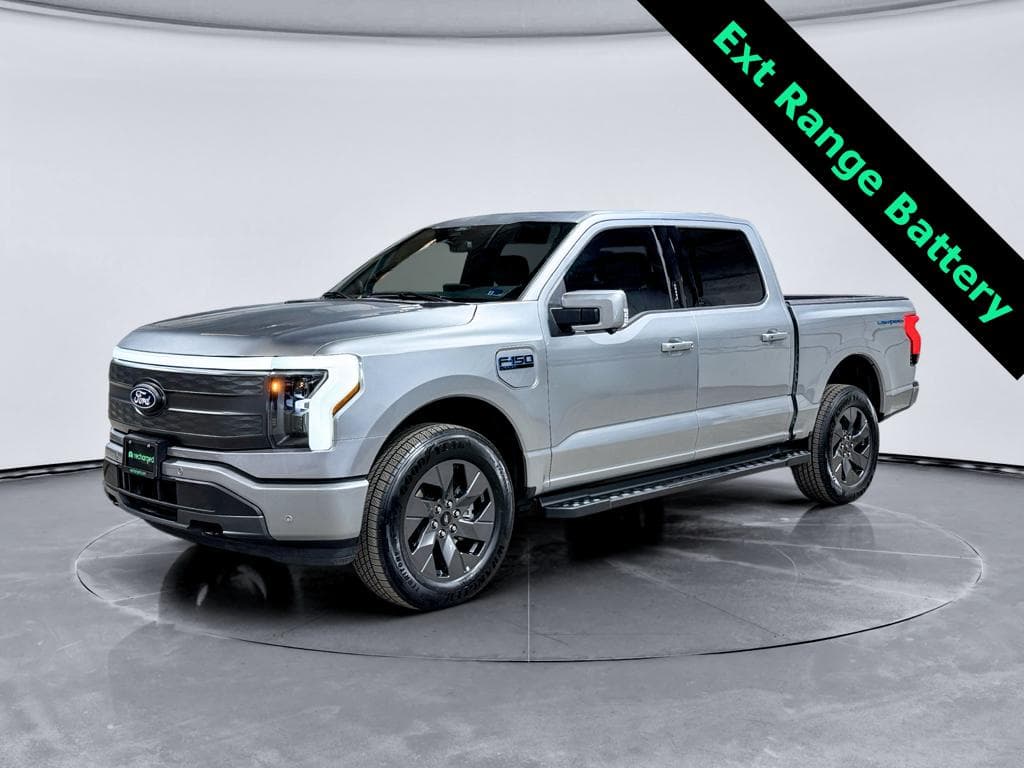
Pro, XLT, Lariat, and Platinum trims, and Standard vs Extended Range packs, create a wide price spread. Higher trims offer more features but don’t always change your daily cost per mile as much as you’d think.
Incentives & tax credits
Depending on your income, location, and whether the truck is new or used, you may qualify for federal or state EV incentives. These effectively drop your total cost of ownership by thousands.
Financing and interest
Interest rates have a big impact on monthly payment. A slightly cheaper used Lightning with a higher rate can cost more per month than a new one with subvented financing.
Where Recharged fits in
Charging costs vs gasoline for the F-150 Lightning
Energy cost is where the F-150 Lightning often shines. The truck is heavy and not the most efficient EV, but electricity is still typically cheaper per mile than gasoline, especially if you can charge at home overnight.
Estimated energy cost over 5 years (60,000 miles)
Those numbers translate roughly into the following per-mile fuel costs:
Per-mile energy cost: F-150 Lightning vs gas F-150
Illustrative costs based on our baseline assumptions.
| Vehicle | Energy cost per mile | 5-year energy cost (60,000 miles) |
|---|---|---|
| F-150 Lightning (mostly home charging) | ≈$0.10 | ≈$6,000 |
| Gas F-150 at 20 mpg, $3.50/gal | ≈$0.18 | ≈$10,500 |
Even with some fast charging, the Lightning typically beats gasoline on energy cost per mile.
What about fast charging?
Maintenance and repair costs
Trucks are workhorses, and historically, full-size pickups aren’t cheap to maintain. Here the F-150 Lightning benefits from its EV powertrain: no oil changes, no spark plugs, no exhaust, and far fewer moving parts than its gas sibling.
F-150 Lightning typical maintenance items
- Tire rotations and eventual replacements (heavy EVs tend to wear tires faster).
- Brake fluid service and occasional pad checks (regenerative braking reduces wear).
- Cabin air filter replacement.
- Coolant service for battery/thermal system at specified intervals.
Gas F-150 typical maintenance items
- Regular oil and filter changes.
- Transmission fluid and differential services.
- Exhaust and emissions system repairs over time.
- Spark plugs, belts, pulleys, and more complex engine components.
Expected maintenance savings
Insurance, registration, and taxes
Insurance can catch EV buyers off guard. F-150 Lightning premiums can be higher than a similarly priced gas F-150 for a few reasons: higher MSRP, expensive aluminum bodywork, and complex electronics. On the other hand, some insurers now offer EV discounts or telematics programs that can soften the blow.
- If your Lightning’s MSRP is higher than your last truck, budget for a modest insurance increase.
- States calculate registration fees in different ways, some add EV surcharges, others offer breaks for clean vehicles.
- Shop around. Insurers differ widely on how they price EV pickups, especially newer models like the Lightning.
Don’t forget EV fees
Depreciation and resale value
Depreciation is the biggest wild card in F-150 Lightning long-term ownership cost. Early trucks saw prices fall faster than many buyers expected as EV incentives changed, interest rates rose, and more supply hit the market. The good news: if you’re buying now, especially used, you may already be past the steepest part of that curve.
What shapes F-150 Lightning resale value
Some you control, some you don’t.
Model year & battery tech
Later-model Lightnings may benefit from improved software, range tweaks, and broader charging network access (like NACS adapters), which can support resale values.
Mileage & usage
High-mileage work trucks will still depreciate faster, but buyers care more about how those miles were driven and whether the battery is healthy.
Battery health proof
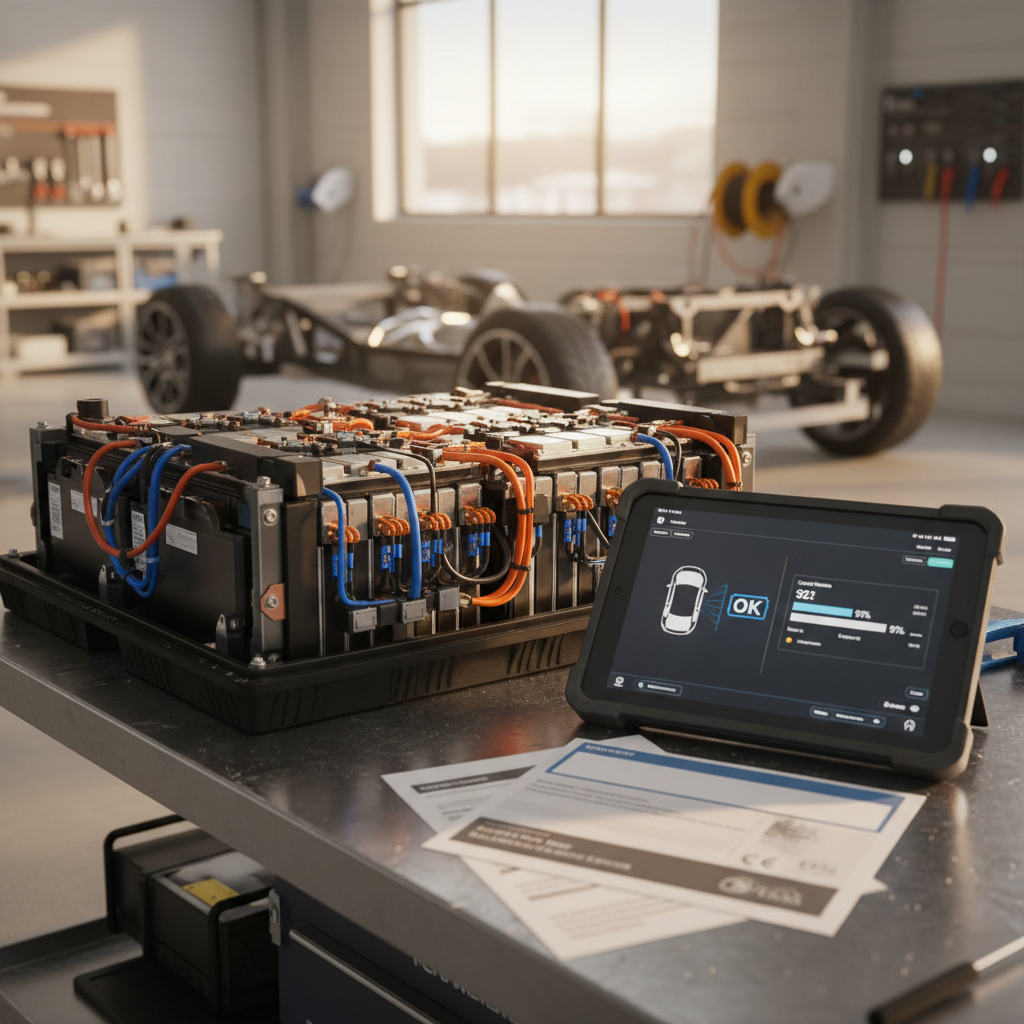
Having documented battery health, for example in a Recharged Score Report, can make a used Lightning easier to sell and command stronger offers.
How Lightning stacks up
Battery health and long-term risk
The F-150 Lightning’s battery pack is engineered for truck duty, with thermal management and software designed to manage degradation. Still, for long-term ownership, battery health is the single most important mechanical variable, much more so than on a gas F-150, where an engine rebuild is unfortunate but possible.
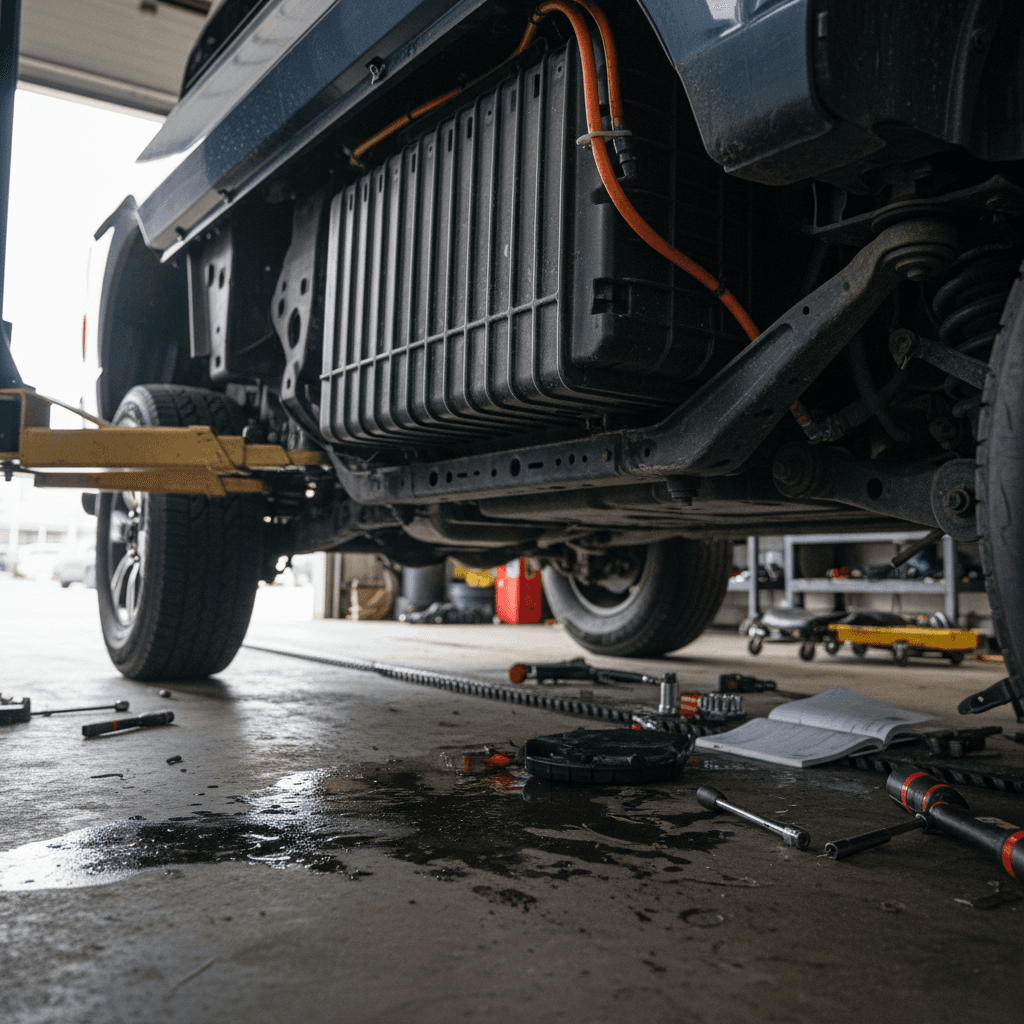
- Normal degradation is expected, losing some range over 8–10 years is typical for modern EVs.
- Fast charging, very high mileage, and repeated heavy towing can accelerate wear but don’t automatically mean a bad pack.
- What matters for resale is documented health, not just odometer mileage. That’s where third-party diagnostics and tools like the Recharged Score come in.
Buying with battery confidence
Real-world 5-year cost scenarios
To make this more concrete, here are two simplified 5-year ownership snapshots for a Ford F-150 Lightning compared with a comparable gas F-150. These are directionally accurate examples, not quotes, and assume 60,000 miles, a mix of city and highway use, and average U.S. prices.
Illustrative 5-year total cost of ownership
Approximate totals for a well-equipped F-150 Lightning vs a comparable gas F-150. Purchase price assumes similar equipment levels before incentives.
| Cost category | F-150 Lightning (before incentives) | Gas F-150 |
|---|---|---|
| Purchase price (incl. tax, fees) | $70,000 | $63,000 |
| Fuel / electricity | $6,000 | $10,500 |
| Maintenance & repairs | $2,000 | $3,500 |
| Insurance (5-year total) | $9,000 | $8,000 |
| Registration, taxes, EV fees | $3,000 | $2,500 |
| Depreciation (estimated) | $32,000 | $27,000 |
| Approx. 5-year total | ≈$122,000 | ≈$114,500 |
Fuel and maintenance savings narrow the gap between Lightning and gas F-150 over five years, especially when incentives apply.
Those numbers shift quickly if you factor in incentives or different energy prices. A meaningful EV tax credit or a strong discount on a used Lightning can drop its total cost into the same band, or below, a gas F-150 while delivering a quieter drive and at-home fueling.
Where do you win with the Lightning?
Tips to lower your F-150 Lightning ownership cost
Practical ways to shrink long-term cost
Charge at home whenever possible
Home charging at off-peak rates can cut your per-mile cost dramatically compared with public DC fast charging. A simple Level 2 setup in your garage or driveway is often enough for daily use.
Right-size your trim and battery
If you rarely tow long distances, you may not need the priciest Extended Range or Platinum trims. A more modest configuration can offer lower payments with similar real-world utility.
Keep tires properly inflated
The Lightning is heavy, and underinflated tires hurt efficiency and wear out quickly. Checking pressures regularly protects range and reduces replacement costs.
Use scheduled charging & preconditioning
Preconditioning while plugged in and using scheduled charging to target cheaper rates can improve battery longevity and lower your electricity bill.
Document service and battery checks
Saving service records, software update logs, and any battery health reports will make your truck more attractive to the next owner and may support a better resale price.
Compare insurance frequently
Rates for newer EVs can change as insurers gather more data. Re-shop your policy annually, especially after software or safety-feature updates that might qualify you for discounts.
Buying a used F-150 Lightning smartly
If you’re eyeing a used Lightning, you’re in a different position from early adopters: you can benefit from depreciation rather than absorbing it. Your long-term cost hinges on the truck’s history, battery health, and the price you pay today.
What to prioritize in a used Lightning
- Battery health reports or diagnostics, not just the dash range estimate.
- Service history, especially any high-voltage or charging-system work.
- Evidence of heavy towing or commercial use (which isn’t automatically bad but should be priced in).
- Software update status and active connected services.
How Recharged helps reduce risk
- Every Lightning sold on Recharged includes a Recharged Score Report that verifies battery condition and key systems.
- Transparent pricing tools help you understand fair market value in today’s EV truck market.
- Financing, trade-in options, and nationwide delivery simplify the process, whether you’re upgrading from a gas F-150 or another EV.
FAQ: Ford F-150 Lightning long-term ownership cost
Common questions about F-150 Lightning ownership costs
Is the F-150 Lightning worth it long term?
When you zoom out over five years, the Ford F-150 Lightning’s long-term ownership cost is more competitive than many shoppers assume. You’re trading a higher upfront price and some depreciation and insurance risk for lower energy and maintenance costs, at-home fueling, and a quieter, more modern truck experience.
If you charge mostly at home, drive a typical 10,000–15,000 miles per year, and can take advantage of incentives, or buy used at today’s more realistic prices, the Lightning can be an excellent financial and practical choice. And if you’re evaluating a used F-150 Lightning, buying through Recharged with a verified Recharged Score Report, battery health data, and nationwide delivery support can help you lock in a truck whose long-term costs match your expectations.