If you’re considering a Ford F‑150 Lightning, especially a used one, battery life is probably near the top of your list. You want to know how much F‑150 Lightning battery degradation per year you should expect, how it affects range and towing, and whether it’ll still be a dependable truck at 80,000 or 120,000 miles.
Big picture
Overview: How Much Do F-150 Lightning Batteries Degrade Per Year?
Let’s start with what’s realistic. Ford warranties the Lightning’s high‑voltage battery for 8 years or 100,000 miles with a guarantee that it will retain at least 70% of its original capacity over that period (check your model‑year booklet for exact wording). That works out to a worst‑case design target of roughly 3–4% degradation per year if you drive 12,000–15,000 miles annually.
F-150 Lightning battery degradation at a glance
In other words, if you treat the truck reasonably well, a 5‑year‑old Lightning with 60,000–75,000 miles is still likely to have well over 80% of its original usable capacity. That’s a noticeable range drop, but nowhere near "time to scrap the truck" territory.
Warranty vs reality
Battery packs, chemistry, and Ford’s warranty promise
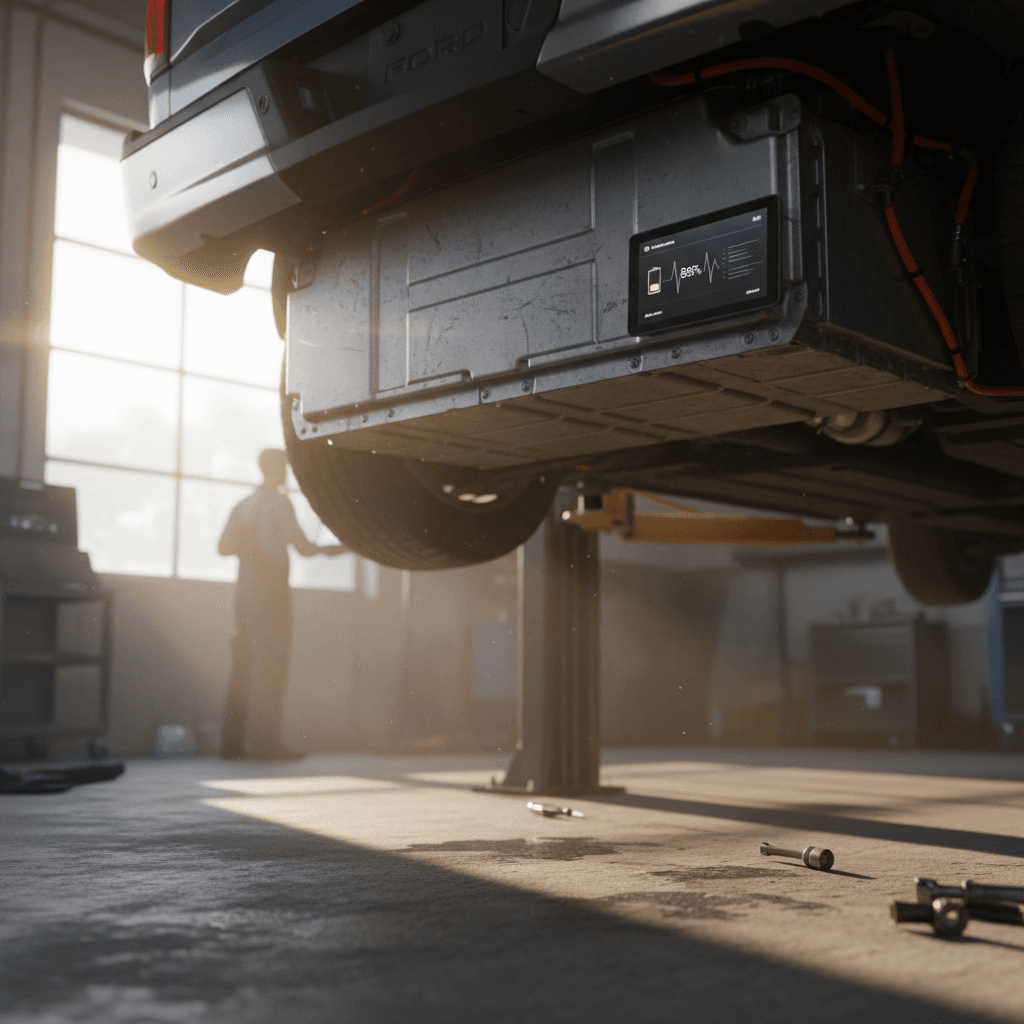
Understanding degradation starts with what’s under the floor. The F‑150 Lightning launched with two lithium‑ion battery options and, by the 2026 model year, moved toward standardizing the bigger pack on more trims:
F-150 Lightning battery options by pack
Usable capacities and EPA range estimates for major F‑150 Lightning battery configurations.
| Pack | Usable capacity (kWh) | Estimated EPA range* | Typical trims |
|---|---|---|---|
| Standard Range (early years) | ≈98 kWh | ~230–240 mi | Pro, XLT, some Lariat |
| Extended Range (most years) | ≈131 kWh | ~300–320 mi | XLT, Lariat, Platinum |
| Later Extended Range (updated energy figure) | ≈123 kWh usable (re‑rated) | ~240–320 mi | 2025–2026 Pro, STX, Flash and others |
Exact EPA range depends on model year, trim, wheels, tires, and options, but this table captures the big picture.
These packs use liquid‑cooled lithium‑ion cells with active thermal management, software‑limited charge windows, and a significant top‑ and sometimes bottom‑end buffer. That buffer is critical for degradation: even when your display shows 100%, the actual cells are below their true maximum voltage, which helps slow long‑term wear.
- High‑voltage battery warranty: typically 8 years / 100,000 miles (U.S.) against excessive capacity loss.
- Capacity guarantee: Ford targets ≥70% of original capacity at the end of the warranty period.
- Coverage scope: battery pack, high‑voltage battery control module, and related components (check your owner’s manual for specifics).
Why 70% matters for shoppers
Real-world owner data: What Lightning drivers are actually seeing
Because the Lightning doesn’t show battery state of health on the main driver screens, most real‑world degradation data comes from owners using OBD2 readers, logging road trips, or comparing repeat routes over time. Those data sets paint a more reassuring picture than many early EV skeptics predicted.
Early F-150 Lightning degradation snapshots
Real‑world stories from high‑mileage owners and long‑term testers
~100,000 miles, ~3% loss
Enthusiast and fleet owners have reported Lightning packs around 96–98% health even past 90,000–100,000 miles, based on OBD2‑read usable energy measurements and repeat long‑distance trips.
3 years, high‑90s SOH
One well‑documented 2022 Lightning showed only a few percent range loss over roughly three years and tens of thousands of miles when the same road trip was repeated under similar conditions.
Range vs. degradation
Many drivers mistake winter range loss or towing losses for degradation. In most logs, when weather and load normalize, range bounces back much more than a truly worn‑down battery could explain.
Put simply: there are already Lightnings in the wild with six‑figure mileage that haven’t come close to Ford’s 70% warranty floor. That suggests the true average annual degradation is often closer to 1–2% in typical mixed use, though abusive fast‑charging or extreme heat can push that higher.
What this means for you
Six key factors that impact Lightning battery degradation
Not all miles are equal. Two F‑150 Lightnings with identical odometers can have very different battery health depending on how they were used and where they lived. Here are the big levers you can actually control.
Main drivers of F-150 Lightning battery wear
1. Calendar age vs. mileage
Batteries age with time as well as miles. A lightly‑driven truck sitting at 100% charge in a hot climate can degrade faster than a higher‑mileage truck that lives in a mild region and cycles between roughly 20–80% most days.
2. State of charge habits
Regularly parking at a displayed 100% for days in a hot driveway is harder on lithium‑ion cells than living between ~20–80% or ~30–90%. The Lightning’s buffer helps, but extremes still add up over years.
3. Fast-charging frequency and behavior
Occasional DC fast charging on road trips is fine. A steady diet of repeated 10–80% fast charges, immediately followed by hard highway driving in summer heat, will stress the pack and accelerate degradation.
4. Temperature exposure
Prolonged heat, think Phoenix summer, ages batteries faster. The Lightning’s liquid cooling protects the pack while driving and charging, but long periods parked outside in extreme heat at high state of charge are still tough on chemistry.
5. Towing and heavy loads
Towing itself doesn’t directly damage the battery, but it <strong>raises discharge rates and pack temperature</strong>. If you tow often at high speed and then fast‑charge immediately, you’re stacking stress on the cells.
6. Software version and charging logic
Ford has updated charging and thermal‑management logic over time. Trucks running the latest software may manage pack temperature more conservatively, which can indirectly slow degradation compared with early builds.
Rule of thumb for battery-friendly use
What degradation really means for range, towing, and payload
Capacity loss is only scary if you translate it straight into “the truck can’t do its job anymore.” For most Lightning owners, a reasonable amount of degradation changes your planning, not your whole life.
Range in daily driving
Start with a 300‑mile Extended Range Lightning. At a conservative 10% permanent degradation, your new "full" might be effectively 270 miles in mild weather. With 20% loss, you’re around 240 miles in the same conditions.
For commuters and local contractors who rarely drive more than 120–150 miles in a day, that’s still plenty of cushion, especially with home overnight charging.
Towing and payload reality check
Where degradation stings more is towing. If you were planning a 150‑mile trailer pull on a single charge with a new Extended Range pack, 10–20% degradation might trim that down to 120–135 miles in similar weather.
Practically, it often means one extra charging stop on long trips or choosing your charging locations a bit more carefully, not giving up on towing altogether.
Don’t confuse trip planner estimates with degradation
How to slow F-150 Lightning battery degradation
You can’t stop degradation entirely, but you can meaningfully slow it down. The goal is to keep the pack in its comfort zone most of the time and reserve the extremes for when you really need them.
- Use charge limits when possible. If your daily driving is light, consider charging to 80–90% instead of 100% every night, especially in summer.
- Avoid long summer parking at high SOC. If the truck will sit outside for days in hot weather, let it drift down into the 40–70% range instead of plugging in to stay at "full."
- Plan fast charging like sprints, not a lifestyle. Use DC fast charging for road trips and work emergencies, not for daily top‑offs when Level 2 home or workplace charging is available.
- Warm up in winter while plugged in. Pre‑condition the cabin and, when available, the battery before leaving on very cold mornings to protect range and stress on the cells.
- Drive a bit slower when towing. Dropping 5–10 mph on the highway while towing can significantly reduce energy demand and pack temperature, which is better for both range and long‑term health.
- Stay current on software. Many battery‑related improvements arrive quietly through over‑the‑air updates. Keeping modules up to date ensures you’re getting Ford’s latest thermal‑management tuning.
You don’t have to baby it
Shopping used: How to judge an F-150 Lightning’s battery health
When you’re buying a used Lightning, the question isn’t just "What’s the odometer?" It’s "How has this pack been treated, and how much usable energy does it still have?" Here’s how to get beyond guesswork.
Four smart checks for a used F-150 Lightning battery
Combine these to build a clear picture of battery health
1. Look at age and mileage together
A 3‑year‑old truck with 70,000 highway miles and reliable charging habits can have healthier cells than a 3‑year‑old garage queen kept at 100% in extreme heat. Use both build date and mileage to frame your expectations.
2. Ask for charging and use history
When possible, learn whether the truck was a fleet fast‑charging workhorse, a commuter that lived on Level 2, or a truck that sat for long periods. Owners who know and care about these details usually took better care of the pack.
3. Compare range vs. EPA when new
On a mild‑weather highway test drive, compare the truck’s projected range at, say, 70 mph to its original EPA estimate for that trim. Big differences can point to added drag, poor tires, or, less commonly, above‑average degradation.
4. Get a professional battery health report
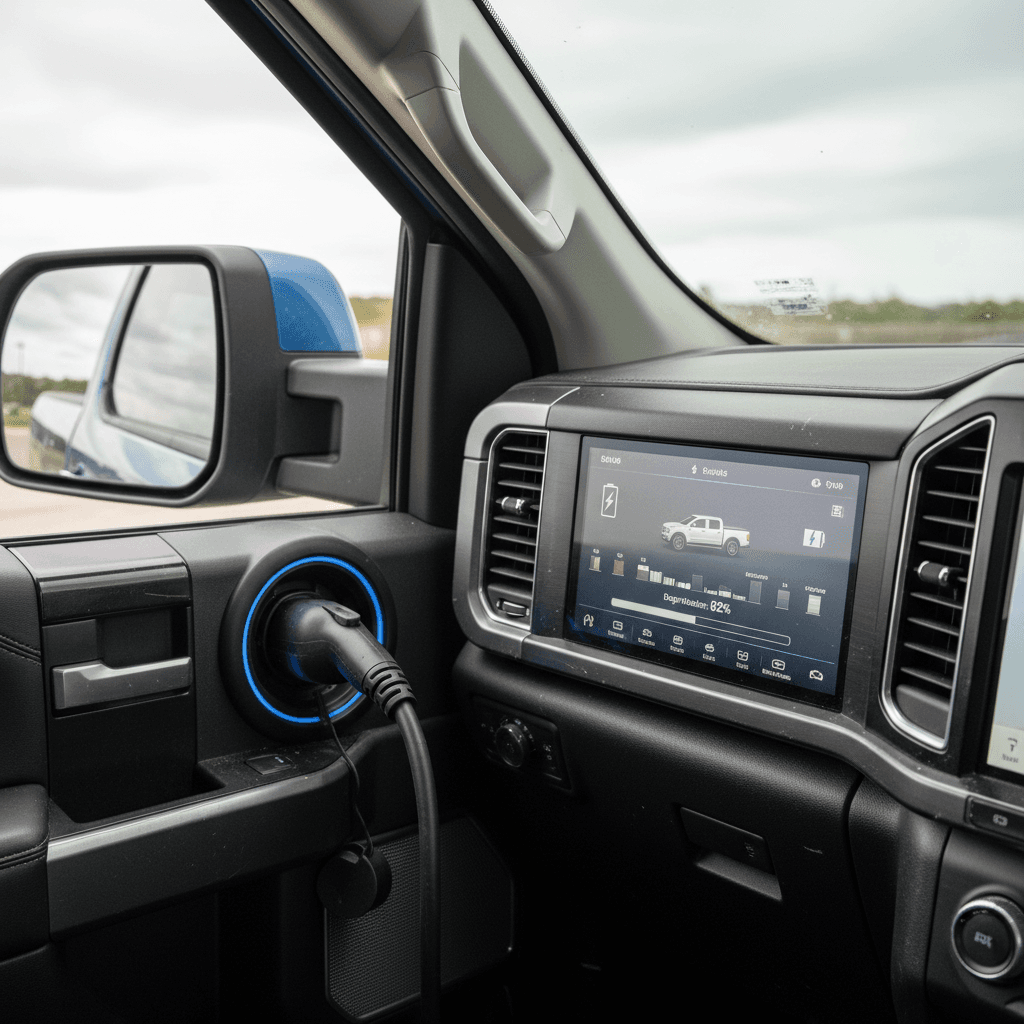
Relying on gut feel is risky with a pack that originally cost tens of thousands of dollars. A proper battery health diagnostic that measures usable kWh and SOH takes the guesswork out of a used Lightning purchase.
The cost of guessing wrong
How Recharged measures F-150 Lightning battery health
Because the battery is the single most expensive component in an F‑150 Lightning, Recharged treats it as the centerpiece of every used‑truck evaluation, not an afterthought. Every Lightning listed on Recharged comes with a Recharged Score Report that goes deeper than a typical dealer inspection.
- Verified battery health: We use specialized diagnostic tools to estimate the pack’s usable energy and state of health, not just read dash range guesses.
- Thermal & charging history clues: Our technicians look for signs of excessive fast‑charging, error codes, or thermal‑management issues that can affect long‑term reliability.
- Fair‑market pricing: Truck pricing is benchmarked against current market data and the specific battery health of that vehicle, so a Lightning with an especially strong pack is valued accordingly.
- Full‑digital experience: You can browse used F‑150 Lightnings online, review Recharged Score Reports, arrange financing, and schedule delivery, without setting foot in a traditional showroom.
- Expert EV support: EV‑specialist advisors can explain what the health numbers mean in plain language and help you decide whether a particular Lightning fits your daily driving, towing, and budget.
Why this matters for a used Lightning
Ready to find your next EV?
Browse VehiclesFAQ: Ford F-150 Lightning battery degradation
Common questions about F-150 Lightning battery life
Battery degradation is real, but it isn’t the silent killer some shoppers imagine. The Ford F‑150 Lightning’s pack has been engineered, and so far, has performed, to lose capacity slowly enough that most owners will move on to their next truck for reasons other than battery wear. If you understand how degradation works, drive and charge with a little care, and insist on verified battery health when you buy used, a Lightning can be a workhorse for many years. And if you’d rather not guess at what’s happening under the floor, shopping through Recharged gives you an expert‑verified window into the battery that matters most.