If you’re shopping for a used electric vehicle in Florida in 2026, you’ve probably heard that the big federal EV tax credits disappeared in late 2025. That’s mostly true for vehicle purchases, but there are still meaningful ways to save on a used EV and your charging costs. This guide breaks down **Florida used EV incentives in 2026** so you know exactly what’s left, what’s gone, and how to stack the remaining perks on a smart used-EV deal.
Key 2026 incentive changes in one glance
Overview: Florida used EV incentives in 2026
Florida used EV incentive snapshot for 2026
For 2026, think of **used EV incentives in Florida** in three buckets: 1. **Vehicle purchase incentives** – mostly gone at the federal level; none at the statewide level. 2. **Charging and energy incentives** – still active through certain utilities and a federal home charger credit that runs into mid‑2026. 3. **Non-cash protections and perks** – such as Florida’s protections against EV-specific insurance surcharges and lower fuel and maintenance costs compared with gas cars. Your strategy now is to **buy the right used EV at a fair price**, then layer in **charging and utility incentives** to keep ownership costs low.
What changed: federal used EV credits in 2026
Through September 30, 2025, qualifying buyers could claim **up to $4,000** off eligible used EVs under the federal pre‑owned clean vehicle credit. Separate rules allowed up to **$7,500** off certain new EVs, and some lessees benefited from point‑of‑sale lease incentives. Under the One Big Beautiful Bill Act, those **vehicle purchase credits were phased out as of late 2025**, based on when you “acquired” the vehicle, not when you register it.
- If you **bought a qualifying used EV on or before September 30, 2025** and haven’t claimed the federal credit yet, you may still be able to file using IRS Form 8936 when you do your taxes.
- If you **buy a used EV in 2026**, there is **no new federal purchase credit** available under current law, whether you pay cash, finance, or lease.
- The sunset of the federal used EV credit also means Florida buyers now rely more heavily on **price, financing, and charging incentives** to make the numbers work.
Don’t confuse 2023–2024 rules with 2026
Florida state-level incentives for used EVs
Unlike some other states, **Florida does not offer a statewide tax credit or rebate just for buying a new or used EV**. There’s no state income tax, so Tallahassee has never layered on a state EV income-tax credit the way Colorado or New York have done. There’s also no extra annual registration fee specifically targeting EVs at the state level, which keeps your ongoing costs a bit more predictable.
The good news on recurring costs
Utility rebates and bill credits for used EV owners
In Florida, the **most valuable 2026 incentives for used EV buyers are tied to your electric utility**, not the state government. Programs change often, so always verify current terms just before you buy, but here’s how the landscape generally looks for major utilities serving Florida drivers.
Major Florida utilities with EV-related incentives
Availability and amounts can change, always confirm with your utility before you count the savings.
Duke Energy Florida
Typical offerings:
- "Charger Prep" credits to offset panel or wiring work for Level 2 chargers.
- Off-peak charging bill credits for EV drivers who charge overnight.
- Rebates for commercial or workplace charging installations.
These programs apply whether your EV is new or used, as long as you meet the enrollment rules.
Florida Power & Light (FPL)
Typical offerings:
- Time-of-use or off-peak charging rates that reduce your cost per kWh overnight.
- Occasional rebates or equipment offers tied to smart chargers.
Even without a rebate, shifting used-EV charging to off-peak hours can noticeably cut monthly costs.
Municipal utilities (OUC, JEA, KUA, others)
Typical offerings:
- One-time rebates for installing a qualified Level 2 home charger.
- Monthly credits for enrolling in an off-peak charging program.
- Discounted public charging at utility-owned stations.
These can be especially valuable in markets like Orlando and Jacksonville.
How to check your specific utility incentives
Illustrative Florida utility perks that can benefit used EV owners
These examples show the types of incentives Florida utilities have been offering. Exact amounts and rules vary and can change quickly.
| Utility / Area | Type of perk | Who it can help | Typical benefit |
|---|---|---|---|
| Duke Energy Florida | Off-peak EV charging bill credit | Used EV owners who charge at home overnight | Monthly bill credit for charging during certain hours |
| Orlando Utilities Commission (OUC) | Home Level 2 charger rebate | Orlando-area homeowners installing a new charger for a used or new EV | One-time rebate that offsets part of equipment and install cost |
| Jacksonville Electric Authority (JEA) | Off-peak charging incentive | Jacksonville EV owners on qualifying rate plans | Monthly bill credit for off-peak charging |
| Florida Power & Light (FPL) | EV time-of-use rate or smart-charging program | FPL customers with home charging | Lower rate per kWh in off-peak periods, which reduces fuel cost for your used EV |
Always verify the current program details with your specific utility before you assume any savings.
Read the fine print on utility programs
Federal home charger credit available through June 2026
Even though the federal **used EV purchase credit** has sunset, many Florida homeowners can still benefit from the **federal Alternative Fuel Vehicle Refueling Property Credit** for home chargers. For qualifying residential installs completed by **June 30, 2026**, you may be able to claim a percentage of the cost of a home charging station and installation on your federal return, subject to IRS limits and rules.
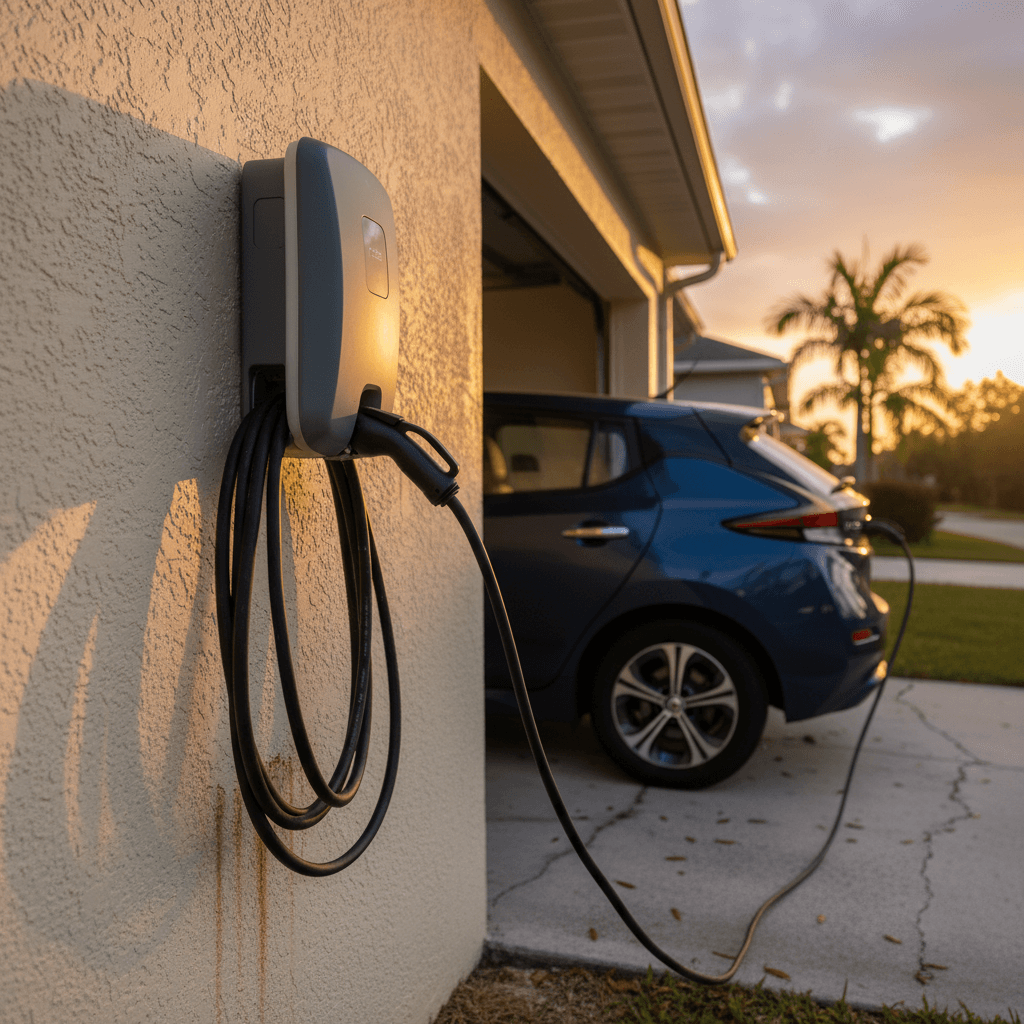
- The credit applies to **equipment and installation** of qualifying EV charging hardware at your home, not to the purchase price of the car.
- You can use this credit whether you buy a **new or used EV**, as long as you install eligible equipment within the program’s timeline and meet income and property requirements.
- Because the current federal rules are detailed and can change, it’s wise to talk with a **tax professional** or carefully review IRS guidance before you assume a specific dollar amount.
Coordinate charger incentives the smart way
How to stack incentives on a used EV purchase
In 2026, the real opportunity isn’t a single big check from the government; it’s **stacking multiple smaller advantages**, purchase price, financing, charger incentives, and cheap overnight electricity, into one smart deal. Here’s a practical playbook for Florida shoppers.
Step-by-step strategy to maximize Florida used EV savings
1. Start with total cost of ownership, not just the sticker
Compare used EVs with similar gas models on **payment, fuel, maintenance, and insurance** over 3–5 years. Electricity is typically cheaper than gasoline, and EVs have fewer moving parts, which can offset the lack of big purchase credits.
2. Lock in a fair purchase price
Used EV prices in Florida have cooled from their peaks. Use pricing tools and local listings, and insist on a **battery health report**, like the Recharged Score report, to be sure the discount you’re getting truly reflects the car’s condition.
3. Explore EV-friendly financing
Check if lenders or platforms specialize in EVs or offer better terms for clean vehicles. On Recharged, you can **pre-qualify for financing online** with no impact on your credit, then compare offers against what your bank or credit union will do.
4. Plan your home charging
Decide whether you’ll rely on **Level 1 charging** (standard outlet) or install a **Level 2 charger**. If you own your home, price out installation, then line that up with any **federal charger credits and utility rebates** you can claim in 2026.
5. Enroll in an off-peak or EV rate
Contact your utility and ask about an **EV time-of-use rate** or off-peak charging program. Charging late at night can dramatically cut your per‑mile fuel cost versus regular daytime rates.
6. Confirm paperwork and timing for every incentive
Before you sign anything, verify whether you need to **apply in advance**, submit a **completion form**, or meet a **deadline** to earn rebates or credits. A few days’ difference in install date or missing documentation can cost you real money.
Example: Building a strong Florida used EV deal in 2026
Let’s walk through a realistic example of how a Florida shopper might make the numbers work on a used EV in 2026. The exact amounts will vary, but the structure is what matters.
Scenario: Orlando-area commuter
You find a **2022 Chevy Bolt EUV** with around 30,000 miles at a fair price of $22,000 from a dealer. The car comes with a detailed **battery health report** (for example, via a Recharged Score) showing minimal degradation.
- You put 10–12,000 miles per year on the car.
- You own a home and have space near the panel for a Level 2 charger.
- Your utility is OUC, which offers a **home charger rebate** and encourages off-peak charging.
How the incentives and savings stack
- Vehicle purchase: No federal or state purchase credit, so you negotiate the best possible price and financing.
- Home charger project: You install a Level 2 charger before June 30, 2026, and apply for both:
- An OUC rebate (credit applied directly by the utility).
- The federal home charger credit on your next federal return, where eligible.
- Monthly fuel savings: By charging mostly overnight on an EV-friendly rate, your fuel cost per mile is substantially below what you’d pay for gasoline in a similar compact SUV.
Over several years, the combination of **lower fuel and maintenance costs**, plus the one‑time charger incentives, can more than make up for the lack of a purchase tax credit, especially if you bought the car at a good price.
Where Recharged fits into this picture
Ready to find your next EV?
Browse VehiclesEligibility checklist for Florida used EV incentives
Because so many 2026 incentives hinge on the fine print, it pays to do a quick self‑audit before you count any dollars. Use this checklist as a starting point, then confirm details with your tax advisor and utility.
Quick eligibility check for common 2026 incentives
You know your utility and rate plan
Identify whether you’re served by **Duke Energy Florida, FPL, OUC, JEA, TECO, KUA, or another municipal/co‑op**. Different utilities have different EV programs, and some require a specific rate plan or smart meter.
You own (or have landlord approval for) a charger install
For home charger incentives, you generally need to **own the property** or have written permission from your landlord or HOA. Condo and apartment dwellers may need extra approvals or may have to rely on existing shared chargers.
Your charger equipment is on the approved list
Many utility and federal programs require a **UL‑listed, networked Level 2 charger**. Check whether the brand and model you plan to buy are eligible before you place the order.
You can document costs clearly
Save **invoices, rebate forms, and any proof of payment** for equipment and installation. You’ll need them for both utility rebates and federal tax forms.
Your installation timing fits current rules
For the federal home charger credit, make sure the work is **completed and paid for before the current deadline** (June 30, 2026 as of this writing). For utility rebates, check if you must apply before or within a certain time after installation.
You’ve verified income and filing details with a tax pro
If you expect to claim any federal credit, confirm with a **tax professional** that you meet income limits (if any), filing requirements, and that you’re using the **correct IRS forms** for the year in which you install the charger.
Common pitfalls and how to avoid them
Avoid these 2026 incentive mistakes
Small timing or paperwork errors can erase big savings.
Relying on expired purchase credits
Don’t assume that online “$4,000 used EV credit” headlines still apply in 2026. Those rules depended on **when you acquired the vehicle**, and they no longer apply to current-year purchases.
Missing documentation
Utility rebates and federal credits are paperwork-driven. If you don’t have **itemized invoices, permit sign‑offs, or rebate approval letters**, you may lose eligibility.
Ignoring charger compatibility
Some programs require a **specific smart charger model** that can share data with the utility. Double‑check the approved list before buying a unit that won’t qualify.
Watch out for dealer “incentive” confusion
FAQ: Florida used EV incentives in 2026
Frequently asked questions about Florida used EV incentives in 2026
Bottom line for Florida used EV buyers in 2026
The **headline-grabbing federal credits for used EV purchases are gone in 2026**, and Florida still doesn’t offer a statewide purchase rebate. But that doesn’t mean a used EV is a bad deal, far from it. If you approach the purchase the way a pro would, you can still put together a very compelling ownership case by combining **smart pricing, low running costs, federal home charger incentives, and Florida utility rebates**.
Start by choosing a used EV with **verified battery health** and a fair market price. Then look closely at **how you’ll charge**, which incentives you can tap for a home Level 2 installation, and which **off-peak rate plans or utility credits** fit your situation. Platforms like Recharged bring this all together, offering transparent battery diagnostics, EV‑savvy financing, trade‑in options, and delivery to your driveway, so you can focus on enjoying quiet, low‑cost electric miles instead of chasing confusing incentives.