If you’re searching for a Florida EV tax credit in 2026, you’ve probably run into a confusing mix of old articles, expired offers, and fine print. The big federal EV credit that used to knock up to $7,500 off a new electric car is gone for purchases after September 30, 2025, and Florida has never offered its own statewide EV purchase tax credit. But that doesn’t mean there’s nothing left. In 2026, Florida drivers can still tap into a mix of utility rebates, charger incentives, and smart used‑EV strategies to cut the real cost of going electric.
Quick snapshot for 2026
Overview: Florida EV tax credit in 2026
Key EV incentive facts for Florida in 2026
From a shopper’s point of view, 2026 is a transition year. The generous federal tax incentives that helped jump‑start EV adoption have been rolled back, while Florida’s state government has chosen not to add its own purchase credit on top. Instead, benefits now come from **three main buckets**: (1) utility‑run rebates and rate plans, (2) the still‑active federal credit for home charging equipment, and (3) the growing price advantage of used electric vehicles compared with new ones. The rest of this guide walks through each of those, and how to use them together when you buy.
Did the federal EV tax credit end?
For years, the centerpiece of EV incentives in the U.S. was the federal “Clean Vehicle Credit,” worth up to $7,500 on new EVs and up to $4,000 on qualifying used EVs. Under legislation finalized in 2025, that credit was **terminated for vehicles purchased after September 30, 2025**. If you bought a qualifying EV on or before that date, you can still claim it on your 2025 tax return (or you may already have received it at the dealership as a point‑of‑sale rebate). But for purchases made in 2026, there is **no federal EV purchase tax credit**, in Florida or anywhere else.
Don’t rely on outdated EV credit lists
Another important nuance: Florida has no state income tax, so there was never a line on your Florida return to claim an EV purchase incentive. When people say “Florida EV tax credit,” they almost always mean the **federal credit applied to a Florida buyer**. With that gone for 2026 purchases, the focus shifts to other ways to save.
What EV incentives does Florida itself offer?
Unlike states such as Colorado or New Jersey, Florida does **not** offer a statewide, per‑vehicle rebate or tax credit for individual EV buyers in 2026. Instead, you’ll see a patchwork of smaller programs, often limited to certain counties, cities, or business types. Some examples over the past few years have included rebates for fleets, grants for charging stations, or small purchase rebates funded by settlement money. As of early 2026, those programs are narrowly targeted and frequently time‑limited rather than broad consumer tax credits.
What Florida does not offer in 2026
- No statewide income-tax credit for buying an EV.
- No across-the-board state rebate per vehicle like some other states offer.
- No reduced vehicle registration fee for EVs at the state level.
Where incentives do show up
- Local and county grants for workplace or public chargers.
- Utility rebates for home charger installation or off-peak charging.
- Occasional limited-time municipal EV purchase or charger programs.
These offers change regularly, so always confirm current terms with your utility or local government before you buy.
Florida policy climate matters
Utility EV programs in Florida (2026 snapshot)
While Tallahassee has stayed on the sidelines, several Florida utilities have offered **EV‑friendly rate plans and rebates**, especially for home charging equipment. The details change year to year and often by service territory, but the patterns are similar:
Common Florida utility EV incentives
Every utility brands these differently, but most offerings fall into these buckets.
Home charger rebates
A one-time rebate, often a few hundred dollars, toward the purchase and installation of a qualifying Level 2 home charger.
Off-peak EV rates
Special EV rate plans that make overnight or weekend charging significantly cheaper than daytime charging.
Public charging discounts
Discounted pricing at utility-owned DC fast chargers or bundled pricing for certain membership plans.
Duke Energy Florida and Jacksonville Electric Authority (JEA), for example, have historically offered **home charger rebates or bill credits**. Florida Power & Light (FPL) has run subscription‑style programs that include installation of a home charger in exchange for a fixed monthly fee and participation in off‑peak charging. Individual terms and availability in 2026 depend on your exact location and utility, but these programs can easily be worth **hundreds of dollars over the first few years of ownership**.
Ask these questions before you install a home charger
EV charger tax credit and Florida homeowners
Even though the federal EV purchase credit has ended, a **separate federal credit for EV charging equipment** is still available in 2026. This is often called the “EV charger tax credit” or the alternative fuel refueling property credit. For most homeowners, it works like this:
- You install qualifying EV charging equipment at your home (for most people, a Level 2 charger and the required electrical work).
- You can claim a 30% federal tax credit on the total qualified cost, hardware plus professional installation, up to a maximum dollar limit set by the IRS.
- You claim the credit on your federal return for the tax year when the charger is placed in service.
Why this still matters in 2026
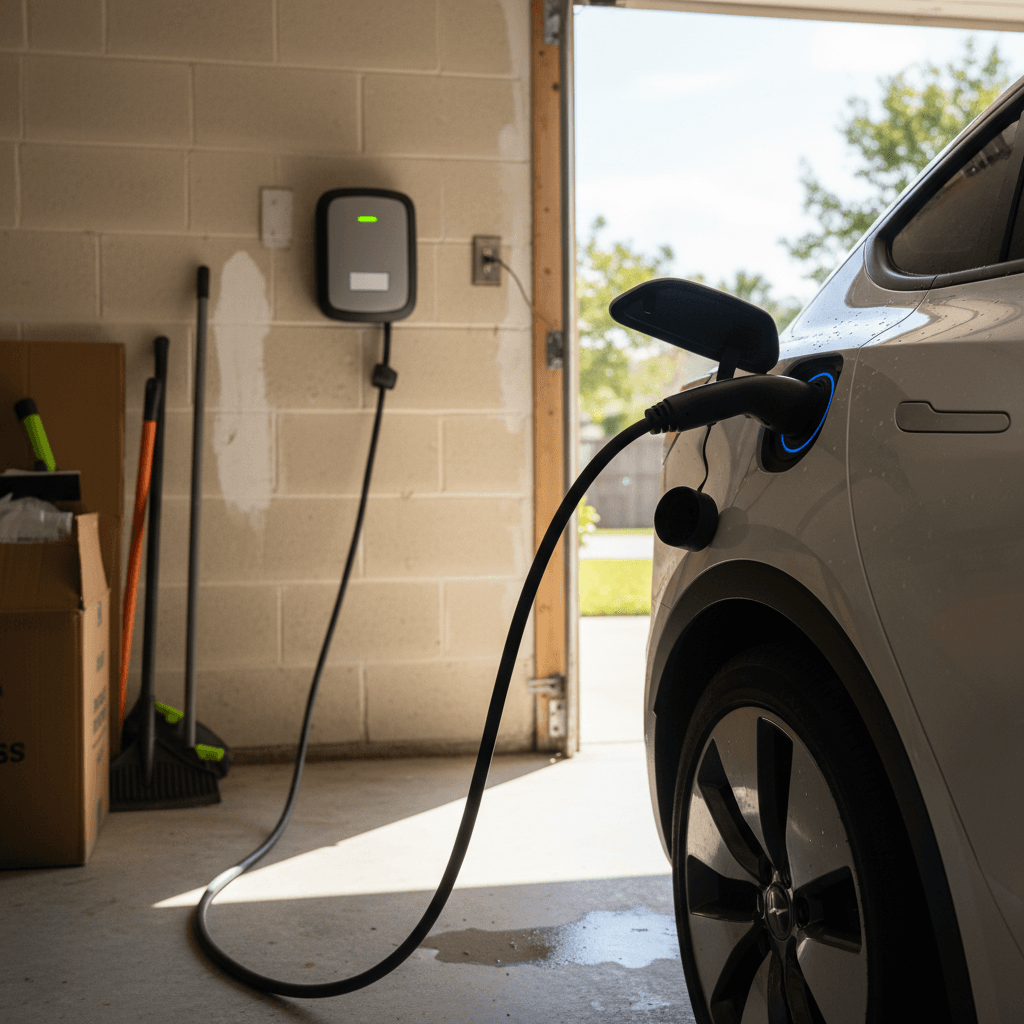
One catch: like all tax credits, this reduces your federal tax bill, it doesn’t generate a refund by itself if you owe nothing. If you’re not sure how much you’ll benefit, talk with a tax professional before you spend heavily on electrical upgrades.
How Florida drivers still save without a state EV tax credit
1. Focus on total cost of ownership
Without a big headline tax credit, the question becomes: what will this car cost me per mile over the next 5–8 years?
- Electricity vs. gasoline: Even at higher Florida power prices, per-mile energy cost is typically lower for an EV than a comparable gas car.
- Maintenance: EVs skip oil changes, transmission services, and many wear items. That can save hundreds of dollars per year.
- Depreciation: Buying a late-model used EV lets you avoid the steepest first-owner depreciation.
2. Stack smaller incentives
Instead of one big state tax credit, you combine several smaller savings:
- Dealer or marketplace discounts on the vehicle.
- Federal EV charger tax credit on home charging.
- Utility rebates or favorable EV rate plans.
- Insurance savings if your EV has strong safety ratings or telematics discounts.
It takes more legwork than a single $7,500 credit, but the total impact over the life of the car can be just as meaningful.
Use the market to your advantage
Used EV tax benefits for Florida buyers
One of the big stories in 2026 is how much value has migrated to the **used EV market**. When the federal used EV credit existed, it helped, but it also propped up pricing on eligible cars. With that incentive gone for post‑September‑2025 purchases, used EVs now have to compete purely on market price, and that’s where Florida shoppers can win.
Why used EVs make sense in Florida in 2026
No tax credit doesn’t mean no deal.
Lower upfront price
Two- to four-year-old EVs often sell for thousands less than their original MSRP, especially in higher trims.
Slower future depreciation
Much of the steep “drive off the lot” drop has already happened, so your risk over the next few years is lower.
Known battery health
With the right diagnostics, you can see how the battery has actually aged instead of betting on a brand-new pack.
Where Recharged fits in for Florida shoppers
If you already own an EV and are thinking about trading up, remember that Recharged also supports trade‑ins, instant offers, or consignment sales, plus financing and nationwide delivery, including to Florida. That flexibility can matter more now that incentives are less generous; structuring the deal correctly becomes a bigger part of your savings.
Florida EV incentives by buyer type
How different Florida EV shoppers can still benefit
First-time EV buyer in a single-family home
Price out both new and used EVs, but give extra weight to late-model used cars with strong battery health reports.
Plan on installing a Level 2 charger; combine any utility rebate with the federal EV charger tax credit.
Choose an EV-friendly electric rate plan (if available) and schedule most charging for overnight hours.
Run a 5-year cost-of-ownership comparison: payment + electricity + insurance + maintenance vs. your current gas car.
Apartment or condo dweller
Check with your building about existing or planned charging; if there’s nothing, look closely at your access to workplace or public charging.
Prioritize EVs with efficient consumption and strong DC fast-charging capability to minimize time at public stations.
Look for utility discounts on public charging or network memberships tied to your power provider.
Because you might move sooner, lean toward used EVs that have already taken their big depreciation hit.
Business or fleet owner in Florida
Investigate federal and state-level grants for commercial EVs and charging, these follow different rules than personal credits.
Talk with your utility’s business account representative about custom rates or make-ready programs for workplace charging.
Work with a tax professional to see how EVs fit into your depreciation and Section 179 strategy in the post‑credit landscape.
Use total cost of ownership modeling; high-mileage fleets still benefit strongly from lower fuel and maintenance expenses.
Step-by-step: How to claim EV savings in 2026
Checklist for Florida EV buyers in 2026
1. Confirm there’s no federal purchase credit
If you’re buying in 2026, assume the former federal new/used EV credits no longer apply. Don’t let anyone write them into your deal unless they can show in writing that your purchase qualifies under pre–Sept. 30, 2025 rules.
2. Get written quotes from your utility
Before installing a charger, ask your utility about EV rebates, special rate plans, and any required hardware. Get the details in writing or via a program brochure so you can claim them later.
3. Choose a charger that qualifies for the federal credit
When you select a Level 2 charger, verify that it meets the IRS definition of qualifying EV charging equipment and keep your invoices and proof of payment.
4. Plan your tax filing
Talk with a tax professional or use reputable tax software to see how the EV charger credit will apply to your 2026 federal return. Make sure you understand any income or property-location requirements that might apply.
5. Use battery health data for used EVs
If you’re buying used, insist on objective battery diagnostics. On Recharged, that’s built into the Recharged Score Report; elsewhere, ask what tests the seller can provide.
6. Compare multiple deal structures
Get side-by-side quotes for buying vs. financing, with and without a trade-in. Sometimes taking a strong cash price on a used EV beats chasing a subsidized new-car lease with no meaningful tax benefits attached.
Common pitfalls and fine print for Florida EV incentives
Pitfalls to watch for when chasing EV incentives
Missing one of these details can erase the benefit you thought you were getting.
| Pitfall | Why it’s a problem | How to avoid it |
|---|---|---|
| Relying on outdated federal-credit info | Dealers and ads still mention credits that no longer apply in 2026. | Check the purchase date cutoffs and ask to see current IRS or manufacturer documentation. |
| Installing a charger that doesn’t qualify | Not all chargers or electrical work qualifies for the federal credit. | Confirm equipment eligibility up front and keep detailed invoices separating hardware and labor. |
| Missing utility paperwork or deadlines | Many utility rebates require pre-approval or proof of installation within a time window. | Read the utility program rules carefully and submit applications as soon as your project is scheduled. |
| Assuming all EVs qualify the same way | Even when credits existed, specific trims and MSRPs mattered; the same will be true for any future programs. | Look up the exact VIN or trim in any official eligibility tool, don’t rely on generic model lists. |
Always read the eligibility section, whether it’s an IRS form, a utility program, or a local grant.
Be cautious with “too good to be true” deals
FAQ: Florida EV tax credit 2026
Frequently asked questions about Florida EV incentives in 2026
Bottom line for Florida EV shoppers in 2026
In 2026, there is no traditional Florida EV tax credit to circle on your calendar. The nationwide federal EV purchase credits ended for vehicles bought after September 30, 2025, and Florida hasn’t stepped in with its own broad rebate. Instead, the smart play for Florida drivers is to think like an owner, not a coupon clipper: add up energy and maintenance savings, chase realistic discounts on the vehicle itself, especially in the used market, and stack every smaller incentive you can find, from the federal charger credit to local utility programs.
If you’re considering a used EV, using a marketplace that makes battery health and pricing transparent can be more valuable than any one incentive. With tools like the Recharged Score Report, financing support, trade‑in options, and nationwide delivery to Florida, you can approach 2026’s incentive landscape with clarity: fewer big tax breaks, but still plenty of ways to drive electric without overpaying.