If you own, or are thinking about buying, a used Fisker Ocean, the recall history isn’t just fine print. It’s a safety roadmap. The Fisker Ocean recalls list includes software bugs that affect braking, potential overheating from a faulty water pump, and cluster issues that can hide important warning lights. In 2026, with Fisker gone and the Ocean now an “orphaned EV,” understanding these recalls is essential before you put your family in the car or your money on the line.
Context: Fisker went bankrupt
Why Fisker Ocean recalls matter in 2026
Every modern car has recalls. The difference with the Fisker Ocean is who’s left to fix them. Some recalls were designed to be handled with quick over‑the‑air (OTA) software updates, while others require parts and labor at a service center. With Fisker out of business, U.S. regulators have already clashed with the company’s bankruptcy plan over who should pay for recall repairs, and owners have banded together through the Fisker Owners Association to keep their vehicles on the road.
If you’re shopping the used market, this makes recalls a double‑check, not a checkbox. You’re not just asking, “Has this SUV been fixed?” You’re asking, “Can it be fixed, and who’s going to pay?” That’s a very different ownership equation than you face with a used Hyundai Ioniq 5 or Tesla Model Y.
Fisker Ocean recalls at a glance
Quick Fisker Ocean recalls list by issue
Here’s a simplified Fisker Ocean recalls list focusing on issues most relevant to U.S. drivers and used‑EV shoppers. Exact campaign numbers may vary by country, but this gives you the big picture:
Major Fisker Ocean recalls by system
High‑level summary of key recalls that affect braking, cooling, and driver information on 2023–2024 Fisker Ocean SUVs.
| System / Component | Typical Model Years | Recall Focus | Remedy Type |
|---|---|---|---|
| Service brakes / software | 2023–2024 | Regenerative braking may unexpectedly reduce, increasing stopping distance | OTA software update to brake module |
| Cooling / water pump | 2023–2024 | Cabin electric water pump may fail, risking overheating and loss of performance | Physical water pump replacement |
| Instrument cluster & telltales | 2023–2024 | Cluster may not properly display required warning lights and symbols | OTA software update to OS 2.1 or later |
| Powertrain control software | 2023–2024 | Motor or vehicle control software may trigger “safe state” and cut power unexpectedly | OTA software update to Motor Control Unit (MCU) and Vehicle Control Unit (VCU) |
Always verify details against the official NHTSA database using your VIN, as recall scope and status can change.
Recall lists change
Brake software recall: regenerative braking loss
One of the most serious recalls on the Fisker Ocean involves its brake software. A 2024 U.S. campaign covers thousands of 2023–2024 Ocean SUVs where the brake control software could reduce regenerative braking unexpectedly. In plain English, you lift off the accelerator expecting the car to slow strongly, as EVs usually do, but instead it lets the SUV coast more than you’re ready for.
In the official recall documentation, regulators note that this can increase stopping distance. The friction (mechanical) brakes are still there, but you may not press the pedal as soon or as hard as you should if you’re used to strong “one‑pedal” driving. That mismatch between expectation and reality is where risk creeps in.
- Models affected: Primarily 2023–2024 Fisker Ocean built roughly from early 2023 through March 2024.
- Symptom: The car doesn’t slow as quickly as normal when you lift off the accelerator; braking feel may change after certain events or software states.
- Risk: Longer stopping distances and a higher chance of rear‑end collisions in stop‑and‑go traffic or at intersections.
- Fix: OTA software update to the brake module. In theory, this can be done remotely, but in practice many owners have needed a visit to a service partner or specialized independent shop.
Take brake changes seriously
Coolant water pump recall: overheating risk
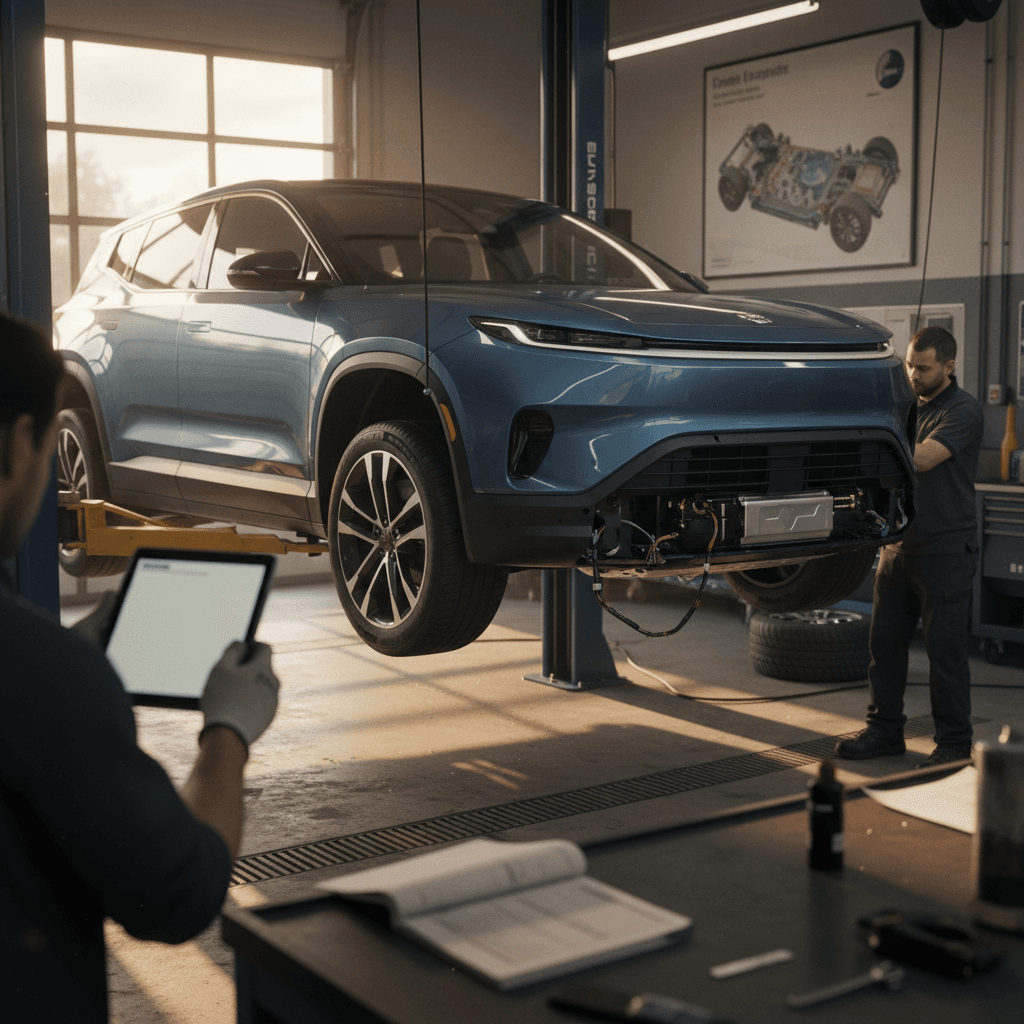
Another major recall covers the cabin electric water pump, which is part of the cooling system. Fisker told regulators the pump can fail, leading to overheating and a potential loss of performance or even stalling in extreme cases. Around 7,500 Oceans in the U.S. were included, with additional vehicles in Canada and Europe.
This is a traditional, parts‑and‑labor recall: the fix is to replace the pump with an updated unit. That’s easy to promise when a company is healthy and has a dealer network. It’s far trickier once the automaker is in bankruptcy court and trying to cap how much it spends on recall repairs.
- Models affected: 2023–2024 Fisker Ocean SUVs in the U.S., plus a few thousand more in Canada and Europe.
- Symptom: Overheating warnings, reduced power, or aggressive derating under sustained driving or in hot weather.
- Risk: Increased risk of breakdown and, in worst cases, higher crash risk if power is reduced suddenly in traffic.
- Fix: Replacement of the cabin electric water pump with a revised part at no cost to the owner, at least on paper. In practice, some U.S. owners have already paid out of pocket for labor, with the Department of Justice warning that this cost‑shifting violates federal safety law.
Shopping tip for used buyers
Instrument cluster and warning light recall
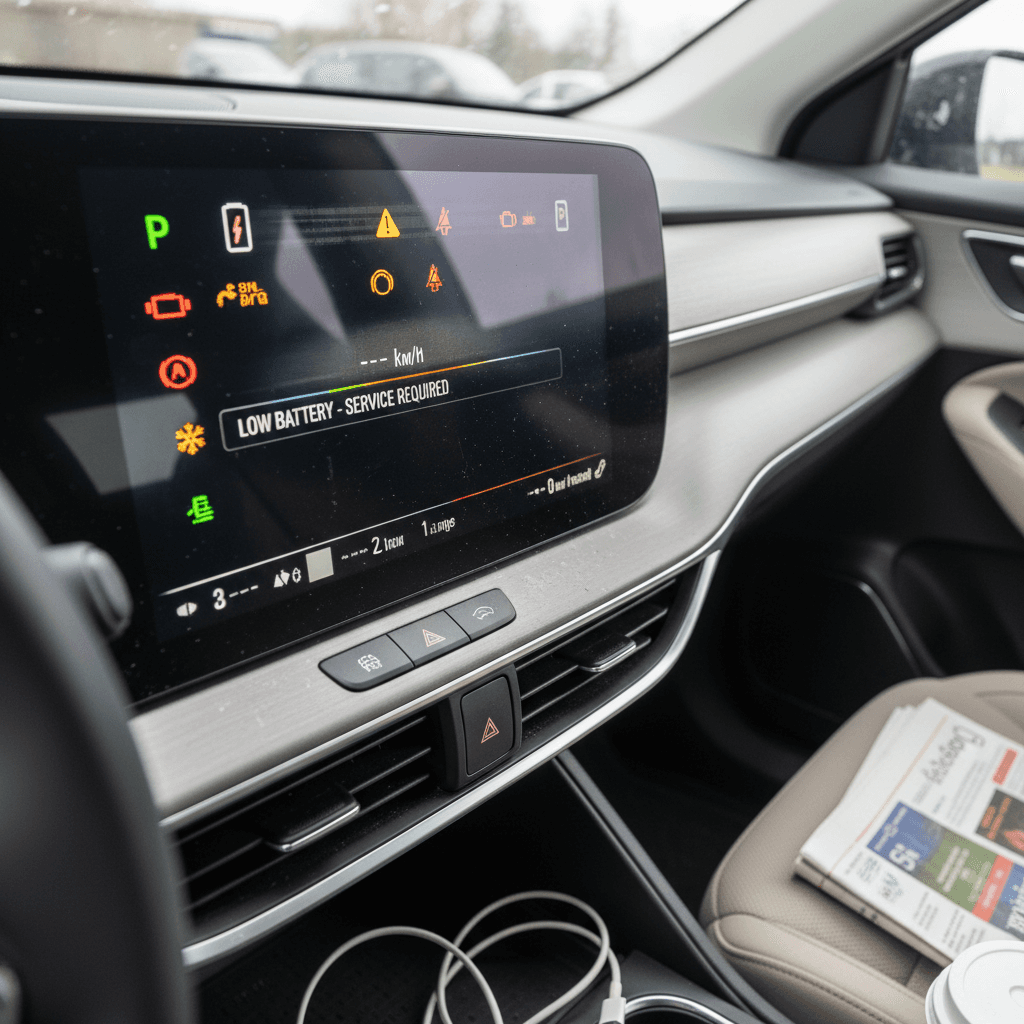
On top of braking and cooling, Fisker issued a recall for the Ocean’s instrument cluster software. Regulators found that required warning lamps and icons didn’t always comply with Federal Motor Vehicle Safety Standards, essentially, the car might not properly tell you when something’s wrong.
Fisker’s solution was an OTA update to operating system version OS 2.1 or later for the Motor Control Unit (MCU) and Vehicle Control Unit (VCU). In many cars this update was bundled with fixes for other software glitches, like sudden drops into a reduced‑power “safe state.”
- Issue: The digital cluster may fail to clearly display certain mandatory telltales and warning symbols.
- Why it matters: If the car can’t reliably warn you about a fault, a minor defect can become a major safety risk before you realize anything’s wrong.
- Fix: Software update, most commonly delivered OTA, though some owners report needing in‑person support to complete or troubleshoot the update.
- What to look for: Confirm the current software version in the vehicle’s settings. If it’s on a very early build, you’ll want to dig deeper into recall history and software updates.
Other notable safety issues and complaints
Beyond the formal recalls, Fisker Ocean owners have reported a grab bag of issues to regulators and the press: intermittent power loss, doors or key fobs failing to unlock, odd regenerative‑braking behavior before the official recall, and buggy driver‑assistance features. Not every complaint becomes a recall, but as a used‑EV shopper you should treat these stories as red flags to investigate, not gossip to ignore.
Software and drivability quirks
- Intermittent power loss or the car suddenly entering a reduced‑power “safe” mode.
- Glitches in driver‑assist features like adaptive cruise or lane keeping.
- Freezing or lag in the infotainment system and digital cluster.
Access and hardware complaints
- Key fobs or app access not reliably unlocking or starting the car.
- Door handles failing to present or open, especially in cold or wet conditions.
- Isolated reports of battery or high‑voltage system faults that required lengthy downtime.
Complaints vs. recalls
How to check if your Fisker Ocean has open recalls
Because the recall landscape around Fisker is still shifting, you should consider a recall check part of your regular maintenance, especially if you bought used or your Ocean has changed hands a few times.
Step-by-step: Checking your Ocean for recalls
1. Find your VIN
Locate the 17‑digit Vehicle Identification Number on the driver’s side dashboard (visible through the windshield), on the driver‑door jamb label, or on your registration/insurance documents.
2. Search the NHTSA database
Go to the official NHTSA recall lookup and enter your VIN. This will show any open safety recalls that have not been marked as completed for that specific Ocean.
3. Review campaign details
Click into each recall campaign and read the description. Confirm whether it relates to brakes, cooling, cluster software, or power‑loss issues, and note what the remedy is supposed to be.
4. Ask for proof of completion
If you’re buying used, ask the seller for service records or invoices showing that recall work was completed. Screenshots of app messages aren’t enough, look for dated paperwork.
5. Talk to current service providers
Because Fisker doesn’t have a normal dealer body anymore, you may be working with independent EV shops, former Fisker partners, or community‑recommended specialists. Ask what experience they have with Ocean recall work.
6. Recheck after software updates
Any time the car receives a major software update, it’s worth revisiting the recall status and making sure the version installed actually matches what the recall campaign specifies.
Don’t rely on promises alone
What these recalls mean when buying a used Ocean
A clean Carfax report and a glossy set of listing photos don’t tell you whether the Fisker Ocean recalls list has been addressed on the specific SUV you’re eyeing. With a bankrupt startup brand, recall status becomes a core part of your value calculation, not an afterthought.
Balancing risk and reward on a used Fisker Ocean
Why some buyers are tempted, and what you should watch for
Why the Ocean looks tempting
- Sharp styling and a long advertised range for the money.
- High original MSRP means steep depreciation on the used market.
- Unique features like California Mode and a large solar roof on some trims.
Why recalls change the equation
- Braking and cooling recalls go straight to core safety.
- Limited parts availability and shrinking service network.
- Potential out‑of‑pocket costs for work that would be free on other brands.
If you’re comparing a used Ocean to something like a used Hyundai Ioniq 5, Kia EV6, or Tesla Model Y, you should factor in not just the purchase price but the cost and hassle of chasing down recall fixes. A cheaper sticker today can evaporate quickly if you’re paying a specialist shop to handle work the original automaker was supposed to cover.
Where Recharged can help
Ready to find your next EV?
Browse VehiclesStaying safe in an orphaned EV
Owning a Fisker Ocean in 2026 is a different experience than owning a Tesla or a Chevy Bolt. There’s passion and community, but there’s also more homework. You’re effectively part owner, part service manager, and part product‑support team for your own SUV.
1. Build a paper trail
Keep copies of everything: recall notices, service invoices, screenshots of software versions, communication with shops. In a fragmented support world, your documentation is your warranty, your history, and your resale story.
2. Find trusted specialists
Look for independent EV shops or former Fisker partners that have real experience with the Ocean’s high‑voltage systems and software. A general mechanic is not the place to experiment on an orphaned EV.
3. Lean on the owner community
Groups like the Fisker Owners Association have stepped in to provide software tools, parts channels, and troubleshooting. They’re not a substitute for a manufacturer, but they can be invaluable when you’re tracking down recall remedies.
4. Have an exit strategy
If you’re buying an Ocean today, go in with clear eyes about resale value. Orphaned EVs can be harder to sell, and unresolved recalls won’t help. Price that risk into your offer from day one.
Consider broader used EV options
Fisker Ocean recalls FAQ
Common questions about the Fisker Ocean recalls list
Bottom line on the Fisker Ocean recalls list
The Fisker Ocean recalls list covers more than quirky software. It reaches into how the SUV brakes, how it cools itself, and whether it gives you clear warning when something goes wrong. In 2026, with Fisker out of the picture, those recalls are still on the books, but getting them fully resolved can take more legwork than most used‑car buyers expect.
If you already own an Ocean, treat recall checks and software versions as seriously as tire rotations and brake pads. If you’re shopping, price in the risk and the reality that you may shoulder part of the repair burden yourself. And if the whole saga leaves you uneasy, remember that there’s a growing universe of used EVs, carefully vetted for battery health, safety, and support, that can deliver electric driving without the drama.