Ask, “When was the first hybrid car invented?” and you’ll get two very different answers. Historically-minded engineers will point you back to 1900 Vienna. Most everyday drivers think about the Toyota Prius in the late 1990s. Both answers are right, they just describe different chapters in the same story.
Quick answer
When was the first hybrid car invented?
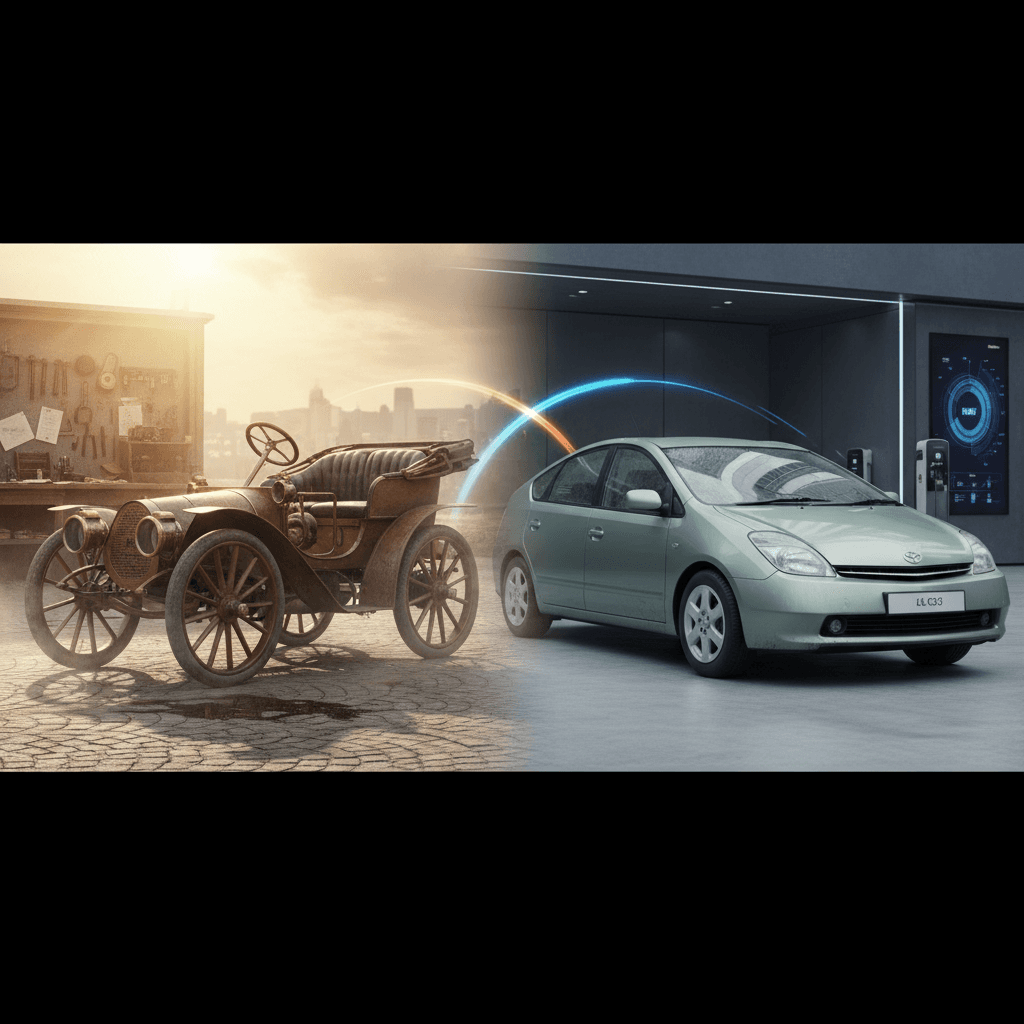
If we’re talking about a working automobile that combined an internal‑combustion engine with electric drive, most historians point to 1900–1901. That’s when young engineer Ferdinand Porsche, working for coachbuilder Jacob Lohner in Vienna, developed the Semper Vivus, a vehicle that used a gasoline engine to generate electricity for hub‑mounted electric motors at the wheels.
In other words, more than a century before you or your neighbor ever heard of a Prius, engineers had already built a series‑hybrid car that could drive on electric motors while an engine acted as a rolling generator. What they didn’t have were lightweight batteries, cheap fuel, or any kind of charging network, so the idea went into hibernation for decades.
Think of it this way
What actually counts as the “first hybrid car”?
There’s a little nuance hiding behind that simple question. When people argue about the first hybrid car invented, they’re usually talking past each other because they’re using different definitions of “first.”
Three ways to define the “first” hybrid car
Same idea, different milestones
1. First functional hybrid
Candidate: Lohner‑Porsche Semper Vivus (c. 1900)
Gasoline engine drove a generator, which powered electric motors in the wheel hubs. A true series‑hybrid layout, just over 100 years ahead of its time.
2. First production hybrid
Candidate: Lohner‑Porsche Mixte (1901 onward)
A production‑ready version of the Semper Vivus. Only a few hundred were built, mainly for fleets like taxis and fire brigades, not everyday private buyers.
3. First mass‑market hybrid
Candidate: Toyota Prius (1997 Japan, 2000 global)
The first hybrid that was built in large numbers, sold through regular dealerships, and backed by a modern warranty and service network.
Don’t confuse hybrids with early EVs
Timeline: from the first hybrid to modern hybrids
Hybrid history at a glance
For nearly a century after Porsche’s experiment, internal‑combustion engines got cheaper, fuel was inexpensive, and battery technology advanced slowly. Hybrids remained an interesting engineering idea, not a viable business. That changed in the 1990s, when emissions rules tightened and Japanese automakers in particular began searching for dramatic fuel‑economy gains.

How the first hybrid car worked mechanically
Early hybrids like the Semper Vivus used what engineers call a series hybrid layout. Instead of the engine driving the wheels directly through a transmission, the engine spun a generator. That generator produced electricity, which then powered electric motors in the wheel hubs. The motors turned the wheels; the engine never did.
Series hybrid (Semper Vivus style)
- Engine drives a generator.
- Generator feeds electric motors.
- Motors alone drive the wheels.
- Engine can run at efficient rpm, but overall system is heavy and complex.
Parallel / power‑split hybrid (modern Prius style)
- Engine and electric motor can both drive the wheels.
- A planetary gearset or similar device blends power.
- Computer decides when to favor engine, motor, or both.
- Far better efficiency and drivability for everyday use.
The big drawback of the first hybrid
From experiments to showrooms: Toyota Prius and mass-market hybrids
The idea that hybrids could be a mainstream solution didn’t really come alive until the 1990s. Toyota’s engineers launched the "G21" project in 1993 to create a car for the 21st century with dramatically better fuel economy. The result was the first‑generation Toyota Prius, introduced in Japan in late 1997 and rolled out to other markets starting in 2000.
Where the Semper Vivus was an engineering prototype for elites and fleets, the Prius was designed from day one as a product a middle‑class family could buy, drive, and maintain. It delivered a then‑remarkable fuel economy rating (around 55 mpg on early test cycles), used nickel‑metal hydride batteries, and came with full factory support. It was also a compact sedan that felt familiar to drive, just quieter and more efficient.
By the mid‑2000s, the Prius had become a symbol, of environmental awareness, of high fuel prices, and of the auto industry’s shift toward electrification. Other brands followed with their own hybrids, from compact hatchbacks to luxury sedans and SUVs. The technology lineage goes straight back to those first hybrid experiments at the dawn of the 20th century.
Why Prius, not Porsche, changed the world
Hybrid vs plug-in hybrid vs EV: why the history matters
Understanding where hybrids came from helps you make sense of today’s alphabet soup: HEV, PHEV, BEV, range‑extender, and more. Underneath the labels, you’re really choosing how much you want to lean on electricity versus gasoline in daily driving.
Hybrid, plug‑in hybrid, and EV compared
How today’s electrified powertrains relate to the first hybrid concepts
| Type | Power sources | Typical electric range | Best for | Reminds us of |
|---|---|---|---|---|
| Hybrid (HEV) | Gas engine + small battery/motor | 1–2 miles continuous, many miles in short bursts | Drivers who want better mpg without plugging in | Prius, Ford Escape Hybrid |
| Plug‑in hybrid (PHEV) | Gas engine + larger battery you can plug in | 20–50+ miles | Commuters who can charge at home but still want long‑trip flexibility | Modern interpretation of the "engine as backup" idea |
| Battery EV (BEV) | Large battery only, no engine | 150–300+ miles | Drivers ready to skip gas entirely | Early pure EVs like the 1890s electrics, brought into the 21st century |
The first hybrid car was a series hybrid; most modern hybrids use more sophisticated power‑split designs.
A practical way to decide
Shopping for a used hybrid or EV today
The story of the first hybrid car isn’t just trivia, it explains why today’s used hybrids and EVs feel so different than a typical gasoline car on the test drive. You’re buying not just a body style and brand, but a particular powertrain philosophy that’s been evolving since 1900.
Key checks when buying a used hybrid or EV
1. Focus on battery health, not just mileage
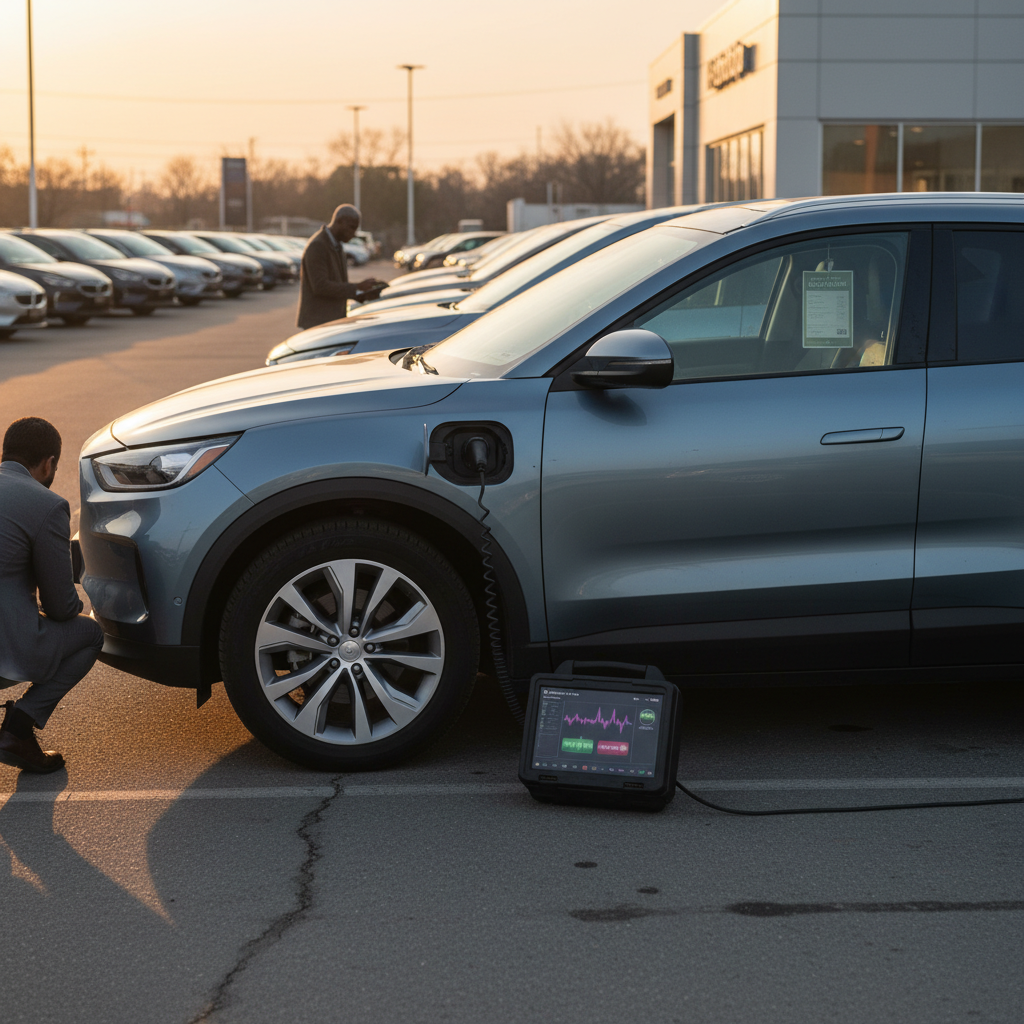
A modern hybrid or EV lives and dies by its high‑voltage battery. Tools like the <strong>Recharged Score</strong> give you a quantified view of pack health instead of relying on guesses or dashboard bars.
2. Understand the type of electrification
Confirm whether the vehicle is a standard hybrid, plug‑in hybrid, or full battery EV. That will determine your real‑world fuel savings, charging needs, and long‑term maintenance profile.
3. Review maintenance history
All the usual used‑car rules still apply: documented service, recalls addressed, and no mystery warning lights. With hybrids, pay extra attention to cooling systems for the battery and power electronics.
4. Test drive in mixed conditions
On your test drive, include city streets, moderate acceleration, and at least a short highway stretch. You’re listening for smooth transitions between electric and engine power, and watching for any hesitation or harshness.
5. Run the numbers on fuel and charging
Compare your current fuel costs to realistic hybrid or EV energy use. In many U.S. markets, off‑peak electricity rates make overnight charging at home very cost‑effective.
6. Look for transparent pricing
Because hybrids and EVs vary widely in options and incentives, it’s easy to overpay. A marketplace that shows <strong>fair market pricing</strong> and fees up front helps you compare apples to apples.
At Recharged, every used EV includes a Recharged Score Report with verified battery health and a pricing analysis based on real‑world market data. If you’re cross‑shopping a used hybrid with a used EV, an expert who lives with this technology every day can help you understand which drivetrain really matches your commute, budget, and long‑term plans.
How Recharged can help
Ready to find your next EV?
Browse VehiclesFAQ: First hybrid car invented
Frequently asked questions about the first hybrid car
Bottom line: why the first hybrid still matters
The first hybrid car invented, Ferdinand Porsche’s Lohner‑Porsche Semper Vivus, never became a driveway staple. It was too heavy, too complex, and far ahead of its time. But the core insight behind it, that you can blend the strengths of an engine and electric motors to move people more efficiently, is exactly what powers today’s hybrids, plug‑in hybrids, and EVs.
When you’re evaluating a used hybrid or electric vehicle today, you’re benefiting from more than a century of trial, error, and refinement. The key is to choose the technology that fits your life, verify the health of the high‑voltage components, and buy from a seller that’s transparent about both. Do that, and you’ll own not just a car, but a piece of a story that started at the turn of the 20th century and is still being written every time you plug in, or drive past a gas station.