If you own, or are eyeing, a Fiat 500e, winter range loss is probably at the top of your worry list. The 500e is a tiny, efficient city EV, but cold weather can carve big chunks out of your displayed range. The good news: when you understand how Fiat 500e winter range loss works, it becomes a planning exercise, not a panic attack.
Two very different 500e generations
Fiat 500e winter range loss: the short version
Fiat 500e winter range loss at a glance
Across modern EVs, winter knocks about 15–35% off rated range in typical cold climates, and more during short, stop‑and‑go trips with the cabin heat blasting. The light, efficient Fiat 500e actually copes pretty well compared with bigger SUVs, but because its starting range is modest, every lost mile feels more dramatic.
When winter loss feels scary
Original vs new Fiat 500e: EPA range and what’s realistic
Fiat 500e generations, battery size, and EPA range
Understanding the baseline range helps you make sense of winter losses.
| Model years | Battery (usable) | EPA combined range | Typical mild‑weather city range | Typical deep‑winter city range |
|---|---|---|---|---|
| 2013–2019 500e (Gen 1) | ~23.8 kWh | ~84–87 miles | 90–100 miles with gentle city driving | 50–65 miles with heat on |
| 2024–2025 500e (Gen 2, U.S.) | ~37–38 kWh usable (42 kWh gross) | ~141–149 miles | 150–170 miles in city with Range mode | 80–120 miles depending on speed & temperature |
Approximate U.S. EPA figures; your actual range will vary.
Fiat’s first‑gen 500e packed roughly a 24‑kWh pack and an EPA rating in the high‑80‑mile range. The new 2024+ 500e more than doubles usable capacity to around 37–38 kWh and carries an EPA estimate around 141–149 miles, while remaining one of the most efficient EVs per kWh on the road. That efficiency helps cushion winter losses, but physics still wins when temperatures plunge.
City car, not interstate cannonball
Why your Fiat 500e loses range in winter
1. Cold slows battery chemistry
Lithium‑ion cells are like people: they don’t love the cold. At low temperatures, internal resistance goes up, so the pack can’t deliver or accept energy as efficiently. You need more energy to go the same distance, and fast‑charge speeds are limited to protect the battery.
The 500e uses an actively managed battery, but it still has to spend energy warming itself in very cold weather, especially if the pack starts out cold‑soaked.
2. Cabin heat is energy‑hungry
In a gas car, you’re using waste engine heat. In an EV, every BTU of warmth comes straight from the battery. Crank the climate control to 75°F with a cold cabin and you can see your projected range fall by 10–25% before you even move.
The small cabin of the Fiat 500e helps, but repeated short trips where you keep reheating a cold interior are a range killer.
- Winter tires and cold, dense air add rolling and aerodynamic drag, especially noticeable above 60 mph.
- Wet, slushy, or snowy roads add resistance and can force traction control to cut power.
- More use of defrosters, seat heaters, and lights all nibble away at your available energy.
- Short trips are the worst case: the cabin and pack never fully warm up, so you keep paying the warm‑up penalty over and over.
Why the 500e is still efficient
How much winter range loss is normal on a Fiat 500e?
Expected Fiat 500e winter range loss by conditions
These are realistic rule‑of‑thumb numbers, not lab results.
Cool & rainy (40–55°F)
Typical loss: 10–20%
- Heater used moderately
- Mostly city/suburban speeds
- Battery not sitting outside overnight
Freezing (25–35°F)
Typical loss: 20–35%
- Regular heater/defroster use
- Mix of city and highway
- Car often parked outside
Deep cold (0–20°F)
Typical loss: 30–40%+ on bad days
- Short trips with cold‑soaked battery
- Heater on high most of the time
- Highway speeds above 65 mph
For a healthy battery, seeing your Fiat 500e show 30–35% less range on a cold January morning isn’t inherently a sign of trouble, it’s a sign that the car is being honest about conditions. What you’re watching on the dash is an estimate based on recent driving and current climate‑control use, not a fixed promise.
When to worry about the battery itself
Real-world winter range scenarios for city and highway driving
Range numbers are abstract until you plug them into a real day. Here’s how Fiat 500e winter behavior tends to shake out for common driving patterns, assuming a healthy battery.
Sample winter range scenarios for Fiat 500e
Approximate, for planning, not hard limits.
| Scenario | Outside temp | Driving style | Old 500e (2013–2019) | New 500e (2024+) |
|---|---|---|---|---|
| Urban errands, 5–10 mile trips, heavy traffic | 25–35°F | Stop‑and‑go, heater at 70°F | ~2.2–2.6 mi/kWh, 50–65 real miles | ~3.0–3.5 mi/kWh, 90–115 real miles |
| Suburban commute, 30 miles round trip | 30–40°F | 50% 35–45 mph, 50% 60–65 mph | Comfortable if you can charge nightly; 35–45% battery used | Easy in new 500e, 25–35% battery used |
| Highway dash, 70 miles in one shot | 20–30°F | Mostly 70–75 mph, climate at 72°F | Borderline; plan DC fast‑charge or backup car | Feasible but tight, start near 100% and expect 70–80% of EPA |
| Weekend city day, 60 miles with lots of stops | 15–25°F | Short hops, lots of cabin reheats | Very tight; you’ll likely need a mid‑day top‑up | Manageable with preconditioning and disciplined climate use |
Assumes properly working battery and tires; numbers are rounded estimates.
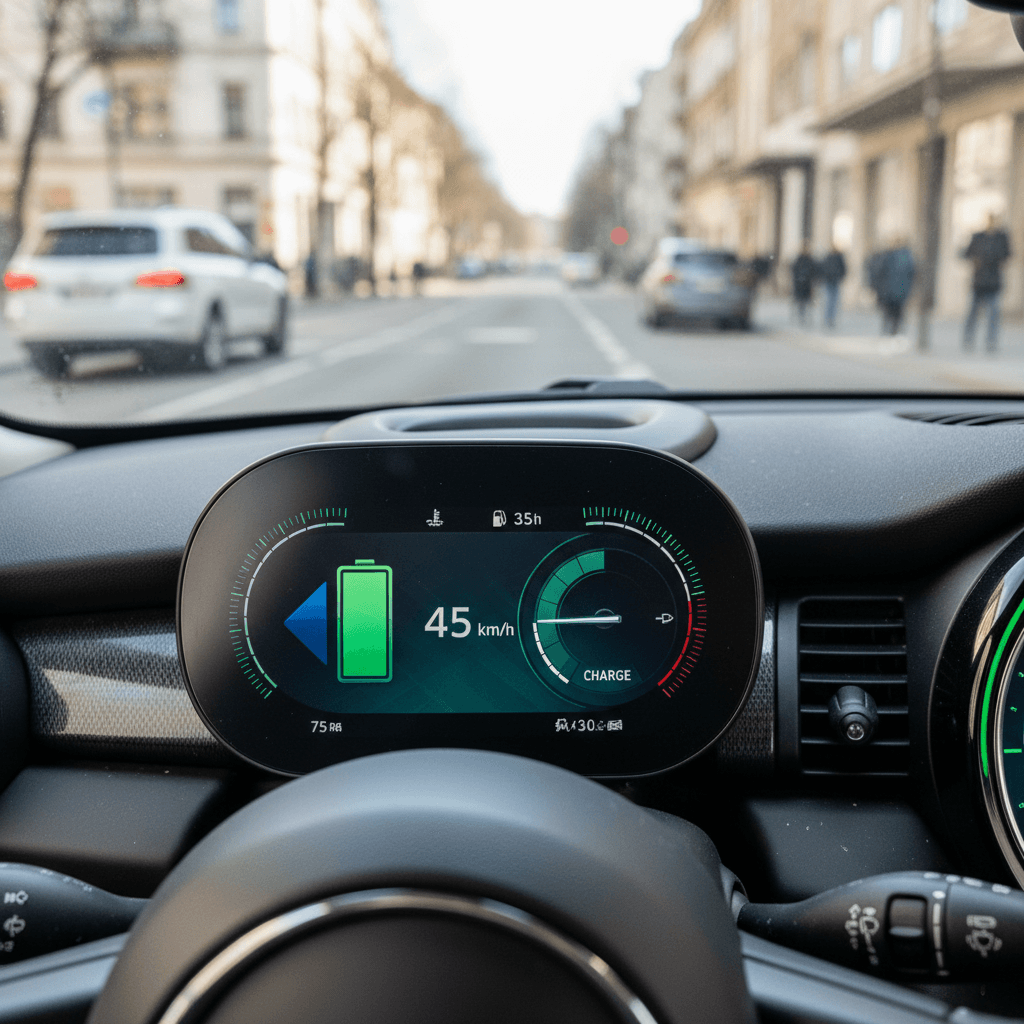
Settings and driving tips to cut Fiat 500e winter range loss
Dial in your 500e for cold-weather efficiency
1. Use Range or Sherpa modes smartly
On the new 500e, <strong>Range mode</strong> increases regenerative braking and can enable one‑pedal driving, which is perfect for city winter traffic. <strong>Sherpa mode</strong> pulls back speed and power to stretch what’s left if you’re cutting it close.
2. Lean on seat and steering‑wheel heaters
Resist the urge to turn the cabin into a sauna. <strong>Seat and wheel heaters use far less energy</strong> than heating all the air in the car. Set cabin temp a few degrees lower and let the contact heat keep you comfortable.
3. Precondition while plugged in
Use preconditioning so the car warms the battery and cabin while it’s still connected to your Level 2 charger. You step into a warm car and hit the road with more energy left for actually moving.
4. Smooth out your driving
Quick stabs of acceleration followed by hard braking throw away energy that regen can’t fully reclaim. Instead, treat the throttle like a dimmer switch. In winter, <strong>predictable, gentle inputs</strong> are better for both range and traction.
5. Cap your highway speed
Aerodynamic drag climbs quickly above about 60 mph. On a cold day, the difference between cruising at 65 vs 75 mph can be the difference between arriving relaxed and scanning for the next charger on 2% remaining.
6. Cut accessories when you’re tight on range
If you’re running low, switch off rear defrosters and other accessories once the glass is clear, and consider dialing back the fan. Every little bit of load you drop shows up as a few more miles in reserve.
Build a winter driving routine
Smart winter charging strategies for the 500e
Charging is where winter reality hits home for many first‑time EV owners. The Fiat 500e’s relatively small pack means charging sessions are short compared with big SUVs, but the cold still slows things down, especially on DC fast chargers.
Cold-weather charging game plan
A few small tweaks can save a lot of time and worry.
At home: Level 2 is your best friend
If you can, install or use a Level 2 charger (240V). The 500e’s onboard charger can pull up to about 11 kW, which can refill a low battery to full overnight even in cold weather.
- Schedule charging so it finishes around your departure time; the pack will be slightly warmer.
- Precondition while plugged in so you’re not burning through your first 10% just to warm up.
On the road: be realistic about fast charging
The 500e supports DC fast charging up to roughly 85 kW, but in cold weather you may see quite a bit less until the pack warms up.
- Arrive at fast chargers with 15–30% remaining if you can; driving warms the pack.
- Don’t wait for 100%, the sweet spot is usually 15–80% for speed.
- In deep cold, plan on a little extra time compared with summer.
Think in hours, not just miles
Buying a used Fiat 500e for winter: what to check
The original 2013–2019 Fiat 500e has become a cult‑favorite used EV thanks to low prices and fun character. If you live where winter is a fact of life, though, you want to be sure the actual battery health matches your expectations, and that you’re honest about how you’ll use the car.
Used Fiat 500e winter-readiness checklist
1. Get an objective battery health report
Range bars and seat‑of‑the‑pants impressions only tell part of the story. A <strong>measured state of health</strong> test, like the one in a Recharged Score report, lets you see how much usable capacity the pack still has before you bet your winter commute on it.
2. Compare displayed range on a mild day
Take a fully charged test drive on a 55–70°F day with the climate control off. If the car only shows, say, 45–50 miles on an older 500e, or under 100 miles on a new one, you may be looking at meaningful degradation or an issue that deserves closer inspection.
3. Ask about storage and use history
Cars that sat at 0% or 100% for long periods, or lived through years of extreme heat, are more likely to show winter weakness. A well‑cared‑for pack typically shows <strong>predictable, manageable winter losses</strong> instead of wild swings.
4. Test both city and highway behavior
On your test drive, do a short city loop and a brief highway stint. Watch how quickly the percentage drops at 65–70 mph. A healthy 500e shouldn’t feel like it’s falling off a cliff the moment you leave city streets.
5. Factor winter range into your budget
A cheap used 500e can be a perfect second car, as long as your winter driving fits inside its realistic range. If your daily needs are close to its deep‑winter limit, consider budgeting for a newer‑generation 500e or another used EV with a larger pack.
6. Consider expert‑guided shopping
Buying used EVs is different from buying used gas cars. Working with an EV‑focused retailer like <strong>Recharged</strong> means you get a transparent battery report, fair‑market pricing, and help matching the car’s winter abilities to your life.
Fiat 500e winter range loss: FAQ
Frequently asked questions about Fiat 500e winter range loss
Key takeaways for living with a Fiat 500e in winter
Every EV loses range in the cold. The Fiat 500e is no exception, but because it’s light and efficient, its winter behavior is more about planning than suffering. If you match the car to the right job, build a few simple charging and preconditioning habits, and respect the limits of a small battery on bitter days, the 500e can be a charming, inexpensive winter commuter.
If you’re shopping used, the real magic is knowing exactly what battery you’re getting. That’s why every used EV at Recharged comes with a transparent Recharged Score report, verified battery health data, and expert‑guided support. That way, when winter rolls in, you’re not guessing, you already know how your Fiat 500e will behave when the temperature drops.