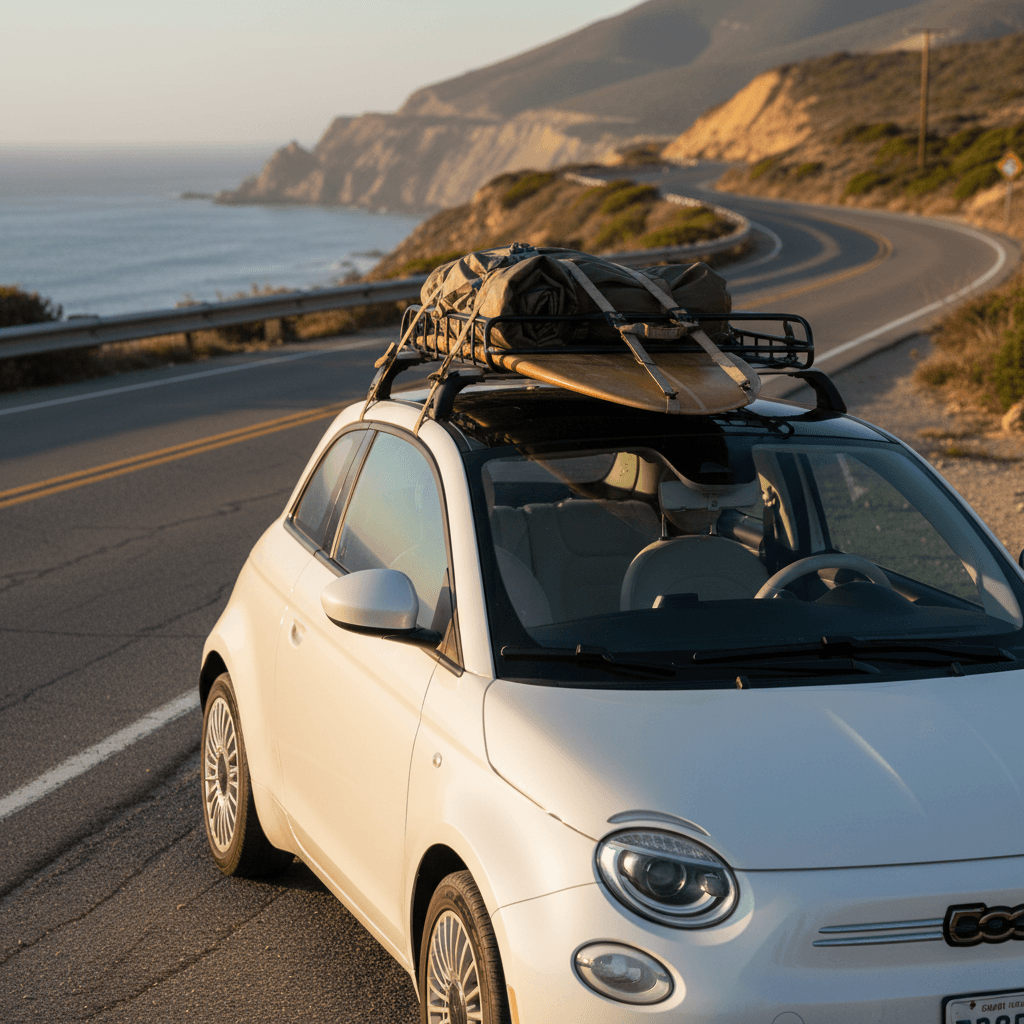
If you’re driving a Fiat 500e, there’s a good chance you bought it for city life: tiny footprint, silent commuting, and easy parking. But the moment you start planning a beach weekend or a ski run, one question shows up fast: what’s the Fiat 500e roof rack weight limit, and how much can I really put up there?
Quick answer (before we dive in)
Overview: Fiat 500e roof rack weight limit
The Fiat 500e was never meant to be an overlanding rig, but it can still carry extra gear if you respect its limits. Two numbers matter:
- Roof load limit – the maximum weight the roof structure is designed to carry, including the rack system and cargo.
- Rack system rating – the maximum load your specific crossbars or aftermarket rack are designed to hold.
For small hatchbacks like the 500e, that roof load limit is typically in the 110–165 lb (50–75 kg) range. That’s enough for a couple of bikes, a small cargo box, or a pair of skis and a duffel, not a full apartment’s worth of stuff. Because this is an electric car with a tall profile and short wheelbase, staying on the conservative side is smart for both safety and range.
Always defer to your manual
Factory roof load limits and what they actually mean
When you see a number like “max roof load 75 kg,” it’s tempting to think of it as a dare. It isn’t. That number is set assuming normal roads, normal speeds, and a healthy car. Here’s how to read it for a Fiat 500e:
How to read a Fiat 500e roof load rating
Three rules that keep you out of trouble
1. It includes the rack
2. It assumes good roads
3. It’s for normal driving
The 500e’s short wheelbase and upright stance make it lively and fun in town, but also more sensitive to weight up high. Even a modest roof load can change the way the car feels in a quick lane change or sharp freeway ramp. That’s why many cautious owners aim for no more than 60–70% of the printed limit for everyday use.
A simple rule-of-thumb
How to calculate your real-world safe load
Instead of guessing, you can work your way down from the official rating to something that fits how you actually drive your Fiat 500e. Here’s a step-by-step approach you can use for almost any small EV hatchback.
Step-by-step: Finding a safe roof load for your 500e
1. Confirm the official roof load
Open your Fiat 500e owner’s manual (or the PDF from Fiat) and find the specified maximum roof load. If you can’t find it, ask a dealer service department to look it up by VIN.
2. Weigh or look up your rack system
Check the specifications for your crossbars, feet, and any accessories. Add up their weights, or use a bathroom scale. An entry-level rack for a 500e is often in the <strong>10–20 lb</strong> range.
3. Subtract rack weight from the factory limit
Example: factory max 165 lb; rack weight 15 lb. That leaves <strong>150 lb (68 kg)</strong> for cargo in theory. That’s your <em>theoretical</em> cargo capacity, not your target.
4. Decide on a safety margin
For a small EV like the 500e, choose a margin of <strong>20–40%</strong> depending on your roads and speeds. If you drive mostly city streets, 20% may be fine; if you’re doing fast highway runs with crosswinds, 40% is smarter.
5. Factor in your driving,“stacking,” and wind
Long, tall loads (bikes, surfboards, cargo boxes) catch a lot more air than a low, compact load. If your gear sticks up, cut your target weight even further, and double-check how it’s strapped down.
6. Weigh packed items, not just empty gear
A roof box that weighs 30 lb empty can quietly creep toward 100 lb when it’s full of shoes, chairs, and beach gear. Use a scale, not guesswork, and write down typical packed weights for your go-to trips.
A realistic example
Popular Fiat 500e roof rack options
Fiat never flooded the world with factory 500e roof racks, but the aftermarket stepped in. Your options depend on whether your car has factory mounting points (some European-market cars do) or if you need a clamp-style solution that grabs the door frame.
Factory-style & dedicated fit kits
- What they are: Feet and bars designed to match the curves and mounting points of the 500/500e roof.
- Pros: Clean fit, less likely to damage seals or paint, often quieter and better-looking.
- Cons: Can be pricier, and availability can be spotty for older EV-only 500e models.
Universal clamp-on crossbars
- What they are: Bars that clamp to the door frame, often adjustable to multiple vehicles.
- Pros: Easy to find, budget-friendly, useful if you swap between cars.
- Cons: More potential for wind noise, door seal wear, and cosmetic damage if not installed carefully.
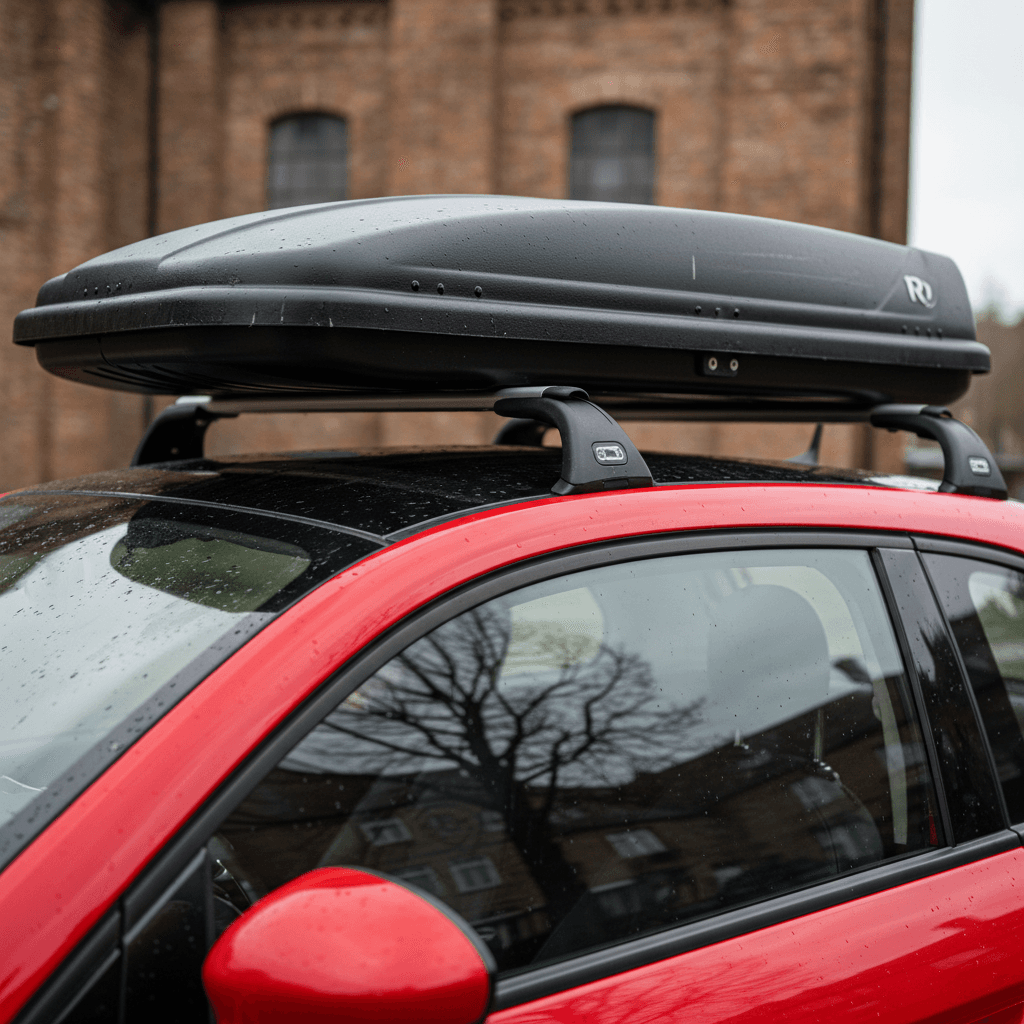
Common ways 500e owners use roof racks
Use cases and whether the 500e is a good match
| Use case | Typical load | Is the 500e a good fit? | Notes |
|---|---|---|---|
| Bike rack | 1–2 bikes | Yes, if under limit | Check total weight of bikes + rack; watch crosswinds. |
| Ski/snowboard | 2–4 skis/boards | Yes | Long but relatively light; secure bindings and tips. |
| Small cargo box | Camping or beach gear | Yes, if kept light | Pack bulky, light items on the roof and heavy gear inside. |
| Roof-top tent | 150+ lb | Generally no | Too heavy/high for the 500e roof and handling; not recommended. |
| Kayak or surfboard | 1–2 boats/boards | Maybe, if light | Keep speed down, use bow/stern straps, and re-check tie-downs. |
When in doubt, choose lighter, lower, and simpler loads on a Fiat 500e roof rack.
Avoid roof-top tents on a 500e
How roof racks affect range and noise
Every EV owner learns fast: nothing punishes range like highway speed and bad aerodynamics. A roof rack adds both. Your Fiat 500e has a small battery, so how you load the roof has an outsized impact compared with a big-road-trip EV.
What a roof rack can do to your small-EV range
In city driving, the efficiency penalty from a rack is modest, because speeds are low. On the highway, it’s a different story. The 500e’s brick-like frontal area and short nose turn a loaded roof box into a sail. If you’re stretching range between DC fast chargers, that matters.
Two easy range-saving tricks
Packing checklist: Do’s and don’ts
Once you know your safe weight, what you pack, and how, matters just as much. Think like a chassis engineer, not like you’re loading a moving truck.
Roof rack packing rules for a Fiat 500e
Keep heavy items inside the cabin
Put dense items, tools, water, canned food, big batteries, on the floor inside the car, between the axles. Save the roof for <strong>bulky but light</strong> gear like sleeping bags and jackets.
Distribute weight evenly left to right
On such a narrow car, a lopsided roof load can make emergency maneuvers feel strange. Balance the load across the bars and cinch it down in more than one place.
Keep the center of gravity low
If you’re using a cargo box, put flatter, heavier things in the bottom and soft, light gear on top. The 500e already sits tall; don’t add a wobbly stack of weight up high.
Use proper straps, not bungee cords
Ratchet straps or cam straps with known ratings beat old bungee cords every time. <strong>Compression and redundancy</strong> are your friends, especially at highway speeds.
Do a shake-test before driving
Grab the load with both hands and shove it around. If any part moves independently of the bars, you’re not done yet.
Re-check at your first stop
Wind and vibration can loosen even a good tie-down. Make it a habit: after 15–20 minutes of driving, pull over and check every strap and mount.
Don’t forget garage clearance
Roof rack safety and EV-specific considerations
The usual roof-rack cautions apply to any car, but an EV like the Fiat 500e adds a couple twists: battery weight, regenerative braking behavior, and often-sketchy tire choices from past owners all play into your margin of safety.
EV-specific roof rack safety for the 500e
Small electric hatchback, big reasons to stay conservative
Already heavy from the floor down
Regenerative braking feel
Tires and suspension
If the car feels wrong, unload it
Buying a used Fiat 500e: Checking the roof and rack
The 500e has become a popular used EV, inexpensive, cheerful, and perfect for short commutes. But if the last owner treated the roof like a work truck, you’ll want to know before you drive it home.
- Inspect the roof skin for ripples, dents around the rack contact points, or creases along the rain gutter area. That’s a sign of overloading or poorly installed racks.
- Check the door seals where clamp-on feet might have sat. Crushed, torn, or warped seals can mean wind noise, water leaks, or both.
- Look for rust or chipped paint under old rack feet or around screw holes if someone tried a DIY installation.
- Ask how the rack was used: bikes and skis are one thing; construction lumber or huge cargo boxes are another.
- Pay attention on the test drive for wind noise and tracking at speed. A car driven long distances with a permanent rack may have more wear than the odometer suggests.
How Recharged helps
Ready to find your next EV?
Browse VehiclesFAQ: Fiat 500e roof rack weight limit
Frequently asked questions about Fiat 500e roof loads
Bottom line: Is a roof rack right for your 500e?
The Fiat 500e is a city car first and an adventure shuttle second, but with the right setup, a roof rack can stretch what this little EV can do. The key is treating the roof rack weight limit as a ceiling you stay well under, not a dare you try to hit. Light, aerodynamic loads; conservative speeds; and careful tie-downs make a big difference.
If you’re shopping for a used Fiat 500e, especially one that already wears bars or a box, take a hard look at the roof, door seals, and how the car feels at speed. On Recharged, every car comes with a Recharged Score Report that spells out battery health, pricing, and inspection findings, so you can focus on how you’ll use your 500e, whether that’s hauling a single bike to the trailhead or just leaving the rack off entirely for maximum range.