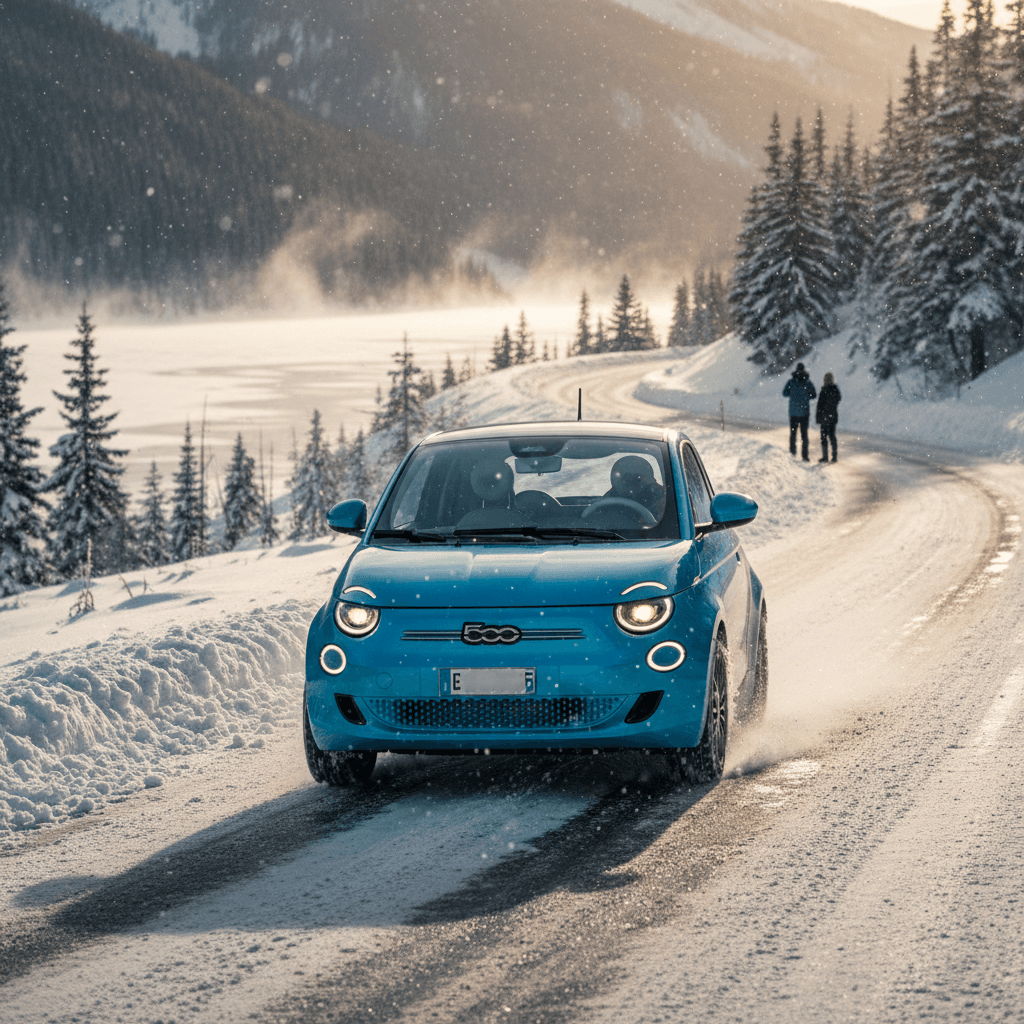
If you’re eyeing a Fiat 500e and you live where it snows, you’re probably wondering: is the Fiat 500e actually good in snow and ice, or will it leave you stuck at the end of your driveway? The reality is somewhere in the middle, and it depends a lot more on tires, snow depth, and your expectations than on the badge on the hood.
Short answer
Fiat 500e in Snow and Ice: Quick Overview
Key Fiat 500e winter-relevant specs
On paper, the modern Fiat 500e is a front‑wheel‑drive hatchback with the battery mounted low in the floor and a curb weight just under 3,000 pounds. That combination can deliver surprisingly good traction in light snow. The catch is its very low ground clearance, around 4.5 inches, and modest EPA range (about 149 miles for current U.S. models in mild temperatures). Those two numbers are what really define its role as a winter car.
Where the 500e struggles most
Winter strengths and weak points of the Fiat 500e
Winter strengths
- Front-wheel drive and a heavy battery pack over the driven wheels help traction off the line.
- Fine control of torque from the electric motor makes it easier to meter power on slick surfaces.
- Stability and traction control are standard and work continuously in the background.
- Compact size and short wheelbase make it nimble in tight, snow‑choked city streets.
- Instant cabin heat (from electric heaters) means you warm up more quickly than most gas subcompacts.
Winter limitations
- Very low ground clearance (~4.5 in) means it can high‑center in deep, rutted, or heavy wet snow.
- Shorter winter range, it’s a city‑range EV in the best of times; cold and heat use cut that further.
- Performance summer tires on some trims are a liability in snow and ice.
- Small footprint and short wheelbase can feel nervous at higher winter highway speeds, especially in crosswinds.
- Limited cargo space for bulky snow gear, skis, or multiple passengers plus luggage.
How to think about it
Traction, handling, and stability control
On slick pavement, the Fiat 500e has a few things going for it. Front‑wheel drive is inherently more stable than rear‑wheel drive in low‑grip conditions, and the weight of the battery pack is carried low in the chassis. That lowers the center of gravity and helps all four tires stay planted. The car also includes electronic stability control and traction control, which constantly monitor wheelspin and can cut motor torque to keep you in line.
- The electric motor’s instant torque is easy to modulate with your right foot once you get used to the car.
- Traction control will usually step in smoothly if a front tire starts to spin when you pull away on ice or packed snow.
- Stability control can brake individual wheels to correct a slide if you enter a slick corner too fast.
- Regenerative braking can feel strong in some modes, which may unsettle the car on very slick surfaces if you abruptly lift off the accelerator.
Dial back regen in the worst conditions
Real‑world owner feedback from snow‑belt regions tends to line up: with proper dedicated winter tires, many describe the 500e as a "little snow buggy" that feels secure in typical city snow and slush. On the stock all‑season or summer rubber, though, the same car can go from confident to sketchy very quickly when the road ices over.
Ground clearance: When the 500e should stay home
Modern U.S.‑spec Fiat 500e models ride low, with about 4.5 inches of ground clearance. That’s sports‑car territory, not crossover territory. It’s great for efficiency and handling on dry pavement, but it’s the number‑one reason this car is not a true four‑season workhorse in serious snow country.
- On plowed streets with a couple inches of packed snow, the 500e will usually do fine with the right tires.
- In 4–6 inches of heavy, wet snow, the bumper and underbody start to plow, increasing drag and the risk of getting stuck.
- Deep ruts left by SUVs and trucks can high‑center the Fiat, lifting weight off the drive wheels.
- Snow build‑up under the car can also hide ice chunks that may contact vulnerable underbody components.
Know when to park it
Winter range and charging in cold weather
The other big winter question is range. Recent U.S. Fiat 500e models are EPA‑rated around 149 miles of range in moderate temperatures. Like every EV, they lose range in the cold for three main reasons: the battery chemistry is less efficient, you’re using energy to heat the cabin and battery, and winter tires plus slushy roads increase rolling resistance.
What to expect from Fiat 500e range in winter
Rough, real‑world expectations, not laboratory numbers
Mild winter (35–45°F)
In cool, damp conditions, expect roughly 15–25% less range than EPA numbers, depending on your speed and heater use.
Cold (20–30°F)
At typical U.S. winter temps, many EVs see 25–35% range reduction. Shorter trips are hardest because the cabin has to be reheated each time.
Very cold (below 10°F)
In deep‑freeze conditions, cuts of 35–40% or more are common. The 500e remains a city‑range EV here, better for short hops than long drives.
Precondition whenever you can
Because the Fiat 500e starts with a relatively modest range, you’ll feel winter losses more than in a big‑battery crossover. For many owners using the car for a 20–40‑mile daily round‑trip commute, that’s still well within its comfort zone. If you routinely need 100+ highway miles at 70 mph in sub‑freezing temps, you’ll be pressing up against the limits and will want fast‑charging options mapped out ahead of time.
Best tires and wheel setup for snow and ice
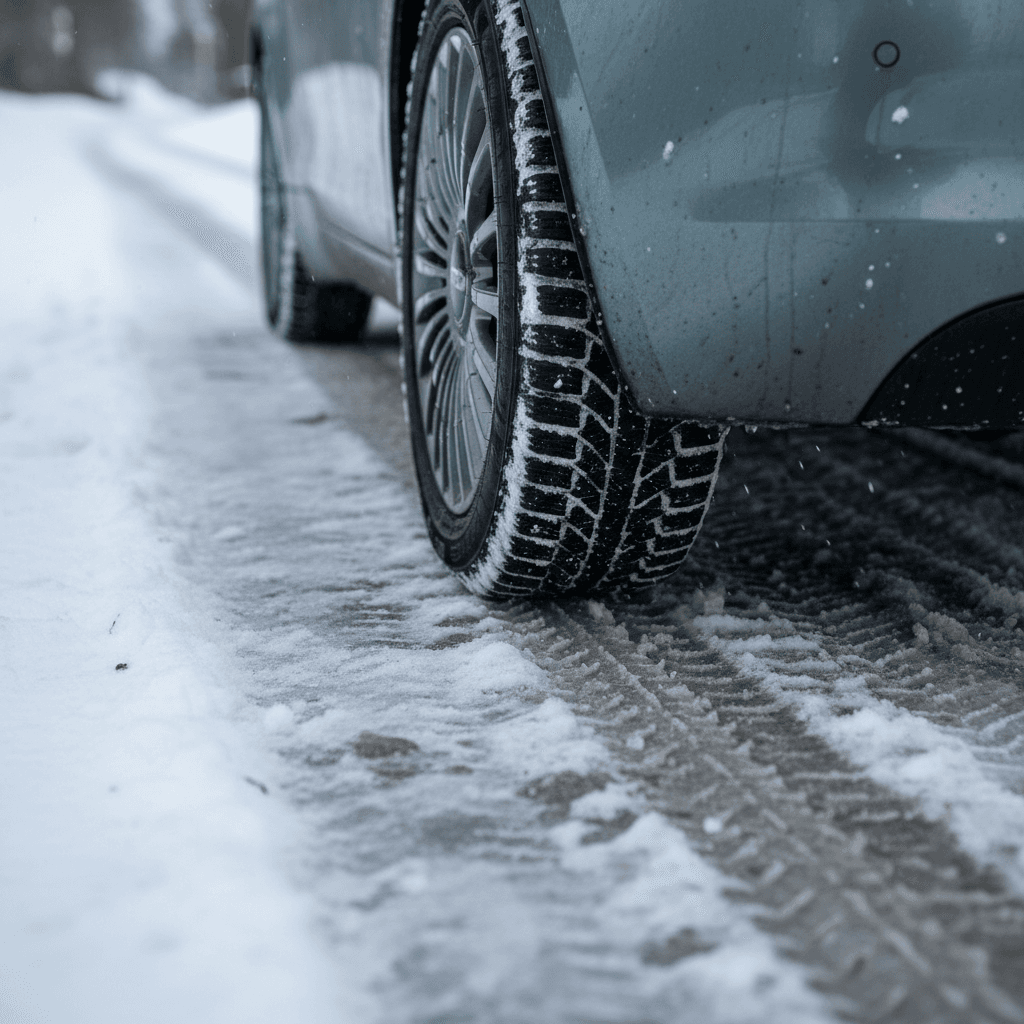
Tires are the single biggest swing factor in whether any small front‑drive car feels "hopeless" or "unstoppable" in winter. The 500e is no exception. Many U.S. cars ship with 205/45R17 all‑season or even summer‑biased tires, which are tuned more for efficiency and handling than deep‑snow grip.
Smart tire choices for a winter‑driven Fiat 500e
Choose real winter tires, not just all‑seasons
For regular driving on snow and ice, a dedicated <strong>three‑peak mountain snowflake (3PMSF)</strong> winter tire will transform the 500e’s traction and stopping distances compared to the stock tires.
Consider a narrower, higher‑profile size
Some owners step down from the stock 17‑inch size to a slightly narrower 16‑inch winter setup (for example, a 195‑section tire). A narrower tire can cut through snow more effectively and the taller sidewall improves ride on frozen ruts and potholes. Always confirm compatibility with a qualified shop.
Buy a dedicated winter wheel set
Mounting winter tires on their own wheels saves wear on the beads and makes seasonal changeovers quick. Steel or simple alloy wheels are fine for winter duty.
Mind the load and speed ratings
Ensure your winter tires meet or exceed the 500e’s <strong>load index and speed rating</strong>. Don’t underspec just to save a few dollars, your contact patches are the last place to cut corners.
Maintain proper tire pressures
Cold weather lowers tire pressure. Check pressures monthly in winter and keep them at the manufacturer’s recommended PSI for best grip, braking, and efficiency.
Why winter tires matter more than AWD sometimes
Winter driving checklist for Fiat 500e owners
Once your tires are sorted, a few simple habits will make the Fiat 500e a much more relaxed companion when the forecast turns ugly. Use this checklist as a starting point and customize it based on your local climate.
Cold‑weather checklist for your 500e
1. Plan realistic winter range
Figure out your true winter range by watching consumption over a few cold weeks. Then <strong>add at least a 25–30% buffer</strong> before planning trips. Don’t rely on the summer EPA number.
2. Pre‑heat while plugged in
Whenever possible, pre‑warm the cabin and defrost the windows while the car is still charging. You get into a warm car and keep more energy in the battery for driving.
3. Keep windows and lights clear
Brush snow off all windows, mirrors, and lights, not just the windshield. In a small car, being seen clearly by taller vehicles is critical in low‑visibility snow.
4. Use gentle inputs
Smooth steering, light braking, and gradual accelerator inputs are your friends on snow and ice. Let the traction and stability systems work with you, not against dramatic maneuvers.
5. Watch ground clearance in lots and driveways
Snow piles at the edge of driveways or parking lots can be taller than the 500e’s clearance. Approach slowly and avoid ramming packed piles with the front bumper.
6. Protect the charge port
Keep a small brush or glove handy to clear snow and ice from around the charge port flap. Don’t force it open if it’s frozen; use gentle warming or de‑icer if needed.
Who the Fiat 500e works for as a winter car
Before you buy, or decide whether to run your 500e through winter, it helps to be clear about what kind of winter driver you are. The same car that’s perfect for one household can be a headache for another just a few ZIP codes away.
Is the Fiat 500e a good winter fit for you?
Match your use case to what the car does best
Great winter fit
- You live in a city or suburb where streets are plowed promptly and frequently.
- Your typical winter driving is short trips and commutes under 40–50 miles round‑trip.
- You have access to home or workplace charging, ideally in a garage or carport.
- You’re willing to invest in quality winter tires and possibly a second wheel set.
- You already have, or don’t need, a tall AWD vehicle for the worst days of the year.
Poor winter fit
- You regularly drive through unplowed or poorly maintained roads in 4–8+ inches of snow.
- You depend on long highway trips in sub‑freezing temperatures with limited charging options.
- Your driveway or access road is steep and often icy with deep ruts.
- You can’t easily charge at home and rely on public charging that may be snow‑covered or crowded.
- You want one vehicle to do everything from ski‑trip duty to hauling bulky winter sports gear.
In my experience, the best winter car isn’t the biggest or most powerful, it’s the one that matches your roads, your weather, and your tolerance for compromise.
How Recharged can help if you’re winter-shopping a 500e
If you’re considering a used Fiat 500e as a winter runabout, you’re smart to look beyond paint color and sticker price. Battery health, tire condition, and prior use all matter more when the temperature drops. That’s where a transparent, EV‑focused process helps.
- Every vehicle on Recharged includes a Recharged Score Report with verified battery health, so you know how much real‑world winter range you’re buying, not just what the car delivered when it was new.
- You can shop and finance completely online, trade in a current vehicle, or get an instant offer, handy if you’re downsizing from a big gas SUV into a city EV like the 500e.
- EV‑specialist support can talk through whether a 500e actually fits your winter driving pattern, or whether a different used EV, perhaps with more ground clearance or range, would be a better bet.
- Recharged offers nationwide delivery and operates an Experience Center in Richmond, VA if you prefer to see and feel a vehicle in person before committing.
Try a 500e as a second, winter‑city car
Ready to find your next EV?
Browse VehiclesFiat 500e winter driving FAQ
Frequently asked questions about the Fiat 500e in snow and ice
So, is the Fiat 500e "best" for snow and ice? It’s not a snow‑belt superhero, and it was never meant to be. But in the right role, short‑range commuting and errands on maintained roads, backed up by the right tires and realistic expectations, it can be a delightfully capable winter companion. Define your needs honestly, match them to what this little EV does well, and if the fit is there, a well‑chosen used 500e can be one of the most enjoyable ways to conquer winter city driving.